Archive for Edinburgh Fringe Festival

Blues, Banter and Bold Whisky Choices Drive a Standout Fringe Experience

Click on image to buy tickets

★★★★★  Some Fringe shows promise a lot and deliver very little. Two Guys, 3 Drams does the opposite: it promises whisky and blues, and somehow delivers whisky, blues, comedy, education, and a roomful of people having a noticeably better time than they expected. After three consecutive sell‑out years, the show returns with the same swagger the performers boast about — “whisky‑soaked swagger, raucous blues, and boisterous charm”  — and the marketing isn’t exaggerating.

Felipe Schrieberg (vocals, lap steel) and Paul Archibald (drums, percussion, and that wonderfully unfashionable washboard) run the hour with the confidence of performers who know exactly what they’re doing. The performers call it “a sensory spectacle blending a world‑class whisky tasting with foot‑stomping live music”, and that’s precisely how it feels in the room: part gig, part tasting, part double‑act.

TheSpace @ Triplex was packed and buzzing throughout.


Music

The musical choices are strong throughout. Their take on I Put a Spell on You was the standout for me — gritty, tight, and delivered with enough bite to make the dram in your hand feel even more appropriate. Other numbers were less familiar, but the quality of the playing meant it didn’t matter. Felipe’s lap‑steel tone is rich and expressive; Paul’s rhythmic precision (especially on the washboard) is a rare treat.

Whisky

The whisky side is handled with a jokey, informal touch that makes the information stick. Felipe and Paul emphasise that the show is “as much about education as it is about entertainment” , and that’s true — but crucially, it never feels like a lecture. Audience questions, quick-fire facts, and a steady stream of banter keep things lively.

The drams on our night:

  • InchDairnie Rylaw Scottish Rye – easily the highlight. Smooth, distinctive, and surprisingly accessible. InchDairnie are a main sponsor this year, and their Head of Innovation calls the partnership “a brilliant way to bring whisky and music together”. Fair enough — the whisky is excellent.
  • A Singaporean whisky (whose name I missed) – light, balanced, and a pleasant surprise.
  • Laphroaig 15-year-old – the marmite dram. I’m firmly in the “no thanks” camp: too peaty, too medicinal, too smoky. Interesting, though, given it was my mother’s favourite whisky; she drank no other. Taste is a funny thing.

The chemistry between Felipe and Paul is the engine of the show. Years of playing together have given them an easy rapport, and the humour feels natural rather than rehearsed. The room was fully involved — responding to prompts, shouting back answers, and generally behaving like a Fringe audience who’ve decided they’re part of the act.

The performers promise you’ll “leave knowing how to sound clever about whisky for the rest of your life”. That’s not far off. You walk out with three good drams inside you, a handful of genuinely useful whisky facts, and the pleasant buzz of having spent an hour with performers who clearly enjoy what they do.

Warm, funny, informative, and musically accomplished. If you want a Fringe show that teaches you something without ever feeling like a lecture — and gives you three quality whiskies in the process — Two Guys, 3 Drams is an easy recommendation.

Reviewed by Pat Harrington

Click here to buy tickets

Leave a Comment

Nude Confronts the Male Gaze with Wit, Rawness, and Feminist Bite

Click on image to buy ticket

⭐⭐⭐⭐⭐ In this cleverly crafted piece, Nude dives headfirst into the complexities of the male gaze, nodding to Mulvey’s old‑school film theory but making it feel fresh, lived‑in, and painfully personal. Clara’s plan — to walk into a life‑drawing class and strip naked in front of her favourite lecturer — is introduced with a wickedly funny line: “No, but how funny would it be though? Like, he turns up, and it’s just me – with my tits out. His model student.”. It’s a moment that perfectly captures the show’s tone: bold, cheeky, and already teetering on the edge of something darker.

The male gaze — and why it matters here

Laura Mulvey’s theory of the male gaze argues that mainstream visual culture positions men as active lookers and women as passive objects of looking. Women become “to‑be‑looked‑at,” their bodies framed for male pleasure, validation, and control. What makes Nude compelling is that it doesn’t just critique this structure — it shows a woman actively stepping into it.

Clara doesn’t simply endure the male gaze; she seeks it, fantasises about it, and tries to choreograph it. She wants to be seen by her tutor in a way that makes her feel chosen, special, exceptional. That desire — to be looked at on one’s own terms — is the emotional engine of the show. It’s exactly what the press release calls “the seductive idea that being seen is the same as being empowered” . Clara confuses visibility with agency, attention with autonomy, and the play exposes how fragile that fantasy is.

This is where Nude becomes a genuinely contemporary feminist work. Mulvey’s theory was about cinema, but Clara’s story shows how the gaze operates in real life: women internalise it, negotiate with it, and sometimes chase it. The show asks a sharper question than most: why do we sometimes seek the very gaze that limits us?

Performance, writing, and Bacchanalia’s mission

Hattie Chapman

Hattie Chapman’s performance is the engine of the piece — restless, funny, and emotionally raw. Audience feedback from the Norwich Theatre R&D sharing described the work as “bold, lyrical, profound writing and superb performance” and “so real and raw” , which is exactly what Chapman delivers. She gives Clara a searching, self‑mythologising energy that makes the humour land and the emotional turns sting.

Phoebe Segal’s writing is confident and unafraid to push Clara into uncomfortable territory. Developed through Menagerie Theatre Company’s Young Writers’ Workshop and supported by Norwich Theatre and Frozen Light, the play has the feel of a young writer testing the edges of a big idea — and succeeding. Bacchanalia, the new East Anglian company founded by Segal and Merlyn Haycraft, frames its mission around interrogating inherited myths, “from ancient archetypes to cultural norms” , and Nude fits that remit perfectly. It takes the archetype of the woman on display and cracks it open from the inside.

A Fringe debut with bite

Nude begins with a joke and ends with a jolt, tracing Clara’s journey from playful self‑display to the moment her fantasy stops protecting  or trapping her. Chapman’s performance makes that turn land with real force, and Segal’s writing never shies away from the contradictions at its core. It’s a debut that not only showcases a formidable new talent but also embodies Bacchanalia’s mission to crack open the myths we inherit. A bold, unsettling, and memorable Fringe offering.

By Pat Harrington

Click here to buy ticket


Leave a Comment

From Eurovision to Global Icons: ABBA’s Story Reborn on Stage

Click on image to buy tickets

★★★★★  Night Owl Shows’ world‑premiere production traces ABBA’s rise from Eurovision outsiders to global pop architects, blending sharp live musicianship with narrative insight to reveal the emotional depth, innovation and lasting cultural impact behind the band’s greatest songs. Dancing Queen: An ABBA Tribute doesn’t just replay the hits; it reconstructs the story behind them — the improbable rise of four Swedes who turned melody, melancholy and sheer pop craftsmanship into global cultural currency.

Night Owl Shows have spent the past decade refining a particular Fringe formula: live musicianship, narrative clarity, and a respect for the material that goes beyond nostalgia. Their reputation — sell‑out runs, critical acclaim, and awards from Brighton to Adelaide — is well earned. But this new production feels like a step forward. It’s not just a celebration; it’s a piece of musical storytelling with genuine shape.

The show starts with ABBA’s Eurovision triumph with Waterloo, and it does so with a confidence that comes from knowing the terrain. The press release promises “the remarkable story of the greatest pop band ever formed,” and that isn’t hyperbole. What the production gets right is the sense of ABBA as outsiders — provincial, unfashionable, and dismissed by critics — who nonetheless reshaped the architecture of pop through melody, harmony and emotional precision.

The musical performances are sharp throughout. The expected giants are here — Dancing Queen, The Winner Takes It All, Mamma Mia — but the show’s strength lies in how it frames them. ABBA’s catalogue is often remembered for its glitter, but the band’s real genius was their ability to smuggle heartbreak into songs that sounded like celebrations. Night Owl’s performers lean into that tension. When they shift into the more melancholy material, the room changes. The brightness dims. The emotional temperature drops. And suddenly you’re reminded that ABBA were never just confectioners; they were storytellers.

One of the most striking choices is the inclusion of the 12‑inch dance version of Lay All Your Love on Me. It’s easy to forget how radical that track was in 1981 — a full‑blown electro‑disco remix at a time when most mainstream acts wouldn’t touch club culture. Hearing it live, with its pulsing, extended architecture, underlines how forward‑thinking ABBA were. They weren’t following trends; they were anticipating them.

The show also acknowledges ABBA’s long afterlife. Their influence runs through pop in ways that still surprise people. Madonna’s Hung Up famously samples Gimme! Gimme! Gimme! — permission she had to personally request from Benny and Björn, who almost never allow sampling. The Fugees pulled from The Name of the Game for Rumble in the Jungle. Erasure built an entire EP around ABBA’s melodic DNA. These aren’t footnotes; they’re proof of how deeply ABBA’s songwriting has permeated global music.

What is interesting — and slightly unexpected — is that the production doesn’t reference ABBA Voyage, the virtual concert that has become one of the most successful live shows of the decade. Voyage demonstrates that ABBA’s music can fill a venue night after night without the band physically present. But Night Owl Shows remind us why live musicians still matter. A band brings risk, personality, and human texture — qualities no avatar can replicate. This show proves that both experiences can coexist: one celebrates ABBA’s precision, the other their emotional resonance.

The cast — Peter Marchant, Will Sharp, Maia Elsey and Kiah Spurle, supported by Ross Taylor, Noah Nelson and Lewis Porter — deliver performances that are musically assured and theatrically disciplined. They don’t impersonate; they interpret. And that’s the difference between tribute and theatre.

Taken together, ABBA: The Journey is more than a jukebox. It’s a reminder of why ABBA’s music endures: the band honoured the hits, dug into the shadows, embraced the experimental corners, and connected the dots between ABBA’s past and their ongoing cultural afterlife. Night Owl Shows respect the material enough to play with it — and that’s the highest compliment an act can earn.

A smart, warm, musically literate production. Very much one for the Fringe crowd.

Reviewed by Pat Harrington

Click here to buy tickets


Leave a Comment

Capturing the Light: A Family Story Rooted in Scotland’s Landscape

Click on image to buy ticket

★★★★★  Elsa McTaggart: Capturing the Light is a  piece that doesn’t simply recount a family story, but reanimates a lineage of Scottish creativity, history,  faith, and stubborn, rural resilience. Elsa McTaggart revisits the life of her great‑grandfather, landscape master William McTaggart, weaving faith, identity and rural Scottish heritage into a modern Fringe performance rooted in light and lineage.

What makes this production compelling is its refusal to treat William McTaggart as a museum figure. Elsa McTaggart approaches her great‑grandfather not as an icon, but as a man shaped by poverty, crofting, Gaelic culture, and the kind of hard graft that leaves its mark on every decision a person makes. The press material describes him as “the third‑born to Gaelic speaking Kintyre crofters” and someone who, through sheer determination, became “one of Scotland’s most popular and recognisable landscape artists.” That grounding matters. It frames the show not as nostalgia, but as an inquiry into how creativity emerges from constraint.

The production traces his journey from rural deprivation to the Trustees Academy School of Art in Edinburgh — a move he made at just sixteen. It’s here that he began exploring the gradations of light, a fascination that would define his work. But what the show captures beautifully is the tension between ambition and loyalty. Despite success, he stayed rooted in Scotland, loyal to the landscapes that shaped him. Many artists of his generation headed south, chasing London prestige. He didn’t. And Elsa treats that decision not as romantic mythmaking but as an act of conviction.

The spiritual dimension is where the piece becomes quietly profound. McTaggart’s upbringing in strict Presbyterianism — the kind of world where ministers scrutinise not just behaviour but intention — shaped him deeply. The show doesn’t shy away from the friction between institutional faith and personal spirituality. When the minister disapproved of his work, even visiting his Father, he didn’t abandon belief; he simply refused to let doctrine dictate his art. That moment, handled with restraint, reveals an independently minded man who saw painting not as rebellion but as devotion.

Elsa McTaggart

And this is where Elsa’s framing becomes genuinely moving. She suggests, implicitly that McTaggart’s art was a form of prayer. Not prayer as supplication, but prayer as attention — the act of looking closely at nature until it reveals something sacred. His seascapes, often devoid of figures or narrative, embody this. No ships. No drama. Just the sea as it is. The sea as he saw it. The sea as a kind of worship. He had a lifelong fascination with light; Elsa shows us why that mattered. Light, for McTaggart, wasn’t just technique. It was theology.

The show itself blends storytelling, music, and projection. Although at the show I was at technical glitches knocked out the projection forcing me to concerntrate on just the narration and music.  Elsa and her long‑time collaborator Gary Lister have been performing other sold‑out Fringe shows for fifteen years, and that experience shows. The musical sections — each inspired by the titles of McTaggart’s paintings — are warm, confident, and rooted in Hebridean sensibility. The production design by Robbie Thomson gives the piece a visual clarity that mirrors McTaggart’s own obsession with light. And the involvement of Isle of Lewis arts venue An Lanntair, along with sruth‑mara’s track record of thoughtful, community‑rooted work, gives the show a sense of place that feels earned rather than decorative.

What emerges is not a biographical lecture, nor a family tribute, but a meditation on legacy — how creativity travels through generations, how rural identity shapes artistic instinct, and how faith can be both anchor and burden. Elsa isn’t simply telling us who her great‑grandfather was; she’s showing us how his way of seeing the world shaped her own.

By the end, you understand that McTaggart didn’t paint to escape his circumstances. He painted to honour them. And Elsa, in turn, honours him not by mythologising his life, but by illuminating the quiet, spiritual labour at its core.

A thoughtful, lyrical, and deeply Scottish piece of theatre — one that treats art not as spectacle, but as inheritance.

Reviewed by Pat Harrington

Click here for tickets

Leave a Comment

Spraywatch: A Beautiful Rescue Delivers Energy, Craft, and Big Laughs

⭐️⭐️⭐️⭐️⭐️  Spraywatch: A Beautiful Rescue is a comedy musical that clearly struck a chord with its audience, even if its particular brand of humour didn’t fully align with my own more sardonic tastes. What was undeniable, though, was the atmosphere in the room: a packed house, fully engaged, laughing readily, and responding exactly the way the show intends. It’s always worth noting when a production lands so successfully with its crowd, even if your own comedic sensibilities sit slightly elsewhere.

Fred (Ant McGinley) stood out for me

The show itself is energetic, colourful, and confidently performed. The cast work hard, and it shows. One performer in particular stood out: Fred, played by Ant McGinley. His physical theatre work was consistently funny, especially during the dance sequences where he used his slightly larger frame to great comedic effect. His timing was sharp, his movement precise, and his dialogue delivered with a dry, almost throwaway wit that worked beautifully. His solo number about his hatred of crabs was a highlight — absurd, committed, and genuinely amusing.

The ensemble as a whole were strong. Denise, played by Natalie Hayes, who seemed to occupy multiple roles within the community rather than switching characters outright, brought a nice running gag to the show. Her presence added texture and variety, and she handled the tonal shifts well.

Another clever moment came from Victor, played by Jamie Knapper, who switched characters rapidly by a wig changing mid‑dance — with another cast member snapping the wig on and off in perfect sync. It was a simple device, but executed with such precision and speed that it became one of the funniest pieces of choreography in the show.

Elsewhere, Izabella Webb as The Lifeguard and Abbie Ashall as Rose anchored the show’s emotional beats. Webb’s performance captured the heightened, slightly surreal tone of the piece, while Ashall — also the show’s executive producer — delivered a grounded presence that balanced the more exaggerated comedic moments.

The production deserves credit for its inventiveness. Kirsty Podlaski’s choreography is well‑structured, often playful, and occasionally quite intricate. The wider creative team — Richard Ross’s set design, Christopher Osbourne’s lighting, and Paul Webster’s sound design — all contribute to a cohesive aesthetic that supports the show’s bold, pop‑rock‑infused world.

As a musical comedy, Spraywatch sits firmly within a genre I’m less familiar with, but the Fringe has broadened my appreciation for it. Having now seen two comedy musicals this year — including Our Little Thing, the mafia‑themed show I enjoyed — I can say that my taste for this form has expanded considerably. Spraywatch contributed to that expansion, offering moments of genuine amusement and showcasing performers who clearly understand how to deliver physical humour, musical parody, and ensemble comedy with commitment.

While the show’s humour wasn’t entirely my own, it was undeniably effective for the audience it aimed at. They loved it! And within it, I found several elements — Fred’s performance, the wig‑switch choreography, Denise’s multi‑role presence — that were genuinely funny, well‑executed, and memorable. More importantly, the cast’s commitment, energy, and sheer enjoyment of performing were unmistakable, and that enthusiasm carried the audience with them from start to finish.

Spraywatch: A Beautiful Rescue is a lively, confident piece of Fringe musical comedy, delivered by a cast who know exactly what they’re doing and clearly love doing it.

Reviewed by Pat Harrington

Click here to buy tickets


Leave a Comment

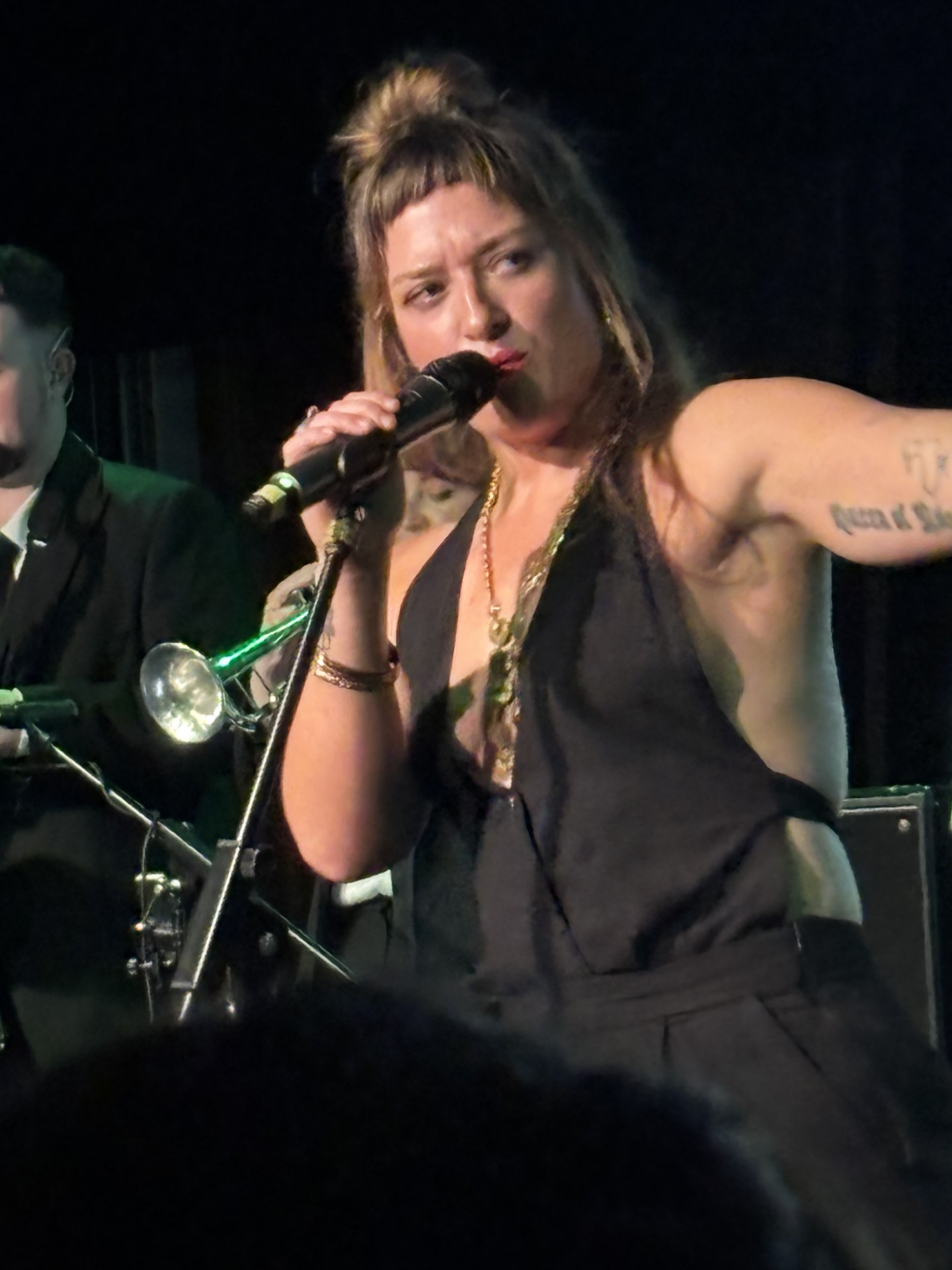
Back to Black: A Moving, Musically Assured Celebration of Amy Winehouse

Leave a Comment

Room 1219: A Precise, Powerful Reclamation of Roscoe Arbuckle’s Story

Click on imagre to buy ticket

⭐️⭐️⭐️⭐️⭐️ Room 1219 is a sharply observed and emotionally intelligent reconstruction of the scandal that destroyed Roscoe “Fatty” Arbuckle’s career. Rather than indulging in lurid retellings, the production interrogates the mechanics of reputation, hysteria, and the brutal speed with which a cultural giant can be erased. It is anchored by a performance of striking versatility from Douglas Arbuckle, and with a clarity that understands exactly why Room 1219 and the scandal around it  still matter.

At the centre of the production is Douglas Arbuckle, delivering a performance of striking versatility and clarity of purpose.

Douglas Arbuckle’s portrayal of Roscoe is grounded in range—physical, vocal, emotional. He captures the vaudeville-honed adaptability that defined Roscoe’s early career: the ability to shift from slapstick to sentiment, from broad comedy to quiet vulnerability. This versatility becomes the show’s emotional engine.
Douglas refuses to play Roscoe as a tragic figure from the outset; instead, he presents a man who has earned his success through relentless observation and craft. Poverty forced Roscoe to learn from every performer he encountered—dancers, singers, acrobats—and Douglas mirrors that hunger with precision.
One of the most affecting moments in the production is Douglas Arbuckle’s performance of By the Light of the Silvery Moon. First published in 1909, with music by Gus Edwards and lyrics by Edward Madden, the song became a staple of early American popular entertainment and was widely performed in vaudeville and later in film. Here, it is delivered with a wistful, almost fragile quality that gently humanises Roscoe. The number feels like a quiet farewell — a suggestion of something ending, a life and career on the brink of being swept away. Its inclusion is a clever choice: a familiar, sentimental tune repurposed to illuminate the emotional cost of the scandal and the man caught inside it.

The Scandal: What Happened in Room 1219

The production handles the scandal with a level of historical seriousness rarely seen in portrayals of Arbuckle. It does not sensationalise the events of Labour Day weekend, 1921, when Arbuckle checked into the St. Francis Hotel in San Francisco.
Room 1219 was the site of a party attended by several guests, including actress Virginia Rappe, who later fell ill and died of peritonitis. Arbuckle was accused of raping her, and the press—already primed for moral outrage—turned the case into the first major Hollywood scandal.
The show makes several crucial points:
• The prosecution’s case was built on speculation, not evidence.
• Medical testimony indicated no signs of sexual assault.
• Witness accounts were contradictory and often motivated by publicity or financial gain.
• Arbuckle endured three trials, the final ending in a full acquittal accompanied by a written apology from the jury.

Douglas Arbuckle as Roscoe.

Yet the acquittal did not save him. The film industry, terrified of public backlash, effectively blacklisted him. The show emphasises this with quiet, devastating clarity: Arbuckle was legally innocent but culturally condemned.

hed‑out, publication‑ready expansion of your thematic section — no markup, no references, and shaped to draw clear parallels with the world of 2026. You can paste this directly into your review.

The title Room 1219 is not merely a reference to the location of the alleged crime. It becomes a symbol of the exact moment a career collapsed, the birth of Hollywood scandal culture, and the room where truth, rumour, and hysteria fused into a narrative that could not be undone. In the production, that room becomes a kind of cultural pressure chamber — a place where a man’s life is rewritten in real time by forces far larger than himself.

The themes the show explores feel uncannily contemporary. Versatility becomes more than a performer’s skill; it mirrors the way people today must constantly adapt to shifting public expectations, online scrutiny, and the demand to present a curated version of themselves. Reputation, once shaped slowly over years, can now be destroyed in hours. Memory — what culture chooses to preserve or erase — is no longer a historical process but a daily one, driven by algorithms, trending topics, and the speed of collective judgement. Scandal, in Arbuckle’s era, was born in newspapers and gossip columns; today it erupts across social platforms, mutates instantly, and hardens into “truth” before facts have even surfaced. And performance itself has expanded beyond the stage: everyone performs now, consciously or not, in public life, online life, and the strange hybrid space between the two.

By tracing Arbuckle’s downfall, Room 1219 quietly asks the audience to consider how little has changed. A century later, we still watch reputations rise and fall with dizzying speed. We still confuse rumour with evidence. We still participate — willingly or not — in the creation of narratives that can define or destroy a person. The production uses Arbuckle’s story not as a relic of old Hollywood, but as a mirror held up to our own world, where the mechanisms of scandal have only grown faster, louder, and more unforgiving.

Room 1219 is a moving, resonant piece of theatre that restores Roscoe Arbuckle to the complexity he deserves. It reframes a man flattened by history and hysteria, and it does so with intelligence, compassion, and artistic precision.
Reviewed by Pat Harrington
Leave a Comment

Musical Soulmates Captures the Pain and Beauty of Billie Holiday & Lester Young

Click on image to buy tickets

⭐️⭐️⭐️⭐️⭐️ Some Fringe shows just entertain, and then there are shows that educate while they entertain, pulling you into a world you thought you already understood.  Musical Soulmates: Songs of Billie Holiday and Lester Young sits firmly in the latter category. It’s not simply a tribute to Billie Holiday and Lester Young; it’s a guided excavation of their lives, their music, and the brutal social machinery that shaped both. 

Christine Adams anchors the evening with soul‑stirring vocals—rich, grainy, emotionally alert. She wisely avoids imitation. There’s no attempt to mimic Holiday’s timbre or phrasing; instead, she leans into tonal homage, letting the ache behind the songs rise naturally. Adams understands Holiday’s sly humour, her armour of wit, her habit of letting pain sit quietly in the corner until it couldn’t be ignored. Songs like God Bless the Child aren’t just performed—they’re contextualised, illuminated, allowed to breathe.

One of the pleasures of the evening was the mix of familiar and unfamiliar material. There were plenty of songs I hadn’t heard before but liked immediately — including A Sailboat in the Moonlight, a gently romantic 1937 number Holiday made her own. It drifts along on the fantasy of two people escaping their troubles by imagining themselves gliding across moonlit water, a kind of soft-focus daydream set to music. And then there were the more familiar pieces, like These Foolish Things, which landed with a different kind of emotional weight. My mother played a lot of jazz when I was growing up, so those melodies carried me straight back to childhood — an unexpected trip down memory lane that added another layer to an already rich show.

Dick Lee’s saxophone and clarinet provide the show’s emotional counterweight. Ebullient, warm, and conversational, his playing feels like a dialogue with Adams rather than accompaniment. Holiday and Young’s musical compatibility famously verged on telepathy; Lee and Adams recreate that sense of intuitive exchange. Lee’s lines curl around Adams’ phrasing, sometimes shadowing it, sometimes nudging it forward, sometimes breaking away entirely to offer a commentary of their own. It’s a partnership built on trust, and it shows.

Phil Adams on guitar and Jerry Forde on bass complete the quartet with understated finesse. Adams’ guitar work is clean and spacious, never crowding the vocals, while Forde’s bass provides the steady heartbeat the show depends on. Together, they create arrangements that are respectful without being museum pieces—alive, responsive, and shaped by the room.

The narration threads through the performance with conversational ease. One moment, we’re hearing about Holiday and Young’s early camaraderie—his nickname  for her “Lady Day,” her “Pres” for him —and the next, we’re plunged into the silence of their three‑year estrangement. The show doesn’t sensationalise the rupture. Instead, it treats it as part of the larger tapestry of two artists navigating fame, addiction, racism, and the relentless grind of touring in segregated America.

And that’s where the Jim Crow material lands with force. The narrator doesn’t lecture; they illuminate. Jim Crow wasn’t an abstract policy—it was a daily logistical nightmare for Black musicians. Holiday and Young were barred from hotels, forced into back entrances, denied basic dignity. When Adams sings after these explanations, the songs carry a different weight. You feel the context pressing in.

The legal troubles are handled with similar nuance. Holiday’s arrests—mainly tied to drugs, always weaponised against her—are framed not as moral failings but as symptoms of trauma and exploitation. Young’s imprisonment, via military court‑martial for marijuana and alcohol possession, becomes another example of how Black artists were punished more harshly than their white counterparts. 

Structurally, the production moves with confident rhythm. Short stretches of storytelling give way to bursts of song. A quiet anecdote is followed by a musical punch. Paragraphs of history dissolve into a single held note. 

By the end, what stays with you  isn’t just the music, or the biography, or the historical detail. It’s the sense of two artists—Holiday and Young—trying to carve out space for themselves in a world determined to shrink them. The show honours that struggle without romanticising it.  It’s a reminder that the past isn’t past. It’s still singing.

Musical Soulmates is a production that deserves to be seen—not because it’s nostalgic, but because it’s honest. It celebrates two friends whose musical and spiritual compatibility bordered on the miraculous, and it does so with intelligence, warmth, and emotional clarity. Adams, Lee, Adams, and Forde deliver a show that feels both intimate and expansive, rooted in history yet alive in the present.

Reviewed by Pat Harrington

Click here to buy tickets

Leave a Comment

Solo Show Illuminates the Defiant Life of Princess Cecilia Vasa

Click on image to buy tickets

⭐️⭐️⭐️⭐️⭐️ Daughter of Sweden is a confident, well‑researched and quietly powerful one‑woman show, carried by Cecilia Säverman’s command of the stage and a script that brings Princess Cecilia Vasa’s turbulent life into sharp, human focus.

Säverman handles the inherent exposure of a solo show with real assurance. A one‑person piece leaves nowhere to hide: pacing, tone, audience connection, emotional shifts — all of it rests on a single performer. She keeps the room engaged throughout, maintaining momentum without rushing, and giving the historical material space to hit home. Her delivery has clarity and warmth, and she knows exactly when to lean into humour, indignation or quiet sadness.
The script does an excellent job of making Princess Cecilia Vasa accessible to a modern audience. Born in 1540 and living until 1627, Cecilia’s life is unusually long for her era — and unusually dramatic. The show foregrounds the moment that defined her public reputation: in 1559, at just nineteen, she was discovered with a lover, triggering a scandal that followed her for decades. Säverman presents this not as a footnote but as the hinge on which Cecilia’s life turned — a moment where personal desire collided with dynastic expectation.
The production also touches on Cecilia’s later reputation for dabbling in privateering. A privateer was essentially a state‑licensed pirate: someone authorised by a crown to raid enemy ships. The show uses this to underline Cecilia’s refusal to fit the mould of a compliant royal woman. She was not content to sit quietly in the background; she wanted agency, leverage, and independence — even if it meant stepping into morally grey waters.
The strongest thread running through the piece is the tension between what society demanded of women and what Cecilia actually was. Säverman plays her as capable, intelligent, stubborn and unwilling to be shaped into something smaller. The show doesn’t shy away from the sadness in her story either:
• Most of her children died before she did.
• One survived her only by a few months.
• Others were taken from her by in‑laws, including a daughter she was prevented from seeing for years.
These details give the piece emotional depth. Cecilia’s resilience becomes more than a historical footnote — it becomes the emotional spine of the show.
The writing is informative without ever feeling like a lecture. It’s educational in the best Fringe sense: you leave knowing more than you arrived with, but you never feel you’ve been talked at. The blend of biography, political context, and personal tragedy is well judged.
Daughter of Sweden is a thoughtful, engaging and well‑performed historical monologue. Säverman carries the responsibility of a solo show with confidence, and the script offers a compelling portrait of a woman who refused to be defined by scandal or by the narrow expectations of her time. It’s a rewarding hour — both enlightening and quietly moving.
Reviewed by Pat Harrington
Read our interview here
Click here to buy tickets

Leave a Comment

Madonna’s Many Layers Shine in a Layered, High‑Energy Fringe Triumph

Click on image to buy tickets

★★★★★ A decade on from their first Fringe triumph, Night Owl Shows unveil Material Girl: Madonna The Icon — a world‑premiere production tracing Madonna’s evolution from breakout star to boundary‑pushing legend, led by “Voice of the Fringe 2025” winner Maia Elsey and the award‑winning Night Owl band.

The show opens with a burst of high‑energy dance music — the Madonna most people think of first — but it quickly becomes clear that the creative team are interested in more than sequins and nostalgia. One of the most striking moments comes early on, when a quote appears on the screen behind the performers: Madonna rejecting the idea that she “reinvents” herself, insisting instead that she simply reveals different layers of who she already is. It’s a line that lands harder than you expect. It reframes not only her career, but the whole idea of artistic evolution. We often say Bowie reinvented himself, but perhaps he too was peeling back layers rather than constructing personas. That thought stayed with me throughout the show.

A performance rooted in interpretation, not imitation.

What impressed me most was the attention given to Madonna’s early life — her childhood, her dance training, the discipline that shaped her long before the fame arrived. I knew some of it, but not all, and the show makes a point of grounding her later flamboyance in those formative years. It’s a smart choice: it gives the spectacle a spine.

The musical selections are mostly the high‑octane numbers you’d expect, delivered with real verve by Maia Elsey — a strong singer, a confident dancer, and an all‑rounder who knows how to work a room. But the show’s emotional peaks come from the quieter moments. Frozen from the Ray of Light album is handled with care, and the shift in tone is welcome. And then there’s Don’t Cry for Me Argentina. As someone who’s long been fascinated by Evita — both the musical and the political history behind Eva Perón — I found this section genuinely affecting. I remember wondering, back when the film came out, whether Madonna could carry the role. She did, and the show acknowledges that turning point with the weight it deserves.

One omission surprised me: Desperately Seeking Susan (1985). For many people, myself included, that film was the moment Madonna first registered as a cultural force outside of music. Desperately Seeking Susan wasn’t just a quirky mid‑80s caper; it was the moment Madonna’s off‑stage persona crystallised into something mythic. The film caught her at the exact point where fashion, attitude, and pop culture collided, and leaving it out slightly blunts the story of how she became a generational touchstone. That absence aside, the production’s musical backbone deserves its own moment in the spotlight.The musicians deserve their own praise. One of the guitarists delivers variations on Madonna themes that are genuinely inventive — miniature interpretations in their own right. The audience responded to him with the same enthusiasm they gave the main performer, Maia Elsey, which tells you everything.

Elsey drives the show with crisp energy and control.

And speaking of the audience: this was one of those Fringe shows where people don’t wait for permission. They were up dancing, clapping, singing along. The atmosphere was warm, communal, and frankly joyous. It’s a feel‑good show in the best sense — not shallow, not saccharine, but celebratory.

Material Girl – The Madonna Story succeeds because it recognises that Madonna’s career isn’t just a string of hits; it’s a story of layers. The show captures those layers — the dancer, the provocateur, the actress, the spiritual seeker, the pop architect — and does so with energy, affection, and a surprising amount of insight for a one‑hour production.
A vibrant, generous interpretation of Madonna’s life and music. And a reminder of just how many lives Madonna has lived without ever ceasing to be herself.
Reviewed by Pat Harrington
Advert

Leave a Comment

« Newer Posts · Older Posts »