★★★★★ A sharply observed, meticulously researched and often darkly funny portrait of Peter Mandelson, delivered through a performance of such precision that it becomes less an impersonation and more an act of political possession. Richard Stirling doesn’t just play Mandelson — he inhabits him.
Archive for Comedy‑drama
Inside Mandelson’s Mind: ‘Mandy: Prince of Darkness’ Delivers Precision and Irony
1518: The Dancing Plague — Satire, Chaos and Queer Heart at the Fringe
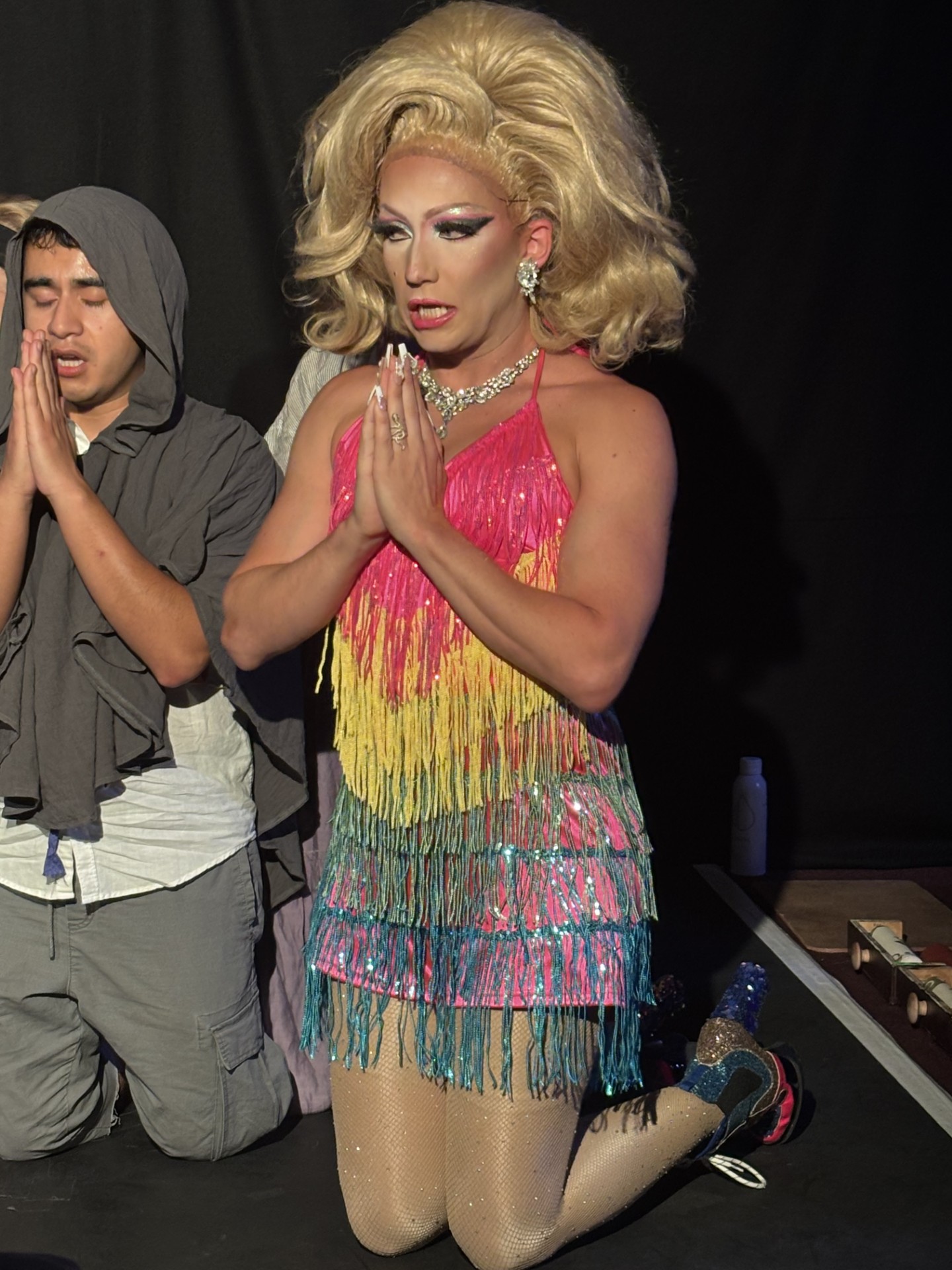
★★★★★There’s something deliciously Fringe about a show that invites you to “shake your a** and dance ’til you (hopefully don’t!) die,” and 1518: The Dancing Plague leans into that promise with full satirical commitment. Based on the very real medieval mass hysteria that had Strasbourg’s citizens dancing themselves into oblivion, Hannah Ponturo’s comedy arrives at theSpaceUK fresh from Los Angeles—armed with a sold‑out reading, a Daredevil Festival pedigree, and the kind of chaotic energy that thrives in late‑night Edinburgh.
At its heart is a queer romance between Katherine and Anna, two peasants whose long‑fractured relationship reignites just as the city collapses around them. It’s a smart dramatic anchor: while clergy and civic authorities scramble to contain the outbreak, the play keeps circling back to the human impulse to connect even when the world is wobbling off its axis. The production promised “uncanny parallels” to our own recent crises, and the show doesn’t shy away from them—Covid echoes, political absurdity, and the familiar spectacle of institutions panicking while ordinary people try to make sense of the mess.
Ponturo’s writing has that LA‑meets‑NYC flavour: punchy, self‑aware, and unafraid of silliness as a delivery system for something sharper. The production, created with Open Variations Theater, fits neatly into their mission of reimagining lesser‑known stories with contemporary bite. You can feel the interdisciplinary New York influence in the way the piece layers satire, history, and outright party vibes into a single 50‑minute burst.
And yes, it is a dance party. The show wants you complicit in the hysteria—laughing at it, recognising it, maybe even feeling the tug of it. The absurdity of people dancing themselves to death becomes a mirror held up to the way we cope with uncertainty now: distraction as survival, movement as denial, rhythm as rebellion.
It’s messy, cheeky, knowingly ridiculous, and unexpectedly tender. Exactly the sort of Fringe show that sneaks up on you: you arrive for the chaos, and leave thinking about the systems that shape how we behave when everything goes sideways.
If you’re looking for a satire with historical weirdness, queer heart, and a healthy disrespect for authority, 1518: The Dancing Plague earns its place on your August shortlist.
Reviewed by Pat Harrington
A Highly Suspect Murder Mystery Knives In — A Clever, Clue‑Packed Whodunnit
★★★★★ A Highly Suspect Murder Mystery: Knives In was great fun. The famous crime novelist Agatha Mystery is found dead at the bottom of the stairs the day before she was due to finish her last novel. It turns out that she was murdered. The world-renowned sleuth Beignet Blank is on the case but needs help from the audience to find out whodunnit. Audience members receive evidence packs to find the guilty party.
Puns and one-liners come thick and fast; some laugh-out-loud, some corny groaners. The names of the four suspects give a bit of the flavour of the outrageous puns, the victim’s nephew, Bennet Blank, Nurse Ophelia Pulse, her publisher, Reed Morebooks and the Reverend Neil Beforechrist. Each one of them has a secret to hide,a potential motive, but which one is the murderer?
The cast really throw themselves into this, hamming it up with great relish. The audience loved it and some highly competitive teams came up with ingenious plot twists worthy of the late Agatha Mystery herself. Some teams got it right. Your reviewer fell for the red herrings.
If you’re looking for a good laugh, first class escapist entertainment and some challenging puzzles, this production should fit the bill for you.
Reviewed by David Kerr
Advert
This Little Thing of Ours: Inside the Musical Mayhem of Fringe’s Mafia Comedy
There’s something irresistible about a show that knows exactly what it is and leans into the chaos with style. This Little Thing of Ours does just that — a gleeful mash‑up of mob mythology, musical theatre swagger and the kind of character work that only comes from creators who genuinely enjoy the world they’re building. Speaking with James and Michael, you get the sense that this project didn’t just arrive fully formed; it grew out of shared obsessions, late‑night ideas, and the kind of friendship where one person says “I want to write a musical” and the other immediately replies, “Right, let’s get started.”
What follows is a conversation that gets right to the heart of the show: the rivalry, the comedy, the family dynamics, the theatrical mischief, and the sheer joy of making big, bold musical theatre out of the mafia canon. Their answers are sharp, funny, and full of the enthusiasm that’s driving this show straight into Fringe folklore.
Michael Mackay is the composer of This Little Thing of Ours, and James Bruce is the writer of the show. Here is the full interview.
Frankie Coglione’s family curse is such a fun hook – when you first started developing the show, what came first: the mafia mythology or the musical comedy angle?
The inception of the story came from Michael. He mentioned in passing that he wanted to write his own musical, and two days later I was on the phone asking to get involved. It was always going to be a musical given Michael’s background, and we both love mafia‑related films and TV shows, so that cemented the initial direction. Once we dove into the writing, comedy came most naturally — the characters were so laughably ego‑driven that we needed to take them down a peg.
The press release hints at a real tug‑of‑war between Frankie and Tony. How did you approach building that rivalry so it feels both dangerous and delightfully theatrical?
Frankie and Tony are both bad guys — Tony is just much worse. Frankie has had a speedrun to the upper tiers of the mafia while Tony has had to grind, scheme and hustle to get where he is. There are a lot of back‑and‑forths between them, culminating in an 80s glam‑rock style duet.
Your Nonna character sounds like a force of nature. What inspired her, and how central is she to the emotional spine of the story?
We wanted Nonna to be the all‑seeing eye in the family business. Nothing gets by her and she’s sharp as a tack. We liked the idea that she had a secret web of informants throughout the crew, reporting every tiny piece of information so she could use it to her advantage. Female characters in mafia shows are often complicit bystanders; we wanted Nonna not just to witness events, but to be the puppet master pulling the strings.
You describe the show as “The Sopranos with full‑scale musical mayhem.” What elements of classic gangster cinema were irresistible to parody or reimagine on stage?
The way characters express themselves — in their words and gestures — in mafia cinema is so captivating and feels prime for parody. We loved the idea of these big macho guys singing about their beef with other members of the “Family.”
The idea that you don’t just whack someone – you give them a closing number – is brilliant. How did you balance the comedy with the stakes of a mob story without tipping too far in either direction?
Alice came up with that line — thanks, Alice. Shows like The Sopranos can have comedic elements in the darkest scenes. We tried to keep the story ticking over without getting too dark, but anything mafia‑related certainly heats up in the second half.
Michael Mackay’s Fringe experience and James Bruce’s BBC background make for an interesting creative pairing. How did that collaboration shape the tone and rhythm of the show?
Our collective experience allowed us to take ideas that worked well and avoid the things that didn’t. We’ve been friends for a long time, so we tend to be on the same page about what we find funny.
Alice Humphries’ previous Fringe success clearly brings strong directing pedigree. What new energy or perspective has she brought to This Little Thing of Ours?
Alice has been the real driving force of the show. She’s brought so much experience that we desperately needed. We met her in February and since then she’s been invaluable in bringing the songs to life.
You’ve assembled a cast of local Scottish talent. What qualities were you looking for to bring this heightened, musical‑gangster world to life? The obvious requirement was that they needed to pull off the accent and sing. We also looked for people with a bit of dark energy about them. I think all of the cast would be quite comfortable playing villains.
The show features a live band of professional musicians. How integral is the live sound to the storytelling, and what does it let you do that a backing track never could?
A live band is essential — it brings the show to life. Backing tracks or playing to a click creates a stale, repetitive atmosphere. Having four musicians playing live and feeding off the audience is much more fun.
Fringe audiences love a late‑night discovery. What do you hope people walk away with after seeing your 22:30 performance – what’s the lasting flavour you want them to carry home?
We hope they ignore the Omertà oath the mafia enforces and tell everyone they know.
Advert