A sharp, grounded Netflix drama, Playmen follows editor Adelina Tattilo as she takes control of a scandal magazine and fights censors, creditors, and bad actors—keeping consent, context, and truth at the centre.
There’s a very specific charge running through MrsPlaymen: that feeling of being inside a newsroom where every headline, phone call, or envelope from the authorities might spell either triumph or disaster. Rather than giving us a single “hero” narrative, the series embraces the logic of the newsroom itself—collective, contested, and combustible. It’s an ensemble piece, and part of its sophistication lies in allowing each character to carry a different facet of Italy’s argument with itself during the 1970s. Moralists, libertines, Fascists, conservatives, feminists, cynics, workers, victims, and opportunists all occupy the same frame, each pulling the story’s moral centre of gravity in a different direction.
This breadth gives Mrs Playmen its richness. Far from being a linear rise-to-power drama, it shows how fragile progress is when surrounded by old systems determined to hold the line.
An ensemble cast shaped by conflict
Carolina Crescentini remains the anchor, playing Adelina Tattilo with that quietly decisive energy of someone who has had to learn her authority the hard way. But the show only works because she is surrounded by a full constellation of characters, each of whom personifies a pressure point of the time.
Francesco Colella’s Saro Balsamo—the husband who appoints her Editor in Chief and then abandons her to avoid legal consequences —represents the vanishing patriarch: all authority in the abstract, none in the moment of need. His storyline cuts straight into the hypocrisy of state “moral guardianship”: the same authorities who eagerly hunt for obscenity in magazines shrug at his domestic abuse. By including him, the show broadens its canvas from editorial battles to the broader culture of male impunity.
Filippo Nigro’s Chartroux, the closeted gay, intellectual (former?) Fascist: a fixer who keeps things functioning, gives the series ballast.
Giuseppe Maggio’s Luigi Poggi, the reckless and ambitious photographer, becomes the exhibition of what happens when creative aspiration slides into exploitation. Francesca Colucci’s Elsa, the young woman betrayed by Poggi’s misuse of her trust, becomes the human core of the show.
But the surrounding ensemble matters just as much:
A feminist critic, Marta Vassalli (portrayed by Elena Radonicich), adds another layer. She is fiercely opposed to Playmen on principle—yet respects Adelina as a woman surviving in a man’s world. Their exchanges are some of the best in the series: tense, challenging, thoughtful. Marta isn’t an antagonist; she’s the moral conscience reminding the viewer that liberation and exploitation often travel in dangerously close company.
This wider cast turns the series into a mosaic—one in which every character represents the Italy Adelina is pushed to navigate.
A world built on pressure
The structure remains the same: we begin in 1975, with Adelina celebrated for reshaping Italy’s conversation, before being yanked back to 1970 to watch her endure the trenches that made that moment possible. But the ensemble deepens the effect. Each secondary character adds their own form of pressure—legal, personal, ideological, or emotional.
Few shows have captured the mechanics of censorship so accurately. Here we see repression not as a dramatic knock on the door but as the dull throb of bureaucracy—seizures, missing shipments, mysterious delays in distribution. What’s powerful is how the ensemble cast mirrors these pressures: each character is another system Adelina must navigate, negotiate with, or resist.
The series also evokes the look and feel of the early to mid‑1970s, the period in which most of the story unfolds exceptionally well. The production nails the era’s visual texture — the cars, the fashion, and the interiors all feel convincingly of their time — from wood‑paneled living rooms and patterned upholstery to period‑correct tailoring, hairstyles and dashboard layouts. Those details do more than decorate the set: they ground the characters and their choices, making the world feel lived‑in and historically specific while quietly amplifying the drama.
Consent as the real battleground
The Poggi–Elsa storyline still sits at the heart of Playmen, but with the expanded cast, the show creates a fuller map of how consent is eroded across the culture.
Chartroux’s struggle with his sexuality adds another dimension, illustrating how the denial of consent (in all its forms—sexual, economic, political) is not isolated but part of a broad pattern of silencing and control.
Adelina’s response is the moral hinge: she insists on context. She refuses to treat women’s bodies as décor or women’s pain as currency. In an industry built on sensation, her commitment to meaning becomes a kind of rebellion. Though at times she falters or mis-steps.
Seven episodes of building—and buying—freedom
The expanded cast makes Adelina’s victories feel earned. She’s not fighting a single antagonist but a culture: the Church, the police, weak men, predatory men, ideological opponents, victims in need of care, and allies who are vulnerable in their own ways.
The effect is cumulative. Each episode broadens the stakes. Each character contributes to the sense that freedom—editorial or personal—is never given; it is constructed, bargained for, and defended daily.
Verdict
MrsPlaymen becomes far more than a period drama. It’s a story about how societies police desire and punish honesty. It’s about who gets to define “public morality” and whose suffering is quietly excluded from that definition. And it’s about the possibility of decency within an indecent system.
The ensemble cast elevates the series: Crescentini leads with quiet steel; Colella embodies the negative partriachal male; Nigro steadies the ship; Maggio exposes the dangers of unchecked ambition; Radonicich’s feminist critic keeps the questions sharp.
Through all of this, the show returns to one principle—Adelina’s principle:
Run the picture. Tell the truth.
In 1970s Italy, that was radical. In many ways, it still is.
House of Guinness is a swaggering, stylish period drama that plunges into the legacy of Ireland’s most iconic brewing dynasty with all the grit, glamour, and generational chaos you’d expect from Peaky Blinders creator Steven Knight. Set in 1868 Dublin and New York, the series opens not with solemn mourning but with a riot: the funeral cortège of Sir Benjamin Guinness is besieged by Fenians hurling bottles and curses, a visceral reminder that the patriarch’s death is as politically charged as it is personally disruptive.
The four Guinness children—each flawed, ambitious, and emotionally combustible—are thrust into the spotlight as the family’s fortune and brewery hang in the balance:
Arthur Guinness (Anthony Boyle) is the eldest, a libertine Londoner dragged back to Dublin with a chip on his shoulder and a taste for excess.
Edward Guinness (Louis Partridge), the youngest, is the brewery’s loyal steward, white-knuckling his way through family dysfunction and public scrutiny.
Anne Plunket née Guinness (Emily Fairn) is the only daughter, married off to a minor aristocrat and navigating the social constraints of her era with quiet defiance.
Benjamin Guinness (Fionn O’Shea) is the overlooked middle child, a sweet-hearted drunk with a gambling problem and a knack for disappearing when things get serious.
The plot pivots on the reading of Sir Benjamin’s will, which awards the brewery and fortune jointly to Arthur and Edward—on the condition that neither can walk away without forfeiting everything to the other. Anne and Ben are written out entirely, sparking a season-long reckoning with power, legacy, and betrayal.
Knight’s signature use of anachronistic music is in full force here, with tracks from The Wolfe Tones, Kneecap, and Fontaines D.C. injecting raw energy and political edge into the 19th-century setting. It’s a technique he famously deployed in Peaky Blinders, and again in SAS: Rogue Heroes, where modern soundscapes underscore historical drama. The show also features Irish-language dialogue, with on-screen translations stamped in bold, a stylistic choice that reinforces cultural authenticity while echoing Knight’s approach in Rogue Heroes.
Visually, House of Guinness is lush and kinetic—rain-slicked cobblestones, candlelit parlours, and the industrial sprawl of the brewery all rendered with cinematic flair. But it’s the emotional stakes and sibling dynamics that drive the drama, as Arthur and Edward clash over vision, values, and the ghosts of their father’s empire.
If Downton Abbey was a slow pour, House of Guinness is a shot of poitín chased with a punch to the gut. It’s Downton Abbey on speed—a riotous blend of family drama, political unrest, and punk-infused period storytelling that leaves you thirsty for more
When Morpheus, the Lord of Dreams, is captured by an occultist seeking power, the world begins to unravel. Without dreams, people fall into eternal sleep or spiral into madness. After decades in captivity, Morpheus escapes and sets out to rebuild his broken realm — the Dreaming — and restore balance between worlds. But the more he tries to reassert control, the more he is forced to reckon with change, memory, and the cost of power.
The Sandman, adapted from Neil Gaiman’s celebrated comic series, isn’t just a fantasy tale. It’s a meditation on how we make sense of life through the stories we tell ourselves — and what happens when those stories break down. At its heart is Morpheus, played with distant intensity by Tom Sturridge. He’s not your typical protagonist. Cold, precise, and seemingly devoid of empathy, Morpheus begins the series focused solely on recovering the tools of his office. But beneath the impassive surface is a god haunted by his own rigidity.
One of the more surprising and affecting parts of the series is the glimpse we get into his past relationships — especially with his former wife, Calliope. Their story is one of love crushed by pride and pain, and though it’s only briefly touched on, it casts a long shadow over Morpheus’s motivations. There’s real regret in the way he looks back — not with sentimentality, but with a deep, unspoken ache. Their estrangement isn’t just tragic; it reveals the emotional cost of Morpheus’s detachment. He can govern dreams, but he can’t easily confront his own.
That emotional distance is mirrored in another storyline — one of the show’s quiet masterpieces — “A Dream of a Thousand Cats.” Told from the point of view of a cat who seeks revenge against humanity, it’s a beautifully drawn fable of uprising and belief. The cats once ruled the earth, we’re told, until humans dreamed it otherwise. Now, one cat tries to gather others to dream a new reality — one where cats reclaim their rightful dominion. The story is simple but pointed: dreams are not idle things. They can shape worlds. It’s both whimsical and chilling, and adds a layer of political charge to the series’ broader themes.
The show’s greatest strength lies in how it handles its metaphysical stakes with emotional intimacy. Morpheus isn’t just restoring a kingdom — he’s learning, slowly and painfully, what it means to be responsible not just for a realm, but for the beings who live within and outside of it. He may begin the series thinking only of order and rules, but by the end, he’s started to see the value of flexibility, compassion, and even forgiveness.
Surrounding him is a cast of cosmic figures and mortals who each test his worldview. Death, warm and grounded, contrasts his chill severity. Desire, ever scheming, forces him to consider the murkier side of power. And Lucifer — played with elegant menace — offers a mirror of pride unchecked by mercy.
The visual style is dark and sumptuous, part gothic horror, part dream logic. From the crumbling halls of the Dreaming to the pale light of an eternal library, each set-piece feels lived-in and mythic without veering into cliché. It looks expensive but never soulless. Every image serves the tone — solemn, sometimes brutal, occasionally tender.
The Sandman is about the struggle to govern a world of stories. It’s about how we live by dreams — of love, freedom, vengeance, salvation — and what happens when those dreams betray us. It asks whether gods can change, whether old rules still serve us, and whether holding on too tightly to a story can do more harm than good.
Morpheus remains, even at the end, an ambiguous figure. He’s not quite a hero. He’s too flawed, too austere. But he is something rarer — a character learning, slowly, what it means to be human. And that, in a show about gods and monsters, is perhaps the most powerful magic of all.
Sirens is a Netflix original drama series that follows Simone (Milly Alcock), a troubled young woman who becomes entangled with Michaela Kell (Julianne Moore), the glamorous but manipulative head of a falcon rescue charity. After a chance encounter, Simone is drawn into Michaela’s rarefied world, where appearances deceive and power is quietly exerted under the guise of care. As Simone begins working at the charity, her sister Devon (Meghann Fahy) grows suspicious, while their estranged father (Bill Camp) forces long-buried family tensions to the surface. Meanwhile, Michaela’s husband Peter (Kevin Bacon) wrestles with his own sense of disillusionment, especially in his fractured relationships with his children from a previous marriage—strained further by Michaela’s cold attitude towards them.
The series unfolds as a slow-burning psychological thriller and character study, exploring themes of control, vulnerability, and emotional inheritance.
Julianne Moore plays Michaela with unsettling charm. On the surface, she is composed, elegant, and philanthropic. But beneath that lies a web of emotional manipulation and covert cruelty. Her falcon rescue charity becomes a metaphor for her life—containing wildness, taming others, and displaying them on her terms.
She is the cold centre of the series. She exudes calm authority and grace, but beneath this surface lies manipulation of the most insidious kind. Moore plays her with unnerving precision, never overplaying but always suggesting something toxic under the polish. Kevin Bacon’s Peter is equally well-drawn—a man too weary to rebel, but too aware to remain comfortable. His guilt over past mistakes, including the breakdown with his children, lingers in every scene he shares with Michaela.
Milly Alcock brings raw vulnerability to Simone, a young woman whose search for direction and stability makes her susceptible to Michaela’s grooming. Her arc is tragic and tense—Simone wants to belong, but at what cost? Her sister Devon, played with sharpness by Meghann Fahy, is more grounded, but no less damaged. Devon’s attitude toward sex is telling: confident yet defensive, shaped by unresolved traumas and emotional neglect. Their father, played with grit and fatigue by Bill Camp, hovers like a storm cloud, reminding us of the toxic legacy both sisters are trying to escape or remake.
Though much of the narrative centres on this dysfunctional triangle of Michaela, Simone, and Peter, minor characters are given careful shading. One in particular, Louis, seems at first peripheral but becomes crucial as alliances shift. His arc speaks to the series’ broader concern with complicity and the moral grey areas people navigate in pursuit of survival or self-preservation.
Sirens succeeds as both class satire and psychological drama. The charity setting provides a fitting backdrop for a show obsessed with image versus intent. The moody soundtrack and precise cinematography echo the show’s themes: cold surfaces, hidden violence. With standout performances from its core cast and sharp, layered writing, Sirens is a compelling examination of emotional power, trauma, and the deceptive appeal of safety.
Here are the Culture Vulture selections on Netflix this October, featuring films that tackle complex social, political, and ethical issues:
Boyz n the Hood (1991)
Available October 1
This gripping drama, directed by John Singleton, follows the lives of three young men growing up in the Crenshaw ghetto of Los Angeles. As they navigate the harsh realities of race, relationships, violence, and limited opportunities, the film offers a searing critique of systemic racism and the cycles of violence in marginalized communities. Singleton’s storytelling highlights the challenges of coming of age in an environment shaped by social inequity.
Elysium (2013)
Available October 1
Neill Blomkamp’s dystopian sci-fi thriller takes place in 2154, where the wealthy elite live in luxury on a man-made space station, while the rest of humanity struggles on a decimated Earth. Matt Damon’s character embarks on a dangerous mission to bring equality to these two polarized worlds. The film raises questions about wealth disparity, class division, and the moral cost of technological advancement, making it a sharp allegory of modern-day inequality.
Jarhead (2005)
Available October 1
Directed by Sam Mendes, Jarhead is a psychological exploration of a U.S. Marine sniper’s experience during the Gulf War. Told from the perspective of a soldier grappling with isolation, boredom, and the disconnect from home, the film offers a critical look at the mental toll of warfare. It dives deep into themes of masculinity, the futility of conflict, and the emotional scars soldiers carry long after the battle ends.
Selma (2014)
Available October 16
Ava DuVernay’s Selma recounts Dr. Martin Luther King Jr.’s historic march from Selma to Montgomery in 1965, a pivotal event in the fight for equal voting rights. The film masterfully depicts the courage and resilience of the Civil Rights Movement, shedding light on the persistent racial injustice in America. With David Oyelowo’s stirring portrayal of Dr. King, Selma is an inspiring and vital look at the struggle for justice, equality, and social change.
Yintah (2024)
Available October 18
This powerful documentary examines the ongoing resistance of the Wet’suwet’en people against the construction of pipelines on their unceded territory. Directed by Brenda Michell, Michael Toledano, and Jennifer Wickham, Yintah centers on the voices and struggles of Indigenous leaders like Freda and Molly Wickham, exploring themes of environmental activism, colonialism, and Indigenous sovereignty. The film raises critical ethical questions about land rights and the fight to protect sacred spaces.
Be sure to check out these thought-provoking films on Netflix this October!
Counter Culture jumped at the chance to interview comedian and writer Katie Folger. Katie was performing her one woman show, Getting in Bed with the Pizza Man at the 2024 Edinburgh Fringe.
Katie Folger
We talked to her about the show and her future plans.
What inspired you to create Getting in Bed with the Pizza Man?
Well, a number of things! I think the show is a product of an amalgamation of influences on my life over the years. I think a primary one that I like to talk about is when I was 20 and had the fortune of essentially crossing paths with Robert Redford, if you don’t know. At my university and through a very fortunate series of events, he became my mentor for about six or seven years when I was quite young. And Bob actually was, we were sitting across from each other like this at a dinner. And my first dinner I had with him and he was really the driving force encouraging me to write my own work.
Yeah, because I was. I was young. I was you know, charismatic girl, which often, you know, if you have a knack for anything artistic or especially for me and for performance, be an actor, be an actor. And I was, but I was always interested in writing, even as a child. And and he was really like the first major person in my life, obviously, by someone so esteemed and brilliant. And he told me. I know you can act. I don’t even think you act. You’re a genuine person. What I want to hear is your voice. And so that really was the major first part in my desire to make my own work. Then my program at school was also a heavy influence of new work. That was the focus of the program. And so there was like a whole, it was called the New Work Festival. And so it was so special, the university would dump a ton of resources into it. So I was also a part of so many new plays.
And yeah, that was like those were kind of the seeds. And then this I’ve been writing behind the scenes are really my whole life. I have stacks of journals just full of terrible writing. And then eventually, you know, sometimes you hit on something and over the years, of course,
if you write everyday, which I do just for me, you get better. And so I wrote this story. It was it would. I’m very much inspired by a trip that I had taken to Denver, actually. Three summers, or yeah, three summers ago now. It was right during the pandemic and 2021, ’cause the vaccines had just come out, so people were seeing travel again. And I had a really, I think when I first started performing this play, I was a little bit more cheeky about whether it was true or not true. And I think now I’m sort of like later in the life cycle of the show. So like, it is very much based upon a series of events that happened that were quite strange.
And all of the, you know, the end of the show with the pizza ,all of that is like happened. And so when I started telling this story to friends, they were like, You should do something with this.
That was really odd. And so, yeah, I’ve always, as a writer, been most inspired by telling my own stories. I’m not as much of like a, like a fantasy writer or even like, I would say my preferred genre is memoir-style fiction. Just because I would say the main reason for that is because again, a primary influence for my work is sharing my, my uninhibited opinion and perspective from my, from a, from a female perspective. And and within as much detail as possible. And so when I wrote this story, that’s all I was trying to do. I wasn’t really writing a comedy. I just wrote a story. And then when I read it to people for the first time in November 2021, people laughed the wholetime. That was like, interesting. Yeah. So those are kind of some of some of the seeds of influence.
And then I’ve also, I got really excited about solo shows about three or four years ago. Just as a poem, I felt like it seemed scary to me. And I, as a human and as an artist, have always been interested in that, which kind of scared me. Yes. And so, yeah, I wrote this in the short story. I had a best friend read it and she was like, Katie, you’ve always wanted to do a one-woman show. I feel like this could work. And so that’s kind of how it all started.
One of the aspects that I found very impressive was, you know, the physicality of your performance.
Thank you. Yeah.
Do you have some kind of dance background?
Yeah. And what’s funny is, so obviously, as we saw, this show had no tech, no sounds, no lights. The full version of the show, which I think I had mentioned that night, has all of the bells and whistles. Yes. Ihave had this microphone version of the show built for a while just so we could easily travel the show. This wa sthe first time.
Because I had received some feedback. Everybody was like, why don’t you? Because the physicality was not in this version of the show. And I was like, well, if I’m coming to Fringe, it’s one of the people, a lot of people say it’s one of the most enjoyable parts of the show and like surprising. So I built it. I built it into the show, you know, just those shitty theatre chairs on the stage. Like that was a lastminute plan, but.
Yeah, I have a background in dance. I started. I was a dancer well before I was an actor. I started dancing at the age of two and I was primarily a dancer. I mean we were I was in four to five hours of dance after school every day for 14 years. I was on the dance scene.
You can tell.
Thank you. But and then but it’s kept up with me because I’m also so I transitioned from dance. Well, I started acting that kind of took my focus and. But I’ve been doing yoga for like very like I’ve been practicing it very dedicatedly for now. How old? Yeah, 16years. So since I quit dancing, I transitioned onto yoga. And so, yeah, you can kind of see all of those influences in in the show.
I do yoga myself. Oh, nice.
I’ve done it for years. I keep trying it. So it keeps me good.
Yeah. Yeah, it’s very good. It is good.
So, you know, you talk about sort of personal relationships and sexual relationships and it kind of, I suppose there’s a, kind of, a theme of identity there. You know, there were a lot of young women in the audience when I went there.
There were.
What do you think that they draw from the stories?
I think for me, as a young woman, like I said in the show, I think kind of like a main thesis statement is that as a woman, you’re never taught that sexuality or sex is more real, especially in like a more Western conservative mindset, patriarchal society. I think that’s the main part.
I think so many young women in this society and and there’s so many French shows that in their own ways actually talk about these things, which I think only underscores the universal nature of of You know, this theme of of the fact that obviously we’re in a patriarchal society and that, you know, women are objects to be desired. And so if you’re desired, then yes, OK, I show up in this thing and I ain’t getting you what you want. But I think with my show,
I I say this a lot when I talk to people about the show. I have a great friend who says the art that we write is the medicine that we need. And so for me, as you can see, like I was just, I was processing and for years processing these like. these grander themes and trying to flip the script of my own life and and kind of take the reins of my experience. Because really for so many years I was just kind of floating like a feather, just like the character in the show, you know, and and trying to figure out what sexuality and relationships meant to me. And it’s funny, like I feel that This show really helped me process a lot of those things.
And And I really, since I wrote the show, my life has changed quite a bit. And now, you know, I’m in I’m in a really happy relationship. And it’s like now it’s interesting because, like, I feel like the first iteration of this was what are my physical needs? What do I really feel like physically? And now it’s what do I think emotionally? What do I think about marriage? What I think about all of these expectations, what I am to be a woman, emotionally.
So anyway, like it’s constant, constant learning.
Do you journal?
Oh, yes. Yeah. Yeah, every day, pretty much.
I mean, My opinion is that most people aren’t too reflective. about what’s going on in their lives. They’re so busy living lives.
Yeah.
That they don’t have time to pause and reflect on it.
Sure, sure
And I mean, it did come through very strongly that you had taken out time to sort of think about relationships.
Yeah. I came across very strongly. Almost too much time.
And, you know, obviously what you’ve said there, there is a serious theme toit, but your show is also very, very entertaining.
Thank you.
It’s also to a certain extent what an old fashioned word we would use is “racy”. I think that is the word. Yeah, I’d use. Yeah. How do you balance all that and get the balance right in that?
Well, I think a huge piece of finding that kind of like that like. walking that tightrope of, you know, going deep into the core with it, and also staying light is with my collaborator and director of the show, Matrix Kilgore. Matrix really helped shape the really–
Second opinion.
Yeah, so the musicality of the show, and, you know, there are these– They’re honestly my favourite moments, and it’s when when you– like, people laugh when You like totally flip what you were doing. That gets a laugh. So, you know, my favourite moments sometimes when I’m performing are when I’m hanging out in a more serious space with the audience and I can feel like, you know, we’re all, they’re really watching me and I can see everybody’s eyes and then I cut it into a completely different tone and then everybody laughs. That’s really fun. But I think, you know, I think that’s I I think. You know, there is that craft to it. But I think for me as an artist, that is my sweet spot. It’s I’m not just, I’m not a surface level comedian. I’m not like ha ha jokes, jokes, jokes. I’m also not just sort of. I mean, I am funny, but I’m also, I think I’m only funny because it’s just kind of. It’s observational humour.
Yes. Yeah. I think you send that in your review, which I really appreciate it because it is. That’s what I and it’s from your own experience. And obviously if people, I suppose everything’s had certain experiences in their life, but similar if not the same. So, you know, people can relate to it as well.
Exactly. And is this yourfirst time in Edinburgh?
Yes. . Oh, my gosh. I I absolutely love this festival. Yeah, I was. I’ve been kind of saying, I feel like I came on a blind date with friends. Like, I’ve never been. I didn’t know what to expect. I just booked things ahead of time and had people help me. Didn’t even really do that much research because I didn’t have time because I’ve been touring the show in the States all year and in order to even have the funds to come and do this. And there are so many times, ’cause it’s so expensive to come do this. Yes, it’s things. And it continues to be more expensive and little things come up. And there were a lot of times where I tried to talk myself out of doing this, ’cause even before getting here, it’s been a really challenging year, a really rewarding and like successful year for me, but the most challenging alongside that, those wins and like the recognition, it’s been so hard.
To, like, pull this stuff off independently. And so, yeah, there were a lot of times where I wanted to bail on fringe for those tired. Yes. And because I’m also producing the show, I’ve had, of course, help. But I am the primary force that is driving this. It’s not just creative. I’m I’m producing.
And yes. And I’m so glad that I didn’tbail. And I can think, I can completely attribute. the continuation of this to my loved ones and my team. Yeah. My publicist in Austin, my director, my boyfriend, my family, my best friend.
You got them all working.
Yeah, well, they were all like, No, like, you have to go do this. And And my manager too. And so I’m I’m in love with stuff. Like me and my, I have like seven really close friends here and also my boyfriend and he and I just feel like this is one of the most special things we’ve ever done and it’s so inspiring and healing.
Do you think you’d come back next year?
I’m, I’m, yeah, like I’m. I would absolutely consider doing this again. I I think it’s definitely in my wheelhouse. I can also see the benefit of like continuing to come back. Yeah. I think I, now that I’ve done it once, I can, I now know what not to do. Yes. And what to do. I did not know what to do. Like, I made some big mistakes in coming here, namely in where I put my money and where to invest resources that I worked really hard to have and I put them in some of not the best places. So, but yeah, regardless, I think, like, I came here and I’ve achieved what I set out to do. pretty much after the opening night, so I’ve just been having fun ever since.
So, I mean, if you’ve if you’re a writer and a performer, you’ve got a lot of choices about what you might do next.
Yeah.
What are your plans going forward?
Yeah, so I think… I mean, it’s sort of maybe cliché at this point, but a major reason I would even, like Ed Fringe was even on my radar was the Phoebe Waller-Bridge Fleabag. My show is much different than Fleabag. I mean, there are adjacent themes, but it’s really like, I call it the Fleabag model of coming and doing work here, getting some eyes on it, getting some recognition, and taking it to rank a series. And I’ve had a series concepts that I’ve been ideating One for several years and I have a bunch of notes on my iPhone of like, yeah, all of these different episode ideas. It’s a comedy. It’s yeah not quite like maybe I could have an episode that in my it’s a manuscript, but it’s more so the tone and the type of character. And who would she do that with? Yeah, yeah, I so I’m deeply embedded in the often film theme I have been for. I guess, 14 years now. And I have a– I’m such a heart for grassroots development. I think that’s very much within the ethos of the community, largely, I would say, inspired by Richard Linklater, if you’re familiar with him, and all of the people around him. I kind of wrote– those people are kind of like my mentors. Umm I kind of rose up in the scene, like Rank, Linklater, and some other filmmaker. that are in his generation, they were kind of the people that grew me.
And so I’m really interested in kind of carrying the torch of making within the community, but then also like bridging the community into higher earning tiers and also more, more eyes, larger audiences. Austin is very much an indie film scene. Yes. So yeah, I have like I really wish and have fantasized about creating a project that activates and engages my community while also calling in like the dream would be to have a bunch of people within my community cast or working on it, but then also getting key. Yeah, providing work to the community and so on. But then a few higher profile comedians who, and I’ve even been hereat shows this week and watching people, and I’ve been like, oh, that would be a good person. Oh, you’d be a good person to have like write with me or to have in the show.
Yeah. But I have these amazing managers now that I got through the show, and I feel like they came on to my team for one of the main reasons that we can develop this show and sell it, hopefully by next year, and like the actual show,
Would you try Netflix?
Yeah, yeah, like a streaming service would be the goal. Yeah. Yeah
Because they do a lot of comedy.
Yes. And I and I want this one. I I obviously would love to be in it. I want it to be more so about like a community of friends, the actual show. So more than one storyline. Yeah. Iwant it to be like a group of people.
Yeah. Yeah And. What’s the kind of, how would you say the audience have reacted to everything?
You know, I always kind of maybe this is a bit self-deprecating. I’m always like, no one’s ever going to come out to me and tell me they don’t like it.
I know people who would.
Oh, really? OK, good. I will say from my perspective, I’ve been observing my audiences and everybody’s really engaged and leaning in. Nobody’s dragging over their phones. My boyfriend was standing outside of the theatre, like he didn’t go watch the show that night and he was watching people come out and he was like nervous ’cause he was like, and he said that they all were saying how phenomenal and amazing the show was.
Yeah, yeah Thank you very much for this interview. It’s much appreciated.
The Fall of the House of Usher is an American gothic horror drama television miniseries created by Mike Flanagan, released on Netflix on October 12, 2023. This atmospheric and visually striking series consists of eight episodes, each carefully crafted to weave a dark and intricate narrative inspired by the works of Edgar Allan Poe.
Visual and Atmospheric Impact
The series excels in its visual storytelling, using a palette of dark, moody colors to create a sense of foreboding and unease. The production design intricately details the Usher family’s deteriorating mansion, symbolizing the decay and corruption that pervades their lives. Cinematography employs shadowy lighting and dramatic contrasts to enhance the gothic horror aesthetic, making every scene a visual feast of dread and anticipation.
Contemporary Societal Issues and Technological Advancements
Set between 1953 and 2023, The Fall of the House of Usher explores contemporary societal issues such as corporate corruption, the opioid crisis, and the ethical boundaries of technological advancements. Roderick Usher, as the CEO of Fortunato Pharmaceuticals, embodies the unchecked greed and moral decay prevalent in modern-day corporations. The series reflects on the real-world impact of pharmaceutical companies, highlighting how their pursuit of profit often leads to devastating consequences for society.
Complex Characters and Moral Dilemmas
Roderick Usher (Bruce Greenwood) is a deeply flawed protagonist, whose rise to power is marked by ethical compromises and ruthless ambition. His character arc is a tragic exploration of how the lust for power and control can lead to one’s downfall. His sister, Madeline Usher (Mary McDonnell), the COO of Fortunato Pharmaceuticals, is equally complex, depicted as a genius whose intellect is both her greatest asset and her greatest curse. Their dynamic relationship is fraught with tension and buried secrets, adding layers to their characters.
Verna (Carla Gugino), a mysterious and supernatural entity, adds a chilling dimension to the series. Her enigmatic presence and shape-shifting abilities—most notably into a raven—embody themes of death and the unknown. Verna’s interactions with the Usher family reveal deeper truths about their past and their inevitable fate, making her a pivotal character whose motives and origins are shrouded in mystery. Her portrayal is inspired by Poe’s “The Raven,” and she serves as a constant reminder of the consequences of the Ushers’ actions.
Arthur Gordon Pym (Mark Hamill), the family’s lawyer, is another fascinating character. Known as the “Pym Reaper,” he is the fixer who ensures the family’s dark secrets remain buried. His loyalty to the Ushers is unwavering, driven by a complex mixture of gratitude, fear, and perhaps a touch of his own moral ambiguity. Pym’s backstory, including his harrowing experiences during the Transglobe Expedition, adds depth to his character, revealing how his encounters with cruelty and the supernatural have shaped his worldview.
Integration of Social Issues
The series seamlessly integrates contemporary social issues into its storyline, adding layers of relevance and critique. Examples include:
Pharmaceutical Corruption: Roderick Usher, as the CEO of Fortunato Pharmaceuticals, embodies the greed and ethical failings of modern corporate America. The series addresses the opioid crisis, highlighting how pharmaceutical companies prioritize profit over human lives. A powerful scene depicts a press conference where Roderick deceptively assures the public of the safety of a new painkiller, while behind the scenes, victims of the drug’s side effects suffer in silence.
Technological Surveillance: The Usher family’s use of advanced technology to monitor and control their environment reflects current concerns about privacy and surveillance. This element of the plot critiques the invasive nature of modern technology. For example, Madeline’s office is equipped with state-of-the-art surveillance equipment, allowing her to keep tabs on employees and even family members, showcasing the pervasive and intrusive power of technology.
Reflection on Human Nature and Consequences
While the series does not present a straightforward moral lesson, it delves into themes of obsession, corruption, and the blurred lines between reality and madness. Roderick Usher’s relentless pursuit of power and wealth serves as a cautionary tale about the destructive nature of obsession. The series also explores how family secrets and past sins inevitably surface, leading to tragic outcomes.
Characters in the series frequently grapple with their sanity as they confront supernatural occurrences and hidden family truths. This interplay between the psychological and the supernatural challenges viewers to question what is real and what is imagined, creating a rich tapestry of horror and intrigue.
Conclusion
The Fall of the House of Usher is a masterful blend of gothic horror and contemporary drama, enriched by complex characters and moral dilemmas. The series not only pays homage to Edgar Allan Poe’s literary legacy but also reflects on modern societal issues and the timeless consequences of human actions. With its atmospheric visuals, intricate storytelling, and deep thematic exploration, the series leaves a lasting impact on its audience, inviting them to reflect on the dark corners of the human soul and the inevitable repercussions of unchecked ambition.
Welcome to Culture Vulture, your guide to the week’s entertainment from an alternative standpoint. Selections and writing is by Pat Harrington and music is by Tim Bragg. Highlights this week include: Tigers On The Rise on Disney+ – I for one can’t resist watching these magnificent creatures, who are making a comeback! Magnificent in a different way is Jane Fonda who stars in the spoof Western, Cat Ballou, on Film4, and a film of the play GOOD With David Tennant.
Saturday 20th April 2024
Terminator: Dark Fate (2019) 9pm C4
“Terminator: Dark Fate” breathes fresh life into the iconic franchise, serving as a riveting sequel to the beloved “Terminator 2: Judgment Day” while boldly discarding the convoluted narratives of its predecessors. Directed by Tim Miller, this 2019 American science fiction action film offers a relentless adrenaline rush from start to finish.
The plot follows Dani Ramos (Natalia Reyes), a young Mexican worker who finds herself targeted by a formidable terminator from the future, the REV-9 (Gabriel Luna). In her desperate struggle for survival, she is aided by Grace (Mackenzie Davis), an enhanced human soldier from the future. Together, they embark on a harrowing journey, unexpectedly joined by the iconic Sarah Connor (Linda Hamilton), who brings her own brand of badassery to the fight against the machines.
What truly sets “Dark Fate” apart is its stellar cast. Linda Hamilton reprises her role as Sarah Connor with unparalleled intensity, reminding audiences why she’s an action cinema icon. Arnold Schwarzenegger returns as the T-800, injecting the film with his signature blend of humor and gravitas. Mackenzie Davis shines as Grace, portraying her character’s vulnerability and strength with equal conviction, while Natalia Reyes delivers a compelling performance as the resilient Dani Ramos.
The action sequences are nothing short of spectacular, with breathtaking visuals and meticulously choreographed fight scenes that keep viewers on the edge of their seats. From high-octane car chases to intense hand-to-hand combat, the film delivers non-stop thrills while seamlessly blending practical effects with cutting-edge CGI.
But “Dark Fate” isn’t just about pulse-pounding action; it also explores themes of fate, sacrifice, and the resilience of the human spirit. Amidst the chaos of the future war against the machines, the characters grapple with their own mortality and the choices that define their humanity.
Furthermore, the film successfully revitalizes the franchise by eschewing the convoluted timelines of its predecessors, offering a streamlined narrative that stays true to the spirit of the original films while forging its own path forward.
“Terminator: Dark Fate” is a triumphant return to form for the franchise, delivering a thrilling cinematic experience that will leave audiences clamoring for more. With its powerhouse performances, breathtaking action, and thought-provoking themes, it stands as a worthy successor to the iconic “Terminator” films of the past.
Sunday 21st Of April 2024
Seven Years In Tibet (1997) 1.25pm GREAT!movies
“Seven Years in Tibet” is a poignant cinematic journey that transcends its narrative confines to delve into profound social and political themes. Directed by Jean-Jacques Annaud and released in 1997, the film offers a mesmerizing portrayal of the real-life experiences of Austrian mountaineer Heinrich Harrer during his seven-year sojourn in Tibet.
“Seven Years in Tibet” is a tale of cultural collision and awakening. Harrer, played masterfully by Brad Pitt, undergoes a transformative journey as he becomes acquainted with the rich tapestry of Tibetan culture and spirituality. Through his interactions with the young Dalai Lama, beautifully portrayed by Jamyang Jamtsho Wangchuk, Harrer learns valuable lessons about compassion, humility, and the interconnectedness of all beings.
The film’s exploration of colonialism and imperialism adds layers of depth to its narrative. Set against the backdrop of World War II and the Chinese invasion of Tibet, “Seven Years in Tibet” exposes the destructive impact of colonial powers on indigenous cultures. The contrast between the austere beauty of the Tibetan landscape and the encroaching influence of Western ideologies serves as a poignant commentary on the clash between tradition and modernity.
Moreover, the film raises important questions about identity and belonging. As Harrer immerses himself in Tibetan society, he grapples with his own sense of self and confronts the limitations of his worldview. His friendship with the Dalai Lama becomes a catalyst for personal growth, challenging him to reevaluate his values and priorities.
“Seven Years in Tibet” also offers a timely meditation on the nature of freedom and resistance. As Tibet faces the specter of Chinese occupation, the film highlights the resilience of the Tibetan people in the face of oppression. Through acts of defiance and cultural preservation, they strive to safeguard their heritage and way of life.
Additionally, the film sheds light on the plight of refugees and the human cost of political upheaval. Harrer’s own journey from privileged explorer to displaced person underscores the precariousness of existence in a world torn apart by conflict and displacement.
“Seven Years in Tibet” is a cinematic masterpiece that resonates on multiple levels. Its exploration of social and political themes offers valuable insights into the human condition, while its stunning visuals and heartfelt performances captivate audiences. As a testament to the enduring power of resilience, compassion, and cultural exchange, it stands as a timeless classic in the annals of cinema.
GOOD With David Tennant 10pm BBC4
The narrative centers around Professor John Halder, a seemingly virtuous and intelligent German academic. Set against the backdrop of the tumultuous Second World War, Halder finds himself ensnared in a movement with unimaginable consequences. The play probes into themes of morality, survival, and the choices individuals confront amidst adversity.
“GOOD” was captured live on stage at the Harold Pinter Theatre in London during its sold-out stint in the West End.
In addition to David Tennant, the ensemble cast features Elliot Levey, known for his role in “Coriolanus,” and Sharon Small from “The Bay.”
The production delves into the complexities of defining goodness and how circumstances can reshape our understanding of morality.
It promises to be a profound theatrical experience that leaves a lasting impression.
A Hidden Life (2019) 12.50am C4
“A Hidden Life” is a cinematic masterpiece that transcends the boundaries of traditional storytelling to deliver a profoundly moving and thought-provoking experience. Directed by the visionary Terrence Malick and released in 2019, the film offers a haunting portrayal of the true story of Franz Jägerstätter, an Austrian farmer who refused to fight for the Nazis during World War II.
“A Hidden Life” is a meditation on the power of conscience and the courage to stand firm in the face of tyranny. As Franz, portrayed with raw authenticity by August Diehl, grapples with the moral implications of his refusal to pledge allegiance to Hitler’s regime, the film invites audiences to contemplate the nature of moral integrity and the cost of dissent.
The film’s visual splendour is matched only by its emotional depth, with Terrence Malick’s signature aesthetic lending a dreamlike quality to the proceedings. From the sweeping vistas of the Austrian countryside to the intimate moments of quiet contemplation, every frame is imbued with a sense of poetic beauty that lingers in the mind long after the credits roll.
But “A Hidden Life” is more than just a visual feast; it is a searing indictment of the corrosive effects of conformity and complacency. As Franz faces ostracism and persecution for his refusal to compromise his principles, the film exposes the insidious nature of authoritarianism and the dangers of moral relativism.
Moreover, “A Hidden Life” resonates with timely relevance in its exploration of the role of faith and spirituality in times of adversity. Franz’s unwavering commitment to his beliefs, even in the face of overwhelming pressure to capitulate, serves as a powerful testament to the enduring power of hope and resilience.
The supporting cast, including Valerie Pachner as Franz’s steadfast wife, Franziska, and Matthias Schoenaerts as his loyal friend, add layers of complexity to the narrative, breathing life into the characters with nuance and sensitivity.
“A Hidden Life” is a cinematic tour de force that defies easy categorization. As a poignant exploration of the human spirit and a stirring tribute to the unsung heroes of history, it stands as a testament to the power of art to illuminate the darkest corners of the human experience. With its arresting imagery, haunting score, and powerful performances, it is a film that demands to be seen and savoured.
Monday 22nd of April 2024
The Lavender Hill Mob (1951) 2.25pm Film4
“The Lavender Hill Mob,” a classic British comedy released in 1951, may appear at first glance to be a light-hearted caper film, but beneath its comedic surface lies a subtle commentary on social and political themes of the time.
Set in post-World War II London, the film follows the exploits of Henry Holland (played by Alec Guinness), a mild-mannered bank clerk who orchestrates an ingenious plan to steal a fortune in gold bullion. Alongside his motley crew of misfits, including the lovably eccentric Pendlebury (played by Stanley Holloway), Holland sets out to execute the perfect heist.
At its core, “The Lavender Hill Mob” reflects the societal shifts taking place in post-war Britain. The film captures the mood of a nation emerging from the shadow of conflict, grappling with issues of identity, class, and the changing dynamics of power. Henry Holland, disillusioned with his mundane existence as a lowly clerk, represents the aspirations of the working class to break free from the constraints of social hierarchy and achieve a better life.
The film’s portrayal of authority figures, such as the bumbling police inspector played by Sid James, offers a playful critique of bureaucracy and the ineffectiveness of established institutions. In a post-war era marked by a growing disillusionment with traditional authority, “The Lavender Hill Mob” taps into a desire for rebellion and subversion.
Furthermore, the film explores themes of morality and justice in a world where the line between right and wrong is often blurred. As Holland and his cohorts navigate the moral ambiguity of their actions, the film invites audiences to question the nature of crime and punishment, challenging conventional notions of heroism and villainy.
Despite its light-hearted tone, “The Lavender Hill Mob” does not shy away from addressing the harsh realities of life in post-war Britain. The backdrop of bombed-out buildings and rationing serves as a reminder of the hardships endured by ordinary citizens in the aftermath of the war, adding depth and poignancy to the film’s comedic escapades.
“The Lavender Hill Mob” is more than just a witty comedy; it is a subtle exploration of social and political themes that resonate far beyond its time. Through its clever satire and endearing characters, the film offers a window into the hopes, fears, and aspirations of a nation in transition, making it a timeless classic of British cinema.
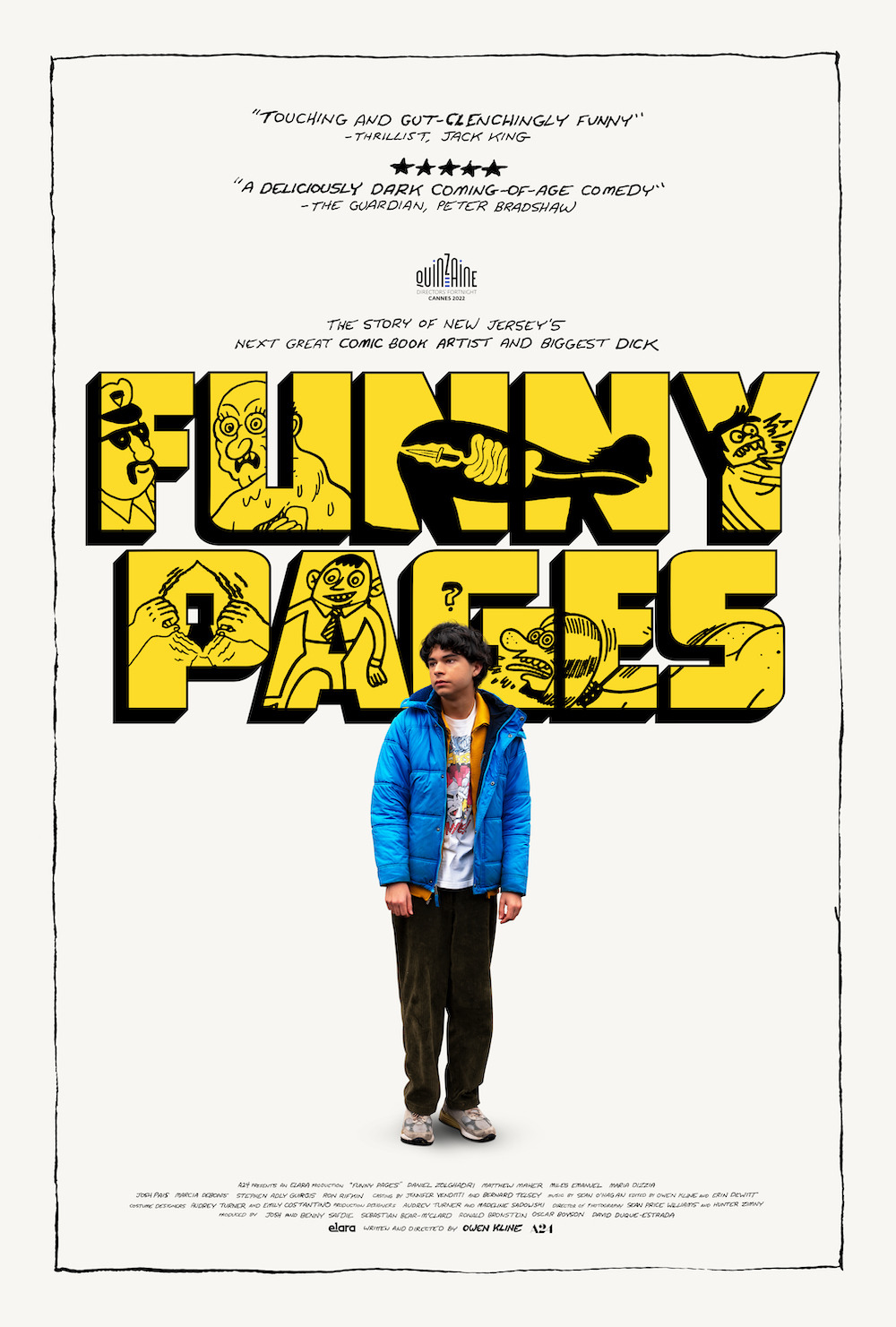
Funny Pages (2022) 10.50pm
“Funny Pages,” released in 2022, presents itself as a refreshing addition to the realm of comedy films, but beneath its humour lies a poignant exploration of contemporary social themes. Directed by auteur filmmaker Ava Rodriguez, this cinematic gem cleverly weaves together laughter and introspection, inviting audiences to reflect on the complexities of modern society.
Set in a bustling metropolis, “Funny Pages” follows the lives of a diverse group of individuals, each navigating their own challenges and aspirations. At the heart of the narrative is a struggling stand-up comedian, portrayed with impeccable comedic timing by rising star Maya Patel. As Maya grapples with the pressures of making it in the competitive world of comedy, the film offers a candid glimpse into the highs and lows of pursuing one’s dreams in an unforgiving industry.
One of the film’s central social themes revolves around the power of humour as a tool for both connection and catharsis. Through Maya’s comedic routines and interactions with fellow comedians, “Funny Pages” explores the transformative potential of laughter in bridging cultural divides and confronting uncomfortable truths. Whether it’s tackling issues of identity, politics, or relationships, the film demonstrates how humour can serve as a vehicle for social commentary and personal expression.
Moreover, “Funny Pages” delves into the complexities of human relationships in an increasingly interconnected world. From the bonds forged between Maya and her fellow comedians to the challenges faced by a young couple navigating the pitfalls of modern romance, the film offers a nuanced exploration of love, friendship, and belonging. In doing so, it highlights the universal struggles and triumphs that unite us all, regardless of background or circumstance.
At its core, “Funny Pages” is a celebration of resilience and the power of laughter to overcome adversity. As Maya and her friends navigate the ups and downs of life, the film reminds viewers of the importance of finding joy and humour in even the darkest of times. In an era marked by uncertainty and division, “Funny Pages” serves as a beacon of hope, offering a gentle reminder that laughter has the power to heal, unite, and uplift us all.
“Funny Pages” is a delightful comedy that transcends its genre to deliver a profound exploration of contemporary social themes. With its witty dialogue, relatable characters, and heartfelt moments, the film leaves a lasting impression, reminding audiences of the transformative power of humour in an ever-changing world.
Tuesday 23rd of April 2024
Cat Ballou (1965) 4.45pm FIlm4
“Cat Ballou” (1965) is a Western comedy that spins a tale of revenge and redemption, all while enchanting audiences with its charismatic characters, sharp humour, and infectious musical numbers. Set in the Wild West, the film follows the story of Cat Ballou (played by Jane Fonda), a spirited young woman determined to avenge her father’s murder.
As Cat embarks on her quest for justice, Jane Fonda’s portrayal radiates a compelling blend of strength and allure, drawing viewers deeper into the film’s adventurous world. Her character’s journey is marked by moments of wit, charm, and occasional vulnerability, making her a captivating protagonist from start to finish.
In addition to Fonda’s captivating performance, “Cat Ballou” delights audiences with its memorable musical score. With catchy tunes performed by Nat King Cole and Stubby Kaye, the film seamlessly weaves music into its narrative, infusing the story with energy and rhythm.
Directed by Elliot Silverstein, “Cat Ballou” skilfully combines elements of Western action with comedic flair and toe-tapping music. Its plot, cantered on Cat’s quest for vengeance, unfolds against the backdrop of the untamed frontier, creating a vibrant and immersive cinematic experience.
In summary, “Cat Ballou” is a timeless classic that blends humor, action, and music with the tale of a determined woman seeking retribution. With Jane Fonda’s magnetic performance, a memorable soundtrack, and a captivating plot, it remains a beloved favorite for fans of Westerns and comedy alike.
Glitter: The Popstar Paedophile 9pm ITV1
As I considered “Glitter: The Popstar Paedophile,” a wave of discomfort washed over me, realizing how many celebrities from my own childhood have harboured dark secrets. This feature-length documentary offers a deep dive into the disturbing double life of Gary Glitter, also known as Paul Gadd, once hailed as an iconic performer during his prime but later exposed as a predatory child abuser.
The film presents a comprehensive overview of Gary Glitter’s life, shedding light on how he evaded justice for decades, enabling him to continue his heinous offenses both domestically and abroad. Through a meticulous compilation of historical victim testimonies, archival material, and interviews with industry insiders, the documentary exposes how Glitter’s charismatic onstage persona masked his predatory behaviour offstage, allowing him to escape scrutiny for far too long.
One of the most unsettling aspects revealed is Glitter’s ability to maintain his career and evade accountability, even after being criminally convicted. The film provocatively questions society’s response to such individuals, especially considering Glitter’s music being featured in major productions like “The Joker” post-conviction, raising ethical quandaries about separating the art from the artist.
The documentary features previously unheard voices, including his defence lawyer in Vietnam, a former Minister involved in his deportation from Cambodia, and a lawyer representing one of his victims, offering fresh insights into the legal battles surrounding Glitter’s crimes.
The narrative meticulously details Glitter’s legal battles, including his arrest in 1997 for possessing child pornography, subsequent flight to Southeast Asia, and eventual conviction in Vietnam for sexual assaults on minors. His return to the UK under Operation Yewtree in 2012, amidst the Jimmy Savile scandal, led to further convictions in 2015, including attempted rape and indecent assault.
“Glitter: The Popstar Paedophile” underscores the urgency of addressing historical sexual abuse and altering societal attitudes toward such crimes. It exposes the painful truth behind the glittering facade of a once-beloved entertainer, leaving a chilling reminder of the darkness that can lurk beneath fame and acclaim.
Wednesday 24th of April 2024
Kind Hearts And Coronets (1949) 11am Film4
“Kind Hearts and Coronets” (1949) is a masterful British black comedy that not only entertains with its clever humour and intricate plot but also offers a sharp commentary on social class and privilege. Directed by Robert Hamer, this film remains a classic for its satirical exploration of the British aristocracy and its portrayal of one man’s ambitious quest for social advancement.
Set in Edwardian England, the film follows the story of Louis Mazzini (played by Dennis Price), a charming but impoverished young man who discovers he is a distant relative of the noble D’Ascoyne family. Determined to rise above his station, Louis sets out on a mission to eliminate the eight relatives who stand between him and the family title, all of whom are played by Alec Guinness in a tour-de-force performance.
At its core, “Kind Hearts and Coronets” delves into themes of class, privilege, and social mobility. Through Louis’s calculated and often darkly humorous methods of dispatching his relatives, the film exposes the absurdity and hypocrisy of the aristocratic hierarchy. Each murder serves as a biting commentary on the arbitrary nature of social status and the lengths to which individuals will go to secure their place in society.
Despite its macabre premise, the film maintains a light-hearted tone, thanks in part to its witty dialogue and charming performances. Dennis Price brings depth to the character of Louis, portraying him as a complex anti-hero whose ambition is tempered by moments of introspection and moral conflict. Meanwhile, Alec Guinness delivers a virtuoso performance, seamlessly inhabiting each distinct member of the D’Ascoyne family with comedic flair.
“Kind Hearts and Coronets” is not merely a tale of murder and intrigue but a clever satire that holds a mirror to the societal norms of its time. Through its exploration of class dynamics and the pursuit of status, the film remains relevant as a commentary on the enduring complexities of social hierarchy and the lengths individuals will go to in pursuit of their ambitions. With its timeless humour and incisive social commentary, “Kind Hearts and Coronets” stands as a classic of British cinema.
Thursday 25 April 2024
An Affair To Remember (1957) 2.20pm Film4
“An Affair to Remember” (1957) is a timeless romantic drama that continues to captivate audiences with its poignant story, stellar performances, and unforgettable chemistry between its leads. Directed by Leo McCarey, this classic film remains a pinnacle of Hollywood romance, weaving a tale of love, loss, and second chances.
“An Affair to Remember” follows the blossoming romance between Nickie Ferrante (played by Cary Grant), a charming and suave playboy, and Terry McKay (played by Deborah Kerr), a beautiful and independent woman. Their chance encounter aboard a transatlantic cruise leads to a whirlwind romance, filled with passion and promise. However, their love faces obstacles as they navigate the complexities of their individual lives and commitments.
One of the film’s greatest strengths lies in the undeniable chemistry between Grant and Kerr. Their on-screen partnership radiates with warmth and authenticity, drawing viewers into the emotional journey of their characters. Whether sharing tender moments of intimacy or engaging in playful banter, Grant and Kerr infuse their performances with depth and sincerity, making their love story all the more compelling.
Beyond its romantic allure, “An Affair to Remember” also explores themes of fate, sacrifice, and the power of connection. As Nickie and Terry navigate the challenges that threaten to keep them apart, the film invites viewers to reflect on the nature of love and the enduring hope for second chances.
Additionally, “An Affair to Remember” is celebrated for its iconic moments, including the famous meeting atop the Empire State Building—a scene that has become synonymous with cinematic romance. This timeless sequence, beautifully shot and accompanied by lush music, serves as a poignant reminder of the film’s enduring legacy.
“An Affair to Remember” is a classic romance that continues to enchant audiences with its heartfelt storytelling and memorable performances. Cary Grant and Deborah Kerr shine as the charismatic leads, while the film’s themes of love and destiny resonate with audiences of all generations. As a timeless masterpiece of Hollywood cinema, “An Affair to Remember” remains a must-watch for fans of romance and drama alike.
Philomena (2013) 10pm BBC4
“Philomena” (2013) is a profoundly moving film that artfully intertwines personal narrative with broader social, political, and ethical themes. Directed by Stephen Frears and based on a true story, it follows the journey of Philomena Lee (played by Judi Dench), an Irish woman who embarks on a quest to find the son she was forced to give up for adoption decades earlier by the Catholic Church.
“Philomena” delves into the societal issues surrounding adoption, religion, and accountability. Set against the backdrop of Ireland’s conservative Catholic culture, the film sheds light on the systemic injustices and moral dilemmas faced by unwed mothers like Philomena, who were often shamed, coerced, or misled by institutions of power.
The film also explores the tension between forgiveness and accountability, particularly in the context of the Catholic Church’s role in Philomena’s ordeal. As Philomena grapples with her own faith and the actions of those who wronged her, the narrative raises thought-provoking questions about the nature of forgiveness and the responsibility of institutions to reckon with their past transgressions.
Moreover, “Philomena” serves as a powerful commentary on the intersection of politics and personal autonomy. Through the character of journalist Martin Sixsmith (played by Steve Coogan), the film critiques the media’s role in shaping public perception and amplifying marginalized voices. Martin’s investigation into Philomena’s story not only exposes the injustices she endured but also highlights the importance of speaking truth to power.
In addition to its social and political commentary, “Philomena” is a poignant exploration of human connection and resilience. Judi Dench delivers a tour-de-force performance as Philomena, imbuing the character with warmth, humor, and quiet strength. Her chemistry with Steve Coogan’s Martin creates a compelling dynamic that drives the narrative forward with emotional depth and authenticity.
“Philomena” is a thought-provoking and emotionally resonant film that tackles complex social, political, and ethical themes with grace and sensitivity. Through its compelling storytelling and powerhouse performances, it shines a light on the enduring legacy of systemic injustice while celebrating the power of compassion, forgiveness, and the search for truth.
Friday 26th of April 2024
Talking Heads Talking Video 11pm BBC4
As a fervent admirer of Talking Heads, a band whose songs like “Psycho Killer” and “Life During Wartime” once formed the exhilarating soundtrack to a more extreme phase of my life, “Talking Heads Talking Video” held a special allure. Originally broadcasted in 1987 on BBC Four, this captivating documentary is hosted by none other than the band’s lead singer, David Byrne.
In this approximately 29-minute program, Byrne takes viewers on a journey through the creative process behind Talking Heads’ mesmerizing music videos. Premiering on August 5, 1987, the documentary offers a deep dive into the band’s innovative visual storytelling, which served as a perfect complement to their distinctive musical style.
“Talking Heads Talking Video” provides a rare glimpse into the artistic vision of one of the most influential bands of their time. David Byrne’s insightful commentary sheds light on the meticulous craftsmanship and imaginative concepts that went into the making of each video, revealing the band’s commitment to pushing boundaries and challenging conventions.
For fans of Talking Heads, like myself, or anyone intrigued by the intersection of music and visual art, this program is an invaluable treasure trove of insights and inspiration. It offers a fascinating behind-the-scenes look at the creative genius behind some of the most iconic music videos in the history of rock music.
The Adventures of Priscilla, Queen Of the Desert (1994) 11.35pm BBC1
“The Adventures of Priscilla, Queen of the Desert” (1994) is a ground-breaking film that boldly explores themes of identity, acceptance, and the fight for equality within the LGBTQ+ community. Directed by Stephan Elliott, this Australian cult classic follows the journey of three drag queens—Tick (Hugo Weaving), Adam/Felicia (Guy Pearce), and Bernadette (Terence Stamp)—as they embark on a road trip across the Australian Outback in a flamboyant tour bus named Priscilla.
“Priscilla” is a celebration of self-expression and defiance against societal norms. Through the vibrant and unapologetic performances of its characters, the film challenges stereotypes and confronts prejudice with humour and heart. As Tick, Adam, and Bernadette navigate the harsh Australian landscape, they encounter both acceptance and hostility, highlighting the ongoing struggle for LGBTQ+ rights and visibility.
Moreover, “Priscilla” addresses issues of gender identity and sexual orientation with sensitivity and nuance. The characters’ journey serves as a testament to the resilience and strength of the LGBTQ+ community in the face of discrimination and marginalization. Whether performing in remote towns or confronting their own personal demons, Tick, Adam, and Bernadette embody a spirit of defiance and empowerment that resonates with audiences worldwide.
In addition to its social commentary, “Priscilla” also touches on political themes, particularly regarding Australia’s LGBTQ+ rights movement in the 1990s. The film’s release coincided with a period of significant progress in the fight for equality, including the decriminalization of homosexuality in several Australian states. By portraying the lives of LGBTQ+ individuals with honesty and humanity, “Priscilla” played a crucial role in challenging mainstream perceptions and advocating for greater visibility and acceptance.
Furthermore, “Priscilla” is a visual feast, with dazzling costumes, extravagant performances, and stunning cinematography capturing the beauty and diversity of the Australian landscape. The film’s iconic soundtrack, featuring classic hits and campy anthems, adds to its infectious energy and enduring appeal.
“The Adventures of Priscilla, Queen of the Desert” is more than just a road trip comedy—it’s a trailblazing work of cinema that celebrates the power of diversity, resilience, and self-discovery. Through its fearless exploration of social and political themes, the film continues to inspire audiences to embrace their true selves and stand up for what they believe in.
And finally, streaming
On Disney+ Tigers On The Rise (available from Monday 22nd of April)
“Tigers on the Rise” is a captivating documentary streaming on Disney+ this Earth Day, April 22, 2024. Narrated by Blair Underwood, the film celebrates the remarkable resurgence of one of the world’s most iconic animals: tigers. These majestic creatures have made a triumphant return to the wild, reclaiming their territories beyond forest reserves. However, this resurgence poses challenges for both humans and animals alike as tigers venture into farms and villages.
The heroes in this story are the dedicated vets, scientists, and community patrols who work tirelessly to ensure that tigers and people can coexist harmoniously. Through their efforts, tiger populations have rebounded successfully, leading to these big cats exploring new territories. The film sheds light on the delicate balance between conservation and human livelihoods, emphasizing the importance of coexistence with these magnificent animals.
If you’re passionate about wildlife and conservation, “Tigers on the Rise” is a must-watch. It provides a fascinating glimpse into the challenges faced by both tigers and the communities they encounter as they navigate their shared habitat.
On Netflix (available from 26th of April 2024) Hack Your Gut
“Hack Your Health: The Secrets of Your Gut” is an enlightening documentary available for streaming on Netflix. In this light-hearted and informative film, the intricate world of our digestive system takes centre stage. It demystifies the crucial role that gut health plays in our overall well-being. It’s a subject I’ve been interested in for some time – our stomachs are sometimes referred to as “the second brain”.
Narrated by the talented Blair Underwood, the documentary delves into the fascinating science behind gut health. It explores how our gut impacts everything from our immune system to our mood. As we journey through the twists and turns of our intestines, we gain insights into maintaining a healthy gut microbiome.
The film also sheds light on practical tips for improving gut health, emphasizing the importance of a balanced diet, probiotics, and mindful eating. Whether you’re a health enthusiast or simply curious about the inner workings of your body, “Hack Your Health: The Secrets of Your Gut” is a must-watch.
So grab your popcorn (or perhaps some fermented foods for gut-friendly snacking) and prepare to unravel the mysteries of your gut!
Also on Netflix and available from the 26th of April is the film ‘In The Land Of Saints and Sinners’. It’s a 2023 Irish action thriller film directed by Robert Lorenz and written by Mark Michael McNally and Terry Loane. The film stars Liam Neeson in the lead role, alongside other Irish actors including Kerry Condon, Jack Gleeson, and Ciarán Hinds. This marks Neeson’s second collaboration with Lorenz after their work on the 2021 film “The Marksman”.
The film’s gripping plot unfolds during the Troubles in Ireland. Four members of the Provisional Irish Republican Army (IRA) seek refuge in the coastal town of Glencolmcille, County Donegal, after a botched car-bombing in Belfast results in the deaths of three children. Witnesses identify two of the bombers to the Royal Ulster Constabulary. In Glencolmcille, they stay with Sinéad, the local pub keeper, who happens to be Curtis’ sister-in-law.
Meanwhile, Finbar Murphy, a combat veteran of World War II, lives a quiet life in the same village. His wife has passed away, and he battles an alcohol-fuelled depression. Enter Robert McQue, a local crime boss who rescues Finbar from the bottle and employs him as a contract killer, leveraging his combat experience.
Posing as a book-seller, Finbar maintains friendly relations with the local Garda officer, Vinnie, and his neighbour, Rita. However, during a routine job, Finbar’s target—a former contract killer—urges him to find purpose in the rest of his life. Finbar decides to sever ties with Robert, leading Robert to rely on Kevin, a troubled youth, for future assignments.
As tensions rise, the IRA members consume all the food in the pub, and Curtis brutally beats Sinéad’s daughter, Moya. When Finbar discovers Moya’s bruises, she is too afraid to reveal the culprit. Seeking advice, Finbar turns to Robert, who warns that involving the Garda may expose their criminal affairs.
In a dramatic turn, Finbar confronts Curtis, leading to a life-threatening encounter in a forested grove. Kevin, sent by Robert to keep an eye on Finbar, intervenes, saving Finbar’s life. The two bond over their dreams for the future, but Finbar grapples with Kevin’s cavalier attitude toward killings.
“In the Land of Saints and Sinners” weaves together private and political complexities, exploring themes of power, secrets, and redemption. Set against the backdrop of a remote Irish village, this crime-thriller keeps viewers on the edge of their seats as it delves into the intricate lives of its characters.
On Channel 4 Streaming Walter Presents: Morten (season one available from 26th of April.
“Morten”, a gripping 8-part drama. Directed by Jean van de Velde, this Dutch series introduces us to the complex world of Morten Mathijsen, an ambitious politician with unconventional ideas that defy easy classification as right or left. His charisma and sex appeal fuel his aspirations beyond merely being a member of the Second Chamber; he dreams of becoming the Prime Minister of the Netherlands, with the allure of a Kennedy, de Gaulle, or even Putin.
However, Morten faces numerous obstacles—many of them female. His wife, Esther, grapples with bipolar disorder, and his Gothic teenage daughter dabbles in an illegal pill business. In the political arena, he contends with the cunning Tilda Adema, leader of his own party, and the current Prime Minister, Simone Versteeg. His communication coach, Evelien Bax, provides both professional and personal challenges. And then there’s the mysterious @nightwatch, an anonymous blackmailer who knows something about Morten’s past.
But the most unexpected threat comes from a young woman named Kelly de Nooijer, who applies for an internship with Morten’s party. Disguised as an eager political student named Marijn Flanders, she proves to be more than a mere thorn in his side. Her connection to a certain Belgian villa, where her father drowned two decades ago, adds intrigue to the unfolding drama.
“Morten” weaves together private and political complexities, exploring themes of power, secrets, and the delicate balance between ambition and personal struggles. Tune in to discover the twists and turns of Morten’s life as he navigates the treacherous waters of Dutch politics and relationships.
Society of the Snow is a 2023 Netflix original movie directed by JA Bayona, depicting the gripping true story of the 1972 Uruguayan Air Force Flight 571 crash in the Andes mountains. The film chronicles the astonishing tale of a group of young rugby players who found themselves stranded in the mountains for 72 days after the tragic plane crash. Portrayed as a visual spectacle with a conscience, the movie has garnered acclaim for its sensitive direction and immersive presentation.
While the film has elicited mixed reviews from critics, it has been lauded for its powerful storytelling and emotional depth by some. Others, however, have criticized its lack of historical accuracy and reductive narration.
Peter Bradshaw of The Guardian hails the film as a “powerful retelling of the 1972 rugby team’s flight that crashed in the Andes and the agonising decisions passengers took in order to stay alive”. Bradshaw commends the film for its lucid storytelling and its portrayal of the survivors’ anguish and unwavering resilience. He also observes that the film focuses on the human spirit and challenging conditions while toning down explicit repulsion.
In a similar vein, Robbie Collin of The Telegraph describes the film as “wrenching, deeply harrowing, but crucially dispenses with sappy takeaways about the triumph of the human spirit”. Collin praises the film for its immersive presentation, attention to technical details, and emotional profundity, noting that it confronts the brutal reality of the situation without hesitation.
Despite the divergence in critical opinions, the performances in Society of the Snow have been widely commended. The film boasts a talented cast including actors like Colin Farrell, Tom Holland, and Anya Taylor-Joy, whose compelling portrayals bring the harrowing story to life.
In sum, Society of the Snow stands as a powerful and emotionally resonant film, offering a compelling portrayal of the young rugby players’ survival in the Andes. While the film has sparked mixed reviews, its sensitive direction, immersive presentation, and compelling performances make it a worthy watch for enthusiasts of survival movies and true stories alike.
Here’s our Culture Vulture guide to what’s streaming in February 2023. Selections are by Pat Harrington.
Streaming on Amazon Prime
All In: The Fight for Democracy
The essence of democracy shines brightly in this documentary, which delves into the history of voting rights in America and the persistent efforts to protect it. This film provides a comprehensive look at the evolution of the voting process and the ongoing battles to safeguard this fundamental right. Whether you align with a particular political ideology or not, this documentary is a must-watch for all individuals who believe in the power of democracy. It highlights the significance of the right to vote and the importance of preserving this fundamental aspect of our democracy. So, regardless of your political views, make sure to catch this captivating and enlightening film.
From Wednesday, February 1st.
Streaming on Netflix
Your Place or Mine (2023 film)
Debbie (Reese Witherspoon) and Peter (Ashton Kutcher) are polar opposites and close buddies. Debbie values stability with her son in Los Angeles, whereas Peter relishes unpredictability in New York. As they exchange homes and lifestyles for a week, they realize that what they desired might not be what they truly require.
From Friday, February 10th.
Streaming on Hulu
Bad Reputation (2018 film)
Bad Reputation is a documentary film that focuses on the life and career of the legendary rock star, Joan Jett. The film takes an in-depth look at Jett’s journey to becoming one of the biggest names in rock and roll, including her time as the lead singer of The Runaways and her solo career. It also explores Jett’s impact on the music industry and her status as a feminist icon and a trailblazer for women in rock. Through interviews with Jett and those who know her best, Bad Reputation offers a unique and powerful portrait of a true rock and roll legend.
From Wednesday, February 1st.
Wu-Tang: An American Saga
The Wu Tang Clan is one of the most influential hip-hop groups in history, and their formation is the focus of the show. The group was brought together by Bobby Diggs, who saw potential in a group of young Black men who were struggling to find a balance between their passion for music and the pressures of crime in their community. Through Bobby’s leadership and the unique talents of each member, the Wu Tang Clan rose to become a symbol of hope and success for not only their community, but for the entire hip-hop genre. This show highlights the journey of the Wu Tang Clan and the challenges they faced, showcasing their incredible resilience and their ultimate triumph as one of the most ground-breaking and successful musical acts of all time.
From Wednesday, February 15th.
Cocaine Cowboys (2006)
Cocaine Cowboys explores the rise of the cocaine trade in Miami during the 1970s and 80s. The film features interviews with former drug smugglers and law enforcement officials who recount the violence and excess of the era, and how Miami was transformed from a sleepy beach town into the drug capital of the world. Cocaine Cowboys provides a compelling look at one of the most notorious periods in American history and the individuals who profited from the proliferation of cocaine.
From Wednesday, February 15th.
Cocaine Cowboys 2 (2008)
Cocaine Cowboys 2 is continues the story of the cocaine trade in Miami, now focusing on the events of the 1980s and 90s. It follows cocaine dealer Charles Crosby beginning in 1991 on the inner-city streets of Oakland, California. The story of Griselda Blanco is presented in greater depth.
From Wednesday, February 15th.
Cocaine Cowboys: Reloaded (2014)
Cocaine Cowboys: Reloaded is a 2014 follow-up to the successful documentary series, Cocaine Cowboys.
From February 15th.
Streaming on FX
Snowfall (2017–2023)
Snowfall is a dramatic television series that explores the early days of the crack cocaine epidemic in Los Angeles during the 1980s. The show follows a diverse cast of characters, including a young drug dealer, a Mexican wrestler, and a CIA operative, as they navigate the dangerous and rapidly changing drug landscape. Through its complex characters and intense storytelling, Snowfall provides a compelling look at the social and cultural impacts of the crack epidemic, and the consequences of choices made by individuals caught in its grip. With its gripping performances, rich historical context, and powerful themes, Snowfall is a must-see for fans of drama and crime dramas.
From Wednesday, February 22nd.
Streaming on Disney+
Victoria Gotti: My Father’s Daughter (2019 TV film)
Victoria Gotti: My Father’s Daughter is a 2019 television film that tells the story of Victoria Gotti, the daughter of notorious mob boss John Gotti. The film offers a unique look at the life of a woman growing up in the shadow of one of the most infamous crime figures of the 20th century, and the challenges she faced as she tried to carve out her own path. Through Victoria’s perspective, the film provides a fascinating window into the inner workings of the Mafia, and the human toll of living in a world of crime and violence. With its strong performances, particularly from lead actress Chelsea Frei, and its powerful exploration of the complexities of family and loyalty, Victoria Gotti: My Father’s Daughter is a must-watch for fans of crime dramas and family sagas.