Culture Vulture is a weekly entertainment guide from an alternative perspective.
This week, the airwaves belong to the dreamers and the rebels. From the symphonic genius of Jeff Lynne to the savage wit of Hunter S. Thompson, the schedule is rich with iconoclasts who did it their own way — and usually better. The BBC rolls out a full evening for ELO, culminating in a triumphant Hyde Park set that glows with retro-futurist joy. On Sunday, Live Aid at 40 casts fresh light on a cultural moment when rock music briefly believed it could save the world — and, for a day, nearly did.
Selections and writing by Pat Harrington.
Saturday 5 July
ELO at the BBC 8:05 PM, BBC Two This lovingly curated concert compilation draws from the BBC archives to celebrate Electric Light Orchestra’s decades-spanning fusion of classical ambition and pop wizardry.
Mr Blue Sky: The Story of Jeff Lynne and ELO 9:05 PM, BBC Two A warm and revealing portrait of Jeff Lynne — producer, songwriter, and sonic visionary — told with affection and rare footage.
Jeff Lynne’s ELO: Radio 2 In Concert 10:05 PM, BBC Two An intimate live set showcasing the enduring musicality of Lynne’s reassembled ELO. Precision meets pop grandeur.
Jeff Lynne’s ELO at Hyde Park 11:00 PM, BBC Two Lynne’s triumphant return to live performance in front of a massive Hyde Park crowd. Rich in fan favourites and retro magic.
Extras with David Bowie 10:20 PM, BBC U&Dave David Bowie brilliantly sends himself up in Ricky Gervais’s meta-sitcom. Equal parts cruel and hilarious — a classic cameo.
The Riddle of the Sands 4:40 PM, Talking Pictures, 1979 This slow-burning Edwardian spy tale has aged into something quietly haunting — part naval adventure, part political forewarning. Two Englishmen, Carruthers and Davies, sail into the Frisian coast and stumble upon evidence of covert German military activity. On the surface it’s espionage, but underneath it’s a meditation on empire and insecurity. The film hints at Britain’s naval pride and its looming irrelevance, with paranoia tucked between fog and sandbank.
Released in 1979, its Cold War context adds another layer — old-world gentility shading into modern unease. The economic anxieties surface in the fixation on coastlines, trade routes, and the subtle mockery of amateurish intelligence efforts. Class friction simmers between the polished civil servant and his gruff companion, both shaped by privilege but shadowed by a sense of waning power. Their mission isn’t just to foil a plan — it’s to reckon with the fading grandeur of a system that trained them to look outward but never inward.
The Secret Garden 6:55 PM, Five Star, 1993 This 1993 take on The Secret Garden quietly blossoms into something more than nostalgia. Beneath its painterly aesthetic — dappled light, tumbling ivy, and Yorkshire mist — lies a story about grief, repression, and emotional rebirth.
Mary Lennox, orphaned and shipped from colonial India to a grey English manor, is not just a lonely girl; she’s a child steeped in imperial detachment and emotional silence. Her transformation, driven by the discovery of a walled garden, is both personal and political. The garden isn’t just a metaphor for healing — it’s rebellion against neglect, against the rigid adult world of locked doors and unspoken rules.
Set against the backdrop of Edwardian wealth and class divide, the film lets nature reclaim order. Frances Hodgson Burnett’s themes of ecological renewal and human connection are tenderly preserved, and Agnieszka Holland’s direction lingers on silence as much as dialogue — the unsaid often being the most powerful.
Perfect for a melancholic summer evening, yes — but also for anyone craving a story that gently confronts emotional barrenness with beauty and growth.
Prey 9:00 PM, Film4, 2022 The Predator franchise gets a sharp and satisfying reboot in this lean, atmospheric thriller set in 18th-century North America. Director Dan Trachtenberg strips away the military bombast of earlier instalments, replacing it with something far more elemental — a fight for survival amid sky-wide plains and thick forests.
Told through the perspective of a young Comanche woman (played with fierce intensity by Amber Midthunder), Prey honours Indigenous storytelling while delivering on creature-feature suspense. The predator itself is more primal, less reliant on tech, which makes the contest feel mythic — nature versus nature.
Visually striking and refreshingly grounded, this is one of the most intelligent franchise entries in recent years. It’s also a reminder that blockbuster cinema can still surprise when it trusts its audience — and its characters — to do more than just shoot first.
Oasis: Supersonic 10:00 PM, Channel 4, 2016 More myth than documentary — but what a myth. A swaggering deep-dive into the rise and ruin of Britain’s most volatile band.
King Richard 10:20 PM, BBC One, 2021 At first glance, this might look like another sports biopic — but King Richard goes deeper, exploring family, ambition, and belief in the face of overwhelming odds. Will Smith gives a layered, deeply human performance as Richard Williams, the father and unorthodox coach of Venus and Serena. He’s protective, stubborn, sometimes difficult — but never anything less than compelling.
The film resists easy triumphalism, focusing instead on the grind, the strategy, and the long hours behind the meteoric rise. Director Reinaldo Marcus Green keeps the tone grounded, while Saniyya Sidney and Demi Singleton deliver radiant performances as the young tennis prodigies.
What emerges is less about sport and more about legacy — how dreams are built, brick by brick, by those rarely celebrated. Smith’s Oscar-winning turn anchors a story about determination, faith, and fatherhood, told with warmth and grit.
Sunday 6 July
Live Aid at 40: When Rock Took on the World (1/3) 9:00 PM, BBC Two The story of how music mobilised global attention, revisiting 1985’s mega-concert with fresh insights and rare footage.
Live Aid at 40: When Rock Took on the World (2/3) 10:00 PM, BBC Two Continuing the story with a closer look at the politics, personalities, and aftershocks of the most ambitious charity gig in history.
Elton John: Million Dollar Piano 4:40 PM, Sky Arts A dazzling performance from Elton’s Las Vegas residency — all sequins, keys, and heartfelt hits.
The Remains of the Day 1:45 PM, Film4, 1993 An exquisite study in repression and regret, The Remains of the Day stands as one of Merchant Ivory’s finest achievements. Anthony Hopkins plays Stevens, a butler so consumed by duty and decorum that he fails to recognise love until it’s far too late. Emma Thompson, quietly radiant, is the housekeeper who might have changed his life — had either of them been brave enough to speak plainly.
Set in the shadow of war and the decline of the English aristocracy, the film explores moral blindness with surgical precision. Stevens’s loyalty to a Nazi-sympathising employer becomes a devastating metaphor for all the things he fails to question — until time runs out.
What lingers most is not what’s said, but what’s left unsaid. Every pause, every glance, carries the weight of lives unlived. Gorgeously shot, perfectly acted, and emotionally shattering, this is a film that stays with you long after the final curtain falls.
Hidden Figures 4:25 PM, Film4, 2016 This uplifting drama tells the too-long-ignored story of the Black women mathematicians who helped launch America into space. Taraji P. Henson, Octavia Spencer, and Janelle Monáe shine as three minds at the centre of NASA’s Mercury programme — battling not just gravity, but racism and sexism embedded in every corridor.
The film moves with energy and warmth, balancing technical detail with personal struggle. Director Theodore Melfi never lets the message become heavy-handed, instead trusting the story’s power to speak for itself. It’s a celebration of intellect, perseverance, and sisterhood in the face of systemic exclusion.
Rousing, moving, and refreshingly straightforward, Hidden Figures is more than a history lesson — it’s a call to re-centre who gets credit, who gets remembered, and who makes history happen.
The Fault in Our Stars 8:00 PM, BBC Three, 2014 Based on John Green’s bestselling novel, this teen romance could have easily veered into sentimentality — but instead delivers a surprisingly grounded and emotionally intelligent story of young love in the shadow of terminal illness. Shailene Woodley and Ansel Elgort bring warmth and wit to roles that could have felt overdrawn, letting humour and humanity shine through.
The film doesn’t shy away from pain, but neither does it wallow. It captures that precarious balance between adolescent intensity and the existential weight of mortality, offering a love story that feels more defiant than doomed. Director Josh Boone allows space for silences, side glances, and the small gestures that make big feelings believable.
What emerges is a film that treats its characters — and its audience — with respect. It’s tender without being fragile, heart-breaking without manipulation. Whether you’re seventeen or seventy, it’s hard not to be moved.
Monday 7 July
True History of the Kelly Gang 11:35 PM, Film4, 2019 This wild, unflinching reimagining of Australia’s most notorious outlaw breaks free from traditional biopic constraints. With a style that’s part fever dream, part punk manifesto, True History of the Kelly Gang drenches the screen in blood, grit, and restless rebellion.
Narrated with a chaotic intensity by George MacKay, the film captures Ned Kelly’s transformation from a hunted youth to folk hero with a rawness that’s as unsettling as it is electrifying. The narrative splinters and soars, evoking a fractured, mythic Australia caught between colonial violence and desperate survival.
Director Justin Kurzel doesn’t offer easy answers — instead, he immerses you in a feverish world where history is as much legend as fact, and legend bleeds into revolution. It’s a messy, brutal, and unforgettable cinematic ride.
Atonement 12:00 AM, BBC One, 2007 Joe Wright’s adaptation of Ian McEwan’s novel unfolds as a haunting meditation on the power of storytelling and the consequences of a single lie. Keira Knightley and James McAvoy deliver nuanced performances in a love story fractured by class, misunderstanding, and the brutal sweep of history.
The film’s elegant narrative structure moves fluidly through time, weaving innocence and guilt with devastating precision. From the manicured English estate to the ravages of World War II, the lush cinematography contrasts sharply with the emotional turmoil beneath.
Atonement is a masterclass in mood and morality — a cinematic poem on regret, forgiveness, and the elusive nature of truth. Its final revelation lingers long after the credits roll, challenging how we perceive both fiction and reality.
Tuesday 8 July
Surviving 9/11 9:00 PM, Sky Documentaries Survivor testimonies reveal the human toll of the September 11 attacks in this moving and clear-eyed documentary.
Eyewitness to History: Norma Percy and Angus Macqueen on The Death of Yugoslavia 10:00 PM, BBC Four Behind-the-scenes reflections from the creators of one of British TV’s most acclaimed political documentaries.
The Death of Yugoslavia: Internationalism 10:20 PM, BBC Four A crucial episode that examines the international community’s role in the Balkan conflicts.
The Death of Yugoslavia:The Road to War 11:05 PM, BBC Four Charting the tragic path from fragile peace to full-scale war in Europe’s post-Cold War collapse.
Gonzo: The Life and Work of Dr. Hunter S. Thompson 10:15 PM, Sky Arts A vivid and sometimes anarchic look at America’s greatest outlaw journalist, narrated by Johnny Depp.
The Wicker Man 11:00 PM, BBC Two, 1973 A landmark of British folk horror, The Wicker Man balances eerie atmosphere with an unsettling exploration of faith and sacrifice. Christopher Lee commands the screen as Lord Summerisle, a charismatic yet menacing pagan leader whose island community harbours dark secrets.
Edward Woodward’s police sergeant arrives seeking a missing girl, only to find himself ensnared in a ritualistic nightmare that blends folklore, music, and dread. The film’s haunting soundtrack and pastoral beauty heighten its sense of inevitable doom.
Part mystery, part ritual drama, The Wicker Man remains chilling decades on — a slow-burning descent into a world where belief becomes deadly. It’s cult cinema that still feels dangerously alive.
Wednesday 9 July
Plunderer: The Life and Times of a Nazi Art Thief 7:20 PM, PBS America The extraordinary story of Bruno Lohse, the man behind the Nazi regime’s massive looting of European art.
Poisoned: Killer in the Post (1/2) 9:00 PM, Channel 4 A gripping real-life thriller following a mysterious case of fatal poisonings linked to letters in the post.
Don’t Look Now 12:00 AM, BBC Two, 1973 Nicolas Roeg’s Don’t Look Now is a haunting, atmospheric meditation on grief, memory, and the uncanny. Set against the labyrinthine canals and decaying beauty of Venice, the film follows a couple (Donald Sutherland and Julie Christie) grappling with the sudden loss of their daughter.
The narrative weaves together erotic tension and supernatural dread, creating a mood both sensual and sinister. Roeg’s fragmented editing and richly symbolic imagery immerse the viewer in a world where reality and premonition blur disturbingly.
This is not a conventional thriller but a deeply emotional exploration of trauma and the unknowable forces that shape our lives — a masterpiece of slow-burning unease.
Thursday 10 July
Touch of Evil 12:00 AM, Rewind TV, 1958 Orson Welles’s Touch of Evil is a masterpiece that reshaped film noir with its dizzying camera moves and morally tangled narrative. Set in a corrupt border town between the US and Mexico, the film thrums with tension, double-crosses, and shadowy figures lurking in every frame.
Welles himself plays a morally ambiguous detective, blurring the line between lawman and criminal with magnetic charisma. The film’s signature long take — a breathtaking three-minute tracking shot — remains one of cinema’s most celebrated technical achievements.
Dark, dirty, and intoxicating, Touch of Evil still feels raw and vibrant, a portrait of a world where justice is elusive and corruption seeps into every corner. Noir at its most electrifying..
The Shape of Water 1:05 PM, Film4, 2017 Guillermo del Toro’s The Shape of Water is a fairy tale drenched in longing and strangeness. At once romantic and unsettling, it tells the story of Elisa, a mute cleaning woman who forms a bond with a mysterious amphibious creature held captive in a secret laboratory.
Del Toro blends lush, vintage aesthetics with a deeply human narrative, exploring themes of otherness, love, and connection beyond language. The film’s fairy tale roots are sharp-edged, reminding us that beauty often coexists with danger.
Equal parts magical and haunting, The Shape of Water invites us to listen carefully — to the creatures, the silences, and the hearts beating beneath the surface.
Friday 11 July
The Massacre That Shook the Empire 7:45 PM, PBS America This documentary confronts a brutal and often overlooked episode of British colonial violence, shedding light on the massacre that shook the foundations of empire and galvanized resistance. Through survivor testimonies and expert analysis, it uncovers the human cost behind the headlines and history books.
Far from distant history, the film connects these events to ongoing struggles for justice and recognition, showing how past atrocities continue to ripple through present-day societies.
Sobering, essential, and unflinching, this is a timely reminder of empire’s darker legacies — and the movements born from its shadows.
Jaws @ 50: The Definitive Inside Story 8:30 PM, National Geographic Half a century after its release, Jaws remains the quintessential thriller that redefined summer cinema and set the blueprint for the modern blockbuster. This documentary dives deep into Steven Spielberg’s creation, exploring the technical challenges, behind-the-scenes drama, and cultural impact that turned a story about a great white shark into a global phenomenon.
Featuring interviews with cast, crew, and film historians, it uncovers the genius and grit behind the suspense, from the famously malfunctioning mechanical shark to John Williams’s iconic score.
For cinephiles and casual fans alike, this is an essential journey into the making of a movie that still looms large in the collective imagination — terrifying, thrilling, and utterly unforgettable.
High Noon 2:15 PM, 5 Action, 1952 A masterpiece of moral tension, High Noon distils the Western into a tight, relentless allegory of duty, courage, and isolation. Gary Cooper delivers a quietly powerful performance as a marshal standing alone against a vengeful gang, his every minute ticking down with mounting dread.
The film’s real-time pacing heightens the sense of inevitability — a small town’s failure to support its own lawman becomes a reflection on conscience and cowardice that still resonates today.
Simple yet profound, High Noon remains a taut, emotionally charged classic that questions what it means to stand firm when everyone else walks away.
The Shining 11:00 PM, BBC Two, 1980 Stanley Kubrick’s The Shining remains a towering pillar of psychological horror, where the eerie corridors of the Overlook Hotel become a labyrinth of madness and dread. Jack Nicholson’s iconic descent into insanity is both terrifying and hypnotic, embodying a menace that seeps into every frame.
Kubrick’s meticulous craftsmanship — from the unsettling steadicam shots to the chilling score — crafts an atmosphere that’s as claustrophobic as it is expansive, trapping viewers in a nightmare that feels impossibly real.
More than just a ghost story, The Shining explores isolation, family breakdown, and the unseen horrors lurking beneath the surface. Essential viewing for any night owl seeking a true cinematic chill.
STREAMING CHOICES
Leviathan Available from Thursday 10 July, Netflix This eagerly anticipated anime brings Scott Westerfeld’s steampunk trilogy to life with stunning animation and a richly imagined alternate 1914. Following Prince Aleksandar, heir to the Austro-Hungarian throne, and Deryn Sharp, a fearless Scottish girl disguised as a boy in the British Air Service, Leviathan combines political intrigue, adventure, and bioengineered airships in a vividly crafted world.
Produced by Qubic Pictures and Studio Orange — renowned for BEASTARS and Trigun Stampede — the series features a score by Nobuko Toda, Kazuma Jinnouchi, and original music by Joe Hisaishi. Westerfeld himself has been closely involved to ensure the anime honours the novels’ spirit while bringing fresh visual and narrative energy.
Whether you’re a fan of the books or new to the story, Leviathan promises a thrilling blend of historical fantasy and cutting-edge animation, perfect for anyone craving epic storytelling with heart and imagination.
History Hit: Gladiator Available from Thursday 10 July, Netflix In this gripping documentary series, Dan Snow delves into the brutal world of Roman gladiators, combining expert insight with vivid re-enactments to explore their lives, battles, and the society that both glorified and exploited them.
History Hit: Gladiator brings history to life with a modern lens, connecting ancient spectacles to contemporary themes of power, violence, and survival. Snow’s approachable style and in-depth research make this a compelling watch for history buffs and newcomers alike.
For anyone fascinated by the Roman Empire’s darker, blood-soaked arenas, this series offers a sharp, thought-provoking journey into one of antiquity’s most iconic—and brutal—institutions.
Dexter: Resurrection First two episodes available from Friday 11 July, Paramount+ The blood-spatter analyst with a dark secret returns once more in this latest revival of the Dexter saga. Picking up where New Blood left off, Dexter: Resurrection dives deeper into the murky waters of morality, identity, and obsession.
Michael C. Hall is back with the familiar mix of charm and chilling detachment, navigating new challenges that blur the lines between justice and vigilantism. The show balances tense thrills with psychological complexity, reminding viewers why Dexter remains a compelling, if controversial, antihero.
Whether you’re a long time fan or curious about the latest chapter, this resurrection promises fresh twists and darker dilemmas in the shadowy world of Miami’s most infamous serial killer.
Walter Presents: Arcadia All 8 episodes available from Friday 11 July, Channel 4 Streaming This Belgian dystopian drama imagines a chilling society where citizens are constantly rated for their behaviour, creating a claustrophobic world of surveillance, judgment, and control. Arcadia deftly explores themes of conformity, resistance, and the human cost of living under unrelenting scrutiny.
Beyond its Orwellian trappings, the series is surprisingly emotional, grounded by complex characters whose struggles add depth to the stark, oppressive setting. With tight plotting and atmospheric tension, it keeps viewers hooked while probing timely questions about privacy and social pressure.
For fans of speculative drama that blends political critique with personal stories, Arcadia offers a gripping and thought-provoking binge.
Welcome to your Xmas and New Year special edition of Culture Vulture. It is your ultimate alternative weekly entertainment guide. We bring you the best of film, music, and the arts. Our perspective is fresh. Mainstream media often overshadows unique voices and creative expressions. Culture Vulture aims to shine a light on hidden cultural gems that deserve your attention. Each week, we curate a selection of films, music, and events designed to inspire and engage. We celebrate the diverse tapestry of artistic endeavours that shape our world. Writing is by Pat Harrington and music is from Tim Bragg.
Highlights this week include:
It’s A Wonderful Life (1946) – A heart-warming Christmas tale of hope and redemption, showing how one life can profoundly impact a community.
The Big Sleep (1946) – A quintessential noir that masterfully weaves cynicism and intrigue into a complex web of corruption and moral ambiguity.
And,
Some Like It Hot (1959) – A hilarious and ground-breaking comedy that challenges gender roles with sharp wit and unforgettable performances.
Saturday 21st December 2024
Eurythmics At The BBC (BBC2, 8:25 PM)
A showcase of the legendary duo’s performances, this programme highlights the psychological and cultural impact of their music. Eurythmics’ fusion of electronic and soulful melodies broke boundaries in the 1980s, representing an era of individuality and innovation. Annie Lennox’s striking androgynous aesthetic challenges traditional gender norms, fostering a dialogue on identity and self-expression. Their politically charged lyrics resonate with themes of societal change, making their work timeless.
Annie Lennox At The BBC (BBC2, 9:55 PM)
This compilation of solo performances underscores Lennox’s evolution as an artist. Exploring themes of heartbreak, resilience, and empowerment, her music delves into the psychological depths of human experience. Lennox’s philanthropic efforts are subtly woven into her artistry, reflecting her ethical commitment to global issues such as HIV/AIDS awareness and women’s rights. Her ability to channel these themes into powerful vocal performances is nothing short of mesmerizing.
Annie Lennox: BBC1 Sessions (BBC2, 10:55 PM)
Lennox’s intimate BBC1 Sessions strip back her iconic sound to its emotional core. These sessions delve into social and personal struggles, offering a raw and honest portrayal of vulnerability. The political undercurrents in songs like “Why” and “Sing” speak to global inequality and injustice, making her music both deeply personal and universally relevant.
Apocalypse Now (1979) (C4, 12:00 AM)
Francis Ford Coppola’s war epic is a harrowing exploration of psychological trauma and the moral ambiguities of conflict. Set against the backdrop of the Vietnam War, the film delves into themes of colonialism, imperialism, and the human capacity for violence. The journey upriver becomes a metaphor for the descent into madness, raising ethical questions about war’s dehumanizing effects. Its political commentary on American interventionism remains strikingly relevant.
Pan’s Labyrinth (2006) (BBC2, 12:45 AM)
Guillermo del Toro’s dark fantasy intertwines the brutality of post-Civil War Spain with the innocence of a child’s imagination. The film explores psychological resilience through Ofelia’s fantastical escape from a harsh reality. Ofelia’s interactions with mythical creatures serve as metaphors for the choices and sacrifices she faces, emphasizing the power of morality in an immoral world.
Culturally, the film critiques authoritarianism, embodied in Captain Vidal, whose oppressive rule contrasts starkly with the imaginative freedom of the labyrinth. Del Toro’s visual storytelling underscores the emotional scars of war and the enduring spirit of resistance. The fusion of fairy tale elements with historical brutality creates a unique narrative that reflects humanity’s capacity for both cruelty and hope.
Ethically, the film challenges viewers to consider their responses to oppression, as Ofelia’s choices are shaped by her unwavering moral compass. Her ultimate act of selflessness is a poignant reminder of the cost of integrity in the face of tyranny. Politically, it stands as an enduring statement against fascism, making it both a deeply personal and universally relevant masterpiece.
Sunday 22nd December 2024
Scrooge: A Christmas Carol (1951) (C5, 10:55 AM)
This classic adaptation of Charles Dickens’ novella captures the psychological transformation of Ebenezer Scrooge from misanthropy to redemption. Themes of social responsibility and ethical living are central to the narrative, with Scrooge’s journey serving as a reminder of the value of compassion and generosity.
The film’s Victorian setting highlights cultural attitudes toward poverty and wealth, many of which remain pertinent in today’s discussions on inequality. Bob Cratchit and Tiny Tim represent the human cost of greed and neglect, emphasizing the need for social change. The spirits of Christmas Past, Present, and Yet to Come illustrate Scrooge’s deep-seated fears and regrets, making his transformation all the more compelling.
Psychologically, the film delves into the impact of isolation and bitterness, showing how Scrooge’s loneliness fuels his disdain for others. As he confronts his memories and witnesses the joy and suffering of those around him, the audience is invited to reflect on their own capacity for empathy and growth.
Ethically, the story raises questions about personal responsibility versus systemic change, as Scrooge’s personal redemption aligns with broader societal themes of justice and fairness. The film’s enduring popularity lies in its ability to inspire hope and the belief in humanity’s potential for kindness and renewal.
Chariots of Fire (1981) (BBC2, 12:30 PM)
A tale of ambition, faith, and perseverance, this Oscar-winning film examines the cultural and social pressures faced by two athletes in 1920s Britain. Eric Liddell’s commitment to his religious beliefs and Harold Abrahams’ struggle against anti-Semitism reflect ethical and political tensions of the time. The film’s exploration of identity and integrity is underscored by its iconic score, leaving a lasting impact on audiences.
Monday 23rd of December 2024
Calamity Jane (1953) (BBC2, 3.50pm)
This musical western presents a whimsical and entertaining take on gender roles in 19th-century America. Doris Day’s spirited portrayal of Calamity Jane upends traditional expectations of femininity, bringing a bold and endearing energy to the screen. Her character’s unapologetic independence and charm remain a highlight of the film.
Exploring themes of identity and transformation, the story follows Calamity as she navigates love and self-discovery. Beneath its light-hearted humour and catchy musical numbers lies a subtle reflection on post-war shifts in societal attitudes toward women. It celebrates individuality while hinting at the evolving roles of women in a changing world.
With its lively songs and colourful characters, the film remains a nostalgic favourite. While its portrayal of gender dynamics is simplified by modern standards, it offers a fascinating glimpse into mid-20th-century perspectives on empowerment and self-expression. Calamity Jane endures as a feel-good classic that blends fun with a touch of cultural commentary. The protagonist navigates love and self-discovery. While lighthearted, it reflects post-war shifts in societal attitudes toward women. It remains a nostalgic, albeit simplified, exploration of gender dynamics in American popular culture.
Christmas Eve 24th of December 2024
Great Expectations (1946) (BBC2, 9.50am)
David Lean’s masterful adaptation of Dickens’ Great Expectations brings the novel’s moral and social commentary to life with stunning visuals and gripping performances. Set in Victorian England, the film delves into themes of class struggle, personal ambition, and the challenges of self-discovery in a rigidly hierarchical society.
Pip’s journey from humble beginnings to the illusions of wealth and privilege serves as a poignant exploration of ethical dilemmas. His experiences highlight the tension between self-improvement and loyalty, revealing the personal cost of neglecting one’s roots. The film critiques the social rigidity of the era, exposing the pitfalls of ambition and the fragility of human connections.
Lean’s direction, coupled with haunting cinematography, captures the atmospheric tension of Dickens’ story. From the eerie marshes to the decaying grandeur of Satis House, the visuals create a world both enchanting and oppressive. This setting underscores the transformative journeys of its characters, making their struggles all the more vivid.
The compelling performances breathe life into the narrative, with John Mills as Pip and Martita Hunt as the unforgettable Miss Havisham. Their portrayals deepen the story’s emotional resonance, connecting audiences to the timeless themes of love, regret, and redemption.
Great Expectations remains a cinematic treasure, offering a profound reflection on personal growth and societal transformation. Its enduring relevance lies in its ability to balance the intimate with the universal, making it a classic that continues to captivate and inspire.
It’s A Wonderful Life (ITV1, 2.30pm)
Frank Capra’s It’s A Wonderful Life is an enduring Christmas classic that combines heartfelt sentimentality with profound moral and philosophical themes. Set in the small town of Bedford Falls, the film follows the life of George Bailey, a man whose dreams of adventure are repeatedly put on hold as he dedicates himself to helping others. At its core, the story explores the impact of individual choices on the lives of family, friends, and the wider community, highlighting the often unseen ripple effects of kindness and sacrifice.
One of the film’s central critiques is its examination of the pursuit of wealth and success at the expense of human connection. Through the antagonist, Mr. Potter, Capra presents a stark contrast to George’s altruistic values. While Potter hoards wealth and power, George chooses to invest in people, prioritising relationships and community well-being over personal gain. This dichotomy serves as a timeless reminder of the dangers of unchecked greed and the enduring value of empathy and selflessness.
As one of my favourite Christmas films, It’s A Wonderful Life holds a special place in my heart for its inspirational story of hope and redemption. George’s journey from despair to enlightenment resonates deeply, especially during challenging times. The pivotal moment when George is shown what life would have been like had he never existed underscores the profound worth of every individual and their potential to make a difference. This message of resilience and the power of community is particularly poignant during the holiday season, when themes of togetherness and gratitude take centre stage.
The film’s timeless appeal lies not only in its uplifting narrative but also in its masterful storytelling and memorable performances. James Stewart’s portrayal of George Bailey captures a wide emotional range, from frustration and anguish to joy and revelation, making his character both relatable and inspiring. Donna Reed’s Mary provides a steady, supportive counterpart to George, embodying the strength and warmth of family bonds. The supporting cast further enriches the world of Bedford Falls, creating a tapestry of lives intertwined by love and mutual support.
It’s A Wonderful Life is more than just a festive favourite; it is a meditation on life’s purpose and the enduring power of hope. Its ability to inspire generations with its message of resilience, compassion, and the immeasurable value of a single life makes it a true masterpiece. Watching this film during the Christmas season is not just an act of tradition but also a chance to reflect on what truly matters: the connections we forge, the kindness we show, and the positive impact we leave on the world around us.
Catch Me If You Can (2002) (C5, 4.35pm)
Steven Spielberg’s Catch Me If You Can is a captivating biographical drama that delves into themes of identity, deception, and redemption. Based on the extraordinary true story of Frank Abagnale, the film chronicles his exploits as a master forger and con artist while being pursued by determined FBI agent Carl Hanratty. The tense cat-and-mouse dynamic between the two creates a narrative rich in trust, morality, and unexpected camaraderie.
Set against the backdrop of 1960s America, the film vividly captures the era’s obsession with success, glamour, and materialism. Abagnale’s ability to slip seamlessly into various identities reveals both the allure and the emptiness of chasing the American Dream. His crimes, while audacious and entertaining, expose the fragile foundation of a society driven by appearances and unchecked ambition.
Spielberg’s direction balances the film’s thrilling escapades with moments of introspection, highlighting Abagnale’s vulnerability and longing for connection. Leonardo DiCaprio delivers a charismatic and nuanced performance as Abagnale, seamlessly shifting between charm and desperation. Tom Hanks’ portrayal of Hanratty provides the perfect counterbalance, grounding the story with quiet determination and unexpected warmth.
The film’s exploration of ambition and fallibility resonates deeply, as Abagnale’s journey underscores the consequences of living a life built on lies. Yet, it also celebrates the possibility of redemption, as the relationship between Abagnale and Hanratty evolves from adversarial to almost paternal.
Both a thrilling caper and a thoughtful character study, Catch Me If You Can remains a compelling reflection on human ingenuity, the pursuit of identity, and the redemptive power of trust and accountability.
The Polar Express (2004) (Sky Showcase, 5.30pm)
The Polar Express is an enchanting animated film that captures the wonder of childhood and the magic of belief. Through its imaginative journey to the North Pole, it explores themes of self-discovery, trust, and the enduring power of faith. The story invites viewers to reconnect with the joy and innocence often forgotten in the rush of adulthood.
While celebrating the spirit of Christmas, the film also reflects on its commercialisation, offering a thoughtful balance between materialism and the deeper values of the season. The contrast between the dazzling spectacles of the North Pole and the quiet, heartfelt moments of connection highlights the importance of gratitude, generosity, and togetherness.
The groundbreaking animation, which pioneered performance-capture technology, adds a distinct charm to the film’s visual style. Though its aesthetic has been divisive, it creates a unique atmosphere that enhances the surreal and dreamlike quality of the story. This innovation underscores the film’s commitment to pushing creative boundaries, mirroring its message of embracing the extraordinary.
One of the film’s most enduring qualities is its evocative music, which perfectly complements the narrative’s emotional highs and lows. From uplifting ensemble numbers to tender, reflective melodies, the score amplifies the sense of wonder and nostalgia, making the experience even more immersive.
Ultimately, The Polar Express is a heart-warming tale that reminds viewers of the value of imagination and belief in a fast-paced world. It encourages audiences, young and old alike, to hold onto the magic of possibility, making it a cherished holiday classic that resonates across generations.
LA Confidential (1997) (Legend, 9pm)
LA Confidential is a masterful noir thriller that lays bare the corruption and moral ambiguity of 1950s Los Angeles. Set against the glitz and glamour of Hollywood’s golden age, the film delves into the city’s dark underbelly, exposing the fragile balance between justice and power. Its intricately woven narrative keeps audiences engrossed as it explores a world where appearances deceive and truth is elusive.
The film critiques the systemic corruption of law enforcement, highlighting how ambition and self-interest often trump integrity. Themes of exploitation, racism, and media manipulation underscore the insidious forces shaping the city’s power structures. The tension between the pursuit of justice and the preservation of personal and institutional reputations creates a potent backdrop for the story.
What sets LA Confidential apart is its deeply flawed and morally complex characters. From the idealistic yet calculating Ed Exley (Guy Pearce) to the rough-edged, justice-driven Bud White (Russell Crowe), and the morally compromised yet charismatic Jack Vincennes (Kevin Spacey), each protagonist embodies a different facet of the ethical dilemmas at play. Their intersecting paths reveal the challenges of navigating a world where right and wrong are perpetually blurred.
The film’s visual and atmospheric style enhances its storytelling, drawing on classic noir tropes while imbuing them with a modern sensibility. The shadowy cinematography and meticulous attention to period detail create a vivid sense of time and place, immersing viewers in the murky depths of 1950s Los Angeles. This setting becomes a character in its own right, amplifying the tension and stakes.
LA Confidential is more than a gripping crime drama; it’s a stark commentary on the American justice system and the societal hypocrisy that sustains it. By peeling back the layers of glamour and exposing the corruption beneath, the film challenges audiences to question the nature of power and the cost of justice in an imperfect world. Its sharp writing, stellar performances, and unflinching critique ensure its place as a modern noir classic.
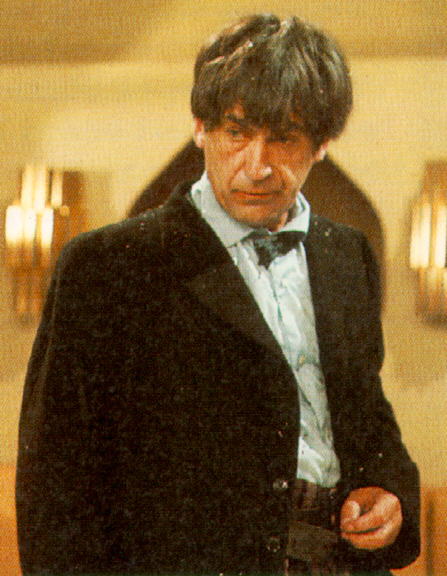
Doctor Who: The War Games In Colour (BBC4 9pm)
This reimagining of a classic serial brings fresh vibrancy to a beloved story. It explores themes of manipulation and the ethics of war. The Doctor’s resistance to authoritarianism and his defence of free will resonate strongly. The narrative critiques the exploitation of soldiers and the dehumanisation of conflict. A visual and thematic treat for long-time fans and new viewers alike.
Lucy Worsley’s Christmas Carol Odyssey (BBC4 10.40pm)
This historical exploration delves into the cultural and religious origins of Christmas carols. Worsley highlights their role in social movements and community identity. Themes of tradition and change emerge as she traces the evolution of festive music. The programme underscores the power of music in shaping collective memory. A fascinating mix of history and holiday spirit, it’s perfect for the season.
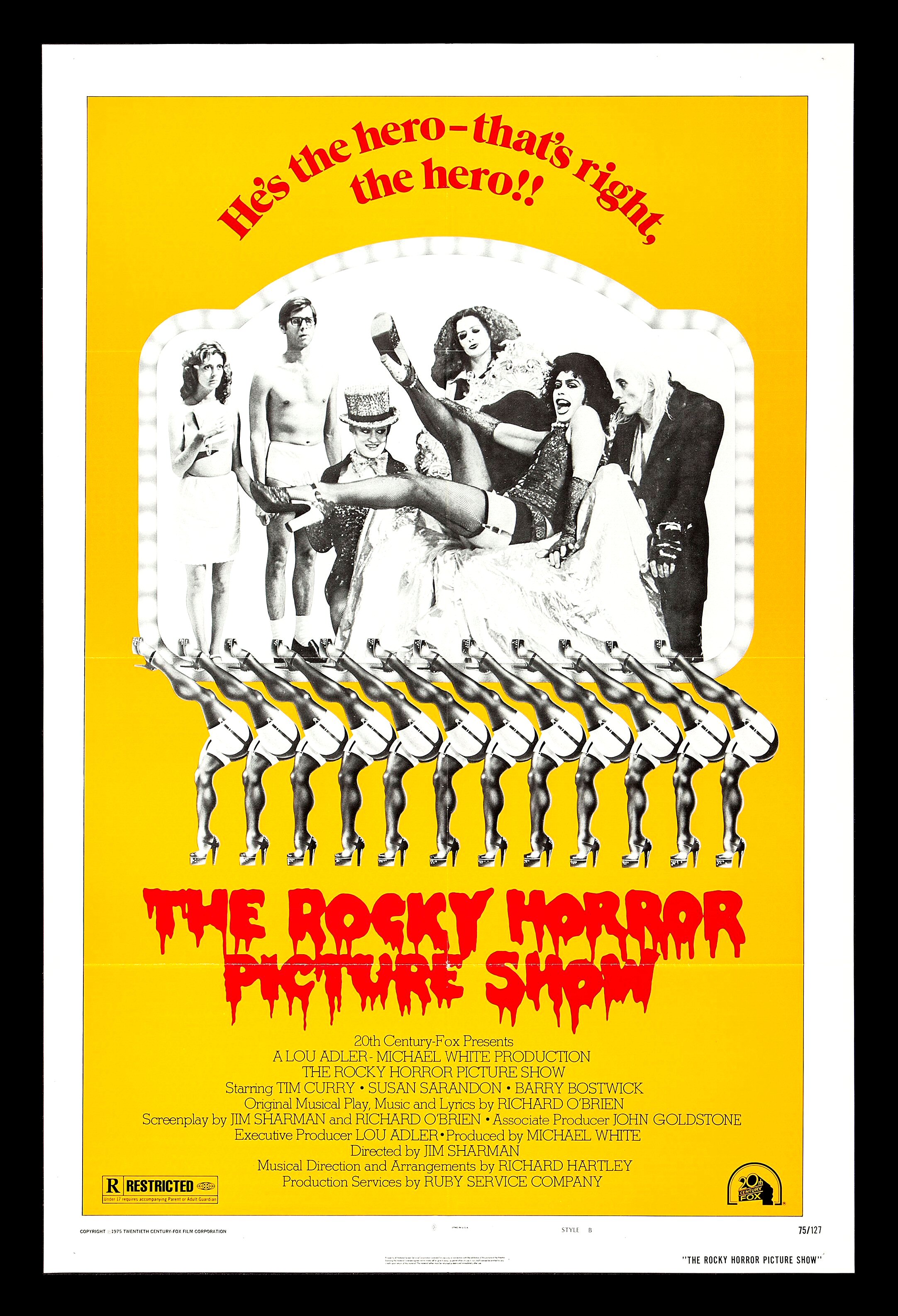
The Rocky Horror Picture Show (1975) (BBC2, 12.15am)
The Rocky Horror Picture Show is a cult classic that celebrates individuality and challenges societal norms. Its groundbreaking themes of sexual freedom and self-expression were revolutionary for its time, making it a beacon for those who felt marginalised or constrained by traditional expectations. The film’s irreverent approach to identity and acceptance has earned it a devoted following over the decades.
Having seen this film several times, as well as experienced it live at the theatre, I can attest to its enduring magic and infectious energy. The theatrical performances bring an added layer of interactivity, with audience participation amplifying its playful and rebellious spirit. Every viewing offers something new to appreciate, whether it’s the sharp wit of the dialogue, the dazzling costumes, or the electrifying performances.
One of the aspects I love most about The Rocky Horror Picture Show is its playful and smart approach to expression. From its campy humour to its over-the-top performances, the film embraces absurdity without losing sight of its underlying message of self-acceptance. This balance between outrageous fun and profound commentary is part of what makes it so special.
The music is another standout feature, ranging from rock anthems like “Time Warp” to heartfelt ballads like “I’m Going Home.” Each song is a perfect match for the film’s tone, adding depth and energy to its already vibrant narrative. The soundtrack has become iconic in its own right, with songs that continue to inspire singalongs and dance routines at screenings and performances worldwide.
Humour is woven throughout the film, making it as entertaining as it is thought-provoking. Whether through Frank N. Furter’s flamboyant charisma or the ensemble cast’s comedic timing, the film keeps audiences laughing while subtly challenging their perspectives on identity and societal expectations. It’s this clever mix of comedy and commentary that ensures it remains relevant and beloved.
The Rocky Horror Picture Show is more than just a film; it’s a joyous rebellion and a cultural phenomenon. Its legacy as a landmark in LGBTQ+ representation and liberation continues to inspire and resonate with new generations. For those who embrace its quirky charm, it offers not only entertainment but also a celebration of self-expression and the freedom to be unapologetically yourself.
Christmas Day 25th of December 2024
The Italian Job (1969) (C4, 2.45pm)
The Italian Job is a quintessentially British heist comedy that captures the cultural shifts and idiosyncrasies of 1960s Britain. Its cheeky humour and audacious plot epitomise a playful rebellion against authority, perfectly reflecting a nation in the midst of redefining itself. The film’s spirit of irreverence is embodied by its characters, who navigate a series of outrageous schemes with wit and flair.
Noel Coward’s pivotal role as the incarcerated mastermind Mr. Bridger adds a fascinating layer of patriotism and eccentricity to the film. His character, with an almost regal sense of British superiority, orchestrates the heist from his prison cell while displaying an absurdly devoted allegiance to the Queen. Coward’s presence underscores the film’s odd blend of anti-establishment energy and weirdly proud nationalism, creating a tension that is both humorous and telling of the era.
At its core, the film explores themes of ingenuity, loyalty, and the delicate balance between individual ambition and collective effort. The iconic Mini Cooper chase through the streets of Turin symbolises resourcefulness and unity in the face of adversity. These daring sequences, set against a backdrop of Italian sophistication, highlight British pluck and ingenuity in a way that has cemented the film’s status as a cultural touchstone.
The weird patriotism running through The Italian Job is as much a character as the actors themselves. From the Union Jack-adorned vehicles to Bridger’s insistence on respect for British institutions, the film celebrates a kind of tongue-in-cheek nationalism. This quirky pride, combined with the irreverent humour, creates a unique blend of critique and celebration of British identity.
Decades after its release, The Italian Job remains a timeless classic, celebrated for its daring stunts, iconic soundtrack, and charmingly absurd plot. Its enduring appeal lies in its ability to balance comedy, action, and a subtle commentary on British culture, making it as much a historical artefact as it is an entertainment masterpiece.
Some Like It Hot (1959) (BBC2, 3.10pm)
Billy Wilder’s Some Like It Hot is a ground breaking comedy that cleverly uses humour to explore themes of gender and identity. When two musicians, played by Tony Curtis and Jack Lemmon, disguise themselves as women to escape mobsters, their experiences challenge traditional gender roles and societal norms. The film’s sharp wit and playful narrative provide a lens through which to examine perceptions of masculinity, femininity, and the fluidity of identity.
Beyond its comedic surface, the film reflects the tension between societal expectations and personal freedom. Set during the era of Prohibition, it critiques the hypocrisy of organised crime and societal repression with a light yet incisive touch. The characters’ escapades highlight the absurdities of rigid norms, making the film both an entertaining farce and a subtle critique of its time.
Some Like It Hot remains as hilarious as it is thought-provoking, thanks to its brilliant performances, sharp script, and timeless themes. Marilyn Monroe’s portrayal of Sugar Kane adds depth and charm, further amplifying the film’s exploration of authenticity and acceptance. Decades after its release, it continues to resonate as a celebration of individuality and the courage to defy conventions
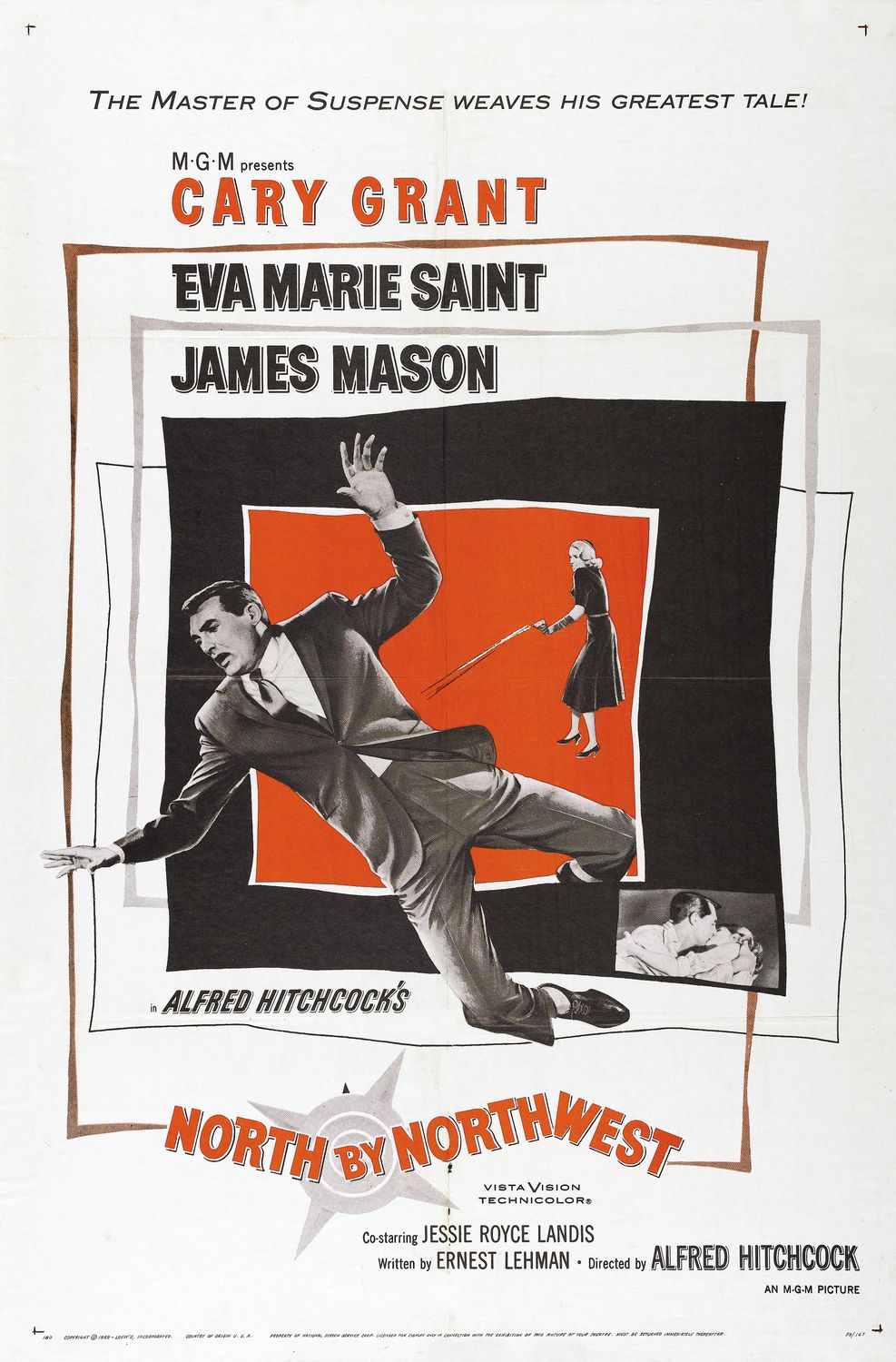
North By Northwest (1959) (BBC2, 5.05pm)
Alfred Hitchcock’s North By Northwest is a thrilling exploration of mistaken identity and Cold War-era paranoia. The film follows advertising executive Roger Thornhill as he is unwittingly drawn into a web of espionage and conspiracy. His journey becomes a gripping portrayal of the individual’s struggle against powerful and faceless institutions, reflecting the anxieties of a world steeped in surveillance and mistrust.
Hitchcock masterfully critiques the fragility of identity in a society driven by appearances and consumerism. Thornhill’s predicament highlights the ease with which a person’s life can be manipulated or erased, a theme that resonates even more strongly in today’s digital age. The film’s commentary on the erosion of personal agency remains strikingly relevant.
Visually, North By Northwest is a tour de force, with iconic sequences that have become hallmarks of cinematic suspense. From the harrowing crop-duster chase to the climactic showdown on Mount Rushmore, Hitchcock’s use of scale and tension immerses viewers in Thornhill’s escalating peril. These scenes not only thrill but also underscore the film’s themes of disorientation and the precariousness of truth.
Cary Grant’s charismatic performance as Thornhill anchors the narrative, blending humour, charm, and vulnerability. His transformation from a complacent, self-assured executive to a resourceful and resilient protagonist mirrors the broader themes of self-discovery and resilience. Eva Marie Saint’s enigmatic portrayal of Eve Kendall adds depth and intrigue, elevating the film’s exploration of trust and deception.
An enduring masterpiece, North By Northwest continues to captivate audiences with its clever plotting, sharp commentary, and visual brilliance. It stands as a compelling examination of power, identity, and the intricate dance between illusion and reality, solidifying its place as one of Hitchcock’s most celebrated works.
Doctor Who: Joy To The World (BBC1 5.10pm)
This festive special explores the Doctor’s impact on individuals and communities. Themes of hope and renewal align with the season’s spirit. The narrative highlights the importance of connection and empathy in overcoming challenges. It critiques isolationism while celebrating diversity and cooperation. A heart-warming episode that balances adventure with poignant social messages.
Boxing Day 26th of December 2024
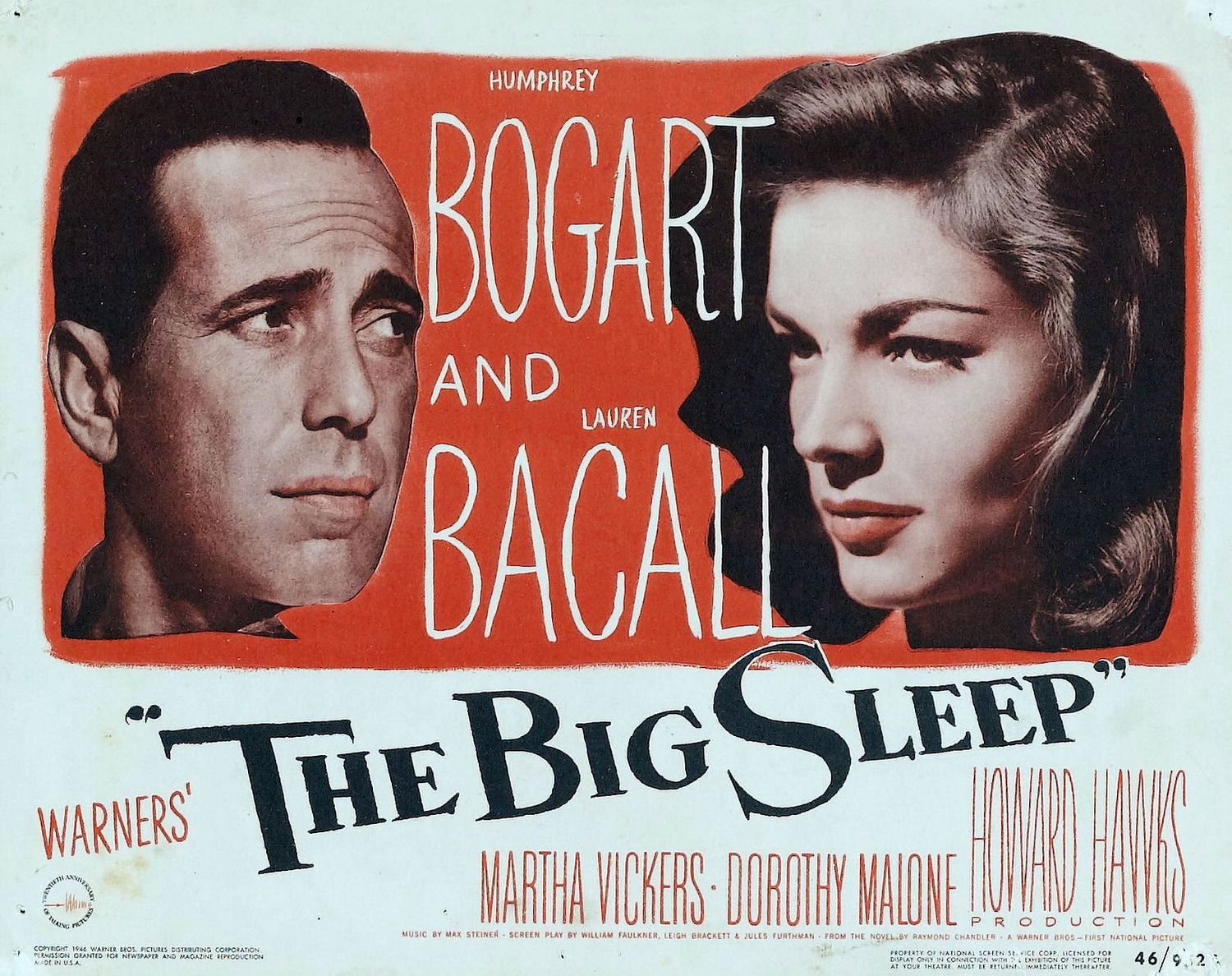
The Big Sleep (1946) (BBC2, 10.55am)
Howard Hawks’ noir classic, The Big Sleep, is a masterful exploration of corruption, power, and moral ambiguity. At its centre is Philip Marlowe, a private detective navigating a web of lies, deceit, and criminality. The film’s intricate plot reflects a society grappling with post-war disillusionment, where trust is scarce, and motives are always suspect.
The film critiques wealth and privilege, exposing how power can manipulate justice to serve its interests. The wealthy Sternwood family, whose secrets drive the story, are emblematic of a class that wields influence with impunity. Marlowe’s encounters with them highlight the disparity between those who control the system and those who are ensnared by it, showcasing a deep cynicism about societal hierarchies.
Cynicism permeates every layer of The Big Sleep, from its morally ambiguous characters to its atmospheric visuals. Marlowe himself, played with wry detachment by Humphrey Bogart, embodies the film’s scepticism towards heroism. He operates in a world where moral clarity is an illusion, and his wit often serves as armour against the pervasive corruption. The film’s dialogue crackles with sharp, sardonic exchanges that reveal as much about the characters as they do the bleak world they inhabit.
The labyrinthine plot, often criticised for its complexity, is a reflection of the chaotic and morally murky world it portrays. Viewers are left questioning not only the characters’ motives but also the possibility of achieving justice in such a corrupt system. This ambiguity is a hallmark of noir, reinforcing the genre’s commentary on the fragility of ethics in the face of power and greed.
A quintessential noir, The Big Sleep remains a sharp commentary on societal flaws and human frailty. Its cynicism, far from alienating audiences, draws them into its richly textured world, compelling them to confront uncomfortable truths about power, privilege, and morality. Decades after its release, it continues to captivate.
Casablanca (1942) (BBC2, 12.45pm)
Casablanca is a wartime romance that transcends its genre to become one of the most iconic films in cinematic history. Set against the backdrop of World War II, the film delves deeply into themes of love, sacrifice, and resistance. Rick Blaine (Humphrey Bogart) and Ilsa Lund (Ingrid Bergman) are at the heart of the story, their personal dilemmas mirroring the larger moral conflicts of a world at war. The film poignantly captures the tension between personal desires and the greater good.
The narrative critiques neutrality and isolationism, embodying these tensions in Rick’s initial reluctance to engage in the fight against fascism. His transformation, spurred by love and loyalty, underscores the urgency of solidarity in the face of oppression. Through its characters, the film makes a powerful case for courage and collective action, challenging audiences to consider the costs of indifference. Iconic lines like “Here’s looking at you, kid” and “We’ll always have Paris” enrich the story, imbuing it with both personal and universal resonance.
A cinematic treasure, Casablanca remains as relevant today as it was upon its release. Its exploration of loyalty, love, and moral responsibility continues to inspire reflection, while its timeless performances and atmospheric setting ensure its place as a masterpiece of storytelling. More than a film, it is a testament to the enduring struggle for freedom and the sacrifices made in its pursuit..
The Magnificent Seven (1960) (BBC2, 2.25pm)
The Magnificent Seven reimagines Akira Kurosawa’s Seven Samurai within the framework of a classic American Western, addressing universal themes of justice, community, and sacrifice. Set in a small Mexican village terrorised by bandits, the film follows seven gunslingers who band together to protect the villagers. It is a story of courage and unity, exploring how collective action can triumph over oppression.
The film critiques exploitation and the morality of violence, questioning whether the ends justify the means. Each member of the seven brings a unique perspective on heroism, with their motivations ranging from redemption to camaraderie. Their willingness to fight for strangers underscores the value of selflessness, even as they grapple with the personal and moral costs of their actions. This complexity gives the film its emotional depth and resonance.
While The Magnificent Seven is undeniably a rousing adventure with thrilling action sequences, it also serves as a meditation on Cold War-era fears and aspirations. The story reflects the anxieties of a world divided by power struggles, as well as the hope that collective efforts can lead to justice and peace. Decades later, the film remains a cinematic classic, blending exciting storytelling with profound reflections on morality and human connection.
The Stories Behind The Songs (Talking Pictures, 2.20pm)
Narrated by singer-songwriter Kate Garner, The Stories Behind The Songs is a captivating documentary that delves into the cultural and historical contexts of iconic melodies. Garner’s heartfelt narration adds a personal touch, drawing audiences into the rich tapestry of stories behind some of the world’s most beloved songs. Through her voice, the programme explores the deep connections between music and societal change.
One of the featured stories is the timeless carol “Silent Night,” which originated in 1818 in a small Austrian village. Composed by Franz Xaver Gruber with lyrics by Joseph Mohr, the song was first performed on Christmas Eve in St. Nicholas Church in Oberndorf. Written during a time of hardship and uncertainty, “Silent Night” embodies themes of peace and hope, resonating deeply with listeners across generations. Its poignant origins underscore the enduring ability of music to provide solace and unity in troubled times.
The programme examines how songs like “Silent Night” reflect identity, protest, and collective memory. From personal stories of resilience to moments of historical significance, the documentary connects audiences to the enduring power of storytelling through music. A rich exploration of music’s role as a catalyst for reflection and transformation, it offers insights into how these melodies continue to shape and inspire the world.
Friday 27th of December 2024
Oliver! (1968) (C4, 11.25am)
This adaptation of Dickens’ Oliver Twist blends vibrant music with stark social commentary, creating a timeless cinematic experience. From its opening number, “Food, Glorious Food,” to the rousing “Consider Yourself,” the film’s soundtrack is integral to its enduring appeal. These songs not only advance the plot but also capture the mood of Victorian London, reflecting the struggles and aspirations of its characters.
Themes of community, resilience, and the quest for belonging resonate throughout the narrative. Songs like “Where Is Love?” and “As Long As He Needs Me” delve into the emotional core of the story, highlighting the loneliness and hope of the characters. The contrast between the upbeat ensemble numbers and the deeply personal ballads mirrors the social divides and emotional complexities of Dickens’ original work.
The music, composed by Lionel Bart, is a standout feature, blending catchy melodies with profound lyrics that have become iconic. These songs transcend the film, becoming part of the cultural lexicon and performed in schools, theatres, and community productions worldwide. The universal themes embedded in the music make it relatable across generations.
Part of the film’s lasting impact lies in its ability to balance entertainment with a critique of societal inequality. The vibrant choreography and cheerful tunes do not shy away from addressing the harsh realities of poverty and exploitation. Instead, they amplify the resilience and spirit of the characters, ensuring that audiences remain engaged while reflecting on the underlying social commentary.
Oliver!’s enduring legacy can be attributed to its masterful integration of story and music. Its ability to captivate audiences with its heartwarming songs and poignant message ensures it remains relevant decades after its release. By blending artistry with a critique of social injustice, the film continues to resonate with viewers, making it a treasured classic of musical cinema.
The Everly Brothers Reunion Concert (BBC4 10pm)
This concert captures the enduring appeal of the Everly Brothers’ harmonies. Their music reflects themes of love, loss, and Americana. The programme revisits a simpler era while acknowledging the cultural shifts of the 20th century. It celebrates their influence on subsequent generations of musicians. A nostalgic and heartfelt tribute to the enduring power of music to connect and inspire.
Arena: The Everly Brothers: Songs Of Innocence And Experience (BBC4 11.15pm)
This documentary examines the Everly Brothers’ journey through fame and personal struggles. It explores themes of sibling dynamics and the pressures of success. Their music bridges generational divides, reflecting both innocence and the complexities of life. The film highlights their impact on shaping modern rock and roll. An insightful look at the cultural and personal dimensions of their legacy.
Brief Encounter (BBC2, 12.10pm)
David Lean’s Brief Encounter is a poignant exploration of longing and the constraints imposed by societal expectations. Trevor Howard and Celia Johnson deliver masterful performances as Alec and Laura, two ordinary people who find an extraordinary connection in the midst of their everyday lives. Their forbidden romance unfolds with quiet desperation, capturing the emotional turmoil of post-war Britain and the sacrifices demanded by duty and convention.
The film critiques rigid social norms, highlighting the tension between personal desires and collective responsibilities. Alec and Laura’s brief moments of happiness are juxtaposed with their deep sense of guilt, underscoring the moral dilemmas they face. Balancing this intensity are the lighthearted supporting roles of Stanley Holloway as the stationmaster and Joyce Carey as the refreshment room attendant, whose comic interactions provide moments of levity and warmth amidst the emotional weight of the main story.
A timeless classic, Brief Encounter remains a delicate exploration of love, loss, and sacrifice. Lean’s subtle direction, coupled with the heartfelt performances, creates a narrative that resonates across generations. Its understated yet powerful portrayal of human connection continues to captivate audiences, making it one of the most enduring romances in cinematic history.
I, Tonya (2017) (BBC2, 11.15pm)
I, Tonya is a compelling biographical drama that delves into the complexities of ambition, class disparity, and media sensationalism. Margot Robbie delivers a captivating performance as Tonya Harding, a figure both vilified and misunderstood in the public eye. The film recounts Harding’s rise in the world of competitive figure skating and the scandal that ultimately defined her career, challenging viewers to reconsider the binary notions of villainy and victimhood.
The narrative critiques the harsh scrutiny faced by women in the public sphere, particularly those from working-class backgrounds. Harding’s struggles against systemic biases and personal adversities highlight the inequities of a world that values spectacle over substance. The film also offers a sharp commentary on the ethics of competitive sports, where appearances often outweigh genuine talent, and the pressures to succeed can lead to morally questionable actions.
Through its provocative storytelling and dark humour, I, Tonya humanises its protagonist while exposing systemic injustices. It reframes Harding’s story as not just a personal tragedy but a reflection of broader societal flaws. The film’s raw and unflinching approach ensures its place as a modern classic, blending entertainment with a thought-provoking critique of the forces that shape public narratives.
Saturday 28th of December 2024
A Hard Day’s Night (1964) (BBC2 11.25am)
Richard Lester’s A Hard Day’s Night (1964) is more than just a Beatles musical; it’s a vivid snapshot of the 1960s, capturing the energy, optimism, and turbulence of an era defined by cultural and social change. The film’s narrative follows the band over 36 hours, showcasing their humor, creativity, and camaraderie while navigating the pressures of fame. At its core, the film explores the tension between individual identity and the societal expectations placed upon them as pop icons, reflecting the struggles of a generation seeking to assert its individuality.
One of the film’s central themes is the generational divide that defined the 1960s. Through its depiction of the Beatles’ playful defiance of authority figures, such as uptight managers, reporters, and disciplinarians, A Hard Day’s Night highlights the growing disconnect between the youth and the older, more conservative generation. This tension mirrors the broader societal shifts of the decade, as young people rejected traditional values and embraced new ideas about freedom, creativity, and self-expression.
The film also captures the burgeoning counterculture movement, which was beginning to question the norms of consumerism, conformity, and materialism. The Beatles’ witty and irreverent interactions with their surroundings serve as a critique of the superficiality of the entertainment industry and, by extension, societal expectations. Their humor, spontaneity, and refusal to take themselves too seriously symbolize a break from the rigid structures of the past, embodying the spirit of rebellion and innovation that defined the 1960s.
Creativity is celebrated throughout the film, not just in the Beatles’ music but also in its groundbreaking cinematic style. Richard Lester’s innovative direction, with its fast-paced editing, unconventional angles, and documentary-like realism, reflects the experimental ethos of the time. This approach not only enhanced the film’s energy but also challenged traditional filmmaking norms, paralleling the Beatles’ own revolutionary impact on music and popular culture. The film suggests that creativity can serve as both a personal and societal liberation, offering a way to break free from restrictive norms.
A Hard Day’s Night critiques the pressures of fame and the commodification of individuality. While the film is filled with joy and laughter, there’s an undercurrent of the constraints placed upon the Beatles as public figures. Their attempts to escape fans, handlers, and the relentless media underscore the loss of personal freedom that often accompanies success. In doing so, the film resonates beyond its time, raising timeless questions about the balance between public image and private identity. Through its humour, energy, and insight, A Hard Day’s Night stands as a cultural landmark that encapsulates the transformative spirit of the 1960s.
The Godfather (1972) (C4 9.45pm)
Francis Ford Coppola’s The Godfather is a cinematic masterpiece that delves deeply into ethical, psychological, and social themes, presenting a profound exploration of power, loyalty, and morality. Through the saga of the Corleone crime family, the film critiques the darker side of the American Dream, exposing how ambition and success can become entangled with corruption and violence. The juxtaposition of traditional family values with ruthless criminality creates a compelling narrative that examines the moral compromises often made in pursuit of power and legacy.
Ethically, The Godfather challenges conventional notions of right and wrong by presenting a world where loyalty and justice operate within a morally ambiguous framework. The Corleone family adheres to their own code of honor, which often contrasts sharply with societal laws. This duality raises questions about the relativity of morality and whether ends can justify means. The film’s depiction of organized crime as a parallel structure of authority underscores the complexities of ethical decision-making in a world where survival often demands compromise.
Psychologically, the film provides a nuanced exploration of identity and transformation, particularly through the character arc of Michael Corleone. Initially portrayed as a reluctant outsider to his family’s criminal empire, Michael’s journey from idealistic war hero to ruthless mob boss illustrates the corrosive effects of power and vengeance on the human psyche. His internal conflict and ultimate moral descent serve as a cautionary tale about the seductive nature of power and the loss of innocence. The psychological toll of living within a violent, morally compromised world is a recurring theme, as characters grapple with guilt, betrayal, and the weight of their choices.
Socially, The Godfather examines the complexities of immigrant identity in America, highlighting the challenges and contradictions faced by those striving to assimilate while preserving their cultural heritage. The Corleones’ rise to power reflects the struggles of many immigrant families who sought prosperity in a system that often marginalized them. However, their methods—resorting to crime to achieve success—critique the systemic barriers that pushed them toward such choices. The film underscores the idea that the American Dream, while alluring, is often fraught with inequities and contradictions.
Thematically, The Godfather blurs the lines between family loyalty and corruption, inviting viewers to question their own values and allegiances. The film’s moral ambiguity forces the audience to empathize with characters who commit heinous acts, challenging black-and-white perceptions of good and evil. By intertwining themes of power, morality, and identity within a richly textured narrative, Coppola creates a timeless work that resonates on multiple levels. Its enduring legacy lies in its ability to provoke deep ethical and psychological reflection, making The Godfather not just a film, but a profound commentary on the human condition.
Sunday 29th of December 2024
Gosford Park (2001) (BBC2 10pm)
Robert Altman’s drama examines class divides in 1930s Britain. It critiques the rigid hierarchies of the aristocracy and the exploitation of servants. Themes of power, privilege, and deception underscore the narrative. The film’s layered storytelling offers a microcosm of societal tensions. A sharp and satirical look at the interplay between wealth and morality.
Don’t Look Now (1973) (BBC2, 12.15am)
Don’t Look Now is a haunting psychological thriller that explores grief, guilt, and the supernatural with unparalleled intensity. Julie Christie and Donald Sutherland star as Laura and John, a couple reeling from the tragic death of their young daughter. Their journey to Venice, intended as an escape, plunges them into a labyrinth of mystery and emotional turmoil, where the past and present intertwine in unsettling ways.
The film’s eerie atmosphere is heightened by the presence of Hilary Mason as a blind mystic who claims to communicate with the dead. Her enigmatic character adds layers of ambiguity and unease, challenging John’s scepticism and rationality. This interplay between realism and mysticism underscores the film’s critique of a purely logical worldview, suggesting that grief can blur the lines between reality and the supernatural.
Director Nicolas Roeg’s masterful use of haunting imagery and fragmented editing creates a sense of disorientation that mirrors the couple’s emotional state. The decaying beauty of Venice becomes a character in itself, reflecting the themes of loss and unresolved trauma. Don’t Look Now lingers in the mind long after viewing, a chilling yet profoundly emotional story that delves deep into the human psyche and the fragile boundaries of perception.
Monday 30th of December 2024
School For Scoundrels (1960) (BBC2, 10.30am)
School For Scoundrels is a sharp satirical comedy that takes aim at the relentless competitiveness of modern life. The story follows a hapless protagonist who enrols in a “school of life” to learn how to outwit rivals and succeed in social and romantic endeavours. Through its witty narrative, the film critiques societal pressures to conform to ideals of charm, confidence, and success, exposing the absurdity of such expectations.
With its clever humour and timeless themes, the film offers a biting commentary on ambition and human nature. By poking fun at manipulation and the superficial trappings of success, School For Scoundrels invites audiences to reflect on the ethics of self-improvement and the lengths people go to achieve their goals. Decades after its release, it remains an enduring and entertaining exploration of social dynamics and personal growth.
Rocketman (2019) (C4, 9pm)
Rocketman is a dazzling biographical musical that celebrates the extraordinary life and career of Elton John. Taron Egerton delivers a remarkable performance as the iconic musician, capturing both his flamboyant charisma and his deep vulnerability. The film takes audiences on a journey through Elton’s rise to fame, showcasing his immense talent and unyielding determination to become one of the most beloved artists of all time.
Elton John’s story is one of resilience, and Rocketman does a beautiful job of exploring the complexities of his journey. It delves into themes of identity, addiction, and self-acceptance, shedding light on the challenges he faced while navigating the pressures of fame and personal struggles. The film’s unflinching portrayal of these moments highlights Elton’s strength and determination to overcome adversity, making his achievements all the more inspiring.
The film is also a love letter to Elton John’s artistry, with its fantastical musical sequences capturing the emotional highs and lows of his life. Songs like “Your Song” and “Tiny Dancer” are woven seamlessly into the narrative, not just as performances but as integral parts of the storytelling. These moments remind audiences of the transformative power of Elton’s music, which has touched countless lives around the world.
What makes Rocketman truly stand out is its ability to balance the glitz and glamour of Elton’s career with an intimate and deeply personal exploration of his character. The film critiques the music industry’s exploitation while celebrating Elton’s ability to reclaim his identity and mental health. It portrays him not just as a superstar but as a human being who has triumphed against the odds.
Rocketman is a vibrant tribute to Elton John’s resilience, talent, and enduring legacy. It celebrates his ability to bring joy and connection through his music, offering an uplifting and deeply personal reflection on a life lived boldly and authentically. For fans and newcomers alike, the film is a testament to the power of music and the indomitable spirit of one of the greatest artists of our time.
New Year’s Eve 31st of December 2024
Jesus Christ Superstar (1973) (Channel, Time TBD)
Jesus Christ Superstar is a groundbreaking rock opera that reimagines the Passion of Christ through a contemporary lens, bringing timeless themes of power, betrayal, and redemption into sharp focus. Directed by Norman Jewison and based on the Andrew Lloyd Webber and Tim Rice stage production, the film captivates with its innovative blend of biblical storytelling and modern sensibilities.
Central to the film’s enduring impact is its bold, genre-defying music. The rock-infused score, featuring iconic numbers like “I Don’t Know How to Love Him” and “Superstar,” elevates the narrative, capturing the emotional and spiritual complexities of its characters. The powerful vocals and dramatic arrangements breathe new life into the familiar story, making it accessible to audiences across generations. The music’s ability to evoke both grandeur and intimacy ensures it remains a defining element of the film.
The film critiques religious institutions and societal expectations of divinity, questioning how figures like Jesus and Judas are perceived and remembered. Through its lyrics and performances, it delves into the humanity of its characters, portraying Jesus as a man grappling with his destiny and Judas as a conflicted figure questioning his choices. This layered exploration adds depth to the story, challenging viewers to reflect on the nature of faith and leadership.
The contemporary aesthetic of Jesus Christ Superstar—from its 1970s costumes to its desert landscapes—reinforces its timelessness and universality. The juxtaposition of ancient narrative and modern music creates a unique atmosphere that resonates deeply with audiences. The film’s choreography and visual symbolism further enhance its storytelling, providing a visceral, almost theatrical experience.
Jesus Christ Superstar is more than just a film; it’s a cultural touchstone that redefines how stories of faith and sacrifice can be told. Its provocative interpretation and unforgettable music ensure its place as a bold and thought-provoking adaptation of a timeless story, inspiring audiences to reimagine the narratives they hold dear.
Unforgiven (1992) (5Action 9pm)
Clint Eastwood’s Western examines the consequences of violence and moral ambiguity. It critiques the romanticism of frontier justice. Themes of redemption, regret, and survival resonate throughout the narrative. The film reflects on the ethical complexity of vengeance. A stark and sobering reflection on the myths of the American West.
The Godfather Part II (1974) (BBC4 9pm)
The Godfather Part II is a richly layered exploration of ethical themes, delving deeper into the interplay between power, corruption, and family loyalty. By juxtaposing the rise of Vito Corleone with the moral decline of his son Michael, the film presents a profound commentary on the cost of ambition and the moral compromises required to maintain power. Through its dual narrative structure, Francis Ford Coppola creates a compelling examination of how power shapes, and often corrupts, individuals and their relationships.
Ethically, the film critiques the relentless pursuit of power and the erosion of personal integrity that accompanies it. Vito Corleone’s journey from a young immigrant to a powerful crime boss is portrayed as a response to systemic injustices, suggesting that his actions, while unlawful, are motivated by a desire to protect and provide for his family. However, his methods—extortion, violence, and manipulation—raise questions about whether the ends justify the means. In contrast, Michael’s reign as the head of the Corleone family is marked by a more insidious corruption, as he betrays his closest allies, sacrifices familial bonds, and descends into paranoia. The film suggests that power, when pursued without ethical boundaries, becomes self-destructive.
The theme of family loyalty, central to the narrative, is fraught with ethical dilemmas. Vito’s actions are rooted in his commitment to his family, but his criminal empire also exposes them to danger and moral compromise. Michael’s decisions, ostensibly made to protect the family legacy, ultimately alienate him from his loved ones, most notably his wife, Kay, and his brother, Fredo. The film interrogates the morality of prioritizing familial loyalty over broader ethical principles, revealing the devastating consequences of such choices. Michael’s isolation by the film’s conclusion underscores the hollowness of his power and the moral void it has created.
The film also examines the ethics of assimilation and the immigrant experience in America. Vito’s rise reflects the struggles of immigrant communities to find their place in a society that often marginalizes them. While his actions challenge systemic inequities, they also perpetuate cycles of violence and exploitation. In contrast, Michael’s story highlights the dangers of losing one’s moral compass in the pursuit of societal acceptance and power. The Corleone family’s journey critiques the idea that assimilation and success must come at the cost of ethical integrity.
The Godfather Part II serves as a meditation on the corrupting influence of power and the fragility of ethical principles in the face of ambition. By presenting morally complex characters and situations, the film challenges viewers to grapple with uncomfortable questions about justice, loyalty, and the cost of success. Its enduring impact lies in its ability to illuminate the ethical struggles inherent in human ambition, making it not just a sequel, but a profound continuation of a cinematic and moral legacy.
New Year’s Day 1st of January 2025
Top Hat (1935) (BBC2 8.35am)
This classic musical celebrates romance and escapism during the Great Depression. Its elegant dance sequences reflect themes of joy and resilience. The film critiques societal constraints through its playful narrative. It offers a vision of glamour and optimism in difficult times. A delightful reminder of the power of art to uplift and inspire.
Lawrence of Arabia (1962) (C4, 12.20pm)
David Lean’s Lawrence of Arabia is a cinematic masterpiece that explores the intersection of colonialism, identity, and ambition through the lens of T.E. Lawrence’s remarkable and controversial life. Played with intensity and complexity by Peter O’Toole, Lawrence is depicted as both a hero and an enigma, embodying the contradictions of a man revered and criticised for his role in shaping the Middle East during World War I. His character invites debate over the ethics of his actions and the imperialist motives that underpinned them.
The film critiques the manipulation of individuals for imperialist goals, with Lawrence caught between his allegiance to the Arab cause and the British Empire’s ambitions. His efforts to unite the Arab tribes and lead a revolt against the Ottoman Empire are depicted with both grandeur and moral ambiguity. This duality highlights the exploitation inherent in colonial power structures and raises questions about the cost of leadership and betrayal.
Beyond its political commentary, Lawrence of Arabia delves deeply into the complexities of heroism and cultural misunderstanding. Lawrence’s struggle to reconcile his admiration for Arab culture with his own identity as a British officer underscores the tension between belonging and otherness. The film portrays his internal conflict with remarkable nuance, reflecting broader themes of alienation and the price of greatness.
A notable aspect of the film that has sparked considerable discussion is the potential homoerotic subtext, particularly in Lawrence’s interactions with Arab leaders and his intense, enigmatic relationships. While not overtly addressed, these themes contribute to the layered complexity of Lawrence’s character, reflecting his isolation and the ambiguity of his personal connections. At the time of its release, such undertones were provocative and generated comment, adding to the film’s reputation as a bold and unconventional epic.
Lean’s sweeping visuals underscore the vastness of the desert landscape, mirroring the enormity of Lawrence’s ambition and the challenges he faces. The cinematography, with its stunning use of light and shadow, enhances the film’s epic scale and symbolic resonance. Every frame contributes to a sense of awe and desolation, capturing both the beauty and harshness of the environment Lawrence sought to master.
A monumental work of cinema, Lawrence of Arabia challenges perceptions of history, power, and the legacy of its controversial protagonist. By examining the complexities of T.E. Lawrence’s character and his actions, the film offers a richly layered narrative that continues to inspire debate and admiration. Its combination of grand storytelling, visual brilliance, and moral inquiry ensures its place as one of the greatest films of all time.
Groundhog Day (1993) (C4, 4.50pm)
Groundhog Day is a beloved comedy that weaves humour with profound philosophical themes, creating a story that continues to resonate deeply with audiences. Bill Murray’s iconic portrayal of Phil Connors, a cynical and self-centred weatherman, anchors the film as he finds himself reliving the same day over and over in the small town of Punxsutawney. This seemingly simple premise unfolds into a rich exploration of human nature, self-improvement, and the search for meaning.
The repetition of Phil’s day serves as a metaphor for the monotony and routine of modern life, challenging both the character and the audience to reflect on their own behaviours and priorities. As Phil transitions from frustration and hedonism to introspection and compassion, the film examines the transformative power of self-awareness and personal growth. His journey is a poignant reminder that change often begins from within.
The film critiques consumerism and superficiality, urging viewers to find meaning in authentic connections and acts of service. Phil’s initial attempts to manipulate his situation for selfish gain highlight the emptiness of material pursuits, while his eventual shift toward helping others underscores the joy and fulfilment that come from kindness and empathy. This message, delivered through witty dialogue and memorable scenes, strikes a balance between humour and heartfelt introspection.
The philosophical underpinnings of Groundhog Day elevate its humour, blending existential musings with lighthearted charm. The film poses timeless questions about the nature of time, choice, and purpose, inviting viewers to consider how they might use their own “extra time” to grow and make a positive impact. Its ability to intertwine these weighty ideas with comedic moments makes it a standout in the genre.
A timeless classic, Groundhog Day transcends its comedic roots to offer a deeply meaningful narrative about redemption, connection, and the human capacity for change. Its universal themes and Murray’s captivating performance ensure its place as both an entertaining and thought-provoking film that remains as relevant today as when it first premiered.
Gogglebox Festive Special (C4, 9pm)
The Gogglebox Festive Special is a heartwarming and hilarious celebration of shared experiences, bringing families and friends together to watch and comment on the best (and worst) of festive television. With its eclectic cast reflecting the diversity of British society, the show captures the charm of communal viewing and the joy of bantering over holiday programming. Regulars like Jenny and Lee, the Siddiquis, and Amira and Iqra light up the screen with their unique perspectives and delightful reactions.
For many fans, the undeniable highlight of the show is Giles Wood and Mary Killen, whose witty exchanges and affectionate bickering are endlessly entertaining. Their distinct personalities and contrasting outlooks create a dynamic that is both humorous and endearing. Whether they’re debating the merits of a Christmas advert or sharing dry observations about a festive drama, their banter feels like a comedy sketch woven into the fabric of the programme. Giles’ whimsical musings paired with Mary’s sharp retorts offer a dialectic that keeps audiences laughing and eagerly anticipating their next quip.
What sets Gogglebox apart is how the relationships between those commenting make the show both funny and heartwarming. The genuine connections and camaraderie among the pairs and families add depth to the humour, as viewers get a glimpse into their interactions and shared histories. Watching the Siddiquis gently tease one another or Jenny and Lee’s infectious giggles feels like being part of a larger, extended family celebrating the season together.
Themes of community, humour, and tradition are central to the show’s enduring appeal. As the cast critiques and celebrates festive media, they also reflect on the shared experiences that bring people together, whether it’s the nostalgia of classic Christmas specials or the absurdity of over-the-top seasonal programming. Their candid and relatable reactions resonate with viewers, creating a collective sense of belonging.
An entertaining and heartwarming look at how TV unites us during the holidays, the Gogglebox Festive Special reminds us that it’s not just the shows on screen but the people we share them with that make the experience special. With its unique blend of comedy, commentary, and community spirit, it remains a cherished part of the festive season.
Ruth Jones Remembers: Hattie (BBC4 10pm)
This tribute honours Hattie Jacques and her influence on British comedy. It reflects on her struggles with societal expectations of women. Themes of resilience and humour underscore Jacques’ legacy. The programme critiques gender norms in the entertainment industry. An affectionate and enlightening look at a trailblazer’s life.
Hattie (BBC4 10.15pm)
This biopic explores the personal and professional life of Hattie Jacques. It examines themes of ambition, love, and societal pressure. The narrative highlights the challenges faced by women in a male-dominated industry. It critiques the double standards of fame and image. A heartfelt portrayal of a complex and talented figure.
The Godfather Coda: The Death of Michael Corleone (2020) (C4 12.30am)
This re-edit of the third Godfather film presents a more streamlined and focused narrative, offering audiences a fresh perspective on a classic tale. Directed by Francis Ford Coppola, the revised version sharpens the story’s emotional core, with themes of legacy, guilt, and redemption taking center stage.
Michael Corleone, now an aging and reflective figure, grapples with the consequences of his lifelong pursuit of power. The film explores the toll of ambition and the inescapable weight of past decisions, painting a poignant picture of a man seeking forgiveness and meaning in his twilight years. Through its depiction of decline and the fragility of human connections, it acts as both a critique of unchecked ambition and a meditation on the personal costs of a life lived in pursuit of control.
With restructured scenes and a revised ending, The Godfather Coda serves as a reflective and fitting epilogue to the Corleone saga, bringing greater clarity and resonance to the story. A must-watch for fans of the trilogy and those intrigued by tales of power and its consequences.
Thursday 2nd of January 2025
Green Book (2018) (BBC2 12.10am)
This biographical drama delves into profound themes of race, friendship, and privilege, centering on the unlikely relationship between the refined African-American pianist Don Shirley and his Italian-American driver and bodyguard, Tony Lip. Set against the racially charged backdrop of 1960s America, the story follows their journey through the Deep South, where systemic racism and societal prejudices are laid bare.
As the two men navigate a world defined by segregation, they confront not only external bigotry but also their own personal biases and preconceptions. Don Shirley’s dignity and resilience serve as a stark counterpoint to Tony’s working-class bluntness, creating a dynamic that is both confrontational and transformative. Their evolving bond sheds light on the complexities of prejudice and the human capacity for growth and understanding.
While the film critiques systemic racism and celebrates the potential for personal reconciliation, it has also sparked debate about its perspective. Critics have questioned whose story is being centred, with some arguing that it leans heavily on Tony’s journey of enlightenment, potentially side-lining the more nuanced experiences of Shirley himself.
Despite the controversy, this is a heartfelt exploration of social divides, offering moments of humour, tenderness, and thought-provoking commentary. Its depiction of reconciliation, though idealistic to some, speaks to the enduring hope for progress in the face of deeply entrenched divisions.
Friday 3rd of January 2025
Planet of the Apes (1968) (BBC2 2.30pm)
This science fiction classic serves as a powerful critique of human arrogance, delving into the ethics of colonization and the consequences of unchecked ambition. Set in a dystopian world where power dynamics are dramatically reversed, the story uses its allegorical framework to explore profound themes of race, war, and the destructive misuse of power.
At its core, the film examines humanity’s tendency to exploit and dominate, questioning the moral implications of such behavior. Themes of equality, justice, and the repercussions of ecological neglect are interwoven throughout the narrative, offering a stark warning about the fragility of both the natural world and societal structures. Its portrayal of oppression and rebellion mirrors historical and contemporary struggles, making its message timeless and universally relevant.
The film’s iconic twist ending is both shocking and deeply reflective, forcing viewers to confront uncomfortable truths about their own roles in perpetuating societal decline. It challenges audiences to reconsider their perceptions of humanity, morality, and the consequences of their actions on a broader scale.
A thought-provoking masterpiece, this classic continues to resonate as a cautionary tale, urging introspection and dialogue about the ethical dilemmas we face as a species. Its enduring legacy lies in its ability to entertain while provoking meaningful reflection on the human condition.
The Lighthouse (2019) (Film4 11.55pm)
This psychological thriller delves deeply into themes of isolation, power dynamics, and the unraveling of the human mind. Set in a remote, claustrophobic environment, the film vividly portrays the mental and emotional toll of prolonged seclusion, highlighting how authority and dominance can exacerbate existing tensions and push individuals toward madness.
The story serves as a biting critique of toxic masculinity and its destructive tendencies, showcasing how power struggles and repressed emotions can spiral into chaos and violence. The characters’ psychological descent is mirrored in the bleak, storm-lashed setting, where the line between reality and delusion becomes increasingly blurred. The film’s exploration of control, fear, and vulnerability sheds light on the darker aspects of human nature, offering a chilling yet thought-provoking commentary on what happens when individuals are stripped of societal constraints.
With stark, haunting visuals and powerhouse performances that intensify the eerie atmosphere, the film captivates and unsettles in equal measure. The interplay of light and shadow, coupled with an evocative sound design, enhances the sense of dread, making the setting feel as much a character as the protagonists themselves.
A harrowing yet compelling exploration of the human psyche, this thriller lingers in the mind long after the credits roll, challenging viewers to confront their own fears and vulnerabilities. It is both a gripping narrative and a profound meditation on the fragile boundaries of sanity.
Spartacus (1960) (ITV4 3.15pm)
This epic historical drama, directed by Stanley Kubrick and starring Kirk Douglas in the titular role, tells the stirring story of a slave rebellion that shakes the foundations of the Roman Empire. Based on true events, the film critiques tyranny and the abuse of power, exploring the resilience of the human spirit in the face of overwhelming oppression.
At its heart, Spartacus is a powerful exploration of freedom, sacrifice, and the transformative strength of collective action. The narrative vividly portrays the stark divide between the ruling elite and the enslaved masses, challenging the entrenched class hierarchies and questioning the ethics of empire-building. Spartacus’s journey from a gladiator fighting for survival to a revolutionary leader inspires a timeless call for justice and equality, resonating deeply with contemporary struggles for human rights and dignity.
With sweeping cinematography, grand battle sequences, and an emotionally charged script, the film balances its epic scale with intimate moments of humanity and compassion. The stellar performances, particularly Douglas’s portrayal of Spartacus as a symbol of defiance and hope, add depth to this rousing tale of resistance.
A cinematic classic, Spartacus remains an enduring testament to the fight for dignity and freedom, reminding audiences of humanity’s unyielding quest for a more just and equitable world.
And Finally, Streaming
An Accidental Studio (on ITVX available from Boxing Day)
This documentary explores the rise of George Harrison’s HandMade Films. It reflects themes of creative independence and the fight against corporate control. The programme critiques Hollywood’s dominance while celebrating British filmmaking ingenuity. It highlights the risks and rewards of breaking conventional moulds. A fascinating insight into an era of filmmaking that championed artistic vision over profit.
Welcome to Culture Vulture. It is your ultimate alternative weekly entertainment guide. We bring you the best of film, music, and the arts. Our perspective is fresh. Mainstream media often overshadows unique voices and creative expressions. Culture Vulture aims to shine a light on hidden cultural gems that deserve your attention. Each week, we curate a selection of films, music, and events designed to inspire and engage. We celebrate the diverse tapestry of artistic endeavours that shape our world.
Highlights this week include:
The Third Man (1949) – In post-WWII Vienna, a writer investigates his friend’s mysterious death, uncovering a world of shadows, betrayal, and suspense.
Moonage Daydream (2022) – This documentary explores the life and genius of David Bowie through stunning visuals and rare archival footage, celebrating his lasting impact on music and culture.
Mad Max 2: The Road Warrior (1981) – In a dystopian wasteland, a drifter becomes an unlikely hero as he helps a band of survivors defend their fuel supply from ruthless marauders.
Saturday 26th of October 2024
Julius Caesar (1953) – BBC2, 1 PM
In Julius Caesar, Shakespeare’s classic tragedy, the story delves into the consequences of power and the lengths individuals go to preserve or dismantle it. The film captures the tension between personal allegiance and civic duty, with Brutus forced to weigh his loyalty to Caesar against his duty to the state. This portrayal of torn loyalty and its consequences brings to light the fragile balance between personal bonds and public responsibility.
Caesar’s ambition and eventual assassination raise questions about leadership and its potential for corruption. The conspirators’ actions illustrate how fear of tyranny can justify extreme actions, igniting debates over the use of violence as a preventive measure against despotism. The film asks the viewer to consider the morality of taking drastic action for a cause and the shadow it casts over those who commit it.
Throughout, the fickleness of the Roman citizens highlights how easily public opinion can be manipulated, especially through persuasive speech. This demonstrates how influential rhetoric can be in shaping or distorting collective beliefs, a reminder of the potency of words and their power to direct actions, both noble and catastrophic.
The portrayal of loyalty—whether to friends, ideals, or a nation—resonates through the characters’ interactions, each facing choices that force them to confront their principles. Mark Antony’s shifting allegiance after Caesar’s death serves as a reminder of the complexity of loyalty when personal and political motivations intertwine.
Julius Caesar ultimately paints a picture of the perils of ambition and the costs of betrayal, raising age-old questions about honour, duty, and the sacrifices made in the name of principle. The consequences faced by each character reflect the tragic price that individuals and societies often pay for idealism turned to action.
Dusty At the BBC – BBC2 9.10 PM
“Dusty at the BBC” is a captivating celebration of Dusty Springfield’s remarkable talent and charisma, showcasing her performances across various BBC programs. The collection features some of her most memorable songs, highlighting her powerful voice and emotional depth. Interspersed with interviews and behind-the-scenes insights, the documentary paints a vivid picture of Dusty’s impact on the music scene during the ’60s and ’70s. Fans will appreciate the rare footage and the nostalgic atmosphere, while newcomers will be drawn in by her undeniable star power.
Definitely Dusty BBC2 12.05 PM
“Definitely Dusty” is a heartfelt documentary that beautifully captures the life and legacy of Dusty Springfield, one of music’s most iconic figures. Through a mix of rare archival footage, interviews with friends and collaborators, and a deep dive into her musical journey, the film offers an intimate portrait of Dusty’s struggles and triumphs. It highlights her ground-breaking contributions to pop and soul music while also addressing the personal challenges she faced, including her sexuality and mental health. The documentary is both a tribute to her artistry and a reminder of the cultural barriers she broke down. Fans of music history will find it both enlightening and moving.
Moonage Daydream (2022) – C4, 10.10 PM
Moonage Daydream is a kaleidoscopic journey into the life of David Bowie, capturing his defiance of norms and boundless creativity. Bowie’s transformative approach to music and performance is portrayed as a radical act of self-expression, challenging conventions around identity and artistry. The film highlights his refusal to be confined to one persona, presenting a portrait of reinvention as a means of personal liberation.
Bowie’s influence on acceptance and inclusivity is a central theme. His unapologetic embrace of fluid identities offered a beacon for those who felt marginalized or restricted by traditional categories, encouraging audiences to explore their own individuality without constraint. In this way, Bowie’s legacy extends beyond music, touching lives as a symbol of freedom and acceptance.
The documentary delves into Bowie’s rejection of conventional fame, prioritizing artistic evolution over popularity. His decisions serve as a critique of celebrity culture, raising questions about the pressures placed on artists to maintain a static image for commercial success. Bowie’s journey suggests that true artistry lies in constant transformation rather than conforming to public expectations.
The emotional toll of fame is subtly explored through moments of Bowie’s vulnerability. His struggles to navigate both stardom and artistic integrity reveal the sacrifices inherent to a life in the spotlight, offering a glimpse into the inner conflicts faced by those who choose authenticity over superficial acceptance.
Through vivid visuals and captivating music, Moonage Daydream is an exploration of individuality, challenging viewers to consider the value of self-discovery and the courage it takes to pursue one’s unique path. Bowie’s legacy as an artist and an icon remains a testament to the power of reinvention and the enduring importance of personal authenticity.
Papillon (1973) – 5Action, 9 PM
Papillon tells the harrowing tale of a man’s unyielding quest for freedom amidst the brutal confines of a French penal colony. Based on a true story, the film reveals the grim conditions of prison life, contrasting the resilience of the human spirit with the oppressive nature of institutional punishment. The protagonist’s struggle embodies a relentless desire for autonomy, challenging the justice of a system that forsakes rehabilitation.
The close friendship between Papillon and Dega highlights a powerful bond forged through adversity. Their solidarity illustrates the capacity for connection even in the most dehumanizing circumstances, reflecting a fundamental aspect of human resilience and the strength derived from companionship in times of hardship.
Through Papillon’s repeated escape attempts, the story raises questions about what it truly means to be free. The physical confinements of prison are paralleled by the mental determination required to endure, with each attempt underscoring the value of personal agency and the lengths one might go to reclaim it.
The film paints an unflinching portrait of survival, depicting how desperation can blur moral boundaries. Papillon’s resourcefulness and determination come at a high personal cost, prompting viewers to consider what one might sacrifice in pursuit of freedom. His journey reminds us of the often-overlooked humanity within those society deems irredeemable.
In Papillon, themes of endurance, justice, and hope interweave to create a narrative that questions the validity of lifelong punishment and the human need for redemption. The story’s ultimate message is one of unbreakable will, showing that even within the harshest systems, the desire for freedom endures.
Sunday 27th of October 2024
The Third Man (1949) – BBC2, 12.15 PM
Set in post-war Vienna, The Third Man is a gripping noir that exposes the moral ambiguities in a fractured society. Against the backdrop of a city divided by political alliances, the film follows an American writer’s pursuit of truth in a landscape defined by deception. The devastated setting reflects the physical and ideological scars left by war, embodying a tension between trust and betrayal.
The central theme of deception unfolds through the elusive figure of Harry Lime, whose dubious activities reveal the corruption and exploitation that thrives in a destabilized society. Lime’s actions challenge conventional morality, suggesting that survival in a compromised world often demands ethical flexibility, if not outright complicity.
As the protagonist, Holly Martins, navigates this treacherous terrain, he encounters a complex moral landscape where loyalty is tenuous, and trust is a luxury few can afford. His gradual disillusionment represents the loss of innocence, revealing the personal cost of clinging to idealism in a world rife with moral compromise.
Through shadowy cinematography and haunting music, the film underscores a sense of unease and the fragility of human connection. Relationships are strained under the pressures of secrecy and self-preservation, with individuals often sacrificing personal bonds in favour of survival.
Ultimately, The Third Man is a meditation on human fallibility, highlighting the moral compromises people make in desperate circumstances. In a society where certainty is elusive, the film challenges the viewer to question the stability of truth and the cost of integrity in a fractured world.
Malcolm X (1992) – BBC2, 10 PM
Spike Lee’s Malcolm X is an exploration of transformation and the complexities of identity in the face of systemic oppression. Following Malcolm’s life from troubled beginnings to becoming a prominent figure in the Civil Rights Movement, the film portrays a journey defined by personal and ideological evolution. His transition from anger to a broader sense of unity reflects an ever-shifting quest for justice and equality.
Malcolm’s encounters with racial injustice are a profound commentary on the struggles of African Americans in a racially divided society. His anger and activism confront the historical injustices that continue to shape his community, highlighting the resilience required to endure and resist. The film’s nuanced portrayal of his evolving beliefs sheds light on the difficulties of advocating for change in a world resistant to it.
The film also examines the power of identity and self-discovery. Malcolm’s experiences with the Nation of Islam and his later pilgrimage to Mecca illustrate his complex relationship with religion, culture, and self-perception. His growth invites the viewer to consider the importance of self-definition, particularly within marginalized communities.
Themes of loyalty and betrayal thread through the narrative, particularly in Malcolm’s conflicts with former allies. These experiences emphasize the costs of pursuing one’s beliefs and the fractures that can arise even within a unified movement. Malcolm’s journey is both inspiring and tragic, showing the risks involved in challenging societal norms.
Ultimately, Malcolm X is a compelling reflection on the power of self-determination. The film urges viewers to consider the importance of understanding and empathy in the fight for equality, leaving an enduring message about resilience in the pursuit of justice and the complexities of leadership.
Villain (1971) – Talking Pictures, 10.05 PM
Villain is a gritty British crime drama that examines the life of Vic Dakin, a ruthless East End gangster whose criminal empire mirrors the underbelly of British society in the early 1970s. Dakin’s violent control of his world exposes the desperation that often drives individuals to the fringes of society. The film is a stark look at how power can corrupt and the toll it takes on those who wield it.
As Dakin’s life spirals through a series of betrayals, the film reveals the fragility of trust in a world where survival often means exploiting others. Dakin’s harsh worldview is reflected in his ruthless approach to loyalty, showing how power and violence can destroy human connections, even among those considered allies.
The portrayal of law enforcement in Villain adds another layer, as officers struggle to curb Dakin’s influence amidst corruption and fear. This dual narrative presents a society in moral decline, where even institutions meant to uphold justice are ensnared by the same vices they seek to eliminate.
The film’s depiction of Dakin’s sexuality and his relationships challenges perceptions of masculinity and power. This aspect of his character highlights the often-hidden personal complexities of figures who, despite their hard exteriors, wrestle with private insecurities and vulnerabilities.
In Villain, the moral and personal costs of a life lived in defiance of societal expectations are profound. The film is both a character study and a critique of the structures that permit corruption to flourish, urging viewers to question the allure and consequences of unchecked power.
Monday 28th of October 2024
Fresh (2022) – Film4, 11.20 PM
Fresh is a sharp exploration of modern relationships and the commodification of intimacy. Set against the backdrop of online dating, the film follows a woman’s unsettling experience with a seemingly charming man who hides a sinister agenda. It speaks to contemporary anxieties surrounding trust, safety, and the thin veneer of civility that masks deeper, darker instincts.
The film’s portrayal of the dating world reveals the complexities of navigating desire and vulnerability. As the protagonist is drawn deeper into a relationship that challenges her autonomy, Fresh examines the risks individuals face when intimacy is weaponized for personal gain.
Throughout, the film subtly critiques societal expectations around relationships, especially the pressures placed on women to conform to idealized images of femininity. The protagonist’s resilience in confronting her circumstances highlights the courage required to resist such expectations, showcasing the strength of self-preservation.
As the narrative unfolds, viewers are left questioning the nature of trust and deception in modern life. The film serves as a reminder of the dangers lurking within seemingly mundane interactions, exposing the ease with which appearances can deceive.
In Fresh, the line between trust and danger becomes increasingly blurred, urging the audience to reflect on the complexities of human connection. The film’s message underscores the importance of agency and the inherent risks that accompany vulnerability in a world of hidden motives.
Tuesday 29th of October 2024
Storyville: Eternal You – BBC4 10 PM
This is a thought-provoking documentary that delves into the complexities of identity, memory, and the human experience. The film follows a unique premise that intertwines personal stories with broader philosophical questions about what it means to truly know oneself. Through a series of intimate interviews and striking visuals, the documentary invites viewers to explore the layers of personal narratives that shape our understanding of who we are.
Mad Max 2: The Road Warrior – ITV4, 10.10 PM
Mad Max 2: The Road Warrior presents a post-apocalyptic landscape where survival is the ultimate currency. The world is ravaged, with resources scarce and communities fragmented, setting the stage for a brutal struggle for dominance and control. Max, the protagonist, embodies the hardened survivor, navigating a society where loyalty and morality are rare luxuries.
The fight for fuel becomes a metaphor for the lengths to which individuals and groups will go to secure their future. As Max aids a small community seeking refuge from marauding forces, the film showcases the resilience needed to protect one’s way of life in a hostile environment, echoing themes of resource scarcity and desperation.
The film’s emphasis on makeshift alliances and tenuous trust underscores the fragility of social bonds. Max’s reluctant heroism reveals the necessity of cooperation, even in a world where betrayal is almost expected. This portrayal of camaraderie amidst chaos highlights humanity’s capacity for empathy, even when survival seems to demand selfishness.
Through its bleak depiction of human conflict, Mad Max 2 questions the price of survival and the role of violence in achieving it. The characters’ brutal actions serve as a reminder of how quickly social structures can deteriorate when survival is at stake, leaving viewers to ponder the balance between self-preservation and moral responsibility.
Mad Max 2 is a stark warning about the consequences of environmental depletion and societal collapse. The film’s narrative of resilience and compromise amid desperation resonates as a cautionary tale of humanity’s potential future if cooperation and sustainability are cast aside.
Wednesday 30th of October 2024
Witches: Truth Behind The Trials 8 PM
This episode offers a gripping exploration of Scotland’s dark history with witch hunts, particularly focusing on King James VI’s deadly obsession with eradicating witchcraft. This episode delves into the brutal trials that swept through the country, revealing the societal fears and superstitions that fueled these tragic events. Through expert interviews and vivid re-enactments, the documentary uncovers the chilling motivations behind James VI’s fervour, highlighting how power, paranoia, and religion intertwined in this grim chapter of history. It’s a compelling and informative look at the impact of fear on justice, making it a must-watch for history enthusiasts.
The Client (1994) – ITV4, 9 PM
The Client is a tense legal thriller that follows a young boy entangled in a dangerous web of crime and justice. After witnessing a crime, the boy becomes the focus of powerful forces both within and outside the law. His journey through the legal system reflects the tension between innocence and exploitation in a world where truth is often clouded by self-interest.
The film exposes the pressures faced by those vulnerable to manipulation, with the boy at the mercy of adults who often prioritize their agendas over his well-being. The relentless pursuit of information from him raises questions about the duty of care and the exploitation of innocence for professional gain.
The portrayal of the boy’s lawyer, who fights to protect him, provides a counterpoint to the exploitative motives of others involved. Her dedication underscores the importance of advocacy and protection, especially for those who cannot navigate the complexities of the legal system alone.
As the boy faces the harsh realities of crime and justice, The Client highlights the courage required to stand up against intimidation. His resilience is a testament to the strength of the human spirit when faced with moral dilemmas and life-threatening challenges.
The Client is a compelling exploration of vulnerability and courage within the justice system, revealing both its strengths and its potential for abuse. The film serves as a reminder of the importance of safeguarding those who find themselves caught in forces beyond their control.
Thursday 31st of October 2024
Hammer Heroes, Legends And Monsters Sky Arts 9pm
A celebratory tribute to Hammer Films as it marks its 90th birthday. This documentary takes viewers on a nostalgic journey through the iconic studio’s rich history, exploring its legendary horror films and unforgettable monsters. With insightful commentary from film historians and actors, the program highlights the ground-breaking contributions Hammer made to the genre, particularly its unique blend of gothic storytelling and visual flair. Featuring clips from classic films and behind-the-scenes anecdotes,
Jude (1994) – BBC4, 9.20 PM
Jude, an adaptation of Thomas Hardy’s Jude the Obscure, is a haunting portrayal of aspiration, class, and the harsh limitations placed upon those born without privilege. Following Jude Fawley’s pursuit of education and social mobility, the film explores the devastating cost of ambition when societal structures are unforgiving. His journey exposes the crushing weight of class barriers and the futility of striving against them in a rigid society.
Jude’s dream of becoming a scholar reflects his desire to transcend his humble origins, yet he finds himself constantly hindered by both the elitism of academia and the expectations of his own social class. His tragic encounters with institutions highlight the unfairness of a system that limits opportunities based on birth, underscoring the loneliness of those who dare to dream beyond their circumstances.
The central relationship between Jude and his cousin, Sue, defies social norms and expectations of marriage, touching on themes of love, independence, and societal judgment. Their connection challenges Victorian moral standards, revealing the intense pressures faced by those who reject conventional paths. This relationship is a critique of the way society imposes its values on personal choices.
As Jude’s life spirals, the film presents a stark picture of the sacrifices made in pursuit of one’s ideals, suggesting that ambition can often lead to ruin when societal forces are immovable. The portrayal of Jude’s descent serves as a poignant reminder of the fragility of hope in the face of unrelenting hardship.
In the end, Jude is a deeply moving narrative on the dangers of defying societal norms and the inevitable consequences for those who strive beyond their “place.” It challenges the viewer to question a system that limits potential and the resilience required to confront it, even when the cost is devastating.
The Omen (1976) – BBC2, 11.05 PM
The Omen is a chilling tale of destiny and fear, exploring the unsettling theme of evil lurking within the innocent. Following an American diplomat whose adopted son harbours a dark secret, the film examines the terror of realizing that some forces are beyond human control. It’s a story that delves into the implications of power, fate, and the lengths people will go to protect their loved ones.
The central conflict between faith and reason is a major thread in the film. As the father grapples with signs of his son’s ominous nature, he faces a crisis of belief, torn between rationality and the supernatural. This tension suggests a broader struggle within society to reconcile religious belief with modern skepticism.
The character of the child, Damien, embodies the fear of unknowable forces that exist beyond human understanding or morality. His presence challenges the nature of evil, as the innocent facade conceals a destructive potential that threatens those around him. This portrayal raises unsettling questions about the source of malevolence and whether it can be combated or is simply inevitable.
Throughout, the film’s atmosphere of suspense underscores the helplessness felt by the parents, who are unable to protect themselves or others from Damien’s influence. Their struggle represents a timeless theme of the limits of parental control, suggesting that some aspects of life are predestined, beyond our comprehension or ability to shape.
The Omen remains a powerful examination of fear, belief, and the limits of human agency. It leaves viewers with the unsettling idea that sometimes the greatest threats come not from external forces but from within, challenging our sense of security and control.
and finally, Friday 1st of November 2024
Pitch Black (2000) – ITV4, 9 PM
Pitch Black is a thrilling sci-fi adventure that explores survival and morality in extreme circumstances. When a group of space travelers crash-lands on a hostile planet inhabited by deadly creatures, the story quickly becomes a test of endurance and trust. The character of Riddick, a convicted criminal, emerges as both a threat and an ally, challenging conventional ideas about good and evil in survival situations.
Riddick’s character forces the group to confront their own prejudices, as they must decide whether to trust someone who defies conventional morality but possesses the skills necessary for survival. This dynamic examines the boundaries of morality, questioning whether someone’s past actions determine their future worth.
The brutal environment of the planet, where creatures emerge in darkness to prey on the survivors, serves as a metaphor for the dangers lurking within the human psyche. Each character’s response to fear and desperation reveals their true nature, highlighting the thin line between civility and primal instinct when lives are at stake.
The themes of leadership and sacrifice are also central, as characters are forced to make life-or-death choices that test their sense of duty and loyalty. The decisions made in the face of imminent danger reveal the varied ways people respond to crises, suggesting that heroism and self-preservation can sometimes be at odds.
In Pitch Black, survival becomes a means to examine character, ethics, and the complexities of trust under duress. The film asks its audience to consider how far they would go to survive and whether our choices define who we are, even when our circumstances force us to compromise.
Out of Sight (1998) – Legend, 9 PM
Out of Sight is a stylish crime romance that explores the allure of connection across the boundaries of legality and morality. Following the unlikely relationship between a bank robber and a U.S. Marshal, the film delves into the chemistry and tension that arise when two people on opposite sides of the law find common ground. Their connection challenges stereotypes about right and wrong, blurring the lines between justice and attraction.
The dynamic between the two leads examines how individuals from contrasting worlds can find understanding and even admiration for one another. The tension between duty and desire reflects the complexities of human connection, where attraction and principles sometimes clash in unexpected ways.
The film’s portrayal of crime is nuanced, focusing on the motivations and personalities of its characters rather than merely their actions. The charm of the robber, Jack, and the resilience of the Marshal, Karen, suggest that people are rarely defined solely by their roles. This complicates the viewer’s perception of right and wrong, suggesting that everyone has redeemable qualities regardless of their choices.
Throughout, Out of Sight balances humour and drama, revealing how moments of honesty and vulnerability can emerge even in the most unlikely circumstances. The film invites viewers to consider how personal growth and empathy can occur outside traditional boundaries, where people often reveal their truest selves.
In the end, Out of Sight is a refreshing take on crime and romance that leaves the viewer contemplating the balance between attraction, loyalty, and the often unpredictable nature of human connection. It’s a reminder that life’s most meaningful relationships can emerge from the most unexpected places.
Testament of Youth (2014) – BBC2, 11.05 PM
Testament of Youth is a powerful adaptation of Vera Brittain’s memoir, chronicling her experiences during World War I and her transformation from an ambitious student to a war nurse. The film captures the devastating effects of war on a personal level, portraying Brittain’s loss, resilience, and the emotional toll of sacrifice. Her story is a testament to the human cost of conflict and the courage required to endure it.
The film’s portrayal of Vera’s journey reflects the impact of war on an entire generation, as dreams and futures are irrevocably altered. Her heartbreak as she loses loved ones underscores the tragedy of youth sacrificed to violence, inviting viewers to consider the enduring trauma borne by those left behind.
Vera’s work as a nurse reveals the harsh realities of war, highlighting the selflessness and fortitude required to care for others in unimaginable conditions. Her experiences force her to confront the brutalities inflicted on both friend and foe, challenging her prior notions of patriotism and duty.
As Vera returns to civilian life, her passion for pacifism grows, revealing the complexities of honouring those who died while opposing the forces that led them to the battlefield. Her transformation into a pacifist is a powerful statement against the glamorization of war and the importance of striving for peace.
Testament of Youth is a poignant reminder of war’s lasting impact, urging viewers to reflect on the sacrifices made by those who serve. Vera Brittain’s story resonates as a call for compassion, resilience, and the pursuit of a world where such losses might be prevented.
Here are the Culture Vulture selections on Netflix this October, featuring films that tackle complex social, political, and ethical issues:
Boyz n the Hood (1991)
Available October 1
This gripping drama, directed by John Singleton, follows the lives of three young men growing up in the Crenshaw ghetto of Los Angeles. As they navigate the harsh realities of race, relationships, violence, and limited opportunities, the film offers a searing critique of systemic racism and the cycles of violence in marginalized communities. Singleton’s storytelling highlights the challenges of coming of age in an environment shaped by social inequity.
Elysium (2013)
Available October 1
Neill Blomkamp’s dystopian sci-fi thriller takes place in 2154, where the wealthy elite live in luxury on a man-made space station, while the rest of humanity struggles on a decimated Earth. Matt Damon’s character embarks on a dangerous mission to bring equality to these two polarized worlds. The film raises questions about wealth disparity, class division, and the moral cost of technological advancement, making it a sharp allegory of modern-day inequality.
Jarhead (2005)
Available October 1
Directed by Sam Mendes, Jarhead is a psychological exploration of a U.S. Marine sniper’s experience during the Gulf War. Told from the perspective of a soldier grappling with isolation, boredom, and the disconnect from home, the film offers a critical look at the mental toll of warfare. It dives deep into themes of masculinity, the futility of conflict, and the emotional scars soldiers carry long after the battle ends.
Selma (2014)
Available October 16
Ava DuVernay’s Selma recounts Dr. Martin Luther King Jr.’s historic march from Selma to Montgomery in 1965, a pivotal event in the fight for equal voting rights. The film masterfully depicts the courage and resilience of the Civil Rights Movement, shedding light on the persistent racial injustice in America. With David Oyelowo’s stirring portrayal of Dr. King, Selma is an inspiring and vital look at the struggle for justice, equality, and social change.
Yintah (2024)
Available October 18
This powerful documentary examines the ongoing resistance of the Wet’suwet’en people against the construction of pipelines on their unceded territory. Directed by Brenda Michell, Michael Toledano, and Jennifer Wickham, Yintah centers on the voices and struggles of Indigenous leaders like Freda and Molly Wickham, exploring themes of environmental activism, colonialism, and Indigenous sovereignty. The film raises critical ethical questions about land rights and the fight to protect sacred spaces.
Be sure to check out these thought-provoking films on Netflix this October!
Welcome to Culture Vulture, your guide to the week’s entertainment from an alternative viewpoint. Music is by Tim Bragg and selections and writings are by Pat Harrington. Highlights this week include: the return of Doctor Who on BBC, classic Sci-Fi, with The Day The Earth Stood Still, Storyville: Praying For Armageddon, a frightening report on the effect of Evangelists on US Middle East policy, and The Guilty Innocent, a gripping new documentary series that explores some of the biggest miscarriages of justice in history.
Saturday 11th of May 2024
The Day The Earth Stood Still (1951) 3.35pm Talking Pictures
“The Day The Earth Stood Still” is a classic science fiction film from 1951 that transcends its genre to deliver a profound message about peace, humanity, and the perils of the Cold War era. Directed by Robert Wise, this timeless masterpiece remains relevant today for its exploration of social and political themes against the backdrop of atomic anxieties and international tension.
Set during the height of the Cold War, the film opens with the arrival of a mysterious alien spacecraft in Washington, D.C. Its occupant, Klaatu, played with enigmatic grace by Michael Rennie, emerges as an emissary of peace, bearing a dire warning for the people of Earth. Klaatu’s message is clear: unless humanity abandons its destructive ways and embraces harmony, the planet faces annihilation.
The Cold War context looms large throughout the film, with the spectre of nuclear conflict casting a shadow over every scene. Released just six years after the bombings of Hiroshima and Nagasaki, “The Day The Earth Stood Still” taps into the palpable fear of atomic warfare that gripped the world at the time. Klaatu’s mission to deliver a message of peace in the face of impending doom serves as a powerful allegory for the urgent need for disarmament and cooperation between nations.
The film is a meditation on the nature of humanity and the potential for redemption. Through Klaatu’s encounters with ordinary people, including young Bobby and his mother Helen, the audience is confronted with the destructive impulses and capacity for violence that threaten to tear society apart. Yet, there is also hope, as Klaatu implores humanity to rise above its baser instincts and strive for a better future.
Thematically, “The Day The Earth Stood Still” is rich with symbolism and allegory. Klaatu’s robot companion, Gort, serves as a metaphor for the awesome power of technology and the need for responsible stewardship. The film’s famous phrase, “Klaatu barada nikto,” becomes a rallying cry for peace and understanding in the face of ignorance and fear.
“The Day The Earth Stood Still” remains a timeless masterpiece that resonates with audiences across generations. Its Cold War context, themes of peace and redemption, and powerful social and political commentary elevate it beyond mere entertainment, cementing its status as one of the greatest science fiction films ever made.
Doctor Who 6.20pm BBC1
On Saturday, May 11, 2024, Doctor Who is making an explosive return. For the first time ever, the Doctor will land with two episodes premiering on BBC iPlayer at midnight, before arriving on BBC One. First, “Space Babies,” in which the Doctor and Ruby discover a baby farm run by talking babies in the far future, where they must save them from the terrifying bogeyman. Second, “The Devil’s Chord,” where the Doctor and Ruby encounter a formidable villain named Maestro. This nonbinary trickster god has stolen music from humankind, including iconic tunes by the Beatles. The episode unfolds when an elderly man unwittingly summons Maestro by teaching a young boy a secret chord on the piano. Maestro’s malicious intent leads to a battle in London, with the future of humanity hanging in the balance.
Eurovision Song Contest 8pm BBC1
At a press conference on Thursday night, several performers, including Joost Klein, expressed their frustration that the debate surrounding Israel’s inclusion in the Eurovision Song Contest was likely to overshadow the event. Klein, who is scheduled to perform just before Dolan on Saturday night, was asked whether his pop anthem ‘Europapa’ could live up to the competition’s unifying motto. He responded pointedly, ‘I think that’s a good question for the EBU.’
In March, the association of broadcasters ruled that Israel could compete as long as it changed the lyrics to its entry, previously titled ‘October Rain,’ which addressed the trauma of the Hamas massacre on 7 October.
The European Broadcasting Union (EBU) defended its decision, emphasizing that Eurovision is a non-political music event and not a contest between governments.
Eden Golan, the Israeli contestant, faced restrictions from her national security agency, staying in her hotel room between performances and attending dress rehearsals in a convoy of cars. During the semi-final lineup, she appeared isolated, as other participants hesitated to show solidarity.
When a Polish journalist questioned whether Golan’s presence endangered other acts and fans, murmurs filled the auditorium. Klein, sitting next to her with a Dutch flag draped over his head, interjected, ‘Why not?’ The Greek performer Marina Satti also seemed to feign sleep when Golan was asked a question by Israeli press.
Bambi Thug, a non-binary singer representing Ireland, criticized Israel’s inclusion, stating that it had overshadowed the true spirit of Eurovision.
In the lead-up to the contest, pro-Palestinian activists urged artists to boycott the event, but their efforts were unsuccessful.
As fans from across Europe arrived at the venue, about 5,000 protesters gathered at Malmö’s Stortorget square, waving Palestinian flags and wearing black-and-white keffiyeh scarves.
We won’t be watching Eurovision because we believe that the inclusion of Israel is an affront to humanity at a time when that country is committing war crimes against the Palestinian people. It’s been a diffiult decision for performers as to whether to boycott the show or go and speak out.
Luzzu (2021) 1am BBC2
“Luzzu” is a poignant and evocative film that delves into the struggles of a Maltese fisherman grappling with the harsh realities of modernization and economic hardship. Directed by Alex Camilleri, this 2021 drama offers a raw and authentic portrayal of a man’s quest to provide for his family while facing the gradual decline of his traditional way of life.
At the heart of the film is Jesmark, portrayed brilliantly by Jesmark Scicluna in his debut performance. As a dedicated fisherman, Jesmark navigates the unpredictable waters of the Mediterranean, relying on age-old techniques passed down through generations. However, his livelihood is threatened by dwindling fish stocks, increased competition from industrial fishing, and the challenges of supporting his wife and newborn child.
Camilleri’s direction beautifully captures the rugged beauty of Malta’s coastline, juxtaposing its serene vistas with the harsh realities of Jesmark’s existence. The use of natural light and intimate camerawork creates a palpable sense of authenticity, immersing the audience in Jesmark’s world.
What truly sets “Luzzu” apart is its commitment to authenticity. The film features a predominantly non-professional cast, with many actors drawn from the local Maltese community. This lends a genuine quality to the performances, allowing the audience to connect deeply with the characters and their struggles.
Beyond its exploration of economic hardship, “Luzzu” also delves into themes of identity, masculinity, and the clash between tradition and modernity. Jesmark’s journey serves as a microcosm of larger societal shifts, as he grapples with the erosion of his cultural heritage in the face of globalization.
Overall, “Luzzu” is a powerful and affecting film that lingers in the mind long after the credits roll. With its arresting visuals, authentic performances, and thought-provoking themes, it stands as a testament to the enduring power of independent cinema. Alex Camilleri has crafted a gem of a film that deserves to be seen and celebrated.
Sunday 12th of May 2024
Song Of The Sea (2014) 11am Film4
“Song of the Sea” is a mesmerizing masterpiece that seamlessly weaves together Irish folklore, breathtaking animation, and a touching narrative. Directed by Tomm Moore, this enchanting film follows the journey of Ben and his younger sister Saoirse, who discovers she is a selkie, a mystical creature from Irish folklore.
The animation is simply stunning, with every frame bursting with intricate details and vibrant colors that bring the magical world to life. The film’s art style is reminiscent of traditional Irish illustrations, adding to its charm and authenticity.
At its core, “Song of the Sea” is a heartwarming tale about family, loss, and the power of love. The bond between Ben and Saoirse is beautifully depicted, as they embark on a quest to save the spirit world and heal their broken family.
Accompanied by a hauntingly beautiful score by Bruno Coulais and Kíla, the film transports viewers to a realm of wonder and enchantment. It’s a visually stunning and emotionally resonant experience that will linger in your heart long after the credits roll.
“Song of the Sea” is a timeless gem that appeals to both children and adults, offering a captivating journey into a world of magic and myth. It’s a must-watch for anyone who appreciates the art of animation and the power of storytelling.
Clemency (2019) 12am BBC2
“Clemency” is a thought-provoking and emotionally powerful film that delves deep into the complex social, political, and ethical issues surrounding the death penalty in America. Directed by Chinonye Chukwu, this gripping drama follows prison warden Bernadine Williams as she grapples with the moral and emotional toll of overseeing executions.
“Clemency” confronts the profound questions of justice, redemption, and the human cost of capital punishment. Through Bernadine’s perspective, the film exposes the psychological trauma inflicted on both the condemned and those responsible for carrying out their sentences.
The film also sheds light on the racial disparities within the criminal justice system, highlighting how factors such as race and socioeconomic status often determine who receives the harshest punishments. This theme adds a layer of urgency to the narrative, forcing viewers to confront the systemic injustices that plague the American legal system.
Ethically, “Clemency” forces audiences to question the morality of state-sanctioned executions and the impact they have on society as a whole. It challenges viewers to consider whether the death penalty truly serves the cause of justice or perpetuates a cycle of violence and vengeance.
With powerhouse performances from Alfre Woodard as Bernadine Williams and Aldis Hodge as death row inmate Anthony Woods, “Clemency” is a haunting and unforgettable exploration of one of the most divisive issues of our time. It’s a film that demands reflection and conversation long after the credits roll, making it essential viewing for anyone interested in the intersection of law, morality, and human dignity.
Monday 13th of May 2024
Sweat (2020) 1.10am C4
“Sweat” is a raw and riveting character study that offers a compelling glimpse into the world of social media influencers and the pursuit of online validation. Directed by Magnus von Horn, this Polish-Swedish drama follows the life of fitness influencer Sylwia Zając as she navigates the highs and lows of fame in the digital age.
“Sweat” explores themes of identity, loneliness, and the often superficial nature of online connections. Sylwia’s carefully curated online persona contrasts sharply with her private struggles, revealing the emotional toll of living life in the public eye.
The film offers a nuanced portrayal of the pressures faced by influencers to maintain a flawless image while grappling with their own insecurities and vulnerabilities. Through Sylwia’s journey, viewers are forced to confront the consequences of our increasingly digitalized society and the impact of social media on mental health.
With a standout performance by Magdalena Koleśnik as Sylwia, “Sweat” is an intimate and introspective exploration of modern-day fame and the quest for self-fulfillment. It’s a thought-provoking film that resonates long after the credits roll, offering a timely commentary on the pitfalls of seeking validation in the digital realm.
Tuesday 14th of May 2024
The Guilty Innocent 9pm Sky History
“The Guilty Innocent” is a gripping new documentary series that explores some of the biggest miscarriages of justice in history. Emmy award-winning actor Christopher Eccleston leads an in-depth contemporary investigation into infamous cases of wrongful convictions. Each meticulously researched episode uses archive footage, talking head interviews with historical experts, and reconstruction to bring these fascinating stories to life. The series delves into why and how the system got the wrong person, shedding light on our world today. Don’t miss this thought-provoking exploration of justice and its flaws!
Better Off Dead? 9pm BBC1
“Better Off Dead?” is a thought-provoking program is authored by actor and disability rights activist Liz Carr. The documentary delves into the sensitive topic of assisted suicide, challenging assumptions and shedding light on the many gray areas in this often one-sided debate.
Inside The Factory XL: Buses 9pm BBC2
Gregg Wallace explores the fascinating process of building red London buses right here in Britain. The episode takes us behind the scenes of a factory where these iconic vehicles are meticulously crafted. From the assembly line to the finishing touches, every step showcases British craftsmanship and engineering excellence. The bus being produced in this episode is a little bit special—it’s fully electric! Gregg assists across all stages of the bus’s construction, including operating a crane to lower the bus’s steps in place, adding anti-slip lino, riveting and gluing the walls, and wiring the electrics. And if that’s not enough excitement, he even takes on the nerve-wracking task of driving the finished bus out of the factory. Meanwhile, Cherry Healey visits a bus windscreen factory, where she gets hands-on experience with the construction of tough laminated heated windscreens.
Storyville: Praying For Armageddon 10pm BBC4
Praying for Armageddon is a Storyville documentary that explores the power and influence of American Evangelical Christians as they aim to fulfill the Armageddon prophecy. The film delves into the role of this movement in shaping US foreign policy in the Middle East. It promises to be an intriguing exploration of the intersection of faith, politics, and global affairs.
What Ever Happened To Baby Jane (1962) 11.15pm BBC2
“What Ever Happened to Baby Jane?” is a timeless psychological thriller that continues to captivate audiences with its gripping narrative and powerhouse performances. Directed by Robert Aldrich, this classic film noir stars Bette Davis and Joan Crawford in iconic roles that showcase their immense talent and on-screen chemistry.
Set in a decaying mansion in Hollywood, the story revolves around Jane Hudson (Bette Davis), a former child star, and her disabled sister Blanche (Joan Crawford), a former movie actress. As tensions simmer between the two sisters, secrets from their past resurface, leading to a series of twisted and shocking events.
“What Ever Happened to Baby Jane?” is a chilling exploration of jealousy, resentment, and the dark depths of the human psyche. Bette Davis delivers a tour-de-force performance as the unhinged and delusional Jane, while Joan Crawford shines as the vulnerable and tormented Blanche. Their complex relationship is at the heart of the film, as layers of manipulation and betrayal are slowly peeled away.
The film’s moody cinematography and eerie atmosphere heighten the sense of suspense and unease, keeping viewers on the edge of their seats until the final, haunting moments. Robert Aldrich masterfully crafts a narrative that is both psychologically rich and viscerally thrilling, creating a cinematic experience that lingers in the mind long after the credits roll.
“What Ever Happened to Baby Jane?” remains a classic of the thriller genre, revered for its compelling storyline, unforgettable performances, and timeless themes. It’s a must-watch for cinephiles and anyone who appreciates a gripping tale of suspense and intrigue.
The Nile Hilton Incident (2017) 1.40am Film4
“The Nile Hilton Incident” is a gripping and atmospheric noir thriller that immerses viewers in the gritty underworld of Cairo. Directed by Tarik Saleh, this Swedish-Egyptian film unfolds against the backdrop of the Egyptian Revolution in 2011, offering a compelling blend of political intrigue and crime drama.
The story follows police detective Noredin Mustafa, brilliantly portrayed by Fares Fares, as he investigates the murder of a famous singer in a luxury hotel. As Noredin delves deeper into the case, he uncovers a web of corruption and conspiracy that implicates some of the most powerful figures in Egyptian society.
Set against the backdrop of a city in turmoil, “The Nile Hilton Incident” explores themes of justice, morality, and the struggle for truth in a corrupt system. The film’s evocative cinematography captures the chaotic energy of Cairo’s streets, while its atmospheric score heightens the tension and suspense.
Fares Fares delivers a standout performance as the world-weary detective, navigating a dangerous labyrinth of deception and betrayal with steely determination. His portrayal adds depth and complexity to a character torn between his duty to uphold the law and his own moral compass.
With its compelling storyline, atmospheric setting, and powerhouse performances, “The Nile Hilton Incident” is a riveting thriller that keeps viewers on the edge of their seats until the very end. It’s a must-watch for fans of crime dramas and political thrillers alike, offering a gripping glimpse into a world where justice is a rare commodity and the truth comes at a steep price.
Wednesday 15th of May 2024
Fly With Me PBS America 8.45pm
“Fly With Me!” is a Storyville documentary that tells the captivating story of pioneering young women who became flight attendants during a time when single women faced significant restrictions. These women were unable to order a drink, eat alone in a restaurant, own a credit card, or even get a prescription for birth control. However, becoming a “stewardess,” as they were called, offered them unheard-of opportunities for travel, glamour, adventure, and independence. Despite being maligned as feminist sellouts, these women were on the frontlines of the battle to assert gender equality and transform the workplace. The film features firsthand accounts, personal stories, and a rich archival record, shedding light on the lively and important but often neglected history of the women who changed the world while flying it.
Filth (2013) 11.20pm Film4
“Filth” is a dark and audacious exploration of the depths of human depravity, disguised as a gritty and darkly comedic crime thriller. Directed by Jon S. Baird and based on the novel by Irvine Welsh, the film delves into the corrupt and morally bankrupt world of Detective Sergeant Bruce Robertson, played with manic intensity by James McAvoy.
At its core, “Filth” confronts the audience with uncomfortable truths about society’s obsession with power, status, and personal gratification. Through Bruce’s unraveling psyche, the film exposes the moral decay and ethical compromises that pervade both his professional and personal life.
One of the central social themes of “Filth” is the corrosive influence of power and authority, as Bruce abuses his position as a police officer to manipulate and exploit those around him. His unchecked ego and rampant narcissism serve as a damning indictment of a society that rewards ruthless ambition at any cost.
The film also delves into themes of addiction and mental illness, portraying Bruce’s descent into madness with unflinching honesty and dark humor. As he grapples with his own demons, the audience is forced to confront the complexities of mental health and the stigma that surrounds it.
Despite its dark subject matter, “Filth” is a compelling and thought-provoking film that ultimately raises important questions about morality, redemption, and the human capacity for change. It serves as a cautionary tale about the consequences of unchecked ambition and the destructive power of self-delusion.
With its bold storytelling, powerhouse performances, and unapologetic examination of taboo subjects, “Filth” is a cinematic experience that leaves a lasting impression, challenging viewers to confront their own assumptions and values long after the credits roll.
Thursday 16th of May 2024
Coca=Cola’s Dirty Secret 8pm C4
Coca-Cola’s Dirty Secret delves into the world of Coca-Cola, the biggest soft drinks producer globally, and investigates its environmental impact. The documentary is hosted by reporter Ellie Flynn, who, despite being a big Coca-Cola lover herself, examines the reality behind Coke’s claims. She uncovers what happens to used bottles, scrutinizes Coke’s assertions about recycled plastic, and explores water sustainability. The film also looks at the impact of Coke’s production on the UK and globally.
The Assassination of Jesse James By The Coward Robert Ford (2007) 10pm Quest
“The Assassination of Jesse James by the Coward Robert Ford” is a haunting and beautifully crafted Western that transcends the genre with its introspective exploration of fame, obsession, and the myth of the American outlaw. Directed by Andrew Dominik and based on Ron Hansen’s novel, the film offers a lyrical and atmospheric portrayal of the final days of legendary outlaw Jesse James.
At its core, the film is a character study that delves into the complex relationship between Jesse James, played with brooding intensity by Brad Pitt, and the young and idolizing Robert Ford, portrayed with eerie vulnerability by Casey Affleck. As Ford’s admiration for James turns to envy and betrayal, the film examines the darker aspects of hero worship and the destructive nature of celebrity.
With its poetic cinematography and haunting score by Nick Cave and Warren Ellis, “The Assassination of Jesse James” immerses viewers in a world of myth and melancholy, where violence lurks beneath the surface of seemingly idyllic landscapes. The film’s slow-burning tension and dreamlike imagery create a sense of foreboding that builds to a devastating climax.
Through its meticulous attention to detail and nuanced performances, “The Assassination of Jesse James” offers a fresh perspective on a familiar tale, eschewing traditional Western tropes in favor of a more introspective and emotionally resonant narrative. It’s a film that challenges the myth of the American outlaw while exploring the timeless themes of ambition, betrayal, and the pursuit of legacy.
With its richly textured storytelling and hauntingly beautiful visuals, “The Assassination of Jesse James by the Coward Robert Ford” is a cinematic masterpiece that lingers in the mind long after the credits roll. It’s a must-watch for fans of Westerns and anyone who appreciates films that push the boundaries of the genre.
Friday 17th of May 2024
Carlito’s Way (1993) 9pm Film4
“Carlito’s Way” is a gripping and stylish crime drama directed by Brian De Palma, starring Al Pacino in a powerhouse performance as Carlito Brigante, a former drug lord trying to leave his criminal past behind. Set against the backdrop of 1970s New York City, the film follows Carlito’s tumultuous journey as he seeks redemption while being pulled back into the dangerous world he’s trying to escape.
“Carlito’s Way” is a character-driven story that explores themes of loyalty, betrayal, and the consequences of one’s choices. Al Pacino delivers a mesmerizing portrayal of Carlito, infusing the character with a mix of charisma, street smarts, and vulnerability. His dynamic performance anchors the film, drawing viewers into Carlito’s world and making them empathize with his struggles.
The film’s supporting cast, including Sean Penn as Carlito’s sleazy lawyer and Penelope Ann Miller as his former love interest, deliver strong performances that add depth and complexity to the narrative. The chemistry between the characters drives the tension and drama, culminating in a series of gripping confrontations and betrayals.
“Carlito’s Way” is also notable for its stylish direction by Brian De Palma, who infuses the film with his trademark visual flair and kinetic energy. From the pulsating nightclub scenes to the gritty streets of New York, De Palma’s direction creates a vivid and immersive atmosphere that enhances the storytelling.
With its compelling characters, tense plot, and memorable performances, “Carlito’s Way” is a classic crime drama that stands the test of time. It’s a must-watch for fans of Al Pacino and Brian De Palma, as well as anyone who appreciates a gripping tale of redemption and betrayal set against the backdrop of the urban jungle.
The Imitation Game (2014) 10.40pm BBC1
“The Imitation Game” is a captivating and poignant historical drama that sheds light on the remarkable true story of Alan Turing, a brilliant mathematician who played a crucial role in breaking the German Enigma code during World War II. Directed by Morten Tyldum and starring Benedict Cumberbatch as Turing, the film offers a compelling glimpse into one of the most important and little-known chapters of the war.
At its heart, “The Imitation Game” is a tribute to Turing’s genius and his tireless efforts to crack the seemingly unbreakable Enigma code. Benedict Cumberbatch delivers a masterful performance, capturing Turing’s eccentricities, brilliance, and vulnerability with nuance and depth. His portrayal humanizes Turing, highlighting both his brilliance as a codebreaker and his struggles as a gay man living in a society that criminalized his identity.
The film skillfully weaves together multiple timelines, chronicling Turing’s work at Bletchley Park during the war and his post-war life, which was marked by persecution and tragedy. Through its non-linear narrative, “The Imitation Game” explores themes of secrecy, sacrifice, and the cost of heroism, offering a poignant reflection on the price of progress and the importance of standing up for what is right.
Supported by a strong ensemble cast, including Keira Knightley, Matthew Goode, and Mark Strong, “The Imitation Game” is a riveting and emotionally resonant film that leaves a lasting impression. Its blend of historical drama, suspense, and human drama makes it a must-watch for anyone interested in the untold stories of World War II and the remarkable individuals who shaped history.
And finally, streaming…
Power on Netflix from Friday 17th of May is a documentary that delves into the untold history of American policing. Driven by the need to maintain social order, American policing has expanded significantly in scope and scale over hundreds of years. This documentary sheds light on the evolution of policing, exploring its impact on society and the challenges it faces.
Welcome to Culture Vulture for the 4th to the 10th of May 2024. Selections and writing is by Pat Harrington and music is from Tim Bragg.
Ever wondered what it’s like to be a spy in the heart of Romania? To navigate a world of secrets and shadows? This week, we dive into the thrilling world of Spy Master, the Romanian espionage drama that’s been setting screens alight with its delicate dance of intrigue and betrayal. From the dark alleys of Bucharest to the hushed corridors of power, Spy Master weaves a compelling tale of loyalty, honor and the blurred lines between right and wrong. It’s a masterclass in suspense, a riveting journey into the heart of darkness that’s sure to keep you on the edge of your seat.
But the world of entertainment isn’t just about thrills and chills. Sometimes it’s about the quiet moments of self-discovery, the journey towards understanding oneself and finding one’s place in the world. And that’s exactly the kind of journey we embark on with Words on Bathroom Walls, an American coming-of-age romantic drama film that explores the trials and triumphs of adolescence with unflinching honesty and poignant charm.
A story of love, hope and the courage to face one’s demons, Words on Bathroom Walls is a heartfelt tribute to the resilience of the human spirit, a gentle reminder of the strength that lies within us all. And finally, we turn our attention to Spacey Unmasked, a two-part documentary that offers a candid look into the life and conduct of Kevin Spacey, once one of the most admired and respected actors in the world. From his meteoric rise to fame to the shocking allegations that rocked Hollywood, Spacey Unmasked is a stark exploration of a man and a myth, a tale of talent, triumph and tragedy.
So there you have it, just some of the highlights in an exciting week in the world of entertainment filled with suspense, emotion and unvarnished truth. But remember, these are just the highlights. The full guide with an even wider range of programs and shows follows.
So stay tuned and immerse yourself in the captivating world of culture vulture. Keep your eyes open, your hearts engaged and your minds curious.
Saturday 4th May 2024
Contact (1997) 3.35pm 5Star
“Contact” (1997), directed by Robert Zemeckis, is a captivating sci-fi drama that delves into profound questions about humanity’s place in the cosmos and the nature of faith, science, and belief. Adapted from Carl Sagan’s novel of the same name, the film follows Dr. Ellie Arroway, played brilliantly by Jodie Foster, a passionate scientist who devotes her life to the search for extra-terrestrial intelligence.
The film’s strength lies in its exploration of the intersection between science and spirituality, as Ellie grapples with scepticism and criticism from both the scientific community and religious institutions. Zemeckis skilfully navigates these complex themes, creating a thought-provoking narrative that challenges audiences to consider the implications of first contact with an alien civilization.
Visually stunning and supported by a stellar cast including Matthew McConaughey, Tom Skerritt, and James Woods, “Contact” seamlessly blends cutting-edge special effects with heartfelt performances. The awe-inspiring sequences depicting Ellie’s journey through space and her encounter with the enigmatic extra-terrestrial beings are particularly memorable.
“Contact” is a deeply philosophical film that encourages viewers to ponder the mysteries of the universe and the infinite possibilities of existence. With its gripping storyline, rich character development, and profound themes, “Contact” remains a timeless classic that continues to resonate with audiences long after its release.
Spy/Master 9pm BBC4
Spy/Master is an espionage drama series that follows one perilous week in the life of a fictional character named Victor Godeanu. The series revolves around Victor Godeanu (played by Alec Secăreanu), who faces a dangerous situation. His government is on the verge of discovering that he is a secret agent for the Soviets. To escape this peril, Godeanu uses a diplomatic trip to Germany as an opportunity to defect to the United States. Along the way, he is assisted by undercover Stasi agent Ingrid Von Weizendorff (Svenja Jung) and up-and-coming CIA agent Frank Jackson (Parker Sawyers). Meanwhile, back in Romania, his wife and daughter deal with the fallout of his actions. If you’re interested, you can catch it on BBC Four and BBC iPlayer. It’s a thrilling series that combines political intrigue with personal secrets, making it a must-watch for fans of spy dramas! In Romanian.
Rise Of The Planet Of The Apes (2011) 10.10pm ITV1
“Rise of the Planet of the Apes” (2011), directed by Rupert Wyatt, is a gripping reboot of the iconic sci-fi franchise that combines thrilling action with thought-provoking themes. Set in a near-future San Francisco, the film follows the story of Caesar, a genetically enhanced chimpanzee whose intelligence surpasses that of humans due to an experimental drug.
At its heart, “Rise of the Planet of the Apes” is a compelling character-driven narrative that explores themes of identity, freedom, and the consequences of scientific experimentation. Andy Serkis delivers a tour de force performance through motion capture as Caesar, imbuing the character with depth, emotion, and humanity despite being a CGI creation.
The film excels in its seamless integration of ground-breaking visual effects, which bring the apes to life in stunning detail. The action sequences are exhilarating, showcasing the apes’ growing intelligence and strength as they rebel against their human captors.
Moreover, “Rise of the Planet of the Apes” doesn’t shy away from addressing real-world issues such as animal cruelty, ethics in scientific research, and the complexities of interspecies relationships. Through Caesar’s journey from captivity to leadership, the film offers a poignant commentary on the nature of power and the importance of empathy and understanding.
“Rise of the Planet of the Apes” is a riveting and thought-provoking blockbuster that successfully revitalizes the franchise for a new generation. With its compelling story, ground-breaking visual effects, and powerful performances, it stands as one of the standout entries in the series. And speaking of the series, let’s not forget that “Kingdom of the Planet of the Apes” hits cinemas this week.
Sunday 5th May 2024
The Road (2009) 11.05pm GREAT!movies
“The Road” (2009), directed by John Hillcoat, is a haunting and visceral adaptation of Cormac McCarthy’s Pulitzer Prize-winning novel. Set in a post-apocalyptic world devastated by an unspecified cataclysm, the film follows a father (Viggo Mortensen) and his young son (Kodi Smit-McPhee) as they journey across a desolate landscape in search of safety and salvation.
Hillcoat masterfully captures the bleakness and despair of McCarthy’s novel, presenting a world stripped bare of civilization and hope. The film’s stark cinematography and muted color palette effectively convey the sense of isolation and desolation that permeates every frame.
“The Road” is a deeply emotional and harrowing exploration of love, survival, and the human spirit. Mortensen delivers a raw and powerful performance as the father, conveying both the desperation and determination to protect his son at all costs. Smit-McPhee is equally impressive as the boy, capturing his innocence and resilience in the face of unimaginable horrors.
The film’s haunting score by Nick Cave and Warren Ellis further enhances the atmosphere, evoking a sense of dread and foreboding throughout the journey. As the father and son encounter various dangers and challenges on their trek, “The Road” becomes a poignant meditation on the nature of humanity and the bonds that connect us in the darkest of times.
“The Road” is a bleak yet profoundly moving cinematic experience that stays with viewers long after the credits roll. It’s a testament to the resilience of the human spirit in the face of adversity and a reminder of the enduring power of love and hope in even the most dire circumstances.
Senna (2010) 11.20pm C4
“Senna” (2010), directed by Asif Kapadia, is a riveting and emotionally powerful documentary that transcends its subject matter to deliver a universally compelling narrative. While cantered around the life and career of legendary Brazilian Formula One driver Ayrton Senna, the film offers much more than a mere sports biography.
Kapadia’s masterful storytelling and deft use of archival footage immerse viewers in Senna’s world, capturing the highs and lows of his meteoric rise to fame and tragic untimely death. Through intimate interviews and behind-the-scenes footage, the film provides a rare glimpse into the mind of a fiercely competitive yet deeply spiritual athlete who captured the hearts of millions around the world.
What sets “Senna” apart is its ability to resonate with audiences on a human level, regardless of their interest in motorsports. At its core, the film is a poignant exploration of passion, perseverance, and the pursuit of excellence in the face of adversity. Senna’s unwavering commitment to his principles, both on and off the track, serves as a powerful reminder of the transformative power of conviction and integrity.
“Senna” offers a fascinating glimpse into the politics and rivalries of Formula One racing during the 1980s and 1990s, making it a compelling watch for enthusiasts of sports history and documentary filmmaking alike.
“Senna” is a gripping and emotionally resonant documentary that transcends its genre to tell a universally captivating story. Whether you’re a die-hard fan of Formula One or simply appreciate a well-crafted tale of triumph and tragedy, this film is sure to leave a lasting impression.
Monday 6th May 2024
The Sting (1973) 1.45pm ITV4
“The Sting” (1973), directed by George Roy Hill, is a timeless classic that delivers a delightful blend of wit, charm, and suspense. At the heart of this caper film lies the irresistible chemistry between its two leads, Paul Newman and Robert Redford, whose effortless rapport elevates the movie to iconic status.
Newman and Redford’s dynamic partnership as con men orchestrating an elaborate scheme is nothing short of electrifying. Their banter crackles with wit and humour, keeping audiences entertained and engaged from start to finish. The palpable camaraderie between the two actors lends an authenticity to their characters’ friendship, making their on-screen exploits all the more enjoyable to watch.
Adding to the film’s allure is its fabulous ragtime soundtrack, composed by Scott Joplin. The infectious rhythms and lively melodies perfectly complement the film’s Prohibition-era setting, transporting viewers to a bygone era of speakeasies and gangsters. From the moment the first notes of “The Entertainer” fill the air, audiences are swept up in the irresistible charm of “The Sting.”
Beyond its stellar performances and catchy soundtrack, “The Sting” boasts a cleverly crafted plot full of twists, turns, and double-crosses. As Newman and Redford’s characters navigate the treacherous world of high-stakes deception, viewers are kept on the edge of their seats, eagerly anticipating each new revelation.
“The Sting” is a cinematic masterpiece that continues to captivate audiences decades after its release. With its unforgettable performances, fabulous soundtrack, and clever storytelling, it’s no wonder that this film remains a beloved classic of American cinema.
Spacey Unmasked (one of two) 9pm C4
This documentary explores Kevin Spacey’s spectacular rise to stardom, from his childhood to early success on Broadway.
It features never-before-seen interviews with individuals who are not connected to Spacey’s UK trial from the previous year. These interviewees share their experiences with the actor.
Spacey was acquitted of sexual offenses against four men in a UK trial in 2023.The series delves into allegations of inappropriate sexual behaviour that led to Spacey’s downfall.
The documentary aims to provide a forensic examination of a man who was once one of the most admired and respected actors in the world.
It sheds light on the impact of these allegations on Spacey’s career and reputation.
Tuesday 7th May 2024
Spacey Unmasked (two of two) 9pm C4
Carrying on from yesterday the documentary delves deeper.
Words On Bathroom Walls (2020) 9pm BBC3
“Words on Bathroom Walls” (2020), directed by Thor Freudenthal, is a poignant and sensitive exploration of mental health issues, particularly schizophrenia, that leaves a lasting impact on its audience. The film follows the journey of Adam, a high school student portrayed with depth and vulnerability by Charlie Plummer, as he navigates the challenges of living with schizophrenia while trying to lead a normal life.
What sets “Words on Bathroom Walls” apart is its compassionate portrayal of mental illness. Rather than sensationalizing or stigmatizing schizophrenia, the film takes a nuanced approach, highlighting the humanity and resilience of individuals living with the condition. Through Adam’s eyes, viewers gain insight into the complexities of schizophrenia, from the hallucinations and delusions to the fear and isolation that often accompany the disorder.
The film’s portrayal of Adam’s relationships, particularly with his supportive mother (played by Molly Parker) and his understanding girlfriend, Maya (portrayed by Taylor Russell), adds depth and authenticity to the narrative. These relationships provide a source of comfort and strength for Adam, emphasizing the importance of love and connection in coping with mental illness.
“Words on Bathroom Walls” effectively captures the internal struggles of living with schizophrenia, as Adam grapples with his own fears and insecurities while trying to find acceptance and understanding from those around him. The film’s portrayal of Adam’s journey towards self-acceptance and empowerment is both inspiring and uplifting, offering hope to individuals struggling with mental health issues.
“Words on Bathroom Walls” is a powerful and emotionally resonant film that sheds light on the often misunderstood world of schizophrenia. With its sensitive portrayal of mental illness and compelling performances, it serves as a poignant reminder of the importance of empathy, compassion, and understanding in supporting those affected by mental health conditions.
All The Money In The World (2017) 9pm GREAT!movies
“All the Money in the World” (2017), directed by Ridley Scott, is a gripping thriller based on the true story of the 1973 kidnapping of John Paul Getty III, the grandson of the wealthy oil tycoon J. Paul Getty. The film captivates audiences with its tense narrative, stellar performances, and sharp direction.
One of the standout aspects of the film is its cast, particularly Michelle Williams as Gail Harris, the mother fighting to save her son, and Christopher Plummer as J. Paul Getty, the billionaire grandfather whose refusal to pay the ransom sets the stage for a high-stakes drama. Plummer’s performance is particularly remarkable, considering he was a last-minute replacement for Kevin Spacey, who was removed from the film following sexual misconduct allegations.
Ridley Scott’s direction is masterful, keeping the tension taut and the pacing brisk throughout the film. The cinematography beautifully captures the opulence of the Getty family’s world juxtaposed with the gritty reality of the kidnapping plot.
“All the Money in the World” is not just a thriller; it’s also a thought-provoking exploration of wealth, power, and family dynamics. The film delves into the moral complexities of wealth and the lengths to which people will go to protect their fortunes.
While “All the Money in the World” faced challenges during production, including the last-minute casting change, it ultimately emerged as a testament to the resilience of the filmmaking process. With its riveting storyline, standout performances, and thematic depth, the film is a compelling addition to Ridley Scott’s oeuvre and a must-watch for fans of true crime dramas.
Prospect (2018) 10.55pm Legend
“Prospect” (2018), directed by Zeek Earl and Chris Caldwell, is a mesmerizing sci-fi thriller that transports audiences to a vividly realized interstellar frontier. Set on a distant alien moon, the film follows a teenage girl named Cee (Sophie Thatcher) and her father (Jay Duplass) as they embark on a perilous journey to harvest valuable gems from the moon’s toxic forest.
“Prospect” is a character-driven tale of survival and exploration, as Cee and her father navigate the treacherous landscape while contending with rival prospectors and indigenous threats. The film’s attention to detail in world-building, from the gritty mining camps to the lush but hazardous environment of the moon’s surface, immerses viewers in a rich and immersive sci-fi universe.
The performances in “Prospect” are top-notch, with Sophie Thatcher delivering a standout portrayal of Cee, a resourceful and determined young woman thrust into a dangerous situation. Jay Duplass also shines as her father, bringing depth and complexity to his role as a flawed yet protective parent.
“Prospect” is committed to realism and practical effects, with the filmmakers opting for practical props and costumes over CGI whenever possible – although that might be, partly, due to budget constraints! This attention to detail lends the film a tactile and immersive quality, enhancing the sense of authenticity and immersion.
“Prospect” explores deeper themes of identity, trust, and the lengths people will go to in pursuit of their goals. As Cee and her father grapple with moral dilemmas and betrayals, the film delves into the complexities of human nature and the bonds that connect us.
“Prospect” is a visually stunning and thematically rich sci-fi gem that stands out in a genre often dominated by big-budget spectacle. With its compelling characters, immersive world-building, and thought-provoking narrative, it’s a must-watch for fans of intelligent and engaging science fiction cinema.
Wednesday 8th May 2024
The Shape Of Water (2024) 11.45pm Film4
“The Shape of Water” (2024), directed by Guillermo del Toro, is a mesmerizing and enchanting fairy tale for adults that transports viewers to a world of wonder and romance. Set against the backdrop of Cold War-era America, the film follows the unlikely love story between Elisa, a mute janitor portrayed with grace and nuance by [actress], and a mysterious amphibious creature (portrayed by [actor]) held captive in a government research facility.
“The Shape of Water” is a celebration of love, acceptance, and the beauty of difference. Guillermo del Toro’s masterful direction infuses every frame with a sense of magic and whimsy, from the enchanting production design to the hauntingly beautiful score by Alexandre Desplat. The film’s visual splendour, highlighted by stunning cinematography and intricate creature design, captivates the imagination and transports viewers to a world of fantastical possibilities.
The performances in “The Shape of Water” are nothing short of extraordinary. [Actress] imbues Elisa with a quiet strength and vulnerability, while [actor] brings a captivating mix of humanity and otherworldliness to the amphibious creature. The chemistry between the two leads is palpable, conveying a profound connection that transcends language and species.
In addition to its romantic core, “The Shape of Water” also offers a poignant commentary on the nature of prejudice, power, and the importance of empathy. Through its diverse cast of characters, including Elisa’s supportive friends and the villainous government agent (portrayed by Michael Shannon), the film explores themes of oppression and resistance with depth and nuance.
Overall, “The Shape of Water” is a cinematic masterpiece that enchants, inspires, and leaves a lasting impression. With its blend of fantasy, romance, and social commentary, it stands as a testament to the power of storytelling to uplift and unite audiences across boundaries of genre and culture.
House of Gucci (2021) 11.15pm BBC2
“House of Gucci” (2021), directed by Ridley Scott, is a sumptuous and captivating tale of ambition, betrayal, and family drama set against the glamorous backdrop of the fashion world. Based on true events, the film chronicles the rise and fall of the Gucci dynasty, focusing on the tumultuous relationship between Patrizia Reggiani (Lady Gaga) and Maurizio Gucci (Adam Driver).
“House of Gucci” is a riveting character study, with Lady Gaga delivering a standout performance as the cunning and ambitious Patrizia Reggiani. Gaga brings depth and complexity to the role, portraying Patrizia as a woman driven by love, loyalty, and a desire for power and status. Adam Driver is equally compelling as Maurizio Gucci, capturing his conflicted feelings of duty and desire as he navigates the treacherous waters of family politics.
Thursday 9th May 2024
The Lady In The Van (2015) 9pm BBC4
“The Lady in the Van” (2015), directed by Nicholas Hytner, is a charming and poignant adaptation of Alan Bennett’s acclaimed memoir and stage play. The film follows the true story of Mary Shepherd, an eccentric and enigmatic homeless woman who takes up residence in a van parked in the driveway of playwright Alan Bennett’s London home.
“The Lady in the Van” is a character-driven tale that explores themes of compassion, friendship, and the complexities of human connection. Maggie Smith delivers a tour de force performance as Mary Shepherd, capturing both her quirks and vulnerabilities with nuance and empathy. Smith’s portrayal breathes life into a character who is at once stubbornly independent and deeply lonely, inviting viewers to empathize with her plight.
Bennett’s screenplay, based on his own experiences with Mary Shepherd, strikes a delicate balance between humor and pathos, infusing the film with warmth and wit. The interactions between Bennett, played by Alex Jennings, and Mary are the heart of the story, as their unlikely friendship evolves from wary coexistence to genuine affection.
“The Lady in the Van” also benefits from its evocative setting, capturing the bustling energy of 1970s London while also exploring the quieter, more intimate moments of life in a close-knit neighbourhood.
Ultimately, “The Lady in the Van” is a moving and deeply human story that reminds us of the importance of kindness, understanding, and acceptance. Through its touching portrayal of Mary Shepherd and her unconventional bond with Alan Bennett, the film leaves a lasting impression, inviting viewers to ponder the complexities of compassion and the power of connection.
House of Gucci (2021) 11.15pm BBC2
Ridley Scott’s direction imbues this film with a sense of grandeur and spectacle, capturing the opulence of the Gucci empire while also delving into the darker, more Machiavellian aspects of its history. The production design, costume design, and cinematography all contribute to the film’s lush and immersive aesthetic, transporting viewers to the glitzy world of high fashion and high society.
While “House of Gucci” is undeniably stylish and entertaining, it also delves into deeper themes of greed, jealousy, and the corrupting influence of wealth and power. As the Gucci family’s ambitions spiral out of control, the film becomes a cautionary tale about the dangers of unchecked ambition and the consequences of betrayal.
“House of Gucci” is a captivating and engrossing drama that offers a tantalizing glimpse into the scandalous world of one of fashion’s most iconic families. With its stellar performances, stylish visuals, and compelling narrative, it’s a must-watch for fans of true crime dramas and high-stakes thrillers.
Friday 10th May 2024
The Iceman (2012) 9pm Film4
“The Iceman” (2012), directed by Ariel Vromen, is a chilling and gripping crime thriller based on the true story of Richard Kuklinski, a notorious hitman who led a double life as a contract killer and devoted family man. Michael Shannon delivers a powerhouse performance as Kuklinski, capturing the character’s cold-blooded ruthlessness and inner turmoil with haunting intensity.
At the heart of “The Iceman” lies the exploration of Kuklinski’s dual identities: the loving husband and father who dotes on his family, and the calculating killer who eliminates his targets with ruthless efficiency. The film delves into the psychological complexities of Kuklinski’s character, examining the motivations behind his actions and the toll his double life takes on his psyche.
Michael Shannon’s portrayal of Kuklinski is nothing short of mesmerizing, conveying both the icy detachment and simmering rage that lurk beneath the surface of his stoic facade. His interactions with his family, particularly his wife Deborah (played by Winona Ryder), provide a poignant contrast to his violent exploits, highlighting the stark divide between his public persona and private reality.
Director Ariel Vromen deftly navigates the film’s nonlinear narrative, weaving together flashbacks and present-day events to create a compelling portrait of Kuklinski’s descent into darkness. The film’s gritty cinematography and atmospheric score enhance the sense of tension and foreboding, drawing viewers deeper into Kuklinski’s morally ambiguous world.
“The Iceman” is a haunting exploration of the human capacity for violence and deception, as well as the fragile boundary between the ordinary and the extraordinary. Through its exploration of Kuklinski’s double life, the film offers a chilling reminder of the dangers that lurk beneath the surface of seemingly ordinary individuals.
Dead Presidents (1995) 11.20pm Film4
“Dead Presidents” (1995), directed by Albert and Allen Hughes, is a gritty and powerful film that goes beyond its action-packed surface to explore deep-seated political and social issues. Set against the backdrop of the late 1960s and early 1970s, the film follows the journey of Anthony Curtis (Larenz Tate), a young African American man who, disillusioned by his experiences in the Vietnam War and struggling to support his family, turns to crime to make ends meet.
“Dead Presidents” is a searing indictment of the systemic racism and economic inequality that pervaded American society during this tumultuous period. The film exposes the harsh realities faced by African American communities, from the discrimination and brutality they encountered in the military to the limited opportunities available to them upon returning home.
Through Anthony’s eyes, viewers are confronted with the stark injustices of the time, from police brutality to economic exploitation, that fuelled the urban unrest and civil rights struggles of the era. The film’s portrayal of the Vietnam War as a formative and traumatic experience for young Black men adds depth and nuance to its exploration of race, identity, and power dynamics.
“Dead Presidents” does not shy away from depicting the complexities of its characters, including their moral ambiguity and conflicting loyalties. Anthony’s descent into crime is depicted not as a simple act of rebellion, but as a desperate response to the systemic barriers that limit his options and opportunities.
Directors Albert and Allen Hughes infuse the film with a gritty realism and authenticity that immerses viewers in the world of inner-city America. The film’s evocative cinematography, pulsating soundtrack, and raw performances enhance its impact, drawing audiences into the visceral and often brutal realities of life on the margins.
“Dead Presidents” is a potent and thought-provoking exploration of race, class, and power in America, as relevant today as it was upon its release. Through its unflinching portrayal of the political and social upheavals of the time, the film offers a compelling glimpse into the struggles and triumphs of a generation fighting for justice and equality.
and finally, streaming…
On Netflix from Thursday, 9th May (all seven episodes), Bodkin.The story revolves around a group of podcasters who set out to investigate the mysterious disappearance of three strangers in an idyllic Irish town. However, as they delve deeper into the case, they uncover a much bigger and stranger story than they could have imagined. The series challenges our perception of truth and exposes the stories we tell ourselves to justify our beliefs or validate our fears.
Welcome to Culture Vulture, your guide to the week’s entertainment from an alternative standpoint. Selections and writing is by Pat Harrington and music is by Tim Bragg. Highlights this week include: Tigers On The Rise on Disney+ – I for one can’t resist watching these magnificent creatures, who are making a comeback! Magnificent in a different way is Jane Fonda who stars in the spoof Western, Cat Ballou, on Film4, and a film of the play GOOD With David Tennant.
Saturday 20th April 2024
Terminator: Dark Fate (2019) 9pm C4
“Terminator: Dark Fate” breathes fresh life into the iconic franchise, serving as a riveting sequel to the beloved “Terminator 2: Judgment Day” while boldly discarding the convoluted narratives of its predecessors. Directed by Tim Miller, this 2019 American science fiction action film offers a relentless adrenaline rush from start to finish.
The plot follows Dani Ramos (Natalia Reyes), a young Mexican worker who finds herself targeted by a formidable terminator from the future, the REV-9 (Gabriel Luna). In her desperate struggle for survival, she is aided by Grace (Mackenzie Davis), an enhanced human soldier from the future. Together, they embark on a harrowing journey, unexpectedly joined by the iconic Sarah Connor (Linda Hamilton), who brings her own brand of badassery to the fight against the machines.
What truly sets “Dark Fate” apart is its stellar cast. Linda Hamilton reprises her role as Sarah Connor with unparalleled intensity, reminding audiences why she’s an action cinema icon. Arnold Schwarzenegger returns as the T-800, injecting the film with his signature blend of humor and gravitas. Mackenzie Davis shines as Grace, portraying her character’s vulnerability and strength with equal conviction, while Natalia Reyes delivers a compelling performance as the resilient Dani Ramos.
The action sequences are nothing short of spectacular, with breathtaking visuals and meticulously choreographed fight scenes that keep viewers on the edge of their seats. From high-octane car chases to intense hand-to-hand combat, the film delivers non-stop thrills while seamlessly blending practical effects with cutting-edge CGI.
But “Dark Fate” isn’t just about pulse-pounding action; it also explores themes of fate, sacrifice, and the resilience of the human spirit. Amidst the chaos of the future war against the machines, the characters grapple with their own mortality and the choices that define their humanity.
Furthermore, the film successfully revitalizes the franchise by eschewing the convoluted timelines of its predecessors, offering a streamlined narrative that stays true to the spirit of the original films while forging its own path forward.
“Terminator: Dark Fate” is a triumphant return to form for the franchise, delivering a thrilling cinematic experience that will leave audiences clamoring for more. With its powerhouse performances, breathtaking action, and thought-provoking themes, it stands as a worthy successor to the iconic “Terminator” films of the past.
Sunday 21st Of April 2024
Seven Years In Tibet (1997) 1.25pm GREAT!movies
“Seven Years in Tibet” is a poignant cinematic journey that transcends its narrative confines to delve into profound social and political themes. Directed by Jean-Jacques Annaud and released in 1997, the film offers a mesmerizing portrayal of the real-life experiences of Austrian mountaineer Heinrich Harrer during his seven-year sojourn in Tibet.
“Seven Years in Tibet” is a tale of cultural collision and awakening. Harrer, played masterfully by Brad Pitt, undergoes a transformative journey as he becomes acquainted with the rich tapestry of Tibetan culture and spirituality. Through his interactions with the young Dalai Lama, beautifully portrayed by Jamyang Jamtsho Wangchuk, Harrer learns valuable lessons about compassion, humility, and the interconnectedness of all beings.
The film’s exploration of colonialism and imperialism adds layers of depth to its narrative. Set against the backdrop of World War II and the Chinese invasion of Tibet, “Seven Years in Tibet” exposes the destructive impact of colonial powers on indigenous cultures. The contrast between the austere beauty of the Tibetan landscape and the encroaching influence of Western ideologies serves as a poignant commentary on the clash between tradition and modernity.
Moreover, the film raises important questions about identity and belonging. As Harrer immerses himself in Tibetan society, he grapples with his own sense of self and confronts the limitations of his worldview. His friendship with the Dalai Lama becomes a catalyst for personal growth, challenging him to reevaluate his values and priorities.
“Seven Years in Tibet” also offers a timely meditation on the nature of freedom and resistance. As Tibet faces the specter of Chinese occupation, the film highlights the resilience of the Tibetan people in the face of oppression. Through acts of defiance and cultural preservation, they strive to safeguard their heritage and way of life.
Additionally, the film sheds light on the plight of refugees and the human cost of political upheaval. Harrer’s own journey from privileged explorer to displaced person underscores the precariousness of existence in a world torn apart by conflict and displacement.
“Seven Years in Tibet” is a cinematic masterpiece that resonates on multiple levels. Its exploration of social and political themes offers valuable insights into the human condition, while its stunning visuals and heartfelt performances captivate audiences. As a testament to the enduring power of resilience, compassion, and cultural exchange, it stands as a timeless classic in the annals of cinema.
GOOD With David Tennant 10pm BBC4
The narrative centers around Professor John Halder, a seemingly virtuous and intelligent German academic. Set against the backdrop of the tumultuous Second World War, Halder finds himself ensnared in a movement with unimaginable consequences. The play probes into themes of morality, survival, and the choices individuals confront amidst adversity.
“GOOD” was captured live on stage at the Harold Pinter Theatre in London during its sold-out stint in the West End.
In addition to David Tennant, the ensemble cast features Elliot Levey, known for his role in “Coriolanus,” and Sharon Small from “The Bay.”
The production delves into the complexities of defining goodness and how circumstances can reshape our understanding of morality.
It promises to be a profound theatrical experience that leaves a lasting impression.
A Hidden Life (2019) 12.50am C4
“A Hidden Life” is a cinematic masterpiece that transcends the boundaries of traditional storytelling to deliver a profoundly moving and thought-provoking experience. Directed by the visionary Terrence Malick and released in 2019, the film offers a haunting portrayal of the true story of Franz Jägerstätter, an Austrian farmer who refused to fight for the Nazis during World War II.
“A Hidden Life” is a meditation on the power of conscience and the courage to stand firm in the face of tyranny. As Franz, portrayed with raw authenticity by August Diehl, grapples with the moral implications of his refusal to pledge allegiance to Hitler’s regime, the film invites audiences to contemplate the nature of moral integrity and the cost of dissent.
The film’s visual splendour is matched only by its emotional depth, with Terrence Malick’s signature aesthetic lending a dreamlike quality to the proceedings. From the sweeping vistas of the Austrian countryside to the intimate moments of quiet contemplation, every frame is imbued with a sense of poetic beauty that lingers in the mind long after the credits roll.
But “A Hidden Life” is more than just a visual feast; it is a searing indictment of the corrosive effects of conformity and complacency. As Franz faces ostracism and persecution for his refusal to compromise his principles, the film exposes the insidious nature of authoritarianism and the dangers of moral relativism.
Moreover, “A Hidden Life” resonates with timely relevance in its exploration of the role of faith and spirituality in times of adversity. Franz’s unwavering commitment to his beliefs, even in the face of overwhelming pressure to capitulate, serves as a powerful testament to the enduring power of hope and resilience.
The supporting cast, including Valerie Pachner as Franz’s steadfast wife, Franziska, and Matthias Schoenaerts as his loyal friend, add layers of complexity to the narrative, breathing life into the characters with nuance and sensitivity.
“A Hidden Life” is a cinematic tour de force that defies easy categorization. As a poignant exploration of the human spirit and a stirring tribute to the unsung heroes of history, it stands as a testament to the power of art to illuminate the darkest corners of the human experience. With its arresting imagery, haunting score, and powerful performances, it is a film that demands to be seen and savoured.
Monday 22nd of April 2024
The Lavender Hill Mob (1951) 2.25pm Film4
“The Lavender Hill Mob,” a classic British comedy released in 1951, may appear at first glance to be a light-hearted caper film, but beneath its comedic surface lies a subtle commentary on social and political themes of the time.
Set in post-World War II London, the film follows the exploits of Henry Holland (played by Alec Guinness), a mild-mannered bank clerk who orchestrates an ingenious plan to steal a fortune in gold bullion. Alongside his motley crew of misfits, including the lovably eccentric Pendlebury (played by Stanley Holloway), Holland sets out to execute the perfect heist.
At its core, “The Lavender Hill Mob” reflects the societal shifts taking place in post-war Britain. The film captures the mood of a nation emerging from the shadow of conflict, grappling with issues of identity, class, and the changing dynamics of power. Henry Holland, disillusioned with his mundane existence as a lowly clerk, represents the aspirations of the working class to break free from the constraints of social hierarchy and achieve a better life.
The film’s portrayal of authority figures, such as the bumbling police inspector played by Sid James, offers a playful critique of bureaucracy and the ineffectiveness of established institutions. In a post-war era marked by a growing disillusionment with traditional authority, “The Lavender Hill Mob” taps into a desire for rebellion and subversion.
Furthermore, the film explores themes of morality and justice in a world where the line between right and wrong is often blurred. As Holland and his cohorts navigate the moral ambiguity of their actions, the film invites audiences to question the nature of crime and punishment, challenging conventional notions of heroism and villainy.
Despite its light-hearted tone, “The Lavender Hill Mob” does not shy away from addressing the harsh realities of life in post-war Britain. The backdrop of bombed-out buildings and rationing serves as a reminder of the hardships endured by ordinary citizens in the aftermath of the war, adding depth and poignancy to the film’s comedic escapades.
“The Lavender Hill Mob” is more than just a witty comedy; it is a subtle exploration of social and political themes that resonate far beyond its time. Through its clever satire and endearing characters, the film offers a window into the hopes, fears, and aspirations of a nation in transition, making it a timeless classic of British cinema.
Funny Pages (2022) 10.50pm
“Funny Pages,” released in 2022, presents itself as a refreshing addition to the realm of comedy films, but beneath its humour lies a poignant exploration of contemporary social themes. Directed by auteur filmmaker Ava Rodriguez, this cinematic gem cleverly weaves together laughter and introspection, inviting audiences to reflect on the complexities of modern society.
Set in a bustling metropolis, “Funny Pages” follows the lives of a diverse group of individuals, each navigating their own challenges and aspirations. At the heart of the narrative is a struggling stand-up comedian, portrayed with impeccable comedic timing by rising star Maya Patel. As Maya grapples with the pressures of making it in the competitive world of comedy, the film offers a candid glimpse into the highs and lows of pursuing one’s dreams in an unforgiving industry.
One of the film’s central social themes revolves around the power of humour as a tool for both connection and catharsis. Through Maya’s comedic routines and interactions with fellow comedians, “Funny Pages” explores the transformative potential of laughter in bridging cultural divides and confronting uncomfortable truths. Whether it’s tackling issues of identity, politics, or relationships, the film demonstrates how humour can serve as a vehicle for social commentary and personal expression.
Moreover, “Funny Pages” delves into the complexities of human relationships in an increasingly interconnected world. From the bonds forged between Maya and her fellow comedians to the challenges faced by a young couple navigating the pitfalls of modern romance, the film offers a nuanced exploration of love, friendship, and belonging. In doing so, it highlights the universal struggles and triumphs that unite us all, regardless of background or circumstance.
At its core, “Funny Pages” is a celebration of resilience and the power of laughter to overcome adversity. As Maya and her friends navigate the ups and downs of life, the film reminds viewers of the importance of finding joy and humour in even the darkest of times. In an era marked by uncertainty and division, “Funny Pages” serves as a beacon of hope, offering a gentle reminder that laughter has the power to heal, unite, and uplift us all.
“Funny Pages” is a delightful comedy that transcends its genre to deliver a profound exploration of contemporary social themes. With its witty dialogue, relatable characters, and heartfelt moments, the film leaves a lasting impression, reminding audiences of the transformative power of humour in an ever-changing world.
Tuesday 23rd of April 2024
Cat Ballou (1965) 4.45pm FIlm4
“Cat Ballou” (1965) is a Western comedy that spins a tale of revenge and redemption, all while enchanting audiences with its charismatic characters, sharp humour, and infectious musical numbers. Set in the Wild West, the film follows the story of Cat Ballou (played by Jane Fonda), a spirited young woman determined to avenge her father’s murder.
As Cat embarks on her quest for justice, Jane Fonda’s portrayal radiates a compelling blend of strength and allure, drawing viewers deeper into the film’s adventurous world. Her character’s journey is marked by moments of wit, charm, and occasional vulnerability, making her a captivating protagonist from start to finish.
In addition to Fonda’s captivating performance, “Cat Ballou” delights audiences with its memorable musical score. With catchy tunes performed by Nat King Cole and Stubby Kaye, the film seamlessly weaves music into its narrative, infusing the story with energy and rhythm.
Directed by Elliot Silverstein, “Cat Ballou” skilfully combines elements of Western action with comedic flair and toe-tapping music. Its plot, cantered on Cat’s quest for vengeance, unfolds against the backdrop of the untamed frontier, creating a vibrant and immersive cinematic experience.
In summary, “Cat Ballou” is a timeless classic that blends humor, action, and music with the tale of a determined woman seeking retribution. With Jane Fonda’s magnetic performance, a memorable soundtrack, and a captivating plot, it remains a beloved favorite for fans of Westerns and comedy alike.
Glitter: The Popstar Paedophile 9pm ITV1
As I considered “Glitter: The Popstar Paedophile,” a wave of discomfort washed over me, realizing how many celebrities from my own childhood have harboured dark secrets. This feature-length documentary offers a deep dive into the disturbing double life of Gary Glitter, also known as Paul Gadd, once hailed as an iconic performer during his prime but later exposed as a predatory child abuser.
The film presents a comprehensive overview of Gary Glitter’s life, shedding light on how he evaded justice for decades, enabling him to continue his heinous offenses both domestically and abroad. Through a meticulous compilation of historical victim testimonies, archival material, and interviews with industry insiders, the documentary exposes how Glitter’s charismatic onstage persona masked his predatory behaviour offstage, allowing him to escape scrutiny for far too long.
One of the most unsettling aspects revealed is Glitter’s ability to maintain his career and evade accountability, even after being criminally convicted. The film provocatively questions society’s response to such individuals, especially considering Glitter’s music being featured in major productions like “The Joker” post-conviction, raising ethical quandaries about separating the art from the artist.
The documentary features previously unheard voices, including his defence lawyer in Vietnam, a former Minister involved in his deportation from Cambodia, and a lawyer representing one of his victims, offering fresh insights into the legal battles surrounding Glitter’s crimes.
The narrative meticulously details Glitter’s legal battles, including his arrest in 1997 for possessing child pornography, subsequent flight to Southeast Asia, and eventual conviction in Vietnam for sexual assaults on minors. His return to the UK under Operation Yewtree in 2012, amidst the Jimmy Savile scandal, led to further convictions in 2015, including attempted rape and indecent assault.
“Glitter: The Popstar Paedophile” underscores the urgency of addressing historical sexual abuse and altering societal attitudes toward such crimes. It exposes the painful truth behind the glittering facade of a once-beloved entertainer, leaving a chilling reminder of the darkness that can lurk beneath fame and acclaim.
Wednesday 24th of April 2024
Kind Hearts And Coronets (1949) 11am Film4
“Kind Hearts and Coronets” (1949) is a masterful British black comedy that not only entertains with its clever humour and intricate plot but also offers a sharp commentary on social class and privilege. Directed by Robert Hamer, this film remains a classic for its satirical exploration of the British aristocracy and its portrayal of one man’s ambitious quest for social advancement.
Set in Edwardian England, the film follows the story of Louis Mazzini (played by Dennis Price), a charming but impoverished young man who discovers he is a distant relative of the noble D’Ascoyne family. Determined to rise above his station, Louis sets out on a mission to eliminate the eight relatives who stand between him and the family title, all of whom are played by Alec Guinness in a tour-de-force performance.
At its core, “Kind Hearts and Coronets” delves into themes of class, privilege, and social mobility. Through Louis’s calculated and often darkly humorous methods of dispatching his relatives, the film exposes the absurdity and hypocrisy of the aristocratic hierarchy. Each murder serves as a biting commentary on the arbitrary nature of social status and the lengths to which individuals will go to secure their place in society.
Despite its macabre premise, the film maintains a light-hearted tone, thanks in part to its witty dialogue and charming performances. Dennis Price brings depth to the character of Louis, portraying him as a complex anti-hero whose ambition is tempered by moments of introspection and moral conflict. Meanwhile, Alec Guinness delivers a virtuoso performance, seamlessly inhabiting each distinct member of the D’Ascoyne family with comedic flair.
“Kind Hearts and Coronets” is not merely a tale of murder and intrigue but a clever satire that holds a mirror to the societal norms of its time. Through its exploration of class dynamics and the pursuit of status, the film remains relevant as a commentary on the enduring complexities of social hierarchy and the lengths individuals will go to in pursuit of their ambitions. With its timeless humour and incisive social commentary, “Kind Hearts and Coronets” stands as a classic of British cinema.
Thursday 25 April 2024
An Affair To Remember (1957) 2.20pm Film4
“An Affair to Remember” (1957) is a timeless romantic drama that continues to captivate audiences with its poignant story, stellar performances, and unforgettable chemistry between its leads. Directed by Leo McCarey, this classic film remains a pinnacle of Hollywood romance, weaving a tale of love, loss, and second chances.
“An Affair to Remember” follows the blossoming romance between Nickie Ferrante (played by Cary Grant), a charming and suave playboy, and Terry McKay (played by Deborah Kerr), a beautiful and independent woman. Their chance encounter aboard a transatlantic cruise leads to a whirlwind romance, filled with passion and promise. However, their love faces obstacles as they navigate the complexities of their individual lives and commitments.
One of the film’s greatest strengths lies in the undeniable chemistry between Grant and Kerr. Their on-screen partnership radiates with warmth and authenticity, drawing viewers into the emotional journey of their characters. Whether sharing tender moments of intimacy or engaging in playful banter, Grant and Kerr infuse their performances with depth and sincerity, making their love story all the more compelling.
Beyond its romantic allure, “An Affair to Remember” also explores themes of fate, sacrifice, and the power of connection. As Nickie and Terry navigate the challenges that threaten to keep them apart, the film invites viewers to reflect on the nature of love and the enduring hope for second chances.
Additionally, “An Affair to Remember” is celebrated for its iconic moments, including the famous meeting atop the Empire State Building—a scene that has become synonymous with cinematic romance. This timeless sequence, beautifully shot and accompanied by lush music, serves as a poignant reminder of the film’s enduring legacy.
“An Affair to Remember” is a classic romance that continues to enchant audiences with its heartfelt storytelling and memorable performances. Cary Grant and Deborah Kerr shine as the charismatic leads, while the film’s themes of love and destiny resonate with audiences of all generations. As a timeless masterpiece of Hollywood cinema, “An Affair to Remember” remains a must-watch for fans of romance and drama alike.
Philomena (2013) 10pm BBC4
“Philomena” (2013) is a profoundly moving film that artfully intertwines personal narrative with broader social, political, and ethical themes. Directed by Stephen Frears and based on a true story, it follows the journey of Philomena Lee (played by Judi Dench), an Irish woman who embarks on a quest to find the son she was forced to give up for adoption decades earlier by the Catholic Church.
“Philomena” delves into the societal issues surrounding adoption, religion, and accountability. Set against the backdrop of Ireland’s conservative Catholic culture, the film sheds light on the systemic injustices and moral dilemmas faced by unwed mothers like Philomena, who were often shamed, coerced, or misled by institutions of power.
The film also explores the tension between forgiveness and accountability, particularly in the context of the Catholic Church’s role in Philomena’s ordeal. As Philomena grapples with her own faith and the actions of those who wronged her, the narrative raises thought-provoking questions about the nature of forgiveness and the responsibility of institutions to reckon with their past transgressions.
Moreover, “Philomena” serves as a powerful commentary on the intersection of politics and personal autonomy. Through the character of journalist Martin Sixsmith (played by Steve Coogan), the film critiques the media’s role in shaping public perception and amplifying marginalized voices. Martin’s investigation into Philomena’s story not only exposes the injustices she endured but also highlights the importance of speaking truth to power.
In addition to its social and political commentary, “Philomena” is a poignant exploration of human connection and resilience. Judi Dench delivers a tour-de-force performance as Philomena, imbuing the character with warmth, humor, and quiet strength. Her chemistry with Steve Coogan’s Martin creates a compelling dynamic that drives the narrative forward with emotional depth and authenticity.
“Philomena” is a thought-provoking and emotionally resonant film that tackles complex social, political, and ethical themes with grace and sensitivity. Through its compelling storytelling and powerhouse performances, it shines a light on the enduring legacy of systemic injustice while celebrating the power of compassion, forgiveness, and the search for truth.
Friday 26th of April 2024
Talking Heads Talking Video 11pm BBC4
As a fervent admirer of Talking Heads, a band whose songs like “Psycho Killer” and “Life During Wartime” once formed the exhilarating soundtrack to a more extreme phase of my life, “Talking Heads Talking Video” held a special allure. Originally broadcasted in 1987 on BBC Four, this captivating documentary is hosted by none other than the band’s lead singer, David Byrne.
In this approximately 29-minute program, Byrne takes viewers on a journey through the creative process behind Talking Heads’ mesmerizing music videos. Premiering on August 5, 1987, the documentary offers a deep dive into the band’s innovative visual storytelling, which served as a perfect complement to their distinctive musical style.
“Talking Heads Talking Video” provides a rare glimpse into the artistic vision of one of the most influential bands of their time. David Byrne’s insightful commentary sheds light on the meticulous craftsmanship and imaginative concepts that went into the making of each video, revealing the band’s commitment to pushing boundaries and challenging conventions.
For fans of Talking Heads, like myself, or anyone intrigued by the intersection of music and visual art, this program is an invaluable treasure trove of insights and inspiration. It offers a fascinating behind-the-scenes look at the creative genius behind some of the most iconic music videos in the history of rock music.
The Adventures of Priscilla, Queen Of the Desert (1994) 11.35pm BBC1
“The Adventures of Priscilla, Queen of the Desert” (1994) is a ground-breaking film that boldly explores themes of identity, acceptance, and the fight for equality within the LGBTQ+ community. Directed by Stephan Elliott, this Australian cult classic follows the journey of three drag queens—Tick (Hugo Weaving), Adam/Felicia (Guy Pearce), and Bernadette (Terence Stamp)—as they embark on a road trip across the Australian Outback in a flamboyant tour bus named Priscilla.
“Priscilla” is a celebration of self-expression and defiance against societal norms. Through the vibrant and unapologetic performances of its characters, the film challenges stereotypes and confronts prejudice with humour and heart. As Tick, Adam, and Bernadette navigate the harsh Australian landscape, they encounter both acceptance and hostility, highlighting the ongoing struggle for LGBTQ+ rights and visibility.
Moreover, “Priscilla” addresses issues of gender identity and sexual orientation with sensitivity and nuance. The characters’ journey serves as a testament to the resilience and strength of the LGBTQ+ community in the face of discrimination and marginalization. Whether performing in remote towns or confronting their own personal demons, Tick, Adam, and Bernadette embody a spirit of defiance and empowerment that resonates with audiences worldwide.
In addition to its social commentary, “Priscilla” also touches on political themes, particularly regarding Australia’s LGBTQ+ rights movement in the 1990s. The film’s release coincided with a period of significant progress in the fight for equality, including the decriminalization of homosexuality in several Australian states. By portraying the lives of LGBTQ+ individuals with honesty and humanity, “Priscilla” played a crucial role in challenging mainstream perceptions and advocating for greater visibility and acceptance.
Furthermore, “Priscilla” is a visual feast, with dazzling costumes, extravagant performances, and stunning cinematography capturing the beauty and diversity of the Australian landscape. The film’s iconic soundtrack, featuring classic hits and campy anthems, adds to its infectious energy and enduring appeal.
“The Adventures of Priscilla, Queen of the Desert” is more than just a road trip comedy—it’s a trailblazing work of cinema that celebrates the power of diversity, resilience, and self-discovery. Through its fearless exploration of social and political themes, the film continues to inspire audiences to embrace their true selves and stand up for what they believe in.
And finally, streaming
On Disney+ Tigers On The Rise (available from Monday 22nd of April)
“Tigers on the Rise” is a captivating documentary streaming on Disney+ this Earth Day, April 22, 2024. Narrated by Blair Underwood, the film celebrates the remarkable resurgence of one of the world’s most iconic animals: tigers. These majestic creatures have made a triumphant return to the wild, reclaiming their territories beyond forest reserves. However, this resurgence poses challenges for both humans and animals alike as tigers venture into farms and villages.
The heroes in this story are the dedicated vets, scientists, and community patrols who work tirelessly to ensure that tigers and people can coexist harmoniously. Through their efforts, tiger populations have rebounded successfully, leading to these big cats exploring new territories. The film sheds light on the delicate balance between conservation and human livelihoods, emphasizing the importance of coexistence with these magnificent animals.
If you’re passionate about wildlife and conservation, “Tigers on the Rise” is a must-watch. It provides a fascinating glimpse into the challenges faced by both tigers and the communities they encounter as they navigate their shared habitat.
On Netflix (available from 26th of April 2024) Hack Your Gut
“Hack Your Health: The Secrets of Your Gut” is an enlightening documentary available for streaming on Netflix. In this light-hearted and informative film, the intricate world of our digestive system takes centre stage. It demystifies the crucial role that gut health plays in our overall well-being. It’s a subject I’ve been interested in for some time – our stomachs are sometimes referred to as “the second brain”.
Narrated by the talented Blair Underwood, the documentary delves into the fascinating science behind gut health. It explores how our gut impacts everything from our immune system to our mood. As we journey through the twists and turns of our intestines, we gain insights into maintaining a healthy gut microbiome.
The film also sheds light on practical tips for improving gut health, emphasizing the importance of a balanced diet, probiotics, and mindful eating. Whether you’re a health enthusiast or simply curious about the inner workings of your body, “Hack Your Health: The Secrets of Your Gut” is a must-watch.
So grab your popcorn (or perhaps some fermented foods for gut-friendly snacking) and prepare to unravel the mysteries of your gut!
Also on Netflix and available from the 26th of April is the film ‘In The Land Of Saints and Sinners’. It’s a 2023 Irish action thriller film directed by Robert Lorenz and written by Mark Michael McNally and Terry Loane. The film stars Liam Neeson in the lead role, alongside other Irish actors including Kerry Condon, Jack Gleeson, and Ciarán Hinds. This marks Neeson’s second collaboration with Lorenz after their work on the 2021 film “The Marksman”.
The film’s gripping plot unfolds during the Troubles in Ireland. Four members of the Provisional Irish Republican Army (IRA) seek refuge in the coastal town of Glencolmcille, County Donegal, after a botched car-bombing in Belfast results in the deaths of three children. Witnesses identify two of the bombers to the Royal Ulster Constabulary. In Glencolmcille, they stay with Sinéad, the local pub keeper, who happens to be Curtis’ sister-in-law.
Meanwhile, Finbar Murphy, a combat veteran of World War II, lives a quiet life in the same village. His wife has passed away, and he battles an alcohol-fuelled depression. Enter Robert McQue, a local crime boss who rescues Finbar from the bottle and employs him as a contract killer, leveraging his combat experience.
Posing as a book-seller, Finbar maintains friendly relations with the local Garda officer, Vinnie, and his neighbour, Rita. However, during a routine job, Finbar’s target—a former contract killer—urges him to find purpose in the rest of his life. Finbar decides to sever ties with Robert, leading Robert to rely on Kevin, a troubled youth, for future assignments.
As tensions rise, the IRA members consume all the food in the pub, and Curtis brutally beats Sinéad’s daughter, Moya. When Finbar discovers Moya’s bruises, she is too afraid to reveal the culprit. Seeking advice, Finbar turns to Robert, who warns that involving the Garda may expose their criminal affairs.
In a dramatic turn, Finbar confronts Curtis, leading to a life-threatening encounter in a forested grove. Kevin, sent by Robert to keep an eye on Finbar, intervenes, saving Finbar’s life. The two bond over their dreams for the future, but Finbar grapples with Kevin’s cavalier attitude toward killings.
“In the Land of Saints and Sinners” weaves together private and political complexities, exploring themes of power, secrets, and redemption. Set against the backdrop of a remote Irish village, this crime-thriller keeps viewers on the edge of their seats as it delves into the intricate lives of its characters.
On Channel 4 Streaming Walter Presents: Morten (season one available from 26th of April.
“Morten”, a gripping 8-part drama. Directed by Jean van de Velde, this Dutch series introduces us to the complex world of Morten Mathijsen, an ambitious politician with unconventional ideas that defy easy classification as right or left. His charisma and sex appeal fuel his aspirations beyond merely being a member of the Second Chamber; he dreams of becoming the Prime Minister of the Netherlands, with the allure of a Kennedy, de Gaulle, or even Putin.
However, Morten faces numerous obstacles—many of them female. His wife, Esther, grapples with bipolar disorder, and his Gothic teenage daughter dabbles in an illegal pill business. In the political arena, he contends with the cunning Tilda Adema, leader of his own party, and the current Prime Minister, Simone Versteeg. His communication coach, Evelien Bax, provides both professional and personal challenges. And then there’s the mysterious @nightwatch, an anonymous blackmailer who knows something about Morten’s past.
But the most unexpected threat comes from a young woman named Kelly de Nooijer, who applies for an internship with Morten’s party. Disguised as an eager political student named Marijn Flanders, she proves to be more than a mere thorn in his side. Her connection to a certain Belgian villa, where her father drowned two decades ago, adds intrigue to the unfolding drama.
“Morten” weaves together private and political complexities, exploring themes of power, secrets, and the delicate balance between ambition and personal struggles. Tune in to discover the twists and turns of Morten’s life as he navigates the treacherous waters of Dutch politics and relationships.
Welcome to Culture Vulture, your guide to the week’s entertainment from an alternative standpoint. Music is by Tim Bragg and selections and writing is by Pat Harrington. Highlights this week include “Unlocked: A Jail Experiment”, a Netflix documentary series that takes viewers inside the walls of an Arkansas detention facility to witness a radical social experiment granting incarcerated men more agency, eight episodes of Fallout on Amazon Prime based on the post-apocalyptic video game, and Defiance: Fighting The Far Right, a three part series from Channel 4.
Saturday 6th of April 2024
A Matter Of LIfe And Death (1946) 1pm BBC2
“A Matter of Life and Death” (also known as “Stairway to Heaven” in the United States) is a 1946 British fantasy-romance film set in England during World War II. It was written, produced, and directed by Michael Powell and Emeric Pressburger. The film features an ensemble cast including David Niven, Roger Livesey, Raymond Massey, Kim Hunter, and Marius Goring1.
Plot Summary: In 1945, Squadron Leader Peter Carter, a Royal Air Force pilot, is flying a badly damaged and burning Lancaster bomber over the English Channel after a mission over Germany. Carter, expecting to die, orders his crew to bail out without revealing that his own parachute has been destroyed. The only radio operator receiving him is June, stationed at a United States Army Air Forces base on the English coast. Carter converses with June before jumping from the Lancaster without a parachute.
Peter should have died at that point, but Conductor 71, the guide sent to escort him to the Other World, misses him in the thick fog over the English Channel. To his bewilderment, Peter wakes up on a beach near June’s base. He assumes he is in the afterlife, but when a de Havilland Mosquito flies low overhead, he discovers that he is still alive. Peter meets June, and they fall in love.
Conductor 71 stops time to explain the situation, urging Peter to accept his death and accompany him to the Other World. However, Peter demands an appeal. While Conductor 71 consults his superiors, Peter continues to live. Eventually, he is granted an appeal and has three days to prepare his case1.
The film’s title, “A Matter of Life and Death”, reflects the central theme of life, love, and the cosmic struggle between life and death. It’s a captivating blend of romance, fantasy, and wartime drama, and it remains a beloved classic in British cinema history.
The Crusades (three episodes from 6.40pm) PBS America
Dr. Thomas Asbridge presents a revelatory account of the Crusades, a 200-year war between Christians and Muslims for control of the Holy Land. The story of the Crusades is often remembered as a tale of religious fanaticism and unspeakable violence. However, fresh research, eyewitness testimony, and contemporary evidence from both the Christian and Islamic worlds shed new light on how these two great religions waged war in the name of God.
Here’s an overview of the three episodes:
Episode 1: The Epic Journey: The initial episode traces the epic journey of the first crusaders. They marched 3,000 miles from Europe with the sacred goal of recapturing the city of Jerusalem from Islam.
Along the way, they endured starvation, disease, and bloodthirsty battles. Surprisingly, these crusaders actually considered surrender during their titanic expedition. Dr. Asbridge reveals that they were not the invincible holy warriors of legend.
Episode 2: The Confrontation: Dr. Asbridge explores how the military confrontation between Christians and Muslims unfolded over the centuries. The Crusades were marked by intense struggles, shifting alliances, and fierce battles.
This episode delves into the complexities of the conflict and the motivations driving both sides.
Episode 3: Victory and Defeat: The third episode concludes the saga. It examines how the military confrontation ultimately played out. Dr. Asbridge visits France to learn more about Crusade leader King Louis IX.
King Louis IX’s hopes of achieving victory ebbed away on the shores of the River Nile in Egypt.
Blood Simple (1984) 1.50am Film4
Go on a journey into the shadowy realms of neo-noir with Joel and Ethan Coen’s electrifying debut feature, Blood Simple. This 1984 American independent gem, a mesmerizing fusion of crime thriller and pulp fiction, captivates audiences with its relentless suspense and gritty realism.
Set against the atmospheric backdrop of Texas, Blood Simple thrusts viewers into a web of deceit and treachery. The narrative unfolds amidst a torrential downpour, as bartender Ray and housewife Abby navigate the murky waters of desire and betrayal. Their clandestine affair, simmering with tension, serves as the catalyst for a series of harrowing events that spiral out of control.
At the heart of the story lies the toxic dynamic between Abby, Ray, and Julian Marty, Ray’s domineering boss and Abby’s estranged husband. As passions ignite and loyalties are tested, the stage is set for a chilling tale of murder and retribution. With the introduction of the enigmatic private detective Loren Visser, portrayed with chilling intensity by M. Emmet Walsh, the plot thickens, and the stakes skyrocket.
Blood Simple’s narrative trajectory is as labyrinthine as the dark alleys of noir itself. Twists and turns abound as characters navigate a landscape fraught with paranoia and moral ambiguity. The film’s title, drawn from Dashiell Hammett’s seminal novel “Red Harvest,” serves as a haunting reminder of the psychological toll of violence, plunging its characters into a state of “blood simple,” where reason gives way to primal instinct.
In crafting Blood Simple, the Coen brothers exhibit a mastery of style and storytelling that belies their status as first-time directors. Every frame pulses with tension, every line of dialogue crackles with subtext. Cinematographer Barry Sonnenfeld’s deft lens captures the stark beauty of the Texas landscape, infusing the film with an eerie, otherworldly atmosphere.
Beyond its technical achievements, Blood Simple holds significance as a launching pad for several cinematic careers. Frances McDormand’s luminous performance as Abby heralds the emergence of a formidable talent, while Barry Sonnenfeld’s skillful cinematography foreshadows his future success as a director. Moreover, the film’s impact extends beyond the screen, inspiring real-life conspiracy theories with its labyrinthine plot and edge-of-your-seat suspense.
Blood Simple stands as a testament to the enduring power of neo-noir cinema. Its intricate plotting, evocative atmosphere, and powerhouse performances make it a landmark achievement in the genre. For aficionados of suspenseful storytelling and atmospheric filmmaking, Blood Simple remains an essential entry in the cinematic canon—a timeless classic that continues to enthral audiences with its dark allure.
Sunday 7th of April 2024
Julius Caesar (1953) 12 noon BBC2
The film adaptation of Shakespeare’s timeless tragedy, “Julius Caesar,” remains steadfastly loyal to the original text, preserving the essence and integrity of the playwright’s work with minimal deviations. Notably, the only significant departure is the substitution of the Messenger’s textual account of the Battle of Philippi with a vivid visual portrayal, a cinematic choice that adds a dynamic layer to the storytelling.
Receiving acclaim upon its release, the film garnered positive reviews, reflecting the meticulous attention to Shakespearean detail and the compelling performances of its cast. Its recognition extended to the prestigious 26th Academy Awards, where it earned nominations across five categories, including the coveted Best Picture and a standout performance nod for Marlon Brando as Best Actor. Ultimately, the film clinched the esteemed Best Art Direction – Black-and-White award, a testament to its visually arresting presentation and meticulous set design.
Both Brando and John Gielgud, who delivered a remarkable performance, were honored at the BAFTA Awards, with Brando securing the title of Best Foreign Actor and Gielgud acclaimed as Best British Actor, underscoring the international appeal and excellence of the film’s ensemble.
Set against the backdrop of ancient Rome, the plot intricately weaves the political machinations and personal ambitions surrounding Julius Caesar’s triumphant return to the city following his victory over Pompey in the civil war. As Caesar ascends to unprecedented heights of power, his coronation as consul and subsequent appointment as dictator for life incite both adulation and trepidation among his peers. Yet, amidst the pomp and grandeur, underlying tensions simmer, fueled by jealousy, resentment, and fear of tyranny, echoing Plutarch’s insightful commentary on Caesar’s controversial reign.
The film deftly explores timeless themes of power dynamics, betrayal, and the inexorable march of fate, mirroring the profound depth of Shakespeare’s original masterpiece. Through its masterful storytelling and poignant character portrayals, it elucidates the tragic consequences of unchecked ambition and the fragility of human loyalties, resonating with audiences across generations. In capturing the essence of Shakespearean drama, the film stands as a poignant homage to one of literature’s most enduring works, immortalizing its themes for contemporary audiences to contemplate and cherish.
Reclaiming Amy 9pm W
“Reclaiming Amy” is a poignant documentary that marks the ten-year anniversary of the passing of the iconic British singer, Amy Winehouse. In this film, her closest family and friends— including her mother, Janis, and her father, Mitch—reveal the truth about Amy’s life, her struggles, and her remarkable musical journey.
Here are the key details about the documentary:
The documentary delves into both the success and the tragedy of the immensely talented artist. Through personal accounts and intimate insights, it paints a vivid picture of Amy Winehouse’s impact on music and culture. Whether you’re a longtime fan or new to her story, “Reclaiming Amy” provides a moving tribute to a remarkable artist whose legacy continues to resonate worldwide.
Eternal Beauty (2019) 11.45pm BBC2
Eternal Beauty, is a 2019 British dark comedy crafted by the visionary mind of Craig Roberts. With a stellar cast led by Sally Hawkins, David Thewlis, and Billie Piper, this cinematic gem invites audiences on a poignant exploration of love, loss, and the labyrinthine corridors of the mind.
Eternal Beauty unravels the tale of Jane, portrayed with haunting depth by Sally Hawkins, whose life takes a tumultuous turn after being jilted at the altar. Plunged into the throes of schizophrenia, Jane embarks on a harrowing journey spanning two decades, where reality blurs with delusion and the boundaries of sanity are tested. Against the backdrop of familial strife and societal stigma, Jane navigates a turbulent landscape where love, both genuine and illusory, becomes her anchor in the storm.
Central to the narrative tapestry is Jane’s unlikely romance with Mike, a failed musician portrayed with raw vulnerability by David Thewlis. Their darkly comic courtship unfolds against the backdrop of Jane’s mental turmoil, offering a stark juxtaposition of lightness amidst the shadows.
Eternal Beauty transcends traditional genre boundaries, seamlessly weaving elements of dark comedy, drama, and romance into a captivating tapestry of human experience. Through Roberts’ deft direction, the film delves into the complexities of psychiatric struggles, portraying with nuance the inner workings of the mind and the haunting specter of psychosis.
Eternal Beauty confronts the stigma surrounding mental illness with unflinching honesty, offering a poignant meditation on the transformative power of love and the enduring quest for meaning amidst the chaos of existence.
As audiences journey through the haunting corridors of Eternal Beauty, they are invited to confront their own perceptions of reality and empathy. Sally Hawkins’ mesmerizing performance as Jane serves as a beacon of strength and vulnerability, guiding viewers through the labyrinthine depths of the human psyche.
Eternal Beauty stands as a testament to the transformative power of cinema. Through its captivating storytelling and powerhouse performances, it invites audiences on a journey of self-discovery and empathy, illuminating the beauty that resides within the darkest corners of the human soul.
A Time To KIll (1996) 12am C4
In the sweltering heat of Canton, Mississippi, a horrifying crime shatters the fragile peace of a small Southern town. Ten-year-old African American girl Tonya Hailey is abducted, brutally raped, and left for dead by two local white men. The perpetrators, Billy Ray Cobb and James Willard, are apprehended, but their arrest doesn’t quell the rage and anguish that engulfs the community.
Enter Carl Lee Hailey, Tonya’s father, portrayed by the formidable Samuel L. Jackson. Consumed by grief and fury, Carl Lee takes justice into his own hands. Armed with an automatic rifle, he storms the county courthouse, seeking retribution for his daughter’s suffering. In a hail of bullets, he kills both rapists and inadvertently wounds Deputy Dwayne Looney. The act is shocking, desperate, and irreversible.
Jake Brigance, a white lawyer played by Matthew McConaughey, steps forward to defend Carl Lee. But this isn’t just any legal battle—it’s a crucible of race, morality, and the weight of history. As the trial unfolds, the town becomes a powder keg of racial tension. The courtroom, once a symbol of justice, now mirrors the deep-seated divisions that plague society.
Here are the key social themes that resonate throughout the film:
Racial Injustice and Prejudice: The film unflinchingly exposes the racial bias ingrained in the legal system. Carl Lee faces an all-White jury, and the odds are stacked against him. The question looms: Can justice prevail when skin color determines guilt or innocence? The Klan’s presence—both in the streets and behind the scenes—underscores the systemic racism that permeates every facet of life. Their hatred fuels the fire, threatening to consume any hope of a fair trial. The Burden of Representation: Jake Brigance shoulders the weight of defending Carl Lee. His decision isn’t just about legal strategy; it’s a moral reckoning. Can he navigate the treacherous waters of race relations while upholding the principles of justice? Ellen Roark, the brilliant law student played by Sandra Bullock, joins the defense team. Her presence challenges gender norms and highlights the struggle for recognition and respect in a male-dominated profession. Community Divide and Collective Conscience: The town becomes a microcosm of America, torn between those who demand vengeance and those who seek compassion. The streets echo with protests, counter-protests, and the clash of ideologies. The film asks: How does a community heal when its wounds run deep? Can empathy bridge the chasm between Black and White, victim and perpetrator? Personal Sacrifice and Moral Dilemmas: Lucien Wilbanks, portrayed by Donald Sutherland, embodies the complexities of a former civil rights lawyer who now grapples with his own demons. His past activism contrasts sharply with his present cynicism. Harry Rex Vonner, Jake’s loyal friend, wrestles with loyalty to his client versus loyalty to the truth. His internal struggle mirrors the broader ethical quandaries faced by those seeking justice. The Power of Storytelling: The trial becomes a narrative battleground. Each side weaves a story—one of vengeance, the other of survival. Whose story will resonate with the jury? Whose pain will they feel? The film underscores how storytelling shapes our perceptions, biases, and ultimately, our verdicts. “A Time to Kill” isn’t just about legal maneuvering; it’s a mirror reflecting the soul of a nation. It forces us to confront uncomfortable truths, to question our assumptions, and to recognize that justice isn’t blind—it’s deeply entwined with our collective humanity.
As the courtroom drama unfolds, we witness the collision of past and present, prejudice and empathy, rage and redemption. And in that crucible, we find the timeless question: When faced with injustice, what is our duty—to turn away or to fight for what’s right?
If you haven’t seen this gripping film, I highly recommend it. Its impact lingers long after the credits roll, leaving us pondering the complexities of morality, race, and the fragile threads that bind us all.
Monday 8th of April 2024
Defiance: Fighting The Far Right 9pm C4 (one of three episodes)
Defiance: Fighting the Far Right” is a powerful three-part documentary series that sheds light on a critical period in British history. Between 1976 and 1981, Britain’s Asian community faced targeted violence. The political activities of the National Front, a group opposed to mass immigration and in favour of repatriation, escalated at the same time. Here are the key details:
Focus: The series examines the courage and resilience of everyday British Asians who confronted racial violence during this tumultuous time.
Seminal Events Covered: Southall Protests: A significant moment of resistance. Death of Blair Peach: Investigating the tragic loss of an anti-racist campaigner. Battle for Brick Lane: The struggle against racist extremism. The Bradford 12: An extraordinary story of defiance. Narrative Approach: The documentary combines archive footage with new testimony from key figures who were on the front lines during this period. It highlights the pivotal moments when the British Asian community decided to fight back against prejudice and violence. Significance: The series aims to bring these overlooked events into focus, emphasizing the bravery and determination of those who stood up against hatred. Against the backdrop of a British Asian Prime Minister and an Asian First Minister in Scotland, this documentary resonates with contemporary relevance. It’s interesting to note that the far-right no longer has an effective Party of its own but rather it seems that many of its views have been incorporated within maninstream parties in the UK.
Continues Tuesday and Wednesday (at the later time of 10pm).
The Two Faces Of January (2014) 11.15pm BBC2
“The Two Faces of January,” a gripping 2014 thriller, marked the directorial debut of Hossein Amini, acclaimed for his adept storytelling and screenwriting prowess. Drawing inspiration from Patricia Highsmith’s evocative 1964 novel of the same name, Amini crafts a riveting cinematic experience that keeps audiences on the edge of their seats. With a stellar ensemble cast led by the talents of Viggo Mortensen, Kirsten Dunst, and Oscar Isaac, the film brings to life the intricacies of Highsmith’s intricate tale with remarkable depth and nuance.
Set against the lush backdrop of 1962 Greece, the plot unfurls with the introduction of Chester MacFarland, a charming yet enigmatic New York con artist, and his beguiling wife, Colette. Their seemingly idyllic Mediterranean excursion takes a fateful turn when they cross paths with Rydal Keener, a young American adrift in a foreign land. Drawn together by chance, the trio’s destinies become intertwined in a web of deceit, desire, and desperation.
The narrative gains momentum as Chester’s past catches up with him, culminating in a violent altercation that propels the protagonists into a harrowing game of cat and mouse. Faced with betrayal and impending danger, they navigate treacherous terrain, both physical and emotional, as they grapple with the consequences of their actions.
Amini juxtaposes breathtaking vistas of Greece and Turkey with the claustrophobic tension simmering beneath the surface, creating a cinematic canvas that is as visually stunning as it is emotionally resonant. From the sun-drenched splendor of the Acropolis to the shadowy labyrinth of Knossos, each location serves as a backdrop for the characters’ inner turmoil and external conflicts.
“The Two Faces of January” is a tale of moral ambiguity and the human capacity for both darkness and redemption. As secrets unravel and alliances shift, the lines between perpetrator and victim blur, leaving viewers captivated by the characters’ shifting allegiances and moral dilemmas.
Premiering to critical acclaim at the 64th Berlin International Film Festival, the film captivated audiences with its blend of suspense, romance, and intrigue. Although we already knew what a great writer Amini was, this showed his ability to craft a taut and immersive thriller, as a Director, that lingered in the mind long after the credits roll.
Tuesday 9th of April 2024
Capricorn One (1977) 11an Legend
Capricorn One,” the thought-provoking 1977 sci-fi thriller, stands as a cinematic landmark that not only captivated audiences with its gripping narrative but also inadvertently ignited real-world conspiracy theories. Delving into its themes reveals a rich tapestry of lessons and insights that continue to resonate with viewers to this day.
Government Deception and Media Manipulation: In the film, NASA resorts to faking a Mars mission to maintain funding, highlighting the perilous intersection of government deception and media complicity. The narrative serves as a cautionary tale, underscoring the importance of critical thinking and skepticism in an age where narratives can be manipulated to shape public perception.
Deep Cynicism and Post-Nixon Era: Reflecting the post-Nixon era’s deep cynicism, “Capricorn One” challenges blind trust in authority, regardless of political affiliations. Director Peter Hyams deliberately aimed to provoke thought and encourage viewers to question the authenticity of information presented by the media, fostering a culture of discernment and skepticism.
Transgressive Thought Experiment: The film’s artful transgression invites audiences to imagine a world where truth can be fabricated, blurring the lines between reality and fiction. By keeping viewers on the edge of uncertainty until the final scene, “Capricorn One” encourages exploration of alternative perspectives and critical awareness of official narratives.
Influence on Conspiracy Theories: While not a blockbuster, “Capricorn One” left an indelible mark, inadvertently fueling Moon-landing conspiracy theories with its premise of government deception. The film’s narrative sparked fervent skepticism and became a blueprint for those questioning historical events.
“Capricorn One” serves as a poignant reminder of the dangers of misinformation, manipulation, and the power of narratives to shape collective beliefs. Its legacy extends beyond entertainment, underscoring the importance of critical thinking and evidence-based reasoning in navigating a world where truth can be elusive. For enthusiasts of government conspiracies and media intrigue, this film remains essential viewing, offering not only thrills but also profound insights into the complexities of truth and deception.
Molly’s Game (2007) 11.15pm BBC2
“Molly’s Game,” the compelling 2017 biographical film helmed by acclaimed screenwriter Aaron Sorkin in his directorial debut, brings to the screen the remarkable true story of Molly Bloom, as chronicled in her 2014 memoir of the same name. With a stellar ensemble cast featuring Jessica Chastain, Idris Elba, Kevin Costner, and a host of other talented actors, the film paints a vivid portrait of Bloom’s journey from Olympic hopeful to underground poker impresario.
At its core, the narrative revolves around Molly Bloom, portrayed with captivating depth by Jessica Chastain, whose aspirations of Olympic glory are derailed by a devastating injury. Refusing to be defeated, Bloom embarks on a new chapter in Los Angeles, where she finds herself drawn into the clandestine world of high-stakes poker. As she navigates the murky waters of celebrity, wealth, and power, Bloom’s rise to prominence as the orchestrator of exclusive poker games for the elite unfolds against a backdrop of intrigue and danger.
Sorkin’s masterful screenplay delves into the intricacies of Bloom’s underground empire, exploring the complexities of ambition, loyalty, and moral ambiguity. From the glitzy allure of Hollywood to the seedy underbelly of organized crime, the film paints a nuanced portrait of a woman determined to carve out her own destiny, even as the forces of law and order close in around her.
Principal photography for “Molly’s Game” commenced in Toronto, Canada, in November 2016, with the film making its highly anticipated premiere at the prestigious Toronto International Film Festival in September 2017. Garnering widespread acclaim upon its limited theatrical release later that year, the film captivated audiences and critics alike with its gripping narrative and standout performances.
Jessica Chastain’s portrayal of Molly Bloom earned her a well-deserved Golden Globe nomination for Best Actress – Drama, solidifying her status as one of Hollywood’s most versatile talents. Meanwhile, Aaron Sorkin’s incisive screenplay garnered accolades at major award ceremonies, including nominations at the Academy Awards, Golden Globes, Writers Guild of America Awards, and BAFTA Awards, attesting to its profound impact and enduring relevance.
For those intrigued by Bloom’s extraordinary journey, her memoir, “Molly’s Game: The True Story of the 26-Year-Old Woman Behind the Most Exclusive, High-Stakes Underground Poker Game in the World,” offers a deeper dive into the captivating world of high-stakes gambling and the indomitable spirit of its fearless protagonist.
Wednesday 10th of April 2024
Fight Club (1999) 10.50pm Film4
“Fight Club,” the groundbreaking 1999 film directed by David Fincher and based on Chuck Palahniuk’s 1996 novel, offers a visceral exploration of masculinity amidst the backdrop of societal discontent and existential angst. Starring Brad Pitt, Edward Norton, and Helena Bonham Carter, the film delves into the psyche of the unnamed narrator, played by Norton, as he grapples with the disillusionment of modern life.
At its core, “Fight Club” serves as a searing commentary on the crisis of masculinity in contemporary society. The unnamed narrator, disillusioned with the trappings of consumer culture and plagued by a sense of emasculation, finds solace in the primal violence of the underground fight club. His alter ego, Tyler Durden, embodied by Brad Pitt’s charismatic portrayal, becomes a symbol of unrestrained masculinity, challenging societal norms and embracing a philosophy of radical self-liberation.
Through the lens of the fight club, the film interrogates traditional notions of masculinity, juxtaposing the narrator’s journey towards self-discovery with the destructive consequences of unchecked male aggression. The allure of physical combat becomes a metaphor for the existential struggle for identity and purpose in a world that values materialism over genuine human connection.
However, beneath the surface bravado lies a deeper exploration of the complexities of male identity. As the narrator becomes increasingly entangled in Tyler Durden’s anarchic worldview, he confronts the darker aspects of masculinity, including violence, power, and toxic machismo. The film challenges viewers to reckon with the consequences of patriarchal ideology and the societal pressures that constrain authentic self-expression.
Despite its initial box office disappointment, “Fight Club” found renewed success through home video releases and has since attained cult status, sparking fervent discussions and analysis among viewers. On its tenth anniversary, The New York Times aptly dubbed it the “defining cult movie of our time,” highlighting its enduring relevance and impact on popular culture.
In summary, “Fight Club” stands as a multifaceted exploration of masculinity, offering a provocative critique of societal norms while delving into the complexities of male identity. Its visceral portrayal of violence and existential despair challenges viewers to confront uncomfortable truths about gender, power, and the human condition, cementing its status as a cinematic masterpiece that continues to provoke thought and debate.
Thursday 11th of April 2024
A Life In Ten Pictures (four of six): Alistair McQueen 9pm
“A Life in Ten Pictures: Alexander McQueen” is a remarkable documentary that unveils the extraordinary life of the renowned British fashion designer, Alexander McQueen. Through a curated selection of iconic shots and private snapshots, viewers gain insight into the enigmatic personality and creative journey of this visionary British fashion designer
Alexander McQueen’s image is celebrated worldwide, but this documentary delves beyond the surface. Through carefully chosen photographs, we witness the highs, lows, and complexities of his life.
Those who knew him intimately share personal stories, revealing a new perspective on this iconic designer. If you’re intrigued by the intersection of art, fashion, and individuality, “A Life in Ten Pictures: Alexander McQueen” is a must-watch. Tune in to o explore the captivating but troubled life of this creative genius.
Friday 12th of April 2024
The Power Of The Dog (2021) 11.05pm BBC2
The Power of the Dog, a 2021 Western psychological drama helmed by the visionary Jane Campion, emerges as a masterful exploration of masculinity, repression, and the haunting specters of societal norms. Drawing from Thomas Savage’s 1967 novel, the film unfolds against the rugged backdrop of Montana, though its scenes are artfully captured in the untamed beauty of rural Otago. This international co-production, spanning New Zealand, the United Kingdom, Canada, and Australia, underscores the universality of its themes.
Premiering at the esteemed 78th Venice International Film Festival, Campion’s directorial prowess was duly recognized with the prestigious Silver Lion for Best Direction. Released globally on Netflix, the film garnered fervent acclaim from critics and audiences alike. Campion’s nuanced direction and poignant screenplay, complemented by stunning cinematography and a haunting score, weave a tapestry of emotional depth. The ensemble cast, led by Benedict Cumberbatch, Kirsten Dunst, Jesse Plemons, and Kodi Smit-McPhee, deliver performances that linger in the psyche long after the credits roll.
At the 94th Academy Awards, The Power of the Dog commanded attention with a staggering 12 nominations, reaffirming its status as a cinematic tour de force. Notably, Campion’s win for Best Director marked a historic moment, echoing the singular recognition achieved by classics like The Graduate (1967). While its nominations spanned various categories, the film’s portrayal of complex characters grappling with societal expectations resonated deeply.
Acknowledged by institutions such as the American Film Institute and the Golden Globe Awards, The Power of the Dog secured its place among the cinematic elite of 2021. Its exploration of themes such as toxic masculinity and the toll of conformity garnered widespread acclaim. At the 27th Critics’ Choice Awards and the British Academy Film Awards, the film continued its winning streak, affirming its enduring impact on contemporary cinema.
As the 2020s unfold, The Power of the Dog stands as a beacon of cinematic excellence, a testament to the transformative power of storytelling. For those seeking riveting narratives and unparalleled performances, this film is an essential addition to any must-watch list, offering a hauntingly beautiful journey into the depths of the human psyche.
Mullholland Drive (2001) 12.50am Film4
Welcome aboard as we try to navigate the enigmatic landscape of David Lynch’s surreal masterpiece, Mulholland Drive. This cinematic journey, stylized as Mulholland Dr., invites audiences into a labyrinthine tale of mystery and illusion, where reality blurs with dreams.
Mulholland Drive introduces us to the aspiring actress, Betty Elms, portrayed with haunting depth by Naomi Watts. Betty’s arrival in the sprawling metropolis of Los Angeles sets the stage for a mesmerizing exploration of identity and desire. Alongside her, we encounter a mysterious amnesiac woman, played by Laura Harring, whose journey intertwines with Betty’s in unexpected ways. Among the tapestry of characters, we also encounter a disillusioned Hollywood director, portrayed by Justin Theroux, whose narrative thread weaves seamlessly into the fabric of Lynch’s narrative.
Originally conceived as a television pilot, Mulholland Drive underwent a metamorphosis under Lynch’s visionary direction. Despite initial rejection by television executives, Lynch’s creative alchemy transformed the project into a feature film, imbuing it with a depth and complexity that defies conventional storytelling. The film’s origins as a pilot linger beneath its surface, manifesting in its episodic structure and multifaceted narrative layers.
Central to Mulholland Drive’s allure is Lynch’s surrealist aesthetic, which infuses every frame with an ethereal quality. Through his distinctive lens, the boundaries between reality and fantasy blur, inviting audiences to question the nature of perception itself. Lynch himself has described the film as “A love story in the city of dreams,” encapsulating its thematic resonance with the illusory nature of desire and ambition.
In the realm of accolades, Mulholland Drive stands as a beacon of Lynch’s cinematic prowess. At the 2001 Cannes Film Festival, Lynch was honored with the Prix de la mise en scène, solidifying his reputation as a master of his craft. Additionally, the film catapulted Naomi Watts into the spotlight, elevating her Hollywood profile to new heights.
Across critical landscapes, Mulholland Drive reigns supreme, earning its place among the pantheon of cinematic greats. It is hailed as one of Lynch’s crowning achievements and frequently cited as one of the greatest films ever made. Its enigmatic allure continues to captivate audiences, earning it the 8th spot in the 2022 Sight & Sound critics’ poll and topping a 2016 BBC poll of the best films since 2000.
As we follow the windding roads of Mulholland Drive, we are reminded of cinema’s power to transcend the boundaries of reality, inviting us into realms of mystery and intrigue. It is a journey not to be missed, a voyage into the depths of the human psyche where truth and illusion converge in mesmerizing harmony.
And finally, streaming
On Netflix
NFT:WTF available from Tuesday April 9th 2024 and Unlocked: A Jail Experiment from Wednesday April 10th 2024.
NFT:WTF
“NFT:WTF?”: A Netflix Documentary
In the heart of the U.K., filmmaker David Shulman takes us on an exhilarating journey through the digital revolution that is reshaping the art market. Non-Fungible Tokens (NFTs)—those unique, indivisible digital assets—are at the center of this seismic shift. The film features exclusive interviews with luminaries like Damien Hirst, whose NFT project The Currency disrupted conventions. Hirst’s audacious experiment allowed collectors to choose between retaining the NFT version or exchanging it for the original physical artwork. Those who opted for the NFT witnessed their original painting ceremoniously burned—a provocative act that raises questions about value, ownership, and the very essence of art. But Hirst is just one piece of this intricate puzzle. From the whimsical world of CryptoPunks and the enigmatic Bored Ape Yacht Club to celebrity collectors and digital artists like Beeple (Mike Winkelmann) and Mad Dog Jones, “NFT:WTF?” unveils the architects of this groundbreaking movement. As the boundaries blur between the tangible and the digital, we witness lives transformed, fortunes made, and the course of creativity forever altered.
Social Themes and Beyond: Beyond the pixels and blockchain, “NFT:WTF?” delves into profound social themes. It’s not just about art; it’s about empowerment, democratization, and the collision of old and new. NFTs have become a symbol of self-expression, a way for creators to reclaim agency in a digital age. But they’ve also sparked debates about environmental impact, exclusivity, and speculative frenzy. As we follow the trail of virtual tokens, we confront questions about authenticity, value attribution, and the role of gatekeepers. The film invites us to ponder: Can a string of code be as valuable as a canvas? How do we define ownership when the canvas is the metaverse? And ultimately, what does it mean to own something in a world where scarcity is redefined by algorithms? “NFT:WTF?” isn’t just a documentary; it’s a mirror reflecting our evolving relationship with creativity, commerce, and the intangible. So, grab your digital passport, step into the NFT gallery, and prepare to be both bewildered and inspired by this brave new frontier.
“Unlocked: A Jail Experiment”: Reality TV Meets Social Transformation
In the heart of Arkansas, a determined sheriff implements an audacious plan. Within the confines of a detention center, men who have lost their freedom find themselves at the center of a groundbreaking experiment. The question: Can empowerment and agency transform lives behind bars? The series peels back the layers of incarceration, revealing the struggles, hopes, and resilience of those society often forgets. As the six-week experiment unfolds, we witness the delicate balance between authority and autonomy. Can a shift in perspective lead to redemption? Can a jail become a crucible for change? “Unlocked: A Jail Experiment” invites us to confront our assumptions about justice, rehabilitation, and the human spirit. It’s a gritty, provocative journey—one that challenges us to see beyond the bars and into the hearts of those seeking a second chance.
Social Themes and Human Stories: Beyond the stark reality of prison life, this series delves into profound social themes. It’s not just about surveillance cameras and cell blocks; it’s about dignity, choices, and the power of small victories. We meet inmates who yearn for education, connection, and purpose. We witness the struggle to maintain identity within a dehumanizing system. And we grapple with the complexities of rehabilitation—how much control can we grant those who have transgressed? As the participants navigate their newfound agency, we confront our own biases and preconceptions. “Unlocked: A Jail Experiment” isn’t just a voyeuristic look at incarceration; it’s a mirror reflecting our shared humanity. So, step inside the concrete walls, listen to the voices, and discover the unexpected transformations that unfold when hope meets opportunity.
Franklin – all three episodes available from Friday, April 12th, 2024
“Franklin”, is a biographical drama television miniseries set to premiere on Apple TV+. Based on Stacy Schiff’s 2005 book “A Great Improvisation: Franklin, France, and the Birth of America,” this series brings to life the fascinating story of one of the United States’ Founding Fathers: Benjamin Franklin.
“Franklin” takes us on an immersive journey through history, focusing on the eight years that Benjamin Franklin spent in France. His mission? To convince the country to underwrite America’s fledgling democracy. Portrayed by the legendary Michael Douglas, Franklin grapples with diplomacy, intrigue, and the delicate balance between two nations. As he navigates the complexities of European politics, we witness the birth of alliances, the clash of cultures, and the forging of a new nation. The series promises a rich tapestry of characters, including Franklin’s grandson William Temple Franklin (played by Noah Jupe), the enigmatic Anne Louise Brillon de Jouy (portrayed by Ludivine Sagnier), and the formidable John Adams (brought to life by Eddie Marsan). With sumptuous period settings and a stellar ensemble cast, “Franklin” invites us to explore the untold chapters of history—one negotiation, one revelation, and one improvisation at a time.
If you’re intrigued by the birth of America, the dance of diplomacy, and the indomitable spirit of Benjamin Franklin, mark your calendars for April 12, 2024, when “Franklin” premieres exclusively on Apple TV+. Prepare to witness history unfold, secrets revealed, and the legacy of a visionary etched into the annals of time.
On Apple TV+
Unlocked: A Jail Experiment
On Prime Video
“Fallout”: A Post-Apocalyptic Saga with a Twist – Episodes from Thursday, April 11th, 2024
In the year 2077, the world is ravaged by thermonuclear war. Atomic blasts decimate major cities across the United States, leaving survivors either seeking refuge in underground shelters or struggling to survive in irradiated wastelands. But this isn’t your typical grim post-apocalyptic tale. Based on Bethesda Softworks’s iconic video game franchise, “Fallout” takes us to an alternate universe—one where history diverged from our own after World War II. Steeped in retrofuturism, the show imagines a world where robots and swing music coexist. And at its heart lies Lucy MacLean, an idealistic hero described as “Leslie Knope meets Ned Flanders.” But what truly sets “Fallout” apart is its tone: simultaneously epic, dramatic, dark, emotional, political, satirical, and even goofy. As executive producer Jonathan Nolan (known for “Westworld” and the Dark Knight trilogy) brings this ambitious storytelling to life, we’re in for a wild ride through a world where humanity’s greatest achievements and deepest flaws collide.
Social Commentary and Political Intrigue
“Fallout” isn’t just about surviving in a nuclear wasteland; it’s a mirror reflecting our own society’s complexities. The show deftly balances bleakness with humor, violence, and biting satire. As we explore the aftermath of the Great War, we encounter factions vying for power, ghouls seeking redemption, and vault dwellers navigating moral dilemmas. But it’s the show’s social commentary that truly shines. In an interview, Nolan revealed that “Fallout” will mirror current political issues, emphasizing cultural divides. The series invites us to ponder questions about governance, ideology, and the consequences of our actions. As the survivors grapple with rebuilding civilization, we witness echoes of our own world—where power struggles, propaganda, and the search for identity shape our destiny. “Fallout” isn’t just escapism; it’s a thought-provoking exploration of humanity’s resilience and frailty in the face of catastrophe.
As the first images from the series emerge, fans eagerly anticipate the fusion of retro aesthetics, dark humor, and political intrigue. “Fallout” promises a thrilling ride through a world where the past collides with the future, and where choices matter more than ever. So, gear up, vault dwellers—your adventure awaits on Amazon Prime!
Welcome to Culture Vulture, your guide to the week’s entertainment from an alternative standpoint. Selections and writing are by Pat Harrington and music is by Tim Bragg. Highlights this week include: eight episodes of Ripley on Netflix, a captivating limited series that unravels the treacherous world of deceit, murder, and secrets, with Andrew Scott’s menacing charm at its core, and the 1954 classic film, On The Waterfront.
Saturday 30 March 2024
On The Waterfront (1954) 2.30pm BBC2
“On The Waterfront” stands as a timeless classic, resonating with audiences through its powerful portrayal of corruption, redemption, and the struggle of conscience. Directed by Elia Kazan, the film follows the story of Terry Malloy, portrayed brilliantly by Marlon Brando, a longshoreman who takes a stand against the corrupt union he’s a part of. Brando’s performance is widely hailed as one of the greatest in cinematic history, characterized by his fresh and nuanced acting style that defied traditional screen mannerisms.
The script by Budd Schulberg is masterfully crafted, offering a compelling narrative that delves into the gritty realities of poverty and desperation among the characters. The atmospheric control adds to the film’s impact, immersing viewers in the world of Terry Malloy as he navigates the complexities of corruption and redemption.
Through its superb performances and profound themes, “On The Waterfront” transcends its era, leaving an indelible mark on cinematic history. The clash between redemption and corruption is portrayed with depth and authenticity, making it a timeless exploration of human morality and the struggle for justice.
“On The Waterfront” remains a must-watch classic, captivating audiences with its exceptional performances, thought-provoking narrative, and enduring relevance.
A Small Light (one of eight) 9pm National Geographic
Immersing viewers into the harrowing era of Nazi-occupied Netherlands, “A Small Light” emerges as a riveting limited series that reframes the Anne Frank narrative through a refreshing lens. Rather than solely delving into Anne’s perspective, the show pivots its focus towards Miep Gies, an often overlooked yet indispensable figure in the clandestine sanctuary of the Frank family amidst Amsterdam’s wartime chaos.
At its core, the series gracefully unfolds against the backdrop of Nazi occupation, with Bel Powley’s portrayal of Miep Gies infusing the character with a spirited determination and youthful fervor for justice. From her humble beginnings to her pivotal role alongside Otto Frank, embodied by Liev Schreiber, the narrative intricately weaves together the bonds of camaraderie and sacrifice amidst the clandestine shelter of the Secret Annexe.
While the series proudly bears the label of being “inspired by actual events,” it takes creative liberties to enrich the storytelling experience. Miep’s idealism and her poignant connection to Anne’s diary serve as poignant focal points, albeit with a modernized dialogue that may initially feel out of place but seamlessly integrates into the overarching narrative tapestry.
Beyond its narrative intricacies, “A Small Light” resonates with profound thematic depth, shedding illuminating insights into the plight of the Netherlands’ Jewish population during World War II. It poignantly captures the essence of courage, resilience, and tragedy, while Otto Frank’s prominence offers a fresh vantage point on the Frank family’s saga.
“A Small Light” stands as a gripping testament to the indomitable spirit of those who dared to defy darkness with acts of selfless valor. Through its compelling portrayal, the series not only honors the bravery of its protagonists but also invites audiences to reevaluate Anne Frank’s enduring legacy from a profoundly different perspective.
Sunday 31 March 2024
This Town (one of six) 9pm BBC1
“This Town” transports viewers to Birmingham during the 1980s, a city pulsating with energy, contradictions, and simmering tensions. Here are some of the social themes that resonate throughout the series:
Working-Class Struggles: The heart of “This Town” lies in its portrayal of working-class lives. Dilapidated council estates, unemployment, and economic hardship form the backdrop. The characters—like Dante Williams and his family—navigate a world where dreams clash with harsh realities. Knight doesn’t shy away from depicting the struggles faced by ordinary people, emphasizing their resilience and determination.
Some of the themes explored are:
Music as a Beacon: The series celebrates the era of ska and 2 tone music. These genres emerged from the working-class neighborhoods, providing an outlet for expression and unity. The soundtrack becomes a character in itself, echoing the hopes and frustrations of the community. Music acts as a beacon of hope, even amidst chaos.
Identity and Belonging: Dante’s journey is one of self-discovery. As a dreamer and poet, he grapples with questions of identity. Is he just another face in the crowd, or does he belong to something greater? The clash between his artistic aspirations and the gritty reality of Birmingham mirrors the broader struggle for belonging and purpose.
Family Dynamics: The Williams family—Dante, his brother Gregory, and their father Deuce—represent different facets of familial bonds. Gregory’s military service and Bardon’s dangerous affiliations strain family ties. Knight explores how external forces impact family dynamics, especially in a city marked by unrest.
Political Turmoil: Coventry’s Irish rebel gang and the broader political landscape add layers of tension. The Troubles in Northern Ireland cast a shadow over Birmingham, affecting characters like Bardon. Knight subtly weaves political threads into the narrative, highlighting how personal lives intersect with larger historical events. Hope Amidst Chaos: Despite the challenges, Knight finds hope in the everyday. The lyrical beauty of Birmingham emerges from the rubble. Whether it’s Fiona’s love for music or Dante’s poetic vision, there’s a sense that even in turbulent times, small moments matter. The series reminds us that hope can thrive even in the most unlikely places.
“This Town” isn’t just about music or historical context; it’s a tapestry of lives, dreams, and struggles. Knight’s heartfelt ode to the Midlands captures the essence of a city in flux, where hope and resilience shine through the cracks.
Apocalypse Now (1979) 10pm BBC2
“Apocalypse Now” (1979) plunges viewers into the abyss of the Vietnam War with a haunting exploration of the dark philosophy embodied by Colonel Kurtz. Directed by Francis Ford Coppola, this epic war film draws inspiration from Joseph Conrad’s “Heart of Darkness” to craft a mesmerizing journey into the depths of human depravity.
Martin Sheen delivers a mesmerizing performance as Captain Benjamin Willard, tasked with the chilling mission of assassinating Colonel Kurtz, portrayed with haunting intensity by Marlon Brando. Kurtz, a once-decorated officer who has descended into the heart of darkness in the Cambodian jungle, embodies a profound and disturbing philosophy that challenges the very essence of humanity.
Coppola’s direction is visionary, capturing the surreal and hallucinatory atmosphere of war-torn Vietnam with stunning visuals and immersive sound design. Vittorio Storaro’s cinematography adds to the film’s sense of dread and awe, enveloping viewers in a world where morality is blurred and sanity is questioned.
The performances in “Apocalypse Now” are riveting, with Sheen and Brando delving deep into the psyche of characters grappling with the darkness within themselves and the world around them. Brando’s portrayal of Kurtz is particularly mesmerizing, conveying a sense of enigmatic charisma intertwined with profound madness.
“Apocalypse Now” is a deeply philosophical exploration of the horrors of war and the moral ambiguity of human conflict. Through Kurtz’s chilling philosophy, the film confronts viewers with existential questions about the nature of good and evil, sanity and madness, and the limits of human morality.
With its unforgettable imagery, powerful performances, and thought-provoking themes, “Apocalypse Now” stands as a landmark achievement in cinema, inviting audiences to confront the darkness that lurks within the human soul.
Monday 1 April 2024
Trafficked: Underworlds… 10pm National Geographic
“Trafficked: Underworlds With Mariana van Zeller” is an eye-opening documentary series that delves into emerging underworlds, including the trade in body parts, hired assassins, sextortion, and human smuggling across the U.S.-Mexico border. Award-winning journalist Mariana van Zeller fearlessly exposes the intricate workings of these dark realms, revealing the tactics used to exploit vulnerable victims.
The Horse Whisperer (1998) 12.55pm GREAT!movies
“The Horse Whisperer” (1998) is a poignant and visually stunning drama directed by Robert Redford, based on the novel by Nicholas Evans. The film follows the story of Grace MacLean (Scarlett Johansson), a young girl traumatized by a horse riding accident, and her mother Annie (Kristin Scott Thomas), who seeks the help of a reclusive horse trainer, Tom Booker (Robert Redford).
Redford’s direction brings out the beauty of the American West, serving as a breathtaking backdrop to the emotional journey of healing and redemption. The cinematography captures the vast landscapes and intimate moments with equal grace, drawing viewers into the heart of the story.
The performances in “The Horse Whisperer” are superb, with Johansson delivering a touching portrayal of a girl struggling to overcome her fear and find her place in the world. Scott Thomas brings depth to the role of a mother torn between her daughter’s recovery and her own desires.
However, it is Redford’s portrayal of Tom Booker that truly shines, embodying the wisdom, patience, and empathy of a man who understands the language of horses and humans alike. His interactions with both Grace and her horse, Pilgrim, are infused with a quiet power that speaks volumes.
“The Horse Whisperer” is a story about the healing power of love and understanding. Through Tom’s unconventional methods and Grace’s journey of self-discovery, the film explores themes of resilience, forgiveness, and the bonds that connect us to each other and the natural world.
“The Horse Whisperer” is a deeply moving film that resonates long after the credits roll. With its captivating performances, breathtaking cinematography, and heartfelt storytelling, it remains a timeless tale of hope, healing, and the transformative power of connection.
Tuesday 2 April 2024
Rocketman (2019) 11.15pm Film4
“Rocketman” (2019) blasts onto the screen as a vibrant and electrifying musical biopic chronicling the life and career of the legendary musician Elton John. Directed by Dexter Fletcher and starring Taron Egerton in a career-defining performance as Elton John, the film takes audiences on a wild and emotional ride through the highs and lows of the iconic artist’s life.
From his humble beginnings as Reginald Dwight to his rise to superstardom as Elton John, the film traces the evolution of his music, his struggles with addiction and personal relationships, and his ultimate triumph of self-acceptance and redemption.
Egerton’s portrayal of Elton John is nothing short of mesmerizing. He not only captures the flamboyant showmanship and musical genius of the man but also delves deep into the vulnerabilities and complexities that lie beneath the surface. His dynamic performances of Elton’s classic hits are electrifying, leaving audiences dancing in their seats and longing for more.
But “Rocketman” is more than just a showcase for Egerton’s talents. The film boasts stunning production design, dazzling costumes, and exhilarating musical sequences that bring Elton John’s larger-than-life persona to vivid life. The incorporation of fantasy elements and surreal visuals adds an extra layer of magic to the storytelling, making for an immersive and unforgettable cinematic experience.
“Rocketman” is a story about the transformative power of music and the universal human desire for love and acceptance. Through its raw honesty and emotional depth, the film resonates with audiences on a profound level, reminding us that even the biggest stars are not immune to the struggles and triumphs of the human experience.
“Rocketman” is a triumphant celebration of one of music’s greatest icons. With its dazzling performances, infectious energy, and heartfelt storytelling, it soars to new heights and leaves an indelible mark on the hearts of all who experience it.
Wednesday 3 April 2024
Amores Perros (2000) 12.50am Film4
“Amores Perros” (2000) is a gripping and emotionally intense film directed by Alejandro González Iñárritu that weaves together three interconnected stories set in modern-day Mexico City. Through its visceral storytelling and raw depiction of life in the urban landscape, the film delves deep into various social themes that resonate with audiences long after the credits roll.
“Amores Perros” explores the harsh realities of life in Mexico City, shining a light on the intersecting lives of people from different social classes and backgrounds. The film tackles issues such as poverty, violence, corruption, and the struggles of everyday survival, painting a stark and unflinching portrait of a city grappling with its own contradictions and complexities.
One prominent social theme explored in the film is the impact of dog fighting on society. The title itself, which translates to “Love’s a Bitch” in English, reflects the brutality and cruelty inherent in the underground world of dogfighting. Through the character of Octavio (played by Gael García Bernal), the film exposes the desperation and moral compromises that individuals are willing to make in order to escape poverty and achieve a better life, even at the expense of others, including innocent animals.
Additionally, “Amores Perros” delves into the dynamics of family and relationships, shedding light on the fragility and resilience of human connections in the face of adversity. Each story in the film revolves around characters grappling with love, loss, and betrayal, highlighting the complex and often tumultuous nature of human emotions.
Furthermore, the film explores the theme of fate and interconnectedness, suggesting that the actions of individuals can have far-reaching consequences that ripple through the lives of others. Through its non-linear narrative structure and overlapping storylines, “Amores Perros” emphasizes the interconnectedness of all living beings, reminding viewers of the intricate web of relationships that bind us together.
“Amores Perros” is a powerful and thought-provoking film that offers a searing portrayal of life in Mexico City while exploring a range of social themes with depth and nuance. Through its compelling storytelling and rich character development, the film leaves a lasting impression, challenging viewers to confront the harsh realities of the world we live in while also finding moments of beauty and humanity amidst the chaos.
Thursday 4 April 2024
Talking Pictures – On The Waterfront Documentary 9.45pm BBC4
“Talking Pictures: On the Waterfront” is a compelling exploration of the iconic film’s hidden layers, revealing a tale of betrayal and resentment fueled by America’s anti-communist fervor in the 1950s. Through archive interviews with director Elia Kazan, writer Budd Schulberg, and cast members—most notably Marlon Brando—the documentary sheds light on the gritty realism and political undertones that make “On the Waterfront” one of the greatest films in US cinema history.
Friday 5 April 2024
The Underground Map Of Britain 8pm Channel 5
Mapping out the history of the world’s first underground system – London’s tube network.
I, Tonya (2017) 11.05pm BBC2
“I, Tonya” (2017) is a darkly comedic and utterly captivating biographical film directed by Craig Gillespie, which delves into the scandalous and tumultuous life of figure skater Tonya Harding. Led by a tour-de-force performance from Margot Robbie as Harding, the film offers a compelling and often sympathetic portrayal of a woman whose life was marred by controversy and adversity.
Set against the backdrop of the competitive world of figure skating, “I, Tonya” takes viewers on a wild and unpredictable ride through Harding’s journey from a rough upbringing to becoming one of the most infamous figures in sports history. Robbie embodies Harding with depth and complexity, capturing both her fierce determination and vulnerability in equal measure.
The film’s narrative structure, which incorporates mockumentary-style interviews with the characters, adds an intriguing layer of storytelling that invites viewers to question the reliability of the different perspectives presented. This approach not only adds to the film’s darkly humorous tone but also offers insight into the complexities of truth and perception.
“I, Tonya” also shines a light on various social themes, including classism, abuse, and the pursuit of the American dream. Through Harding’s tumultuous relationships with her abusive mother LaVona (Allison Janney) and volatile ex-husband Jeff (Sebastian Stan), the film explores the cycles of dysfunction and trauma that can shape a person’s life.
Janney delivers a scene-stealing performance as LaVona, portraying her as a tough and unapologetic force of nature whose actions leave a lasting impact on Harding’s life. Stan is equally compelling as Jeff, capturing the complexity of a man whose love for Harding is often overshadowed by his own demons.
“I, Tonya” is a bold and audacious film that defies expectations, offering a nuanced and humanizing portrait of a woman who was vilified by the media and society. With its stellar performances, sharp writing, and darkly comedic tone, the film is a must-see for anyone interested in true stories that challenge conventions and spark conversation.
And streaming
“Ripley all eight episodes available on Netflix from Thursday April 4
“Ripley” is a limited series that delves into the intriguing world of deceit, fraud, and murder. The show follows the story of Tom Ripley, a down-on-his-luck grifter who is hired by a wealthy man to travel to Italy and convince his vagabond son to return home. Little does Tom know that accepting this job will set him on a treacherous path filled with secrets and danger.
Andrew Scott, known for his captivating performances, oozes menacing charm as Tom Ripley. His portrayal adds depth to the character, making him both captivating and unsettling. The show’s black-and-white visuals and foreboding tonality contribute to its air of prestige TV, capturing the imagination of viewers.
While the eating disorder subplot becomes a juicy revelation about Ripley’s sexuality, the show occasionally treads familiar ground. Netflix’s efficiency in churning out content sometimes results in a sameness across their offerings. However, for fans of crime-based dramas, “Ripley” is a compelling addition to the streaming platform’s repertoire.
“Ripley” combines suspense, intrigue, and a touch of psychological drama, making it a binge-worthy watch for those who enjoy complex character studies and dark narratives.
Antisocial Network: Memes to Mayhem available from Friday April 5.
“The Antisocial Network: Memes to Mayhem” dives headfirst into the murky depths of internet culture, exploring the rise and impact of 4chan, a once-innocent online community that morphed into a breeding ground for chaos and conspiracy.
Directed by Giorgio Angelini (“Owned: A Tale of Two Americas”) and Arthur Jones (“Feels Good Man”), this documentary navigates the treacherous waters of 4chan’s evolution—from harmless pranks to the insurrection. The film sheds light on how a group of bored teenagers transformed shared loneliness into a digital phenomenon that shattered consensus reality.
The early days of 4chan are nostalgically portrayed, with glimpses of in-person meetings and the enigmatic figure known as “moot” (Christopher Poole), who would later become the Mark Zuckerberg of this shadowy realm. But innocence gives way to toxicity, as the community fractures and offline pranks escalate into the work of Anonymous and QAnon conspiracy theorists.
The film grapples with the inherent flaws of shitposting and trolling—the slippery slope from one harmless act to increasingly impactful chaos. It tiptoes around blame, suggesting that unchecked power was destined to corrupt, absolving some individuals of personal responsibility. Yet, choices were made, and the impact of 4chan reverberated through society, amplifying absurdities like PizzaGate into national discourse.
“The Antisocial Network” fits neatly into the “Internet Bad” category of documentaries, but it stands out for its deft chronicle of how chaos was birthed online. As we peer into this digital abyss, we’re reminded that freedom of expression can mutate into something darker — a cautionary tale for our interconnected age.
Welcome to Culture Vulture, your guide to the week’s entertainment from an alternative standpoint. Selections and writing is by Pat Harrington and music is by Tim Bragg. Highlights this week include: 2016 film, The Lost City Of Z, Shadow Commander: Iran’s Military Mastermind, and 2021 film Rebel Dykes.
Saturday 3rd of February 2024
Genius: MLK/X (one of eight) 9pm National Geographic
“Genius: MLK/X” is a limited series on National Geographic that follows the lives and legacies of Martin Luther King Jr. and Malcolm X, two of the most influential civil rights leaders in American history. The series explores their personal and political journeys, from their formative years to their rise as icons of a movement that changed the nation. The series also examines their complex and sometimes conflicting views on race, religion, violence, and justice. The series stars Hamilton Hodell as Martin Luther King Jr., Aaron Pierre as Malcolm X, Cynthia Erivo as Coretta Scott King, and Ron Cephas Jones as Elijah Muhammad. The series is created by Suzan-Lori Parks and executive produced by Brian Grazer and Ron Howard.
The Lost City Of Z (2016) 9pm GREAT!Movies
“The Lost City of Z” (2016) is a captivating adventure film directed by James Gray, based on David Grann’s non-fiction book of the same name. The movie follows the true story of British explorer Percy Fawcett, played brilliantly by Charlie Hunnam, as he embarks on a series of expeditions into the Amazon rainforest in the early 20th century in search of a mythical ancient city.
The film is a visual and emotional triumph, with lush cinematography that captures the untamed beauty of the Amazon and the challenges faced by Fawcett and his team. The performances, particularly by Hunnam and Robert Pattinson as Fawcett’s loyal companion, are commendable, bringing depth and nuance to their characters.
What sets “The Lost City of Z” apart is its exploration of obsession, ambition, and the clash between Western colonialism and indigenous cultures. It delves into the complexities of Fawcett’s motivations and the toll his quests take on his personal life. The narrative unfolds with a measured pace, allowing the audience to immerse themselves in the mystery and danger of the uncharted jungle.
The film succeeds in creating an atmospheric and haunting experience, blending historical drama with elements of mysticism. It prompts viewers to contemplate the allure of the unknown and the sacrifices made in the pursuit of discovery. “The Lost City of Z” is a thought-provoking and visually stunning cinematic journey that stays with you long after the credits roll.
Sunday 4th of February 2024
In Search of Dracula With Mark Gatiss 10.15pm BBC4
“In Search of Dracula With Mark Gatiss” is a documentary film that aired on BBC Two in January 2020. It is hosted by Mark Gatiss, the executive producer and co-writer of the 2020 Dracula series on BBC One. The film explores the history and evolution of the iconic vampire character, from the original novel by Bram Stoker to the various adaptations on screen. The film features interviews with actors, film experts, and historians, as well as visits to locations such as Orava Castle in Slovakia, the London Library, and Philadelphia.
Monday 5th of February 2024
Shadow Commander: Iran’s Military Mastermind 10pm BBC4
Shadow Commander: Iran’s Military Mastermind is a one-hour documentary film that aired on BBC Two in March 2019. It tells the extraordinary story of General Qassem Suleimani, the leader of Iran’s elite Quds Force, who was killed by a US drone strike in January 2020. The film features first-hand accounts of his secret deals and shifting alliances across Syria, Iraq and Lebanon, as well as his role in the fight against ISIS and the rivalry with Saudi Arabia. The film is reported by Jane Corbin and directed by Sasha Joelle Achilli
Vice (2018) 11.15pm BBC2
“Vice” (2018), directed by Adam McKay, is a bold and satirical exploration of the life and political career of Dick Cheney, the enigmatic Vice President to George W. Bush. Christian Bale delivers an astonishing transformation into Cheney, capturing not only his physical likeness but also embodying the complex personality of this influential and controversial figure.
The film uses an unconventional narrative style, blending dark humor, clever editing, and fourth-wall-breaking moments to dissect Cheney’s rise to power and his impact on American politics. Amy Adams is equally compelling in her role as Lynne Cheney, portraying the formidable and politically savvy wife who plays a crucial role in her husband’s ascent.
“Vice” doesn’t shy away from presenting Cheney’s political maneuvering and the consequential decisions that shaped the nation, including the Iraq War and the expansion of executive power. The film raises thought-provoking questions about the balance between political ambition and ethical considerations.
While some may find the film’s style and tone divisive, it undeniably offers a unique and entertaining take on recent political history. “Vice” is a sharp and incisive critique of power dynamics, leaving audiences both amused and contemplative about the influence wielded by those in the shadows of political leadership.
Tuesday 6th of February 2024
Stronger (2017) 12.10am BBC2
“Stronger” (2017) is a powerful and emotionally resonant film directed by David Gordon Green, based on the memoir of Jeff Bauman, a survivor of the Boston Marathon bombing. Jake Gyllenhaal delivers a compelling performance as Bauman, capturing the physical and emotional challenges he faces in the aftermath of the tragic event.
The film skillfully explores the personal journey of Jeff Bauman, who becomes a symbol of resilience and strength. Gyllenhaal portrays the complexities of Bauman’s character with sensitivity, portraying his struggles, triumphs, and the impact on his relationships, particularly with his girlfriend Erin, played by Tatiana Maslany.
“Stronger” goes beyond the typical inspirational narrative, delving into the psychological and physical toll of trauma. The film does not shy away from portraying the difficulties Bauman faces as he copes with his injuries and the expectations placed upon him as a symbol of hope.
The supporting cast, including Miranda Richardson as Jeff’s mother, adds depth to the storytelling, highlighting the importance of the support system in one’s recovery. The film successfully balances moments of heart-wrenching drama with touches of humor, making it a well-rounded and authentic portrayal of the human spirit’s capacity to overcome adversity.
In addition to its compelling performances, “Stronger” is notable for its respectful handling of the real-life events and its emphasis on the personal growth and transformation of its central character. It is a moving and thought-provoking film that celebrates the resilience of the human spirit in the face of unimaginable challenges.
Rebel Dykes (2021) 2.20am Channel 4
Rebel Dykes (2021) is a documentary film that explores the lesbian scene in London during the 1980s and 1990s, when punk met feminism. The film features interviews with some of the women who were part of this subculture, as well as archival footage and animation. Rebel Dykes celebrates the sex-positive, radical, and diverse aspects of lesbian and feminist identity and activism at that time. The film is directed by Siân A. Williams and Harri Shanahan, and has won one award and received three nominations.
Wednesday 7th of February 2024
Shame (2011) 11.50pm Film4
“Shame” (2011), directed by Steve McQueen and starring Michael Fassbender and Carey Mulligan, is a haunting exploration of addiction and the corrosive effects of shame. The film delves into the life of Brandon Sullivan (Fassbender), a New Yorker grappling with a compulsive and destructive addiction to sex.
The cinematography in “Shame” is striking, with McQueen’s meticulous framing and long takes adding to the film’s intensity. Fassbender’s performance is nothing short of extraordinary, capturing the internal torment of a man caught in a cycle of self-destructive behavior. Mulligan, in her role as Brandon’s troubled sister, adds a layer of complexity to the narrative.
The film doesn’t rely on explicit scenes for shock value but rather focuses on the emotional and psychological toll of addiction. The screenplay, co-written by McQueen and Abi Morgan, is spare yet powerful, allowing the characters’ actions and reactions to speak volumes.
“Shame” is a raw and unflinching portrayal of a deeply troubled individual, examining the impact of addiction on relationships, intimacy, and self-worth. It’s a challenging watch, but the film’s unapologetic approach makes it a thought-provoking exploration of human vulnerability and the search for connection in the face of personal demons.
Hunger (2008) 1.55am Film4
“Hunger” (2008), directed by Steve McQueen, is a visceral and intense portrayal of the 1981 Irish hunger strike led by Bobby Sands (played by Michael Fassbender) in the Maze Prison. The film marks McQueen’s directorial debut and is known for its unflinching depiction of the brutality faced by political prisoners during this historical event.
The cinematography is a standout aspect of “Hunger,” with McQueen and cinematographer Sean Bobbitt employing long takes and visually arresting compositions. The film’s deliberate pacing allows viewers to absorb the harsh realities of life in the Maze Prison and the profound commitment of the hunger strikers to their cause.
Michael Fassbender delivers a riveting performance as Bobby Sands, capturing the physical and emotional toll of the hunger strike. The second half of the film, featuring a strikingly extended dialogue scene between Sands and a Catholic priest played by Liam Cunningham, is particularly noteworthy for its emotional depth and intensity.
“Hunger” is a challenging yet powerful cinematic experience that goes beyond a traditional political drama. It delves into the human cost of political resistance, the resilience of the human spirit, and the ethical complexities surrounding the use of extreme measures for a cause. The film received critical acclaim for its uncompromising approach and its ability to provoke contemplation on broader themes of sacrifice, resistance, and the consequences of political conflict.
Thursday 8th of February 2024
Miner’s Strike 1984: The Battle for Britain (third of three) 9pm Channel 4
The third episode of “Miner’s Strike 1984: The Battle for Britain” is titled Power. It tells the story of how businessman David Hart helped Thatcher’s government finally defeat the strike by waging a war of propaganda and exploiting splits among Nottinghamshire miners. The episode features interviews with Hart himself, former cabinet ministers, union leaders, and striking and working miners. The episode also reveals how Hart secretly funded a breakaway union called the Union of Democratic Mineworkers, which opposed the strike and undermined the NUM’s authority. The episode shows how the strike ended in March 1985, with the miners returning to work without any concessions from the government or the NCB. The episode concludes with the long-term consequences of the strike, such as the decline of the coal industry, the rise of neoliberalism, and the legacy of bitterness and division among the mining communities.
Starship Troopers (1997) 11.05pm ITV4
“Starship Troopers”, directed by Paul Verhoeven, is a sci-fi action film that cleverly incorporates political satire and dark humor, making it a unique and subversive take on the military genre. Set in a futuristic society, the film follows Johnny Rico (played by Casper Van Dien) and his fellow soldiers as they battle against an insectoid alien species.
Verhoeven’s satirical approach to the source material, Robert A. Heinlein’s novel of the same name, is evident throughout the film. The director uses exaggerated patriotism, propaganda, and militaristic imagery to critique and lampoon fascist and jingoistic ideologies. The recruitment advertisements and newsreel-style segments serve as biting commentary on the glorification of war and blind nationalism.
The dark humor in “Starship Troopers” adds an extra layer to the satire. Verhoeven balances intense action sequences with moments of absurdity and irony, creating a tone that invites viewers to question the underlying messages being presented. The film doesn’t take itself too seriously, using humor as a tool to expose the absurdities of war and authoritarianism.
While the film was initially misunderstood by some as a straightforward action flick, its subversive elements have gained recognition over time. “Starship Troopers” stands out as a thought-provoking and entertaining example of how satire and dark humor can be effectively woven into the fabric of a genre film, challenging conventional narratives and prompting audiences to reflect on the implications of blind allegiance to authority.
Friday 9th of February 2024
Captain Tom: What Happened Next 10pm Channel 5
“Captain Tom: What Happened Next” is a documentary film that aired on Channel 5 in November 2023. It investigates the controversy surrounding the financial handling of Captain Sir Tom Moore’s charitable efforts during the Covid-19 pandemic. The film reveals how some of the money raised by the national hero and his family was used for personal gain, such as a book deal and an unauthorised spa complex. The film also examines the impact of these allegations on Captain Tom’s legacy and reputation. The film is reported by Jane Corbin and directed by Sasha Joelle Achilli.