Posts Tagged Censorship

Mrs Playmen: A Drama of Power and Morality in 1970s Italy

FROM NOVEMBER 12 ONLY ON NETFLIX 

A sharp, grounded Netflix drama, Playmen follows editor Adelina Tattilo as she takes control of a scandal magazine and fights censors, creditors, and bad actors—keeping consent, context, and truth at the centre.

There’s a very specific charge running through Mrs Playmen: that feeling of being inside a newsroom where every headline, phone call, or envelope from the authorities might spell either triumph or disaster. Rather than giving us a single “hero” narrative, the series embraces the logic of the newsroom itself—collective, contested, and combustible. It’s an ensemble piece, and part of its sophistication lies in allowing each character to carry a different facet of Italy’s argument with itself during the 1970s. Moralists, libertines, Fascists, conservatives, feminists, cynics, workers, victims, and opportunists all occupy the same frame, each pulling the story’s moral centre of gravity in a different direction.

This breadth gives Mrs Playmen its richness. Far from being a linear rise-to-power drama, it shows how fragile progress is when surrounded by old systems determined to hold the line.


An ensemble cast shaped by conflict

Carolina Crescentini remains the anchor, playing Adelina Tattilo with that quietly decisive energy of someone who has had to learn her authority the hard way. But the show only works because she is surrounded by a full constellation of characters, each of whom personifies a pressure point of the time.

Francesco Colella’s Saro Balsamo—the husband who appoints her Editor in Chief and then abandons her to avoid legal consequences —represents the vanishing patriarch: all authority in the abstract, none in the moment of need. His storyline cuts straight into the hypocrisy of state “moral guardianship”: the same authorities who eagerly hunt for obscenity in magazines shrug at his domestic abuse. By including him, the show broadens its canvas from editorial battles to the broader culture of male impunity.

Filippo Nigro’s Chartroux, the closeted gay, intellectual (former?) Fascist: a fixer who keeps things functioning, gives the series ballast.

Giuseppe Maggio’s Luigi Poggi, the reckless and ambitious photographer, becomes the exhibition of what happens when creative aspiration slides into exploitation. Francesca Colucci’s Elsa, the young woman betrayed by Poggi’s misuse of her trust, becomes the human core of the show.

But the surrounding ensemble matters just as much:

A feminist critic, Marta Vassalli (portrayed by Elena Radonicich), adds another layer. She is fiercely opposed to Playmen on principle—yet respects Adelina as a woman surviving in a man’s world. Their exchanges are some of the best in the series: tense, challenging, thoughtful. Marta isn’t an antagonist; she’s the moral conscience reminding the viewer that liberation and exploitation often travel in dangerously close company.

This wider cast turns the series into a mosaic—one in which every character represents the Italy Adelina is pushed to navigate.


A world built on pressure

The structure remains the same: we begin in 1975, with Adelina celebrated for reshaping Italy’s conversation, before being yanked back to 1970 to watch her endure the trenches that made that moment possible. But the ensemble deepens the effect. Each secondary character adds their own form of pressure—legal, personal, ideological, or emotional.

Few shows have captured the mechanics of censorship so accurately. Here we see repression not as a dramatic knock on the door but as the dull throb of bureaucracy—seizures, missing shipments, mysterious delays in distribution. What’s powerful is how the ensemble cast mirrors these pressures: each character is another system Adelina must navigate, negotiate with, or resist.

The series also evokes the look and feel of the early to mid‑1970s, the period in which most of the story unfolds exceptionally well. The production nails the era’s visual texture — the cars, the fashion, and the interiors all feel convincingly of their time — from wood‑paneled living rooms and patterned upholstery to period‑correct tailoring, hairstyles and dashboard layouts. Those details do more than decorate the set: they ground the characters and their choices, making the world feel lived‑in and historically specific while quietly amplifying the drama.


Consent as the real battleground

The Poggi–Elsa storyline still sits at the heart of Playmen, but with the expanded cast, the show creates a fuller map of how consent is eroded across the culture.

Chartroux’s struggle with his sexuality adds another dimension, illustrating how the denial of consent (in all its forms—sexual, economic, political) is not isolated but part of a broad pattern of silencing and control.

Adelina’s response is the moral hinge: she insists on context. She refuses to treat women’s bodies as décor or women’s pain as currency. In an industry built on sensation, her commitment to meaning becomes a kind of rebellion. Though at times she falters or mis-steps.


Seven episodes of building—and buying—freedom

The expanded cast makes Adelina’s victories feel earned. She’s not fighting a single antagonist but a culture: the Church, the police, weak men, predatory men, ideological opponents, victims in need of care, and allies who are vulnerable in their own ways.

The effect is cumulative. Each episode broadens the stakes. Each character contributes to the sense that freedom—editorial or personal—is never given; it is constructed, bargained for, and defended daily.


Verdict

Mrs Playmen becomes far more than a period drama. It’s a story about how societies police desire and punish honesty. It’s about who gets to define “public morality” and whose suffering is quietly excluded from that definition. And it’s about the possibility of decency within an indecent system.

The ensemble cast elevates the series: Crescentini leads with quiet steel; Colella embodies the negative partriachal male; Nigro steadies the ship; Maggio exposes the dangers of unchecked ambition; Radonicich’s feminist critic keeps the questions sharp.

Through all of this, the show returns to one principle—Adelina’s principle:

Run the picture. Tell the truth.

In 1970s Italy, that was radical.
In many ways, it still is.

Reviewed by Maria Camara

Leave a Comment

Glastonbury and the Politics of Free Speech

999 words, 5 minutes read time.

Glastonbury’s acres have long nurtured more than music and mud. From its birth amid Britain’s counterculture in 1970 through the CND rallies of the early 1980s to today’s climate strikes and aid drives, the festival has worn its politics on its sleeve. Yet this summer’s fierce backlash to pro-Palestinian chants—while far graver atrocities in Gaza meet only muted response—reveals a troubling double standard in how we police speech versus how we confront state violence.

A joyful festival-goer wearing a colorful outfit dances enthusiastically atop a person's shoulders, surrounded by a vibrant crowd and festival flags.

A Storied Tradition of Political Expression
The first Glastonbury festivals combined open-mic poetry with anti-establishment rock, drawing 1,500 people to Worthy Farm in 1970. By 1982 Michael Eavis had raised over £130,000 for the Campaign for Nuclear Disarmament, cementing an anti-war identity. In 2005 Live 8 attracted 1.5 billion TV viewers worldwide in a bid to cancel Third World debt, and Greenpeace and Oxfam have run ongoing campaigns on site—calling out fossil fuels, water privatisation and corporate tax avoidance to crowds of tens of thousands.

Scholars of popular culture note that Glastonbury’s blend of music and protest reflects a broader European tradition of politicised festivals dating back to the 1960s. The Pyramid Stage has hosted everything from Joan Baez’s Vietnam-era ballads to Fishbone’s critiques of police brutality, while Billy Bragg’s Left Field arena featured Tony Benn delivering impassioned political narration in 2002 and again in 2008. Other voices such as Caroline Lucas and Jeremy Corbyn have joined those sessions, reinforcing Glastonbury’s role as a pulse-check on Britain’s political mood.

Clarifying Key Terms
Policing dissent describes institutional actions—by governments, broadcasters or venues—that restrict, sanction or censor critical speech.
Hate speech denotes expressions that directly incite violence or discrimination against a protected group. How is criticism or condemnation of the Israeli Defence Force fit that? Are the IDF a “protected group” under UK law?
State violence refers to systematic actions by a government, military or their proxies that violate human rights or international humanitarian law.

The Outcry Over Words
On June 28, punk-rap duo Bob Vylan led West Holts in chants of “Death to the IDF,” broadcast live by the BBC. Within hours, the prime minister labelled it appalling hate speech, police opened an investigation, talent agencies dropped the band, and their US tour visas were revoked. A two-word slogan prompted a cascade of punitive measures.

The BBC’s Editorial Challenges and Defense
Covering six days of live music and debate is a logistical tightrope. The BBC issued on-screen warnings, removed the set from its on-demand archive and has since launched a review to introduce broadcast-delay systems and empower on-site editors to cut streams instantaneously. A senior editor explained that mistakes were made under extreme time pressure but stressed the corporation’s commitment to platforming diverse, even contentious, voices within clear hate-speech guidelines.

Silence on Actual Atrocities
Meanwhile, UN OCHA reports that over 1.9 million Gazans—more than 80 percent of the territory’s population—have been internally displaced since October, and at least 60,000 Palestinians killed. A UN Special Rapporteur has described Israel’s siege-style blockades and forced expulsions as war crimes, even genocide. Human Rights Watch and Amnesty International document systematic attacks on hospitals and schools and deliberate starvation strategies. Yet none of these findings has triggered visa revocations, parliamentary motions or media apologies on the scale meted out for a few words from the stage at a festival.

Diverse Voices on Accountability
Ravi Gill, senior researcher at Human Rights Watch, calls this disparity a moral blind spot, urging that public outrage be calibrated to the scale of harm. Dr Sara Roy of Harvard’s Centre for Middle Eastern Studies argues that cultural platforms like Glastonbury are uniquely placed to bridge the gap between distant suffering and popular conscience. Israeli group B’Tselem has condemned military actions in Gaza as a grave breach of international law, challenging Western allies to apply pressure rather than fall silent.

Kneecap’s Court Battles and Unbowed Defiance
Northern Irish rap collective Kneecap face two legal fronts. Member Mo Chara is charged under the Terrorism Act for allegedly displaying a Hezbollah flag during a London gig—a charge he and his lawyers call political policing—and remains on unconditional bail until his August hearing. Separately, the trio successfully sued the UK government for unlawfully withdrawing their £14,250 arts funding, donating the settlement to Belfast youth charities. Their solidarity with Gaza may infuriate powerful lobby groups, but, as Chara says, speaking out against war crimes is not optional; it’s our duty.

Wes Streeting: Holding Israel to the Same Standard
Health Secretary Wes Streeting has proven one of the few MPs willing to apply consistent scrutiny. On Sky News he urged Israel to get its own house in order by cracking down on settler violence in the West Bank and ensuring due process for Palestinians under occupation. His candour deserves praise for insisting that accountability be universal—whether at a festival or in a parliament.

Why Speaking Out Remains a Moral Imperative
Art is more than entertainment; it is conscience in living colour. If we police every festival chant more zealously than we prosecute every atrocity, we abdicate our humanity. Speaking out against war crimes in Gaza may antagonise powerful interests, but it is a moral imperative. When public broadcasters are forced to apologise for airing a slogan when women and children are being murdered in Gaza, they expose the skewed priorities of our politicians and their subservience to the Zionist lobby.

Concluding Call to Action
Glastonbury’s fields have proven fertile ground for truth-telling. You can help keep them that way:

  • Advocate for clear broadcast-delay protocols and free-speech training at public broadcasters.
  • Defend the BBC from unfair criticism.
  • Share reports from Human Rights Watch, Amnesty International and UN Special Rapporteurs.
  • Write to your MP demanding equal accountability for all actors—artists and states alike.
  • Participate in peaceful solidarity events and campus forums to keep conversations alive.

Art must challenge power or risk becoming a polite distraction from injustice. Take a stand now—before the next message is silenced and the next atrocity is covered up.

By Pat Harrington

Leave a Comment

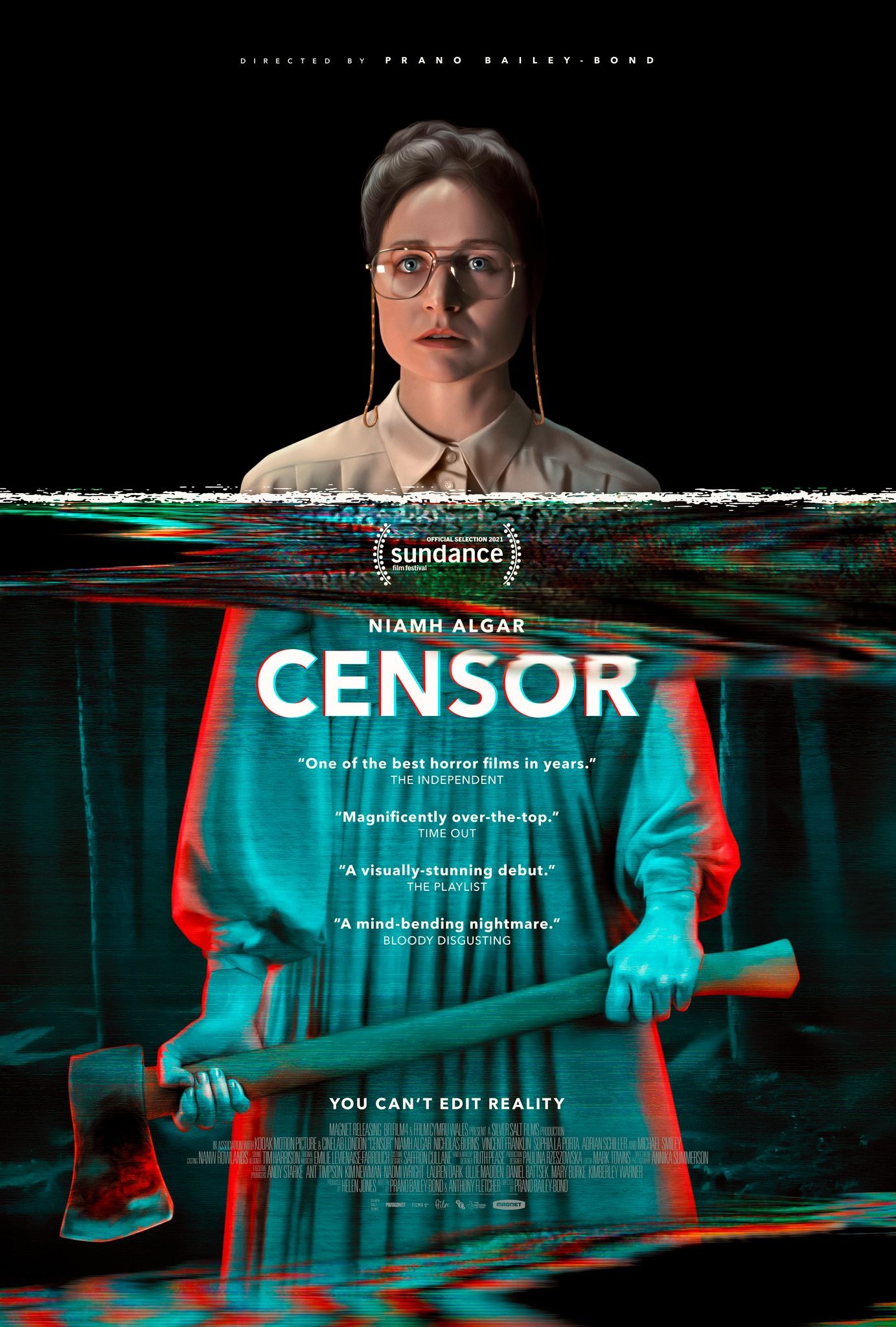
“Censor” (2021 Film) – Unmasking Social and Political Horrors in the Shadow of Cinema

Prepare for a chilling cinematic experience with “Censor” (2021), directed by Prano Bailey-Bond. This psychological horror film takes us on a gripping journey into the shadows of the film industry, offering a unique and haunting perspective that unveils deeper social and political themes, keeping viewers on the edge of their seats.

“Censor” immerses us in the dark underbelly of the 1980s British cinema world, a time fraught with social and political tensions. Niamh Algar portrays Enid, a diligent film censor grappling with the morally complex task of reviewing and censoring gruesome and controversial films. In her performance, Algar captures the weight of a society wrestling with its own demons, mirroring the political turmoil of the era.

Prano Bailey-Bond’s direction shines a spotlight on the disorienting atmosphere of the time, where a conservative political climate was reflected in the cinema’s obsession with violence and exploitation. The film’s visual style and use of ’80s aesthetics serve as a powerful backdrop for its exploration of the societal obsession with disturbing content. The blend of fiction and reality is an allegory for a society that often struggled to distinguish between the two, all while political issues loomed large.

The film delves into the social and political consequences of exposure to disturbing content, asking viewers to confront the impact of censorship and the fine line between protection and restriction. It poses crucial questions about the role of censorship in preserving societal values and protecting the vulnerable, especially in a time marked by political and moral conflicts.

As “Censor” provides an ideal platform to revisit these themes, it challenges viewers to reflect on the consequences of censorship, the blurred lines between reality and fiction, and the broader societal and political implications that lurk beneath the surface.

“Censor” (2021) is a chilling and thought-provoking exploration of the dark underbelly of cinema, amplified by the social and political tensions of its time. This gripping tale challenges viewers to reflect on the consequences of censorship, the blurred lines between reality and fiction, and the broader societal and political implications that lurk beneath the surface. Don’t miss this thought-provoking journey into the heart of darkness in both the cinema and society.

Reviewed by Pat Harrington

Picture credit: By Magnet Releasing – http://www.impawards.com/intl/uk/2021/posters/censor_xxlg.jpg, Fair use, https://en.wikipedia.org/w/index.php?curid=67704699

Leave a Comment