Posts Tagged movie analysis

The Running Man (2025) and the Language of Class

Edgar Wright’s The Running Man (2025) is less a remake than a re‑translation: it takes Stephen King’s novella’s vocabulary of dispossession and televisual cruelty, keeps the 1987 film’s neon spectacle in its peripheral vision, and tries to speak to a present where algorithms, privatized care, and influencer economies have replaced the blunt machinery of the Cold War. At its center is Ben Richards, played with a coiled, combustible intensity by Glen Powell, a man whose private desperation—medical precarity for his child, blacklisting from steady work—becomes public property the moment he signs the Network’s contract. The film stages class not as an abstract backdrop but as a conversational, moral, and performative field: characters talk about money, dignity, and survival the way other films talk about love or revenge. Those conversations are where the movie’s politics live.


Conversations That Do the Work

Wright’s script foregrounds dialogue as the primary site where class is diagnosed and debated. When Richards encounters Amelia (Emilia Jones), the exchange is not merely plot exposition; it is a microcosm of how propaganda fractures empathy. Amelia, fed a steady diet of Network lies, parrots the show’s narrative—Richards is a killer, his family is broken, his motives base—until Richards forces her to confront the human cost behind the headlines. That scene is crucial because it dramatizes how media narratives manufacture moral distance: the poor are not only exploited, they are taught to despise one another. Amelia’s lines—delivered by Jones with a brittle, defensive edge—show how class resentment can be weaponized by spectacle.

Other conversations map the social terrain more broadly. Colman Domingo’s Bobby Thompson functions as a kind of populist interpreter: he speaks to the crowd and to Richards in the language of performance and grievance, translating systemic injury into a rhetoric that can be broadcast. Michael Cera’s Elton and Lee Pace’s Hunter Evan McCone provide counterpoints—one a small‑time schemer who understands the economy of attention, the other a professionalized instrument of the Network’s violence—so that the film’s debates about class are never abstract but embodied in distinct social roles. Josh Brolin’s Dan Killian, the ruthless producer, rarely argues in moral terms; his conversations are transactional, revealing how the elite’s language of efficiency and ratings masks a calculus of human expendability.

These exchanges are not mere set dressing. They are the film’s method for showing how class consciousness is formed, suppressed, and sometimes reclaimed. When Richards speaks to allies and strangers—when he refuses to accept the Network’s framing of his actions—he is doing political work: he is naming the structural causes of his desperation. The film stages these moments as small victories in a media environment designed to make such naming impossible.


From King’s Bleakness to Wright’s Compromise

Stephen King’s novella is unflinching about the structural causes of poverty: the Games are a symptom of a society that has normalized precarity. The 1987 film translated that anger into a satirical, hyperbolic spectacle—Arnold Schwarzenegger’s Ben Richards becomes an action archetype, and the movie’s politics are filtered through camp and one‑liners. Wright’s 2025 version attempts to reclaim the novella’s moral spine while keeping the cinematic pleasures of spectacle. The result is a hybrid: the film restores conversations about privatized healthcare, blacklisting, and corporate media manipulation, but it also softens the novel’s bleakness with moments of crowd catharsis and a more conventional narrative closure.

This tonal compromise shows up in dialogue. Where King’s text leaves readers with the residue of systemic rot, Wright’s screenplay allows characters to articulate grievances in ways that invite audience identification and, ultimately, a sense of vindication. That shift matters: a conversation that ends in collective outrage is different from one that ends in unresolved despair. Wright wants viewers to feel roused; King wanted them to feel implicated.


Media, Disinformation, and the Language of Control

A central thread in the film’s conversations is the mechanics of modern propaganda. Characters repeatedly name the tools that keep the poor compliant: curated feeds, staged outrage, and the monetization of pity. Daniel Ezra’s YouTube debunker and other secondary figures illustrate how the Network’s narratives are amplified and policed by a constellation of intermediaries—influencers, pundits, and algorithmic platforms. These characters’ exchanges reveal a contemporary truth: class control no longer needs overt censorship when it can shape perception through attention economies.

Richards’ confrontations with on‑air commentators and with viewers in the crowd are instructive. He does not only fight hunters; he fights a language that reduces human need to entertainment. When Richards speaks plainly about his daughter’s illness or about the impossibility of steady work, those lines function as counter‑rhetoric—simple, human, and therefore dangerous to the Network’s business model. The film stages these moments as rhetorical insurgencies: a man’s testimony against a machine that profits from his silence.


Performances as Political Registers

The cast’s performances turn political argument into lived texture. Glen Powell keeps Richards raw and combustible; his anger is not rhetorical flourish but a register of class injury. Emilia Jones gives Amelia a brittle, performative moralism that is easier to consume than to interrogate; her character’s arc—moving from parroting the Network to seeing its lies—models how propaganda can be unlearned. Colman Domingo and Lee Pace provide the film with a moral and aesthetic counterweight: Domingo’s charisma makes solidarity feel possible, while Pace’s Hunter embodies the professionalization of violence under late capitalism. Josh Brolin as Killian is the film’s cold center: he speaks in metrics and margins, and his conversational style—calm, managerial, amused—reveals how the elite rationalize exploitation.

These performances make the film’s class conversations credible. They show how different social positions produce different rhetorical strategies: the producer’s managerial language, the hunter’s procedural detachment, the runner’s blunt testimony, the viewer’s distracted outrage. Wright stages these registers against one another so the audience can hear, in the film’s cadence, how class is argued into being.


Conclusion: Conversation as a Political Act

The Running Man (2025) is, at its best, a film about how we talk about poverty and how those conversations are policed, monetized, and sometimes reclaimed. Wright’s update restores the novella’s concern with structural causes and gives it contemporary specificity—privatized healthcare, algorithmic spectacle, influencer economies—while the cast turns political argument into human exchange. The film’s compromises—its more audience‑friendly ending, its occasional reliance on spectacle—do not erase its achievement: it makes class talk cinematic.

If the film’s final act softens King’s bleak lesson, it nonetheless insists that speech matters. When Richards names his daughter’s illness, when Amelia repeats the Network’s lies and then must answer for them, when Bobby Thompson translates grievance into performance, those are not just plot beats; they are political acts. Wright’s movie asks viewers to listen to those acts, to recognize the language of control, and to imagine solidarity as something that begins in conversation and, if we are lucky, moves beyond it.

By Pat Harrington

Poster credit: By Paramount Pictures – https://www.movieposters.com/products/running-man-mpw-149867, Fair use, https://en.wikipedia.org/w/index.php?curid=80330198

Cover of 'The Angela Suite' by Anthony C. Green featuring a pair of bare feet and a book with a cityscape background, with bold text promoting the book and a 'Buy Now' call to action.

Leave a Comment

Culture Vulture 7th-13th of June 2025

Curated by Pat Harrington | Original music in our video edition by Tim Bragg

Welcome to Culture Vulture, your guid to the week’s entertainment from an alternative standpoint. This week’s viewing offers a powerful mix of historical reflection, contemporary drama, and late-night provocation. From early Powell and Pressburger to post-financial crash San Francisco, we witness questions of identity, morality, and social fabric play out on screen. Pat Harrington’s selections lean into stories of disruption and transformation, whether through criminal underworlds, bureaucratic absurdities, or simple human loneliness.


Saturday 7 June

I Know Where I’m Going! (1945) – BBC Two, 2:00 PM

Powell and Pressburger’s wartime romance offers more than a tale of love thwarted by weather. Joan, a headstrong Englishwoman, travels to the Hebrides to marry a wealthy industrialist but finds herself stranded and slowly falling for a modest naval officer. What begins as a romantic caprice unfolds into a meditation on fate, class, and cultural identity.

The backdrop of the Scottish islands is not just scenic; it represents a different moral universe. Joan’s certainty is challenged by a community that prioritises tradition over transaction, humility over ambition. In wartime Britain, with social roles being renegotiated, the film’s suggestion that true value lies in character rather than status must have rung true.

Eighty years on, this remains a quietly radical film. Its politics are gentle but unmistakable: class mobility is not simply about marrying upwards, and progress does not mean severing ties with rootedness. In many ways, the film anticipates today’s cultural fault lines around modernisation and authenticity.

Doctor Who Unleashed: 20 Years in Wales – BBC Three, 7:00 PM

A nostalgic and affectionate behind-the-scenes celebration of the revival of Doctor Who, showcasing its cultural significance, regional pride, and the creativity it sparked in a generation of viewers and writers.

This evening’s BBC2 programming is notably dedicated to Billy Joel, a musician whose career has spanned decades and whose influence on popular music is undeniable. From his early days as a piano-driven storyteller to his status as a stadium-filling icon, Joel’s work has resonated across generations. His ability to craft deeply personal yet universally relatable songs has cemented his place as one of America’s most enduring musical figures.

Billy Joel at the BBC – BBC Two, 8:40 PM

A rich retrospective that showcases Joel’s appearances on the BBC over the years. This documentary highlights his evolution from a working-class troubadour to a global superstar, offering a blend of biography and musical exploration. Expect performances of classics like Just the Way You Are and The River of Dreams, alongside interviews that provide insight into his artistry and longevity

Billy Joel: The 100th – Live at Madison Square Garden – BBC Two, 9:55 PM

A landmark event celebrating Joel’s 100th performance at Madison Square Garden. This concert is a testament to his enduring appeal, featuring beloved hits, hidden gems, and surprise guest appearances. With a staggering 18,000 fans in attendance, the show is both a nostalgic journey and a showcase of Joel’s unparalleled ability to connect with audiences.

Billy Joel: Old Grey Whistle Test – BBC Two, 11:55 PM

rare glimpse into Joel’s early career, featuring a stripped-back performance and an insightful interview. This archival footage captures him at a pivotal moment, revealing the anxieties and ambitions that shaped his music. Expect performances of Just the Way You Are and The Entertainer, offering a raw and intimate look at his artistry.

This line-up is a fitting tribute to Joel’s legacy, interwoven with thought-provoking historical programming that ensures a night of both entertainment and reflection.

Road to Perdition (2002) – ITV1, 11:20 PM

Sam Mendes directs this sombre gangster tale with a painterly touch. Set during the Great Depression, it follows hitman Michael Sullivan (Tom Hanks) and his young son on the run after a betrayal inside the Irish-American mob. The film probes the costs of loyalty, masculinity, and the myth of redemptive violence.

Economic hardship haunts every frame. The icy streets and fading grandeur of Chicago echo a world of scarcity, both financial and emotional. Mendes presents crime as a corrupt refuge from the poverty of ordinary life—but not one without its own hierarchy and brutality.

What lingers is the film’s moral ambiguity. Sullivan is both protector and killer, father and destroyer. As economic despair forces men into morally grey choices, the film asks whether virtue is even possible in a corrupt system—or if the most one can hope for is to limit the damage done to others.

Bad Lieutenant (1992) – Legend, 12:55 AM

Abel Ferrara’s film is a nightmarish descent into the soul of a corrupt New York police officer. Played with searing intensity by Harvey Keitel, the titular lieutenant is both predator and penitent, committing crimes as often as he investigates them. When a nun is raped, her refusal to condemn her attackers sends him spiralling.

This is no standard crime film. It explores the rot within institutions and the hollow centre of performative morality. The lieutenant’s crisis is spiritual as much as physical—a post-Reagan parable of a society that prizes appearance over substance, retribution over justice.

Ferrara’s New York is bleak, but never indifferent. Amid the horror is a strange sort of grace. The nun’s forgiveness offers a radical alternative to the lieutenant’s world of deals and debts. It’s a brutal film, but also one of the most theologically daring in American cinema.


Sunday 8 June

Julius Caesar (1953) – BBC Two, 2:00 PM

Joseph L. Mankiewicz’s version of the Shakespeare play is rich in oratory and intrigue. With Marlon Brando as Antony, James Mason as Brutus, and John Gielgud as Cassius, the film explores the collapse of a republic under the weight of ambition, paranoia, and noble delusion.

Though set in ancient Rome, the film resonates with Cold War anxieties. The fear that democracy could crumble from within mirrored mid-century American unease with McCarthyism and creeping authoritarianism. Brutus, the idealist, finds that honour alone is no match for realpolitik.

The film’s enduring relevance lies in its depiction of populism and manipulation. Antony’s funeral speech is a masterclass in the power of rhetoric. As modern democracies face their own challenges, this adaptation remains a timely warning that good intentions are not enough to save a republic from itself.

Groundhog Day (1993) – Film4, 4:40 PM

At first glance, Groundhog Day appears to be a lighthearted comedy about an arrogant weatherman stuck in a bizarre time loop. But beneath its charming surface, Harold Ramis’s film is a profound meditation on self-improvement, morality, and the human condition.

Bill Murray plays Phil Connors, a cynical TV weatherman sent to cover the annual Groundhog Day festivities in Punxsutawney, Pennsylvania. When he wakes up to find himself reliving the same day over and over again, his initial response is frustration, then reckless indulgence. He exploits his predicament—seducing women, manipulating events, and indulging in hedonistic pleasures—only to find that none of it brings lasting satisfaction.

The film’s brilliance lies in how it transforms repetition into revelation. As Phil cycles through the same day, he is forced to confront his own flaws. His journey from selfishness to selflessness mirrors a philosophical awakening, echoing ideas from Buddhism, existentialism, and even Aristotelian ethics. The time loop becomes a metaphor for personal growth: only by embracing kindness, humility, and genuine connection can Phil break free.

Socially, Groundhog Day speaks to the monotony of modern life—the feeling of being trapped in routines, unable to escape the cycles of work, relationships, and societal expectations. It asks whether change is possible, not just for individuals but for communities. Phil’s transformation suggests that redemption is within reach, but only through conscious effort.

Ethically, the film raises questions about free will and moral responsibility. If given infinite chances, would we choose to become better people? Or would we remain trapped by our worst instincts? Phil’s evolution suggests that morality is not innate but cultivated through experience and reflection.

More than just a romantic comedy, Groundhog Day is a fable about the power of choice, the weight of time, and the possibility of renewal. It remains one of the most quietly profound films of the 1990s, blending humour with deep philosophical inquiry.

The Gold – BBC One, 9:00 PM

The first episode of this compelling drama dives into one of Britain’s most notorious crimes—the Brink’s-Mat robbery. A staggering £26 million in gold bullion was stolen from a Heathrow warehouse in 1983, setting off a chain of events that reshaped the UK’s financial crime landscape.

This dramatization meticulously intertwines the police investigation, the shadowy world of money laundering, and the far-reaching socio-economic consequences of the heist. It offers a gripping portrayal of the officers determined to uncover the truth, the criminals entangled in a web of greed and betrayal, and the systemic vulnerabilities that allowed illicit wealth to flow into legitimate channels.

With a keen eye for detail and a sophisticated narrative approach, the series doesn’t just recount events—it explores themes of corruption, power, and justice, making for a thought-provoking watch.

Alison Steadman Remembers Girl – BBC Four, 10:00 PM

Alison Steadman reflects on her breakthrough role in Girl, connecting past performances with shifting views on gender, class, and performance in Britain. Girl was notable for the first broadcast of a lesbian kiss between Steadman with Myra Frances way back in 1974.

Tonight’s programming on BBC Two serves as a tribute to Alan Yentob, a towering figure in British broadcasting who passed away on the 24th of May 2025 at the age of 78. Yentob was a champion of the arts, shaping decades of cultural programming at the BBC. His influence extended across television, film, and theatre, with a passion for storytelling that left an indelible mark on British culture.

As the long-time editor and presenter of Imagine, Yentob brought audiences intimate and thought-provoking portraits of creative visionaries. His work celebrated originality, risk-taking, and artistic ambition, making the BBC a home for creativity and curiosity.

Imagine: Mel Brooks – BBC Two, 9:00 PM

An affectionate profile of the anarchic genius behind Blazing Saddles and The Producers, this episode is both a career retrospective and an insight into how humour can act as cultural critique.

David Bowie: Cracked Actor – BBC Two, 10:15 PM

Alan Yentob’s interview style in Cracked Actor was as much a part of the documentary’s impact as Bowie himself. Filmed in 1974, Yentob approached Bowie with a quiet, observational technique, allowing the musician’s own words and demeanor to shape the narrative.

Rather than pressing Bowie with direct questions, Yentob created an atmosphere where Bowie could reflect freely, often in the back of a limousine or in dimly lit hotel rooms. This method captured Bowie at his most vulnerable—physically drained, creatively restless, and grappling with the effects of fame and addiction. Yentob’s ability to draw out Bowie’s introspective musings without intrusion resulted in moments of startling honesty.

The documentary’s most memorable exchanges show Bowie speaking in fragmented, poetic thoughts, revealing his fascination with identity, reinvention, and alienation. Yentob’s presence is felt more as a guide than an interrogator, allowing Bowie’s words to unfold naturally rather than forcing a structured narrative. This approach made Cracked Actor one of the most intimate portraits of Bowie ever filmed, offering rare insight into his psyche at a critical turning point in his career.

Gateways Grind – BBC Four, 10:50 PM

A rare look at Britain’s first lesbian nightclub and the women who frequented it. More than nostalgia, it’s a piece of queer history reclaimed.

Our Ladies (2019) – Film4, 11:05 PM

Michael Caton-Jones adapts Alan Warner’s novel about six Catholic schoolgirls cutting loose on a trip to Edinburgh. What could have been a light coming-of-age comedy becomes a fierce, foul-mouthed celebration of teenage rebellion and female friendship.

The film is set in the mid-1990s—a time when Scotland was still negotiating its cultural and political identity. These young women push back against repressive religious authority and a society that expects little from them. Their antics may be juvenile, but they are acts of defiance.

There’s a raw honesty to how the film handles class and aspiration. These girls don’t dream of escape to London or New York. Their rebellion is local, bodily, and immediate. The humour is crude, the emotions sincere. And the film dares to let its protagonists be chaotic, even unlikable, without apology.


Monday 9 June

Jamie’s Dyslexia Revolution – Channel 4, 9:00 PM

Jamie Oliver’s Dyslexia Revolution is more than just a personal journey—it’s a call to rethink how we support individuals with dyslexia in education and beyond. The documentary takes a deeply personal look at Oliver’s own experiences, shedding light on the struggles and triumphs of those who navigate a world often designed for a single learning style.

Oliver critiques the education system’s rigid structure, arguing that traditional classroom methods often fail to recognize the diverse ways in which people absorb and process information. He advocates for a more inclusive approach, one that values creativity, problem-solving, and alternative learning techniques rather than focusing solely on standardized metrics.

The film doesn’t just highlight the challenges of dyslexia—it also celebrates the unique strengths that come with thinking differently. By sharing his own story and engaging with experts, educators, and those living with dyslexia, Oliver pushes for systemic change, urging schools and workplaces to rethink how they support neurodivergent individuals.

It’s a compelling and necessary conversation about education, inclusion, and the need for a more holistic understanding of intelligence. With Oliver’s characteristic passion and commitment, Dyslexia Revolution promises to spark debate and encourage a more accommodating approach to learning


Tuesday 10 June

The Gold – BBC One, 9:00 PM

In this gripping second episode, the stakes rise as investigators and criminals alike feel the pressure of the Brink’s-Mat heist fallout. The stolen gold, now laundered into the financial system, begins to seep into legitimate businesses, demonstrating how illicit wealth can distort economies and institutions.

The episode meticulously examines the mechanics of systemic corruption—how layers of deception, financial loopholes, and complicit insiders allow criminal profits to blend seamlessly into everyday commerce. It’s a study not just of crime, but of the fragility of accountability within the financial and legal structures meant to prevent such infiltration.

With intense performances and sharp storytelling, the series continues to unearth the uncomfortable reality that crime is rarely confined to the criminal underworld; it’s a shadow that stretches across the economic landscape, implicating figures far removed from the original act.

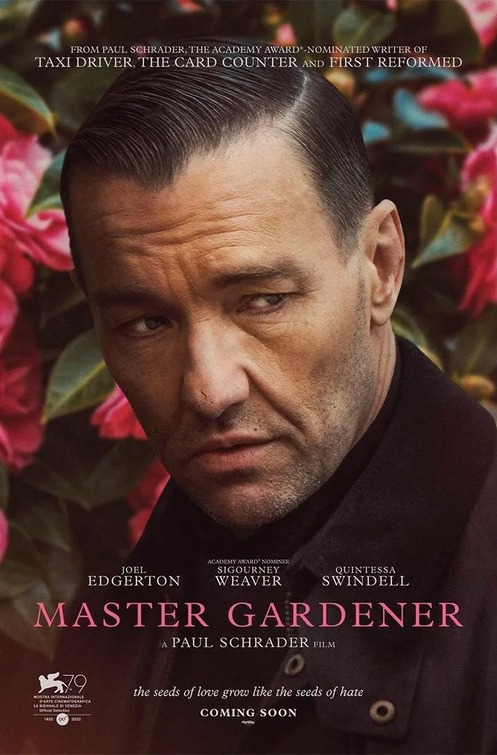
Master Gardener (2022) – Great Movies, 9:00 PM

Paul Schrader’s latest drama centres on a horticulturist with a violent past who becomes entangled with a young woman in need of protection. The film is a slow-burning examination of redemption and identity in a nation scarred by racism and generational trauma.

What makes the film arresting is its refusal to offer easy forgiveness. The protagonist’s past as a white supremacist is not glossed over, and his transformation is tentative. The garden becomes a metaphor for cultivation and control—of the self and society.

This is a film about inherited guilt and the hope that care can be more powerful than destruction. Schrader’s Calvinist sensibility makes it heavy viewing, but in its own way, it’s a political film about American decay and spiritual yearning.

Storyville: Wedding Night – BBC Four, 10:00 PM

This documentary offers a rare and intimate look into the experiences of ultra-Orthodox Jewish couples on their wedding night, a moment steeped in tradition and expectation. In this community, men and women are raised separately, with little interaction before marriage. When the time comes, the expectation is that they will consummate their union, navigating a deeply personal and often overwhelming transition.

Through candid interviews, Wedding Night explores the emotional and psychological impact of these customs, revealing how modesty, religious doctrine, and societal pressures shape the experience. Men and women speak openly about their feelings during matchmaking, engagement, the wedding ceremony, and their first night together, offering a nuanced perspective on a tradition rarely discussed outside the community.

Directed by Rachel Elitzur and produced by Avigail Sperber, the film provides a sensitive yet unflinching portrayal of a world where deeply held beliefs intersect with personal realities


Wednesday 11 June

Witchfinder General (1968) – Legend, 3:05 AM

Michael Reeves’s horror classic stars Vincent Price as the sadistic Matthew Hopkins, hunting so-called witches during the English Civil War. A historical horror rooted in real repression, the film’s power lies in its exposure of mob justice and authority gone mad.

The English countryside is depicted as bleak and paranoid, where superstition thrives in the absence of law. Reeves’s direction is unforgiving—less gothic and more brutal realism. It is, above all, a warning about the uses of fear to control communities.

Often seen as a comment on Vietnam-era violence and state-sanctioned cruelty, its themes have not aged. From moral panics to modern witch hunts, this remains a visceral critique of unchecked authority.


Thursday 12 June

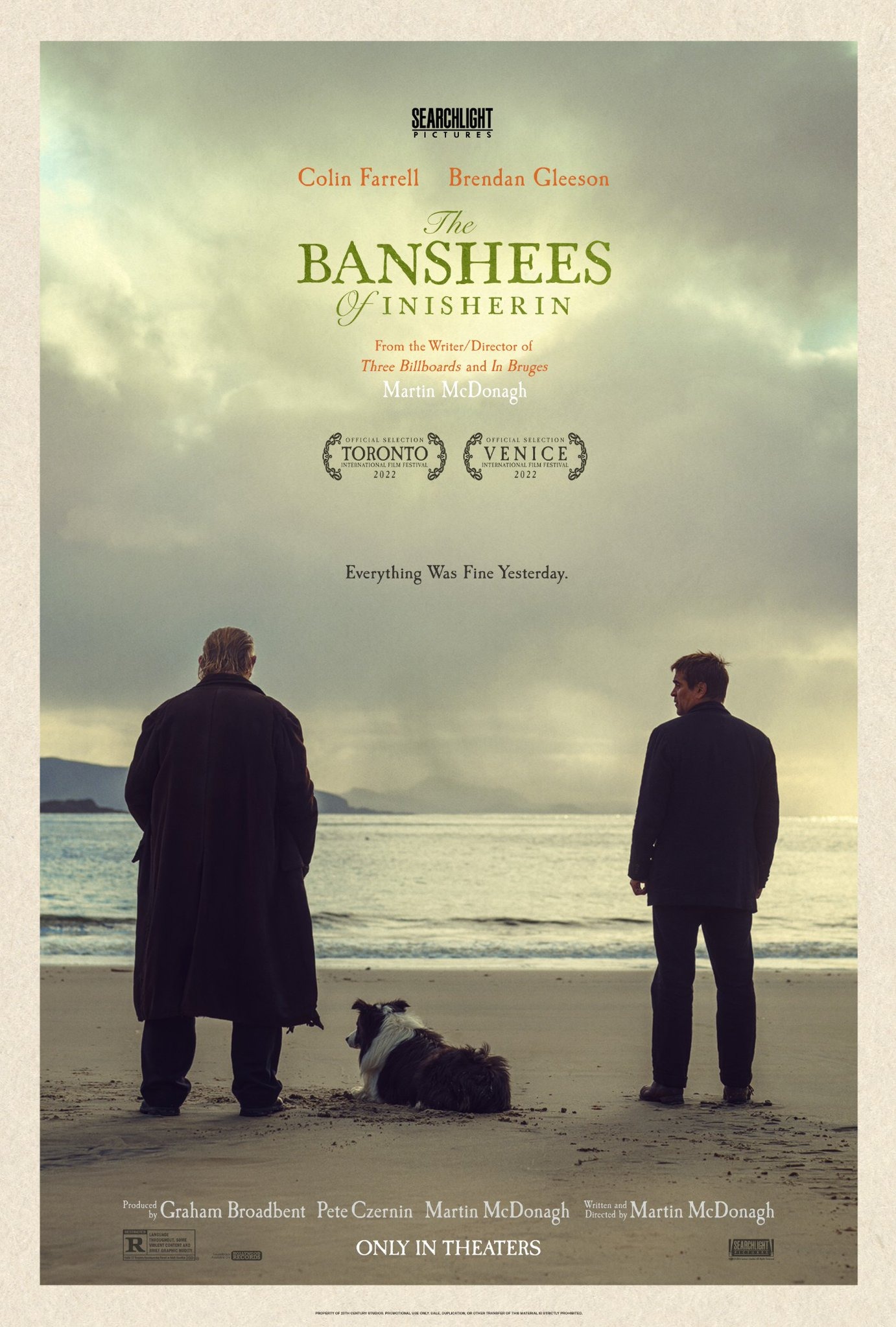
The Banshees of Inisherin (2022) – Film4, 9:00 PM

Martin McDonagh’s black comedy is about a friendship’s abrupt end on a remote Irish island. It quickly becomes an allegory for civil war, grief, and the slow erosion of community.

Brendan Gleeson and Colin Farrell play former friends, their quarrel taking absurdly tragic turns. Inisherin is portrayed as stagnant and inward-looking, where isolation breeds cruelty. The war in the background echoes the pettiness and pointlessness of human conflict.

As with McDonagh’s earlier work, there’s moral ambiguity and biting dialogue. But the lasting effect is mournful. This is a fable about the pain of being human, and the damage we do when we sever connection.

The Last Bus (2021) – BBC Two, 11:00 PM

Timothy Spall delivers a touching performance in this quietly powerful film about love, loss, and resilience. He plays Tom, an elderly widower who embarks on a poignant journey across the UK, travelling from John o’ Groats to Land’s End using only his free bus pass. His mission is deeply personal—one final trip to honour the memory of his late wife.

As Tom moves through towns and cities, he encounters strangers who each add something to his story, whether through moments of kindness, curiosity, or reflection. Along the way, the film gently explores themes of ageing, grief, and the enduring bonds that shape our lives. Flashbacks reveal his younger years with his beloved Mary, showing the love that fuels his determination to complete this journey.

With its heartfelt storytelling and Spall’s understated but deeply expressive performance, The Last Bus is a tribute to quiet perseverance and the simple yet profound connections we make in life. It’s a film that lingers, reminding us of the journeys we take—not just across landscapes, but through time and memory.


Friday 13 June

The Last Black Man in San Francisco (2019) – BBC Two, 11:00 PM

Joe Talbot’s semi-autobiographical debut tells the story of a young man trying to reclaim his childhood home in a rapidly gentrifying city. The film is a lyrical meditation on place, memory, and cultural displacement.

It focuses on Jimmie and his best friend Mont as they navigate friendship, loss, and identity in a city that no longer feels like theirs. San Francisco is portrayed as a living organism—its wealth, tech invasion, and erasure of Black culture weighing on every frame.

Visually stunning and emotionally restrained, the film resists easy answers. It instead offers a poetic portrait of what it means to belong somewhere—and what it feels like to lose that place to time and power.

Naked (1993) – Film4, 11:20 PM

Mike Leigh’s darkest film stars David Thewlis as Johnny, a drifter whose verbal tirades mask deep despair. Set in Thatcher’s London, it exposes a society fractured by inequality, misogyny, and existential dread.

Johnny wanders the capital, leaving ruin in his wake. His encounters with women and strangers are both intellectually charged and emotionally violent. Leigh refuses to redeem him, showing how rage, even when insightful, can be corrosive.

A bleak portrait of a man—and a city—adrift, Naked still feels provocatively contemporary. It asks how a society that has lost its soul can expect its citizens to behave morally.


Streaming Choices

FUBAR Season 2 – Netflix

Arnold Schwarzenegger returns as a retired CIA agent juggling spycraft and family drama. More absurd than thrilling, but it embraces its campiness with gusto.

Deep Cover (1992) – Prime Video

Deep Cover (1992) is a gripping neo-noir thriller that blends crime, identity, and social critique into a tense and thought-provoking narrative. Directed by Bill Duke, the film stars Laurence Fishburne as Russell Stevens Jr., a principled cop with a troubled past who is recruited by the DEA to go undercover in an international cocaine cartel2. As he assumes the alias John Q. Hull, Stevens finds himself navigating the murky waters of law enforcement, morality, and personal transformation.

What sets Deep Cover apart is its unflinching examination of race, power, and the drug war’s devastating impact. The film doesn’t just follow the familiar beats of an undercover cop story—it interrogates the very system Stevens is meant to uphold. As he climbs the ranks of the criminal underworld, the lines between justice and corruption blur, forcing him to question whether he is truly fighting crime or merely perpetuating a cycle of systemic exploitation.

Duke’s direction infuses the film with a stylish yet gritty atmosphere, capturing the tension and paranoia of Stevens’ double life. The screenplay, co-written by Michael Tolkin and Henry Bean, delivers sharp dialogue and layered character development, making Deep Cover as intellectually engaging as it is thrilling. Fishburne’s performance is magnetic, portraying a man torn between duty and survival, while Jeff Goldblum, in a strikingly unconventional role, plays a morally ambiguous lawyer entangled in the drug trade.

Beyond its crime-thriller framework, Deep Cover serves as a searing indictment of the drug war’s moral cost, exposing how law enforcement policies disproportionately affect marginalized communities. The film’s themes remain remarkably relevant, making it a standout in the genre and a must-watch for those interested in socially conscious cinema.

Hereafter (2010) – Paramount+

Hereafter (2010) is a contemplative drama directed by Clint Eastwood, weaving together three parallel narratives that explore themes of grief, mortality, and the search for meaning. The film follows an American factory worker, played by Matt Damon, who has a psychic connection to the afterlife, a French journalist, portrayed by Cécile de France, who survives a near-death experience during the 2004 Indian Ocean tsunami, and a British schoolboy, played by Frankie and George McLaren, who struggles with the loss of a loved one.

Eastwood’s direction lends the film a quiet, meditative tone, steering clear of grand spectacle in favor of a restrained and personal approach. Hereafter focuses on the emotional weight of loss and the human desire for connection, offering a reflection on the different ways people process death. The film’s pacing is deliberate, allowing its characters to navigate their personal struggles with realism, though some critics found its emotional beats inconsistent.

With a screenplay by Peter Morgan, Hereafter balances its supernatural elements with grounded storytelling, making it more of a philosophical exploration than a traditional thriller. The cinematography, particularly in its depiction of the tsunami sequence, is striking, setting the stage for the existential questions that follow. While the film received mixed reviews, it remains a compelling watch for those interested in introspective, character-driven narratives.

Picture credits

Cracked Actor
May be found at the following website: https://www.discogs.com/ru/release/6889562-David-Bowie-Cracked-Actor-A-Film-about-David-Bowie, Fair use, https://en.wikipedia.org/w/index.php?curid=74574080
I Know Where I’m Going! (1945)
By http://www.impawards.com/1945/i_know_where_im_going.html, Fair use, https://en.wikipedia.org/w/index.php?curid=10548579
Road to Perdition (2002)
May be found at the following website: IMP Awards, Fair use, https://en.wikipedia.org/w/index.php?curid=1026190
Bad Lieutenant (1992)
May be found at the following website: IMDb, Fair use, https://en.wikipedia.org/w/index.php?curid=26387547
Julius Caesar (1953)
Fair use, https://en.wikipedia.org/w/index.php?curid=6717381
Groundhog Day (1993)
May be found at the following website: IMP Awards, Fair use, https://en.wikipedia.org/w/index.php?curid=7596535
Our Ladies (2019)
By http://www.impawards.com/intl/uk/2019/our_ladies.html, Fair use, https://en.wikipedia.org/w/index.php?curid=67802038
Master Gardener (2022)
By http://www.impawards.com/2022/posters/master_gardener.jpg, Fair use, https://en.wikipedia.org/w/index.php?curid=71679382
Witchfinder General (1968)
The poster art can or could be obtained from American International Pictures., Fair use, https://en.wikipedia.org/w/index.php?curid=6120541
The Banshees of Inisherin (2022)
By http://www.impawards.com/2022/posters/banshees_of_inisherin_xxlg.jpg, Fair use, https://en.wikipedia.org/w/index.php?curid=71458552
The Last Bus (2021)
By http://www.impawards.com/intl/uk/2021/last_bus_ver3.html, Fair use, https://en.wikipedia.org/w/index.php?curid=68583124
The Last Black Man in San Francisco (2019)
By A24 Films, Fair use, https://en.wikipedia.org/w/index.php?curid=60292326
Naked (1993)
By https://uk.movieposter.com/poster/MPW-53927/Naked.html, Fair use, https://en.wikipedia.org/w/index.php?curid=48434515
Hereafter (2010)
By May be found at the following website: http://www.movieposterdb.com/poster/77bc13c4, Fair use, https://en.wikipedia.org/w/index.php?curid=28805505
Deep Cover (1992)
By IMDb, Fair use, https://en.wikipedia.org/w/index.php?curid=15521015
Mel Brooks
By Angela George, CC BY-SA 3.0, https://commons.wikimedia.org/w/index.php?curid=10257010
Alan Yentob
By Financial Times – https://www.flickr.com/photos/financialtimes/34788802943/in/dateposted/, CC BY 2.0, https://commons.wikimedia.org/w/index.php?curid=64029981
Alison Steadman
By Flickr user Andy from London, UK – You’ll Have Had Your Tea – Alison Steadman as Mrs Naughtie from Flickr, CC BY-SA 2.0, https://commons.wikimedia.org/w/index.php?curid=2256855
Billy Joel
By David Shankbone – David Shankbone, CC BY 3.0, https://commons.wikimedia.org/w/index.php?curid=7866968
Jamie Oliver
By Karl Gabor – http://www.mynewsdesk.com/uk/scandic_hotels/images/jamie-oliver-192908, CC BY 3.0, https://commons.wikimedia.org/w/index.php?curid=31594070

Leave a Comment

Trust and Deception in Black Bag: A Deep Dive by Pat Harrington

2,755 words, 15 minutes read time.

Black Bag is a glossy espionage thriller directed by Steven Soderbergh, centering on a high-stakes mole hunt within British intelligence. The story follows strait-laced agent George Woodhouse (Michael Fassbender), a legendary operative tasked with unmasking a traitor who has stolen dangerous technology . In a world where deception comes as easily as breathing, George’s commitment to truth is tested when evidence points to his own wife, Kathryn (Cate Blanchett), a high-ranking agent, as a prime suspect . With their marriage on the line, George must quietly investigate Kathryn and their colleagues – including the agency’s insightful psychiatrist Dr. Zoe Vaughan (Naomie Harris), a charmingly reckless field agent Freddie Smalls (Tom Burke), and an eager junior operative Clarissa Dubose (Marisa Abela) – all while keeping up appearances. The film’s premise sets up an intriguing blend of marital drama and spy mystery without tipping off any major twists. Soderbergh wastes no time plunging the audience into a paranoid atmosphere of secret meetings, surveillance, and double lives, establishing the stakes and conflicts early on in a spoiler-free manner.

Click on image to buy DVD

Themes of Espionage, Deception, and Trust

At its core, Black Bag uses the spy genre to explore deeper themes of trust and betrayal. The film asks what it’s like to build a marriage on secrets and lies, when both partners are trained to deceive as part of their profession. The central tension revolves around espionage bleeding into domestic life – can George and Kathryn truly trust each other when each is skilled in subterfuge? Soderbergh and screenwriter David Koepp play with the idea that romance can feel a lot like spycraft when suspicion creeps in; every affectionate gesture or offhand remark might mask an ulterior motive. This dynamic gives the film an emotional undercurrent: the characters grapple not only with catching a mole, but also with the erosion of intimacy and certainty in their personal relationships. As Mark Kermode observed, the film functions as a “seductive spy comedy” about “married spooks trying to trace a leak whilst navigating a relationship that must have secrets” . Indeed, Black Bag balances its cloak-and-dagger intrigue with witty commentary on the impossible dilemma of total honesty between spies. The theme of deception is handled with a light touch at times – there are playful moments when characters test each other’s trust – but the emotional stakes remain relatable. Even without revealing any outcomes, it’s clear that the question of trust (who can believe whom, and to what extent) drives the suspense as much as the actual spy plot.

Performances and Characters

The film boasts a stellar cast who elevate the material with nuanced performances. Michael Fassbender brings a steely gravitas to George Woodhouse, portraying him as a methodical agent torn between duty and devotion. Fassbender’s intensity sells George’s internal conflict; with just a tightened jaw or a flicker of doubt in his eyes behind thick-framed glasses, he conveys the weight of suspecting the person he loves . Opposite him, Cate Blanchett is effortlessly compelling as Kathryn, imbuing the character with an air of elegant mystery. Blanchett plays Kathryn as both caring partner and enigmatic operative – her cool composure keeps us guessing about Kathryn’s true intentions. The chemistry between Fassbender and Blanchett is a highlight: their cat-and-mouse exchanges and subtle shifts in tone make the central husband-wife relationship believable and intriguing. Critics have noted that the charged relationship between these two stars is what makes the film so alluring, as their scenes crackle with tension and restrained emotion .

The supporting cast provides strong backup. Naomie Harris shines in a smaller role as Dr. Zoe, the agency psychologist who perhaps knows more than she lets on; Harris delivers warmth and shrewdness, often serving as the story’s moral compass. Tom Burke is memorable as Freddie Smalls, bringing roguish charm and a touch of vulnerability to the “alcoholic maverick” agent who injects some unpredictability into the team . Marisa Abela plays the junior tech expert Clarissa with earnestness, and her scenes often add a youthful, modern perspective on the old-school spy game. Notably, former James Bond star Pierce Brosnan makes a brief but delightful appearance as the silver-haired agency boss overseeing the mole hunt – a casting choice that serves as a sly wink to the genre’s legacy . Each actor mentions their character by name in dialogue naturally, making it easy to keep track of who’s who. Overall, the performances ground the film’s twisty plot in genuine emotion. Even as the story’s deceptions multiply, the cast ensures that the audience remains invested in the characters’ fates.

Direction and Cinematography

Director Steven Soderbergh imprint is unmistakable in Black Bag. Known for his versatility and stylish visuals, Soderbergh here indulges his love for the classic British spy thriller ethos while giving it a contemporary polish. He not only directs but, true to form, reportedly handles the cinematography and editing himself under pseudonyms – a rare one-man technical show that gives the film a cohesive, auteur vision. The cinematography is sleek and controlled: Soderbergh frames the scenes with a cool, modern elegance. From the hushed corridors of London offices to the lavish interiors of the Woodhouse home, every setting is filmed with crisp precision and atmospheric lighting. The camera often lingers on fabulously chic interiors and impeccable tailoring, creating a sumptuous visual palette that distracts (in a good way) from the potentially convoluted plot . There’s a memorable visual contrast between the polished veneer of the spy world and the ugliness of betrayal lurking underneath. Soderbergh uses subtle camera movements – a slow pan here, a steady long take there – instead of shaky action, to ratchet up tension. One standout sequence involves all the suspects gathered in a single location; the way Soderbergh’s camera glides around the room builds suspense through staging and glance, rather than explosions. It’s a restrained approach that favors slow-burn suspense over bombastic action.

This refined visual style has drawn mixed reactions. Some viewers will appreciate the “hyper-polished” and coolly elegant look of the film, which the Financial Times aptly described as a “coolly cerebral take on British espionage” . The subdued color palette and meticulous shot composition give Black Bag a sophisticated sheen, more John le Carré than James Bond. However, others might find the visuals almost too slick, contributing to a tone that is emotionally distant at times. While undeniably beautiful to look at, the film’s style can feel icy. Still, Soderbergh’s direction keeps the storytelling clear despite multiple characters and clues. Even without high-octane chases, he maintains a taut pace through editing – cross-cutting between characters’ perspectives to reveal lies and truths incrementally. The result is a film that is visually confident and consistently engaging, if not overtly flashy. Soderbergh proves once again that a thriller can be tense and cinematic without relying on CGI or rapid-fire action; his focus on mood and detail in each frame invites the audience to live in the intrigue alongside the characters.

Screenplay and Tone

The screenplay, written by veteran screenwriter David Koepp, is packed with intrigue, sharp dialogue, and the occasional dash of dark humor. Koepp sets up a classic whodunit structure within the spy framework – every main character has secrets, alibis, and motives that slowly come to light as George conducts his clandestine investigation. The script smartly balances spy jargon and personal drama. Conversations oscillate between mission briefings and intimate husband-wife banter, emphasizing how the professional and personal are intertwined for the Woodhouses. Many critics have highlighted the film’s witty, verbal sparring. Much of Black Bag is “relegated to dinner tables and office rooms as stages for rapid-fire, gleefully barbed verbal exchanges,” one reviewer noted, pointing out that the thrills often come from words more than gunplay . Indeed, the tension builds through mind games and probing conversations, giving the film a cerebral quality. This lighter, talkier tone – even verging on a social comedy of manners in some scenes – has led Mark Kermode and others to label the film a sly spy comedy as much as a thriller . There are flashes of humor (often bone-dry British wit) that relieve the tension and remind us that Soderbergh is having fun subverting genre expectations.

That said, the screenplay has faced some criticism. The Guardian’s reviewer argued that the script is the film’s “main problem,” suggesting that after all the elaborate setup, Koepp’s screenplay doesn’t quite deliver a satisfying payoff . Without spoiling details, it’s fair to say the third act resolution has proven divisive – some feel it wraps up too conveniently or lacks the punch one might expect after such a careful build-up. Additionally, a few character motivations remain somewhat baffling or under-explained , which can leave parts of the story feeling convoluted if you stop to question them. The film asks the audience to go along with its twists even if not every detail fully adds up. For viewers accustomed to the gritty realism and complexity of modern spy series like Slow Horses, Black Bag may come off as inauthentic or superficial beneath its glossy surface . The Guardian quipped that, compared to the grubby, hard-edged world of Mick Herron’s spies, this film “feels about as authentic as a set of dental veneers” – a pointed critique that it’s style over substance. However, other voices found Koepp’s script clever in how it turns a spy caper into a relationship drama. There is praise for how the screenplay uses the espionage plot as a lens to examine marriage and trust, with one outlet calling it “smart [and] titillating” in that regard . In tone, Black Bag walks a fine line: it’s suspenseful but not overly grim, sophisticated but not afraid to wink at the audience. Depending on your expectations, you’ll either enjoy the dialog-driven approach as a fresh twist on the genre or wish the film had a bit more bite and clarity in its narrative bite.

Critical Reception

Upon release, Black Bag garnered a generally positive but somewhat mixed critical reception, with many praising its style and performances while noting some shortcomings in substance. The Guardian’s Wendy Ide gave the film a middling 3 out of 5 stars, commending its “fabulously chic” aesthetic and the pleasure of watching Blanchett and Fassbender on screen, but ultimately finding it a slick experience that lacks the gritty authenticity of the best spy tales . The Guardian review highlighted that while the film is polished and entertaining, it doesn’t fully resonate on an emotional level, owing largely to a script that sacrifices plausibility for panache . Over at the Financial Times, the critic also remarked on Soderbergh’s hyper-polished approach. The FT described Black Bag as a “coolly cerebral take on British espionage” with an abundance of suave style . This assessment aligns with many reviewers who admired the movie’s intelligence and measured pacing – it’s a thriller that “luxuriates in its own cerebral suaveness,” focusing on psychological chess matches rather than explosive action (a quality the FT noted with both appreciation and a hint of reservation). In other words, the film’s methodical, brainy nature was seen as a double-edged sword: it set Black Bag apart from run-of-the-mill spy flicks, but also made it a touch too cool and arm’s-length for some tastes.

Renowned film critic Mark Kermode also weighed in with his perspective. On his film review podcast, Kermode characterized Black Bag as seductive and stylish, emphasizing the unique blend of marital drama and espionage comedy . He lauded Soderbergh’s technical artistry – noting it’s “a rare situation where one person is in charge of the entire visual treatment” of a film – and suggested that viewers who enjoy sleek direction and subtle details would find much to admire. Kermode appreciated the film’s witty script and retro spy vibes, comparing its tone favorably to classic genre pieces. However, he also hinted that the film might not be for everyone, acknowledging that its deliberate pacing and talky nature could test the patience of those expecting a high-octane thriller. In summary, critics from The Guardian, Financial Times, and Mark Kermode’s camp all agree on the strong performances and high-gloss direction, even as they diverge on whether the film’s cerebral, slow-burn approach is a brilliant subversion or a missed opportunity. The overall critical consensus tilts positive: Black Bag is frequently described as “sleek” and “spiked with dry wit,” an espionage tale that succeeds more in atmosphere and character interplay than in white-knuckle thrills . It currently enjoys a high approval rating on review aggregators, indicating that most critics were intrigued and entertained, if not outright blown away.

Strengths and Weaknesses

Black Bag stands out for its strengths in style, acting, and thematic ambition. The combination of Steven Soderbergh’s assured direction and the magnetic star power of Michael Fassbender and Cate Blanchett results in a film that is immensely watchable. Its espionage-meets-marriage concept feels fresh, and the theme of trust is woven thoughtfully into the narrative. Many viewers will enjoy the film’s dry humor and classy visual flair – it’s the kind of thriller that opts for tête-à-tête confrontations over shootouts, which can be a refreshing change of pace. Technically, the film is top-notch: from the cinematography and production design to a jazzy, percussive score by David Holmes (reminiscent of his work on Soderbergh’s Ocean’s series), Black Bag oozes a confident, upscale vibe. Among its greatest strengths is the palpable chemistry between the leads and the way the dialogue crackles when they face off. There are moments of real tension and sly excitement as layers of deception are peeled back. In short, Black Bag excels as a sophisticated spy drama that doubles as an intimate character study. It’s likely to please fans of slow-burn thrillers and those who appreciate witty, literate screenplays.

On the flip side, the film does have weaknesses that prevent it from reaching true classic status. The most cited issue is the screenplay’s third act, which some found underwhelming after such a meticulous build-up . The revelations and resolution can come across as a bit pat – lacking the knockout punch or clarity one might hope for. While the movie is consistently engaging, it seldom reaches a boiling point; for some, the understated approach may verge on anticlimax. Additionally, the heavy emphasis on style sometimes comes at the expense of substance. Black Bag is so immaculate in its look and tone that it risks feeling clinical and distant, and as The Guardian noted, there’s an air of superficiality in how neatly everything (and everyone) is groomed in this spy world . The emotional core between George and Kathryn, while compelling, could have been explored even more deeply – a few more raw moments of vulnerability might have added heft. Viewers expecting a heart-pounding thriller might also be let down by the film’s restrained pace and talkiness; the cerebral plotting demands close attention, and a few mid-section scenes do drag slightly as characters trade barbs in well-furnished rooms. Lastly, the film juggles multiple supporting characters, and not all of them get satisfying development. Some of the intriguing side players (like Harris’s and Abela’s characters) feel underused, leaving one wishing for more payoff to their subplots.

Verdict

In the end, Black Bag is a smart, stylish espionage drama that offers a nuanced take on a spy hunt by filtering it through the lens of a marriage built on secrets. Its spoiler-free premise of two married agents caught in a web of suspicion is handled with enough skill and charm to hook the audience, even if the film doesn’t revolutionize the genre. The central themes of espionage, deception, and trust are well-realized – especially the notion that in love as in espionage, knowing whom to trust is the ultimate challenge. With first-rate performances (Fassbender’s stoicism and Blanchett’s inscrutability make for a riveting pair) and slick direction, Black Bag delivers plenty of pleasures: it’s tense but not terrifying, witty but not silly, and above all, consistently engaging. Its weaknesses, notably a somewhat safe finale and a sheen of implausibility, keep it just shy of greatness. But taken on its own terms, the film succeeds as a “sleek, sexy take on marital espionage” that entertains and intrigues in equal measure . In a year filled with bombastic action movies, Black Bag feels like a throwback to more elegant, character-driven thrillers, and it earns a recommendation for those who enjoy their spy films with a side of sophistication. Without spoiling any surprises, one can say that Black Bag ultimately packs its punch not in explosive twists, but in the subtle knife’s edge it draws between love and betrayal,

Picture credit

🎬 Watch Black Bag at Home

Starring: Michael Fassbender, Cate Blanchett
Directed by: Steven Soderbergh

Own the gripping espionage thriller that has everyone talking.

Leave a Comment

Culture Vulture 15th to the 21st of March 2025

5,085 words, 27 minutes read time.

Welcome to Culture Vulture, your alternative, non-mainstream weekly entertainment guide. Our aim is to highlight films and programmes that offer something deeper—whether through social critique, political subtext, or psychological insight. Selection and writing are curated by Pat Harrington, with music provided by Tim Bragg.

Here are three highlights from this week’s schedule:

  • The French Connection (1971) – BBC Two, 22:00, Sunday 16th March A gritty, uncompromising crime thriller that delves into police obsession, systemic corruption, and the brutal realities of law enforcement. Gene Hackman’s portrayal of Popeye Doyle remains one of cinema’s most fascinating antiheroes.
  • The Northman (2022) – Film 4, 21:00, Monday 17th March Robert Eggers’ visually stunning Viking epic explores revenge, destiny, and the destructive cycles of violence, questioning whether vengeance ever leads to true justice.
  • Aftersun (2022) – BBC Three, 21:00, Friday 21st March A deeply moving drama about memory, fatherhood, and self-discovery, Aftersun offers a quiet yet powerful meditation on nostalgia and intergenerational trauma.

Longer reviews of some of the featured films are available at Counter Culture, where we explore the cultural, philosophical, and political themes embedded within these works.

Now, on to this week’s full schedule:

Saturday, 15th March 2025

The Third Man (1949)

BBC Two, 14:50
Carol Reed’s The Third Man is a masterclass in post-war noir cinema, dripping with shadowy intrigue and moral ambiguity. Set in a divided, war-torn Vienna, the film follows an idealistic American writer, Holly Martins (Joseph Cotten), as he arrives in the city to meet his old friend Harry Lime (Orson Welles), only to discover that Lime is dead—under suspicious circumstances. As Martins digs deeper, the lines between truth and deception blur, leading him into a web of corruption, espionage, and betrayal.

Beyond its gripping narrative, The Third Man is a film about disillusionment and the erosion of idealism in the face of harsh political realities. Reed’s use of canted angles and deep shadows heightens the sense of unease, while the haunting zither score by Anton Karas underscores the melancholy of a city divided by war. The film asks uncomfortable questions about loyalty and morality—who gets to decide what is right and wrong in a world recovering from the trauma of global conflict?

Orson Welles’ enigmatic portrayal of Harry Lime elevates the film to legendary status. His brief yet unforgettable performance, particularly in the famous Ferris wheel scene, reveals the chilling pragmatism of a man who sees human suffering as an economic opportunity. In an age where corporate greed and political maneuvering continue to dominate global discourse, The Third Man remains as relevant as ever.

War for the Planet of the Apes (2017)

GREAT!Movies, 18:25
In a franchise often associated with science-fiction spectacle, War for the Planet of the Apes stands out as a meditation on leadership, revenge, and the cost of war. The film follows Caesar (Andy Serkis), the reluctant leader of the apes, as he seeks to protect his people from a ruthless human military faction led by the fanatical Colonel (Woody Harrelson). As the war escalates, the film pivots into a deeply introspective journey, exploring Caesar’s internal struggle between his quest for justice and his growing desire for vengeance.

Unlike its predecessors, War for the Planet of the Apes places a heavier emphasis on themes of morality and power. While it draws clear parallels to historical conflicts—including the American Civil War and Vietnam—the film also resonates in today’s era of authoritarianism and xenophobia. The apes, once portrayed as the ‘other,’ become a reflection of humanity’s own capacity for resistance and unity in the face of oppression.

Andy Serkis delivers one of the most remarkable motion-capture performances in cinema history, bringing depth and gravitas to Caesar’s character. His nuanced portrayal allows us to see a leader burdened by the weight of responsibility, forced to navigate a world where survival often comes at the cost of one’s soul. In an era where political leadership is under intense scrutiny, War for the Planet of the Apes asks what it truly means to lead—and at what cost.

Lady Gaga: Inside the Chaos

BBC Two, 20:30
Lady Gaga: Inside the Chaos features an insightful conversation between Lady Gaga and BBC’s music correspondent, Mark Savage. In this intimate documentary, Gaga discusses the creation of her latest album, Mayhem, her growing connection with a younger audience, and offers a glimpse into her personal life.

She shares the inspiration and creative freedom behind Mayhem, a blend of various genres reflecting her artistic evolution. Working with producers like Andrew Watt and her fiancé, Michael Polansky, Gaga has crafted an album that’s both personal and universally relatable.

Additionally, Gaga talks about how her music resonates with a younger audience, attributing this to her unique style and genre-defying music. Her use of visual storytelling and social media has strengthened her bond with fans, allowing her to engage directly and create a sense of unity.

On the personal front, Lady Gaga opens up about her relationship with Michael Polansky and the impact it has had on her life. She reflects on her journey, the pressures of fame, and the importance of mental health, emphasizing self-care and resilience.

Overall, Lady Gaga: Inside the Chaos is a must-watch for those interested in the behind-the-scenes realities of creative industries and the personal sacrifices involved in achieving success.

Lady Gaga at the BBC

BBC Two, 21:00
A retrospective of Lady Gaga’s performances and interviews, this programme showcases her growth as both a musician and a cultural icon. Her ability to blend avant-garde artistry with mainstream appeal is highlighted through key moments in her career, from early pop hits to experimental projects that challenge industry norms.

Enya at the BBC

BBC Two, 22:00
Enya at the BBC is a captivating retrospective that celebrates the ethereal sound and enduring appeal of Enya. This collection of performances and interviews showcases her unique ability to blend haunting melodies with lush, atmospheric arrangements. The programme highlights key moments in her career, from her early days with Clannad to her solo success with hits like “Orinoco Flow” and “Only Time.”

Enya’s music has always provided a refuge for listeners, offering a sense of tranquility and escape from the chaos of everyday life. Her distinctive style, characterized by layered vocals and intricate instrumentation, is beautifully captured in this compilation. The documentary also delves into her creative process, revealing the meticulous craftsmanship behind her timeless compositions.

As I Roved Out

BBC Two, 22:45
As I Roved Out is a captivating BBC programme that delves into the rich tradition of Irish folk music. This documentary offers an exploration of how Irish ballads and folk songs have preserved history, identity, and resistance through the ages.

Featuring rare performances and in-depth discussions with contemporary musicians, the programme highlights the enduring relevance of these traditional songs. It examines the role of oral storytelling in shaping national memory and the way these ballads have been passed down through generations.

The documentary also provides insights into the personal and cultural significance of the songs, showcasing their power to evoke emotion and convey the struggles and triumphs of the Irish people. Through evocative performances and thoughtful commentary, As I Roved Out celebrates the beauty and resilience of Irish folk music, making it a must-watch for anyone interested in cultural heritage and musical traditions.

St. Patrick’s Day at the BBC

BBC Two, 23:15

St. Patrick’s Day at the BBC is a vibrant celebration of Irish culture and music, showcasing some of the finest performances from the BBC archives. The programme features a diverse lineup of artists, including U2, Sinead O’Connor, Van Morrison, The Pogues, The Corrs, and The Cranberries, reflecting the immense impact of Irish music on the global stage.


A musical celebration featuring performances that capture the spirit of Ireland. Beyond the revelry, the programme subtly acknowledges the historical struggles tied to Irish identity and the role of music in cultural resilience.

Sunday, 16th March 2025

Dark Victory (1939)

BBC Two, 13:30
Bette Davis delivers a powerhouse performance in Dark Victory, a deeply moving drama that explores mortality, resilience, and self-discovery. Davis plays Judith Traherne, a wealthy socialite whose carefree existence is upended when she is diagnosed with a terminal illness. Instead of dwelling on despair, she embarks on a journey of personal transformation, embracing love and purpose in the face of her fate.

What makes Dark Victory stand out is its raw emotional honesty. Rather than portraying Judith as a passive victim, the film highlights her strength in choosing how to live her final days. The narrative critiques societal expectations of women, showing Judith breaking free from superficial concerns to find a deeper sense of identity. The film’s handling of terminal illness is refreshingly progressive for its time, avoiding melodrama in favor of introspective realism.

The chemistry between Davis and co-star George Brent lends the film additional depth, but it is Davis who commands every scene. Her ability to portray vulnerability without sacrificing agency ensures that Dark Victory remains a standout in Hollywood’s Golden Age. The film’s themes of self-determination and dignity in the face of mortality continue to resonate today, making it a timeless meditation on what truly matters in life.

Stardust (2007)

E4, 15:15
A fantastical adventure that blends fairy tale charm with sharp wit, Stardust is a modern classic that subverts traditional storytelling tropes. Directed by Matthew Vaughn, the film follows Tristan (Charlie Cox), an unassuming young man who embarks on a quest to retrieve a fallen star for his beloved. However, the star turns out to be a celestial woman (Claire Danes), and the journey becomes far more perilous than he anticipated.

Beyond its enchanting visuals and thrilling action, Stardust offers a deeper critique of power, ambition, and gender dynamics. The film’s antagonist, Lamia (Michelle Pfeiffer), embodies the dangers of unchecked greed, while its heroines challenge the passive roles often assigned to women in fantasy. Yvaine, the fallen star, is no mere damsel but a force of agency and independence.

A standout aspect of Stardust is its playful examination of identity. Tristan’s transformation from insecure villager to confident adventurer is not just about winning a romantic prize—it’s about self-discovery. In an era where traditional masculinity is being reevaluated, the film’s depiction of personal growth through emotional openness feels especially relevant. Stardust reminds us that true heroism is not about conquest but about understanding one’s own worth.

The French Connection (1971)

BBC Two, 22:00
William Friedkin’s The French Connection redefined the crime thriller genre, presenting a gritty, unflinching look at law enforcement and organised crime. The film follows NYPD detectives Jimmy “Popeye” Doyle (Gene Hackman) and Buddy Russo (Roy Scheider) as they attempt to dismantle a French heroin-smuggling operation. What sets The French Connection apart is its commitment to realism—filmed on location in New York, its documentary-like aesthetic immerses viewers in a world where justice is often as murky as the criminal networks it seeks to dismantle.

The French Connection is a film about obsession. Doyle, an unorthodox and deeply flawed protagonist, is driven not by noble ideals but by an almost pathological need to bring down the criminals he hunts. His reckless methods blur the line between law enforcement and vigilantism, forcing the audience to question whether the ends justify the means. In an age where discussions around police accountability are more urgent than ever, Doyle’s character serves as a stark reminder of the dangers of unchecked authority.

One of the film’s most celebrated sequences is the heart-stopping car chase beneath an elevated train track—a sequence that remains one of the most thrilling in cinema history. But beyond its technical brilliance, the film is a study in contrasts: the meticulous, disciplined criminals versus the erratic, relentless detective. This dynamic creates a tension that keeps viewers on edge throughout.

Friedkin’s decision to eschew a traditional Hollywood ending reinforces the film’s bleak realism. Unlike conventional crime dramas where justice is served, The French Connection ends on an ambiguous note, reflecting the frustrating reality of real-world law enforcement. In doing so, it captures the moral ambiguity of its time, where corruption and crime often go hand in hand.

The film also offers an early exploration of the global drug trade, an issue that continues to plague societies worldwide. The impact of such trade—on communities, law enforcement, and international politics—remains just as relevant today. By immersing the audience in the mechanics of a transatlantic smuggling operation, The French Connection forces viewers to confront the systemic nature of crime and its far-reaching consequences.

Decades after its release, The French Connection remains a landmark film, not just for its technical achievements but for its unflinching look at the complexities of justice. In an era where crime dramas have become increasingly stylised, this film’s raw, uncompromising storytelling stands as a testament to cinema’s ability to provoke, challenge, and unsettle.

Monday, 17th March 2025

The Northman (2022)

Film 4, 21:00
Robert Eggers’ The Northman is a brutal, visually arresting Viking epic that delves into themes of revenge, destiny, and the cyclical nature of violence. Inspired by the Scandinavian legend of Amleth, the film follows a young prince (Alexander Skarsgård) seeking vengeance for his father’s murder. Eggers’ meticulous attention to historical accuracy gives the film a mythic yet grounded quality, immersing viewers in a raw, elemental world where fate is inexorable.

Unlike conventional revenge narratives, The Northman examines the psychological and ethical weight of vengeance. Skarsgård’s Amleth is not a glorified hero but a deeply troubled figure, trapped in a cycle of retribution that threatens to consume him. The film subtly critiques traditional notions of masculinity and honor, questioning whether violence truly brings justice or merely perpetuates suffering.

Visually, The Northman is stunning, with haunting landscapes, hypnotic battle sequences, and surreal dream imagery that reinforce the film’s mythological underpinnings. Anya Taylor-Joy and Nicole Kidman deliver standout performances, adding depth to the narrative’s exploration of power, survival, and agency. The film’s unflinching brutality may not be for everyone, but its thematic richness makes it a compelling, thought-provoking work of historical fiction.

What Do Artists Do All Day? Jack Vettriano

BBC Four, 22:00
This insightful documentary offers a rare glimpse into the life and creative process of Jack Vettriano, one of Scotland’s most commercially successful yet critically divisive artists. Known for his evocative, film-noir-style paintings, Vettriano has long been dismissed by the art establishment despite his enduring popularity. The documentary follows him in his studio, capturing his meticulous approach to painting and his reflections on success, rejection, and artistic integrity.

Vettriano’s art is often associated with themes of longing, seduction, and nostalgia, drawing comparisons to cinematic storytelling. While some critics deride his work as overly commercial, his ability to evoke strong emotional responses from audiences speaks to its cultural significance. The documentary subtly explores this tension, raising broader questions about what defines ‘serious’ art in the contemporary landscape.

Beyond the studio, What Do Artists Do All Day? presents Vettriano’s personal journey, from his working-class roots to his unexpected rise in the art world. It highlights the ways in which class dynamics shape access to and recognition within artistic circles, making it a fascinating study of both an artist and the institutions that determine artistic legitimacy.

Jack Vettriano: Heaven and Hell XS

BBC Four, 22:30
A deeper exploration of Vettriano’s career, this follow-up programme examines his most iconic works and the controversies surrounding his artistic reputation. Through interviews with collectors, critics, and the artist himself, Heaven and Hell XS investigates how Vettriano has navigated fame, criticism, and the shifting perceptions of his work over time.

Tuesday, 18th March 2025

The Mouse That Roared (1959)

Film 4, 11:00
A biting political satire wrapped in a charming comedy, The Mouse That Roared follows the fictional, impoverished European microstate of Grand Fenwick, which declares war on the United States in the hopes of receiving post-war aid. What begins as an absurd military campaign takes an unexpected turn when Grand Fenwick accidentally wins the war, sending international politics into chaos.

Beyond its whimsical premise, the film cleverly critiques Cold War-era geopolitics and the absurdities of superpower rivalries. The notion that a tiny, unassuming nation could upend global affairs underscores the arbitrary nature of political influence and military might. Peter Sellers shines in multiple roles, delivering a satirical yet oddly sincere performance that reinforces the film’s underlying message.

In an era still dominated by discussions of international power struggles, The Mouse That Roared remains a relevant and witty exploration of how small actions can have outsized consequences. Its humor, rooted in sharp social commentary, ensures that it endures as a classic farce with serious undertones.

Can You Ever Forgive Me? (2018)

Channel 4, 02:15
A gripping drama based on true events, Can You Ever Forgive Me? tells the story of Lee Israel (Melissa McCarthy), a struggling biographer who turns to literary forgery to make ends meet. What starts as a desperate attempt to survive soon escalates into a sophisticated con, forcing Lee to navigate the ethical and legal consequences of her actions.

Melissa McCarthy delivers a career-defining performance, shedding her comedic persona to embody a deeply flawed but sympathetic character. The film’s nuanced portrayal of isolation, financial hardship, and moral compromise makes it a compelling character study that resonates far beyond its crime plot.

At its heart, Can You Ever Forgive Me? is a meditation on artistic legitimacy and societal neglect of those who fall outside the mainstream. It critiques the publishing industry’s elitism while also exploring how personal struggles can drive individuals to make impossible choices.

The Undercover Police Scandal: Love and Lies Exposed

ITV1, 22:45
This episode, titled There Are Others, delves into the shocking revelations surrounding undercover police officers who infiltrated activist groups, forming long-term relationships under false identities. Helen and Alison are introduced by a mutual friend and soon discover that their former partners belonged to a special Met Police squad tasked with infiltrating political groups. As they piece together the truth, they find that the media are not interested in their stories. Despite the lack of attention, the women rebuild their lives until a social media post seven years later unmasks one of the spy cops, Mark Kennedy, whose undercover name was Mark Stone.

The programme examines the devastating personal and legal consequences for those deceived, many of whom unknowingly built their lives around fictional personas. It does not just document the scandal but interrogates the wider implications for civil liberties and state surveillance. In an era where police accountability is a growing concern, Love and Lies Exposed highlights systemic failures and the ethical breaches within law enforcement.

Through interviews with victims, legal experts, and former officers, the documentary paints a chilling portrait of institutional deception. It forces viewers to ask whether such tactics are ever justified and what protections should exist to prevent future abuses of power.

Wednesday, 19th March 2025

The Swimmer (1968)

Film 4, 15:10
A surreal and deeply introspective drama, The Swimmer follows Ned Merrill (Burt Lancaster), a seemingly successful suburban man who decides to “swim” his way home by hopping from pool to pool in his affluent neighborhood. What begins as an eccentric, light-hearted journey slowly morphs into a devastating exploration of loss, self-delusion, and the collapse of the American Dream.

Lancaster delivers one of his most poignant performances, portraying a man whose self-perception crumbles with each interaction. As Ned encounters friends and acquaintances, the film peels away layers of his past, revealing uncomfortable truths about his financial ruin, personal failures, and emotional isolation. The film’s structure is deceptively simple, yet its impact lingers long after the credits roll.

Visually, The Swimmer uses the idyllic suburban landscape to reinforce its themes of nostalgia and disillusionment. The pools, initially symbols of luxury and freedom, become markers of Ned’s slow descent into a tragic reality he refuses to acknowledge. This underappreciated classic remains a powerful allegory for the dangers of clinging to illusions in a world that has already moved on.

French Connection II (1975)

GREAT!Action, 21:00
A sequel that dares to break convention, French Connection II follows Gene Hackman’s iconic character, Popeye Doyle, as he travels to France to track down his nemesis, drug kingpin Alain Charnier. Unlike its predecessor, which focused on high-stakes surveillance and action-packed chases, this film delves deeper into Doyle’s psyche, portraying his struggle with addiction and cultural alienation.

Hackman delivers a riveting performance, showcasing Doyle’s brash arrogance alongside his vulnerabilities. The film’s most harrowing sequence sees Doyle forcibly addicted to heroin, a stark contrast to the confident, reckless detective audiences met in the first film. His detox scenes are gut-wrenching, reinforcing the brutal realities of drug dependency and its dehumanizing effects.

While French Connection II lacks the kinetic energy of the original, it makes up for it with psychological depth and a gripping character study. The film’s critique of American exceptionalism, as Doyle flounders in a country that does not play by his rules, adds another layer of complexity to the narrative. It is a bold, often overlooked sequel that deserves more recognition.

A Cruel Love: The Ruth Ellis Story (3/4)

ITV1, 21:00
The third episode of this gripping series continues its examination of Ruth Ellis, the last woman to be executed in Britain. This episode follows Ruth, who has been found guilty and is due to hang in three weeks’ time. Initially, she accepts her fate, but as her execution date draws nearer, she grows more desperate. Her lawyer, played by Toby Jones, seeks a reprieve from the Home Office, hoping to save her from the gallows.

The Tower of London Special: Elizabeth I and Anne Boleyn, The Prisoner Queens

Channel 5, 21:00
This historical special juxtaposes the lives of two of England’s most famous queens, both of whom spent time in the Tower of London under vastly different circumstances. While Anne Boleyn met her tragic fate there, her daughter Elizabeth I later emerged from imprisonment to become one of the most powerful monarchs in history.

The documentary traces the parallels between mother and daughter, highlighting how political intrigue, gendered power struggles, and personal resilience shaped their respective legacies. Featuring expert historians and dramatic reenactments, it offers a fresh perspective on how the Tower served both as a prison and a place of transformation.

By shedding light on their personal struggles and triumphs, The Prisoner Queens challenges viewers to see beyond the myths and consider the human cost of power. It is a compelling watch for those interested in Tudor history and the lasting impact of these formidable women.

Thursday, 20th March 2025

The Old Man and the Gun (2018)

Film 4, 19:15
A charming farewell to a Hollywood legend, The Old Man and the Gun stars Robert Redford in what was widely regarded as his final acting role. The film tells the true story of Forrest Tucker, a lifelong criminal who escapes from San Quentin prison and embarks on a series of audacious heists—all carried out with remarkable politeness and charm.

Redford delivers a performance imbued with warmth, charisma, and a quiet melancholy, embodying an aging outlaw who refuses to conform to societal expectations. His dynamic with Sissy Spacek adds depth to the narrative, elevating the film beyond its crime elements to become a meditation on aging, purpose, and the joy of doing what one loves—even if it is outside the law.

Director David Lowery employs a nostalgic visual style, evoking 1970s crime films while reinforcing the story’s themes of nostalgia and time slipping away. In an era that often glorifies youthful rebellion, The Old Man and the Gun presents an alternative perspective—that of a man who has lived by his own rules and refuses to let age define him.

Hearts of Darkness: A Filmmaker’s Apocalypse (1991)

Film 4, 01:25
A legendary behind-the-scenes documentary, Hearts of Darkness chronicles the near-disastrous production of Apocalypse Now, revealing the chaos, ambition, and near-madness that fueled Francis Ford Coppola’s Vietnam War epic. Through on-set footage and candid interviews, the documentary exposes the psychological toll of artistic obsession, as Coppola battles financial ruin, uncooperative weather, and an increasingly erratic Marlon Brando.

The film offers a rare glimpse into the extremes of filmmaking, highlighting the fine line between creative genius and self-destruction. Coppola’s struggles mirror the themes of Apocalypse Now itself, with both narratives exploring power, control, and the human cost of ambition.

Beyond the film industry, Hearts of Darkness speaks to broader questions about leadership and perseverance under pressure. It is a must-watch not just for cinephiles but for anyone fascinated by the lengths to which individuals will go in pursuit of artistic vision.

St. Patrick: Born in Britain, Made in Ireland

BBC Two, 21:00
This historical documentary re-examines the life and legacy of St. Patrick, Britain’s most famous expatriate and Ireland’s most celebrated saint. Tracing his journey from a kidnapped youth to a religious icon, the programme challenges the myths surrounding his story, offering a nuanced view of his historical significance.

While St. Patrick is often romanticized as a bringer of Christianity, this documentary presents a more complex picture—one of a man navigating the political and cultural landscapes of early medieval Ireland. It explores the role of religion as both a tool of unification and division, drawing parallels to modern struggles over identity and faith.

Through expert interviews and stunning cinematography, St. Patrick: Born in Britain, Made in Ireland invites viewers to reconsider the narratives we inherit and how historical figures are shaped by the times in which they lived.

The Undercover Police Scandal: Love and Lies Exposed (3/3) – Neither Confirm Nor Deny

ITV1, 21:00
The concluding episode of this gripping investigative series delves into the long-term consequences of the undercover policing scandal that shattered lives and raised serious ethical concerns about state surveillance.

This episode focuses on the legal and emotional aftermath, highlighting the victims’ fight for justice and the institutional resistance they continue to face. Through interviews with those directly affected, the documentary uncovers how the policy of “Neither Confirm Nor Deny” has been used to evade accountability, leaving many questions unanswered.

The series as a whole stands as a powerful indictment of unchecked governmental power, exposing how trust can be systematically weaponized for the sake of intelligence gathering. It forces viewers to confront the delicate balance between security and civil liberties, a conversation that remains as urgent today as ever.

Stacey Dooley: Meet the Shoplifters

BBC Three, 21:00
Stacey Dooley’s latest investigative piece explores the rise of organized shoplifting and its connection to economic hardship, addiction, and shifting social attitudes towards crime. With her signature blend of empathy and direct questioning, Dooley speaks with shoplifters, security professionals, and those impacted by retail theft to paint a comprehensive picture of this growing issue.

The documentary goes beyond sensationalism to examine the structural factors that drive theft, highlighting how poverty, corporate policies, and law enforcement responses contribute to the cycle. It also questions whether harsher penalties or alternative rehabilitation approaches would be more effective in addressing the problem.

Dooley’s ability to humanize both perpetrators and victims makes Meet the Shoplifters a thought-provoking watch that challenges viewers to consider the broader implications of crime and punishment in contemporary society.

Friday, 21st March 2025

Aftersun (2022)

BBC Three, 21:00
A deeply introspective drama, Aftersun is a quiet yet emotionally devastating exploration of memory, childhood, and the bonds between a father and daughter. Paul Mescal delivers an understated but powerful performance as Calum, a young father trying to give his daughter Sophie (Frankie Corio) a joyful holiday while struggling with his own internal battles.

Charlotte Wells’ direction lends the film an almost dreamlike quality, where past and present blur through Sophie’s recollections of their time together. The film subtly explores themes of mental health and intergenerational trauma, with its most poignant moments emerging not from grand dramatic reveals but from quiet, unspoken interactions.

Aftersun is a meditation on nostalgia, the fleeting nature of happiness, and the way we attempt to reconcile our memories with reality. Its emotional resonance has solidified it as one of the most powerful films in contemporary cinema.

And finally, Streaming

Walter Presents: Flowers Over the Inferno

Channel 4 Streaming, available from 21st March
A psychological thriller that delves into the mind of a brilliant but haunted detective, Flowers Over the Inferno follows Teresa Battaglia, a seasoned investigator with a sharp mind but a deteriorating memory. Tasked with solving a series of gruesome murders in the Alps, she must confront both the killer and her own encroaching vulnerability.

This Italian drama, based on Ilaria Tuti’s bestselling novel, weaves an intricate narrative filled with psychological depth, rich character development, and breathtaking scenery. Unlike many crime thrillers that focus purely on action and mystery, Flowers Over the Inferno deeply examines aging, resilience, and the cost of dedicating one’s life to justice.

With a gripping storyline and a protagonist unlike any seen in crime dramas before, this series promises to be an unforgettable viewing experience for fans of dark, character-driven mysteries.

Icons of Style is a captivating new series streaming on BBC iPlayer, with the first episode available from Sunday, 16th March 2025. Presented by the esteemed journalist Kirsty Wark, this two-part series delves into the rich and influential history of Scottish fashion.

Episode One: A Journey Through Time

The first episode takes viewers on a journey through 60 years of Scottish fashion, highlighting the designers, influencers, and celebrities who have left an indelible mark on the global fashion scene. From the historical connections between Dior and Scotland to the impact of the Scottish landscape on designers like Bernat Klein, the episode offers a comprehensive look at how Scotland has shaped the fashion industry.

Celebrating Iconic Figures

Kirsty Wark meets with a diverse array of fashion icons, including actor Alan Cumming, designers Pam Hogg and Bill Gibb, and singer Sharleen Spiteri. Each interview provides unique insights into how these figures have championed Scotland’s distinctive style and contributed to its enduring appeal.

A Blend of Tradition and Modernity

The series beautifully captures the essence of Scottish fashion, showcasing how traditional elements like tartan and tweed have been reimagined for contemporary audiences. The episode also explores the role of iconic Scottish mills, such as Lochcarron, in producing fabrics for major fashion houses worldwide.

A Must-Watch for Fashion Enthusiasts

Icons of Style is a must-watch for anyone interested in the intersection of fashion, culture, and history. The series not only celebrates the creativity and innovation of Scottish designers but also highlights the importance of sustainability and the timeless nature of well-crafted garments.

Icons of Style is a visually stunning and intellectually engaging series that offers a fresh perspective on the global impact of Scottish fashion.

Picture Credits

The French Connection (1971)
By RogerEbert.com: [1], Fair use, https://en.wikipedia.org/w/index.php?curid=4368613
The Northman (2022)
By https://twitter.com/TheNorthmanFilm/status/1508806210451091463, Fair use, https://en.wikipedia.org/w/index.php?curid=69558144
Aftersun (2022)
The Third Man (1949)
By “Copyright 1949 Selznick Releasing Organization, Inc. Country of Origin U.S.A.” – Scan via Heritage Auctions. Cropped from the original image and lightly retouched to repair the torn upper-left corner., Public Domain, https://commons.wikimedia.org/w/index.php?curid=85714336
War for the Planet of the Apes (2017)
By http://www.impawards.com/2017/war_for_the_planet_of_the_apes_ver3.html, Fair use, https://en.wikipedia.org/w/index.php?curid=48616125
Dark Victory (1939)
By http://www.movieposterdb.com/poster/94189217, Fair use, https://en.wikipedia.org/w/index.php?curid=7200777
Stardust (2007)
By May be found at the following website: MoviePosterDB.com, Fair use, https://en.wikipedia.org/w/index.php?curid=11120362
The Swimmer (1968)By http://www.movieposterdb.com/poster/3d02fcee, Fair use, https://en.wikipedia.org/w/index.php?curid=35940227
French Connection II (1975)
By RogerEbert.com, Fair use, https://en.wikipedia.org/w/index.php?curid=7942921
The Old Man and the Gun (2018)
By https://www.imdb.com/title/tt2837574/, Fair use, https://en.wikipedia.org/w/index.php?curid=57635090
Hearts of Darkness: A Filmmaker’s Apocalypse (1991)
By American Zoetrope – IMDb, Fair use, https://en.wikipedia.org/w/index.php?curid=39124787
Lady Gaga
By Carlos M. Vazquez II – 210120-D-WD757-1720, CC BY 2.0, https://commons.wikimedia.org/w/index.php?curid=121269563
Enya
By Orlando Sentinel/ Associated Press – The Orlando Sentinel, January 22, 1989, Public Domain, https://commons.wikimedia.org/w/index.php?curid=151569434
Jack Vettriano -The Singing Butler
Fair use, https://en.wikipedia.org/w/index.php?curid=3809260
SpyCops
Used with kind permission of KollectivFutur
Ruth Ellis
Fair use, https://en.wikipedia.org/w/index.php?curid=29759349
The Tower Of London
By Joy – Tower of London, CC BY 2.0, https://commons.wikimedia.org/w/index.php?curid=10578253
Stacey Dooley
By War on Want – https://www.flickr.com/photos/waronwant/3930619275/, CC BY-SA 2.0, https://commons.wikimedia.org/w/index.php?curid=74634102
Can You Ever Forgive Me? (2018)
By Fox Searchlight Pictures, Fair use, https://en.wikipedia.org/w/index.php?curid=56873249
Saint Patrick
By Nheyob – Own work, CC BY-SA 4.0, https://commons.wikimedia.org/w/index.php?curid=39732088

Comments (2)

Culture Vulture 15th to the 21st of February 2025

Welcome to Culture Vulture

Your weekly entertainment guide, written from an alternative viewpoint. Here, we explore film, TV, and streaming with a focus on fresh perspectives, overlooked gems, and stories that challenge the mainstream. Culture Vulture isn’t just about what’s on—it’s about why it matters.

All selections and writing are by Pat Harrington. Music is from Tim Bragg.

This Week’s Highlights

Quo Vadis, Aida? – BBC2 1.25am, Saturday
A devastating look at one woman’s struggle to save her family as history’s cruel machinery grinds forward.

Zero Day – Streaming from Thursday
A high-stakes political thriller where secrets aren’t just power—they are survival.

The Quiet Girl – C4 12.10am, Monday
A beautifully restrained story of a child discovering kindness for the first time.

Stay tuned for in-depth reviews, critical takes, and a perspective you won’t find anywhere else.

Saturday 15th February 2025

Songs Inspired By The Movies At The BBC – BBC2 8.35pm

This programme brings together a mix of performances from the BBC archives. The selection spans decades.. Some choices, like Bananarama’s Robert De Niro’s Waiting and Deep Blue Something’s Breakfast at Tiffany’s, make clear connections to cinema. Others are more tenuous—Shania Twain’s That Don’t Impress Me Much is included seemingly for name-dropping Brad Pitt rather than any deeper film link.

An T-Eilean (The Island) – BBC4 9pm

“An T-Eilean” (The Island) is a gripping Scottish Gaelic-language crime drama set in the picturesque Outer Hebrides. The series follows Kat Crichton (played by Sorcha Groundsell), a family liaison officer who returns to her island home after a decade to investigate the murder of Lady Mary, the wife of a wealthy tycoon2. As Kat delves into the case, she uncovers deep-seated family secrets and confronts her own troubled past.

The show’s stunning landscapes and authentic portrayal of island life add to its atmospheric tension, while the blend of Gaelic and English dialogue enriches the storytelling. With a talented cast including Sagar Radia as DCI Ahmed Halim and Iain Macrae as Sir Douglas Maclean, “An T-Eilean” stands out as a landmark in Gaelic-language television, offering a unique and captivating viewing experience.

A Quiet Place (2018) – Film4 11.20pm

Silence is survival. In this world, sound brings death, so a family learns to live in near-complete quiet. Every movement is careful, every word unspoken. Even the smallest mistake can cost a life.

The tension never fades. The father, protective but powerless, builds barriers that cannot last. The mother, expecting a child, knows the risk she takes. The children, forced to grow up too fast, carry burdens they never chose.

There is love here, even in the fear. The film is as much about family as it is about horror. In the end, survival is not just about silence—it’s about sacrifice.

Quo Vadis, Aida? (2020) – BBC2 1.25am

Aida is a translator, caught between duty and desperation. She works for the UN, believing she can keep her family safe. But the promises made to her are empty, and the walls close in.

She moves through crowded rooms, pleading with those in power. Some listen, some turn away. No one tells the truth. Outside, families wait, uncertain of their fate. Inside, decisions are made, final and cold.

There is no justice here, no hero to save the day. Only the choices of one woman, trying to hold onto hope when all is lost.


Sunday 16th February 2025

Notorious (1946) – Talking Pictures 6pm

In this classic Alfred Hitchcock thriller, spies, betrayal, and a love tangled in lies take center stage. Alicia Huberman (Ingrid Bergman), the daughter of a convicted Nazi spy, is recruited by government agent T.R. Devlin (Cary Grant) to infiltrate a group of Nazi sympathizers in South America. Her mission: to seduce Alex Sebastian (Claude Rains), a high-ranking member of the group.

As Alicia delves deeper into her role, her loyalty and love are tested at every turn. She plays her part well, but at what cost? The camera lingers on her face, the weight of her choices visible in every glance. Devlin, torn between his duty and his feelings for Alicia, watches from a distance, caught between trust and suspicion.

Shadows stretch long across the screen, secrets hiding in every corner. The tension between Alicia and Alex, and Alicia and Devlin, drives the film forward, making every interaction charged with suspense. Some films age, others sharpen with time. This one remains as sharp as ever, its tensions still cutting deep.

Nixon In The Den – PBS America 8.35pm

A man at the peak of power, yet always afraid. Nixon’s world was built on paranoia, on enemies real and imagined. This documentary takes us inside that world, showing the mind behind the man.

The footage is stark. Private conversations reveal a leader whose victories brought no peace. The need to control, to silence opposition, grew stronger the higher he climbed. He had power but never security.

History has judged him, but this film lets him speak.

Escaping Utopia (one of three) – BBC2 9pm

Some individuals are born into environments where control is paramount. They are instructed on what to believe, whom to fear, and what to love. For those who manage to break free, the concept of freedom can be both unfamiliar and daunting.

“Escaping Utopia” is a poignant documentary that delves into the lives of individuals who have left behind strict, closed communities, such as the Gloriavale Christian Community in New Zealand. The film chronicles their journeys as they step into a world vastly different from the one they were conditioned to accept. Through candid interviews and personal stories, viewers gain insight into the psychological toll of escaping a controlled environment.

Gloriavale, founded in 1969 by Neville Cooper (also known as “Hopeful Christian”), is a small and isolated cult located on the West Coast of New Zealand’s South Island. The community is known for its fundamentalist Christian beliefs, large families, and strict gender roles. Members wear distinctive uniforms, and the community has faced numerous allegations of abuse and exploitation over the years.

Many participants speak with a sense of relief, having finally found the courage to seek a new life. However, others share their experiences with palpable pain, as the past continues to cast long shadows over their present. Even after leaving, the memories and scars of their previous lives remain deeply etched.

This documentary not only tells a story of survival but also highlights the profound sense of loss that comes with leaving behind everything they once knew. It explores the challenges of adapting to a new reality, the fear of the unknown, and the resilience required to rebuild one’s identity. Through their voices, “Escaping Utopia” offers a moving narrative of courage, transformation, and the enduring quest for freedom.

Words On Bathroom Walls (2020) – BBC3 10.30pm

A teenager struggles with a mind that won’t stay quiet. He sees things others don’t, hears voices no one else hears. His world is fractured, shifting, always uncertain.

The film does not romanticise his experience. The fear is real, but so is his humour. He clings to love, to the idea of normality, even when it feels out of reach.

It’s not just about illness. It’s about understanding, about how people see those who are different. He wants to be more than his diagnosis. But will the world let him?


Monday 17th February 2025

Gaza: How To Survive A Warzone – BBC2 9pm

Survival is not just about staying alive. It is about finding food, keeping loved ones safe, and making choices no one should have to make. For those living in a warzone, danger is constant, but life must go on.

The documentary follows people navigating destruction in Gaza, a place where the conflict between Israel and Hamas has left deep scars. A mother, shielding her children from the chaos; a doctor, working tirelessly without supplies; a boy, too young to understand but old enough to feel fear. Their days are filled with waiting—waiting for aid, for news, for the next attack.

There is no easy answer here. The film does not give solutions, only stories. And stories matter. They remind us that behind the headlines, there are people. Through the lens of three children and a young woman with a newborn, the documentary captures the harrowing reality of life in Gaza, where even the youngest are forced to confront unimaginable horrors.

There is no easy answer here. The film does not give solutions, only stories. And stories matter. They remind us that behind the headlines, there are people.

The Real Stonehouse – ITV1 10.45pm

John Stonehouse was a British politician who built his life on deception. A charismatic and ambitious man, he climbed the ranks of the Labour Party, gaining power and enjoying the rewards that came with it. However, lies and deceit can only hold for so long, and eventually, the truth catches up with him.

The documentary unfolds the riveting tale of Stonehouse’s audacious plan to fake his own death. In 1974, facing financial ruin and the possibility of his fraudulent activities being exposed, Stonehouse staged his own disappearance in Miami, leaving behind a neatly folded pile of clothes on the beach. He hoped to start afresh in Australia under a new identity, away from his mounting troubles. However, he underestimated the complexity of the world around him and his ability to outsmart the authorities.

As the story progresses, Stonehouse’s carefully crafted facade begins to crumble. His plans unravel when a combination of errors, including his conspicuous behavior and the astuteness of law enforcement, leads to his arrest in Melbourne, Australia. Despite his initial success in evading capture, the flaws in his scheme become evident, and his downfall is inevitable.

“The Real Stonehouse” does not paint him as a straightforward villain or a tragic victim. Instead, it presents a nuanced portrait of a man whose ambition and hubris outweighed his abilities. The documentary explores the intricacies of his deception, his motivations, and the eventual consequences of his actions. Through interviews, archival footage, and expert analysis, viewers are given an in-depth look at the life and times of John Stonehouse, a politician whose legacy is forever marked by his infamous attempt to escape his past.

The Quiet Girl (2022) – C4 12.10am

A child sent away, silent and watchful. She has learned not to expect much. But in a new home, she finds something unfamiliar: kindness.

The film moves slowly, allowing glances and gestures to speak. No grand events, no dramatic revelations—just a girl realising she is valued. The sadness lingers, but so does the warmth.

It’s a story of care, of understanding what love looks like when words are few. And it’s a reminder that some things, once given, cannot be taken away.


Tuesday 18th February 2025

Georgia Harrison, Porn, Power, Profit (Part One) – ITV4 9pm

A woman fights to reclaim what was stolen. Private moments turned into public spectacle. A violation excused as entertainment.

Her voice is clear, unwavering. She refuses to let others define her. The legal battles are long, but the personal cost is greater. This is not just about her—it is about a system that allows such things to happen.

Speaking out comes with risks. But silence would mean accepting defeat. And she is not willing to do that.

Snowpiercer (2013) – ITV4 10pm

A train circles a frozen Earth. Inside, life is divided. The rich live in luxury, the poor fight for scraps. Order is kept through force, and rebellion simmers below the surface.

The film moves fast, each carriage revealing something new. Violence is sudden, brutal. The cost of change is high, but the alternative is worse. The train cannot run forever.

It asks, without ever saying it directly: who deserves comfort, and who is left to suffer? And who decides?


Wednesday 19th February 2025

Georgia Harrison, Porn, Power, Profit (Part Two) – ITV4 9pm

Georgia Harrison returns to ITV2 and ITVX with a two-part series exploring the lucrative world of the online porn business following on from her previous documentary, Revenge Porn: Georgia vs Bear.

Georgia explains:-

“What we really wanted to do was get to the bottom of who is behind the posting of image-based sexual abuse that’s still out there. The first part involves me having to really look into where my video still is which is obviously a really tough thing to do, but by doing that we could then decipher how many different sites it was on. Then this gave us a way of following the video,  figuring out who is actually behind the money and who is advertising next to this image-based sexual abuse.

“When it comes to DeepFake pornography, I have so many women now messaging me through my inbox for help. That’s usually all forms of abuse, so image-based sexual abuse, DeepFake pornography, domestic abuse, anything to do with a struggling relationship or another person involved, people tend to reach out.

“I was just seeing more and more issues around DeepFakes, a lot from mothers and it was affecting their children in school and I just thought, ‘this is the same sort of feeling as image-based sexual abuse’. It is the same feeling of humiliation, a violation of literally being de-clothed without your consent. It’s unconsented image-based abuse. Just because it’s fake, doesn’t mean it doesn’t evoke the same emotion within the victim it affects.” 

With the global porn industry worth an estimated $1 billion globally, Georgia takes a deep dive look into how this hugely profitable industry works and seeks to uncover just how far her own illegal video has spread, and who might be profiting from it.

Georgia says:-

“Overall, the purpose of doing both documentaries is to do two things; give the power back to the victims and look into how the porn industry works and how it makes its money.  I’ve been very open about what’s happened to me, been to Downing Street, won my court case…I very publicly made it obvious that my video is unconsented, yet it’s still on so many websites. 

“It’s raising awareness of that, because hopefully, we can evoke change within the internet, so in the future, not just me, but any person who has been a victim of revenge porn won’t have to wake up every day wondering if it’s still out there.  If you can stop the people higher up from investing into the advertisement at the bottom, then the people at the bottom won’t keep putting up unconsented footage because they won’t be making any money off it. It’s just exposing the ecosystem. 

“And with DeepFakes, it’s exposing the issue because so many people aren’t aware of it and I’m telling you, I had heard of it and I had friends who were affected by it, but until really looking into it and immersing myself into the world of it, I had no idea how damaging it is to society. How much it’s catching us all up, how much it’s ruining young people’s lives. It’s affecting parents and teachers who are dealing with this issue in schools, it’s a really horrible thing to do.  Recently it was announced that the creation of deepfakes will be made illegal so the more awareness I can raise around it, the more likely it will be implemented.” 

Here at Culture Vulture we agree that the battle is not over. The system protects those who exploit. She keeps speaking, keeps pushing. Justice is slow, but silence would mean giving up.

Others come forward. Similar stories, the same fight. The problem is bigger than one case. It is built into the way power works.

It is a hard watch, but an important one. The cost of speaking out is high, but the cost of staying silent is higher.

The Father (2020) – Film4 9pm

In “The Father,” Anthony Hopkins delivers an extraordinary performance as an elderly man grappling with the disorienting effects of dementia. As his mind betrays him, time loses its coherence, certainty becomes elusive, and familiar faces morph into strangers. Rooms shift, and memories vanish like smoke, leaving both Anthony and the audience in a labyrinth of confusion and doubt.

The film places us inside Anthony’s fragmented perception of reality. We experience his bewilderment firsthand, seeing through his eyes and feeling the same disorientation he endures. Olivia Colman portrays Anne, Anthony’s devoted daughter, who is both patient and exhausted, struggling to care for a father who is gradually slipping away. Her unwavering commitment to him serves as an emotional anchor amidst the chaos.

“The Father” is a deeply affecting exploration of the devastating impact of dementia on individuals and their families. There is no relief, no easy resolution—only the harsh, quiet truth that some battles cannot be won. The film’s brilliance lies in its ability to evoke empathy and understanding for those facing this relentless condition, leaving a lasting impression on all who watch.

Shayda (2023) – Film4 1.35am

A mother and daughter seek refuge, but safety is fragile. They are not free, not really. The past is close, the threat never far.

The film is filled with small moments. A child laughing, a mother braiding hair. But underneath, the fear remains. How long can they stay hidden?

It does not promise a happy ending, only a chance to keep going. And sometimes, that is enough.


Thursday 20th February 2025

Vesper (2022) – Film4 9pm

In a world that is dying and struggling to survive, young Vesper is a beacon of hope and resilience. The 13-year-old girl, armed with exceptional bio-hacking skills, navigates a post-apocalyptic landscape where resources are scarce and survival is a daily battle. Clever and resourceful, Vesper faces overwhelming odds, but her determination never wavers.

The bleakness of the landscape is starkly contrasted by Vesper’s indomitable spirit. She does not wait for salvation; instead, she fights for it with every ounce of her being. Along her journey, she encounters a diverse cast of characters—some cruel and opportunistic, others kind and supportive. Each person she meets shapes her path and challenges her resolve, forcing her to confront difficult truths and make impossible choices.

“Vesper” presents a vision of the future that feels all too relevant to our present-day concerns. The film raises urgent questions about who controls the resources, who gets to live, and who is left behind. Through its captivating narrative and stunning visuals, the film invites viewers to ponder the ethical implications of genetic technology and the power dynamics at play in a world on the brink of collapse.

The story takes a poignant turn when Vesper rescues Camellia, a young woman from a citadel, promising to take Vesper and her father to a place of safety. As they search for another survivor, Elias, the bond between Vesper and Camellia deepens, adding layers of emotional complexity to the narrative.

“Vesper” is a beautifully crafted film that combines science fiction with a deeply human story of survival, resilience, and hope. It is a hauntingly evocative portrayal of a world where the line between savior and survivor is blurred, and where the fight for a better future is both a personal and collective struggle.

It is a vision of the future, but its questions are for now. Who controls the resources? Who gets to live? And who is left behind?

Stan & Ollie (2018) – BBC4 11.45pm

“Stan & Ollie” is a heartfelt biographical film that explores the final years of the legendary comedy duo, Stan Laurel and Oliver Hardy. Laughter made them famous, but fame, like all things, fades with time. The once adored pair, who brought joy to millions with their slapstick humor, now find themselves struggling to fill theatres during their post-war tour of Britain in 1953.

The film captures the poignant reality of their later years, as the inseparable friends face diminishing audiences and the physical toll of age. Stan Laurel (Steve Coogan) and Oliver Hardy (John C. Reilly) deliver masterful performances, portraying the deep bond and unwavering friendship that define their relationship. Despite the challenges they face, their camaraderie and mutual respect never truly break.

“Stan & Ollie” is a gentle film, filled with nostalgia and a deep sense of affection for its subjects. It does not seek to shock or dramatize but instead offers a tender remembrance of two icons of comedy. Their final years were not easy, marked by health struggles and financial difficulties, but they had each other to lean on.

The film beautifully illustrates the evolution of comedy and the shifting tastes of audiences. While comedy changes and new stars emerge, the work of Laurel and Hardy remains timeless. Their influence on the genre is undeniable, and their routines continue to evoke laughter even now. “Stan & Ollie” serves as a touching tribute to their legacy, reminding us that behind the laughter were two men who shared an unbreakable bond and a passion for making people smile.


Friday 21st February 2025

Red Eye (2005) – GREAT!movies 9pm

“Red Eye,” directed by Wes Craven, is a taut and gripping thriller that keeps viewers on the edge of their seats from start to finish. The story revolves around Lisa Reisert (Rachel McAdams), a hotel manager who boards a late-night flight from Dallas to Miami. Expecting a routine trip, Lisa soon finds herself trapped in a nightmare when she meets Jackson Rippner (Cillian Murphy), a charming yet menacing stranger.

As the plane ascends, the tension escalates minute by minute. Jackson reveals his true intentions, coercing Lisa into assisting with a high-stakes assassination plot targeting a high-profile guest at her hotel. The confined space of the airplane amplifies the claustrophobic atmosphere, leaving Lisa with few options for escape.

Despite being clever and resourceful, Lisa faces a formidable adversary in Jackson, who is always one step ahead. The battle between them is as much psychological as it is physical, with mind games and threats intensifying the stakes. The film masterfully plays on the primal fear of being trapped and powerless, creating a relentless sense of suspense.

“Red Eye” excels in its simplicity and effectiveness. The plot unfolds with precision, building tension through expertly crafted scenes and sharp dialogue. Wes Craven’s direction ensures that every moment counts, making even the smallest details contribute to the overall sense of dread. Sometimes, fear needs no ghosts or monsters—just a locked door and no way out.

The performances by Rachel McAdams and Cillian Murphy are outstanding, with McAdams portraying Lisa’s vulnerability and determination, while Murphy’s chilling portrayal of Jackson adds to the film’s menacing aura. “Red Eye” is a testament to the power of a well-executed thriller, proving that sometimes the most terrifying scenarios are grounded in reality.

Lindisfarne’s Geordie Genius: The Alan Hull Story – BBC4 9pm

Alan Hull, the heart and soul of the folk-rock band Lindisfarne, was a musician who never chased fame but found it nonetheless. His songs resonated with the struggles and joys of ordinary lives, painting vivid pictures through poetic, political, and deeply personal lyrics. Hull’s music spoke to the hearts of many, capturing the essence of life in the North East of England.

“Lindisfarne’s Geordie Genius: The Alan Hull Story” is a heartfelt documentary that delves into the life and legacy of this remarkable artist. The film lets Hull’s music tell his story, showcasing the depth and authenticity of his songwriting. Through a blend of archival footage, interviews, and performances, viewers are taken on a journey through Hull’s career, from his early days with Lindisfarne to his solo work.

The documentary does not seek to sensationalize or dramatize Hull’s life. Instead, it offers a gentle and nostalgic reflection on his contributions to music and his impact on those around him. Hull’s words, whether addressing social issues or personal experiences, remain as relevant and powerful today as they were when first penned.

Hull was not a star in the traditional sense—he was a man who stayed true to his roots and his craft. His songs, filled with wit, warmth, and wisdom, continue to resonate with audiences, ensuring his legacy endures. The documentary serves as a reminder of the enduring power of music and the remarkable talent of Alan Hull.

Rock Goes To College BBC4 10pm

“Rock Goes to College” was a BBC series that showcased various rock bands performing live at university venues. Lindisfarne’s episode, first aired on November 17, 1978. It captures the band’s raw energy and charm in an intimate setting2. The performance highlights their unique blend of folk and rock, with Alan Hull’s distinctive voice and songwriting taking centre stage. The stripped-down, acoustic feel of the show allows the audience to experience Lindisfarne’s music in a personal and authentic way. This episode remains a cherished memory for fans, showcasing the band’s enduring appeal and musical talent.

And finally, Streaming

The Chief: All four episodes available from Thursday, 20th February 2025. Scot Squad comedy spin-off following pompous and out of touch Cameron Miekelson (Jack Docherty).

Zero Day: All six episodes available from Thursday, 20th February 2025. A political thriller set against a US under cyber attack where morality is less important than results.

Walter Presents: Evilside: All six episodes available from Friday, 21st February 2025 A bullied outcast on a remote island becomes the prime suspect in the ritualistic murder of her friend.

Video Picture Credits

Songs Inspired By The Movies At The BBC
An T-Eilean (The Island) – Sorcha Groundsell
By MTV UK – Sorcha Groundsell & Percelle Ascott Talk Sex Scenes – Netflix’s The Innocents – MTV Movies, CC BY 3.0, https://commons.wikimedia.org/w/index.php?curid=116162815
A Quiet Place (2018)
By http://popcornhorror.com/5-horror-movies-whose-atmosphere-will-scare-hell/, Fair use, https://en.wikipedia.org/w/index.php?curid=56965271
Quo Vadis, Aida? (2020)
By http://www.impawards.com/intl/misc/2021/quo_vadis_aida.html, Fair use, https://en.wikipedia.org/w/index.php?curid=65554033
Notorious (1946)
By “Copyright 1946 RKO Radio Pictures Inc.” – Scan via Heritage Auctions. Cropped from the original image., Public Domain, https://commons.wikimedia.org/w/index.php?curid=87339746
Nixon In The Den
By Department of Defense. Department of the Army. Office of the Deputy Chief of Staff for Operations. U.S. Army Audiovisual Center. (ca. 1974 – 05/15/1984) – This file was derived from: Richard M. Nixon, ca. 1935 – 1982 – NARA – 530679.jpg:, Public Domain, https://commons.wikimedia.org/w/index.php?curid=92980570
Escaping Utopia
Protest against the cult – By Schwede66 – Own work, CC BY-SA 4.0, https://commons.wikimedia.org/w/index.php?curid=94977675
Words On Bathroom Walls (2020)
By Studio and or Graphic Artist – Can be obtained from film’s distributor., Fair use, https://en.wikipedia.org/w/index.php?curid=64561738
Gaza: How To Survive A Warzone
The Real Stonehouse
John Stonehouse – By André Cros – This photograph is part of the Fonds André Cros, preserved by the city archives of Toulouse and released under CC BY-SA 4.0 license by the deliberation n°27.3 of June 23rd, 2017 of the Town Council of the City of Toulouse., CC BY-SA 4.0, https://commons.wikimedia.org/w/index.php?curid=119124824
The Quiet Girl (2022)
By Inscéal – IMDB, Fair use, https://en.wikipedia.org/w/index.php?curid=70151764
Georgia Harrison, Porn, Power, Profit (Part One)
Shutterstock under license
Vesper
By kinopoisk.ru, Fair use, https://en.wikipedia.org/w/index.php?curid=7187855071878550
Snowpiercer (2013)
By http://www.impawards.com/2013/snowpiercer_ver27_xlg.html, Fair use, https://en.wikipedia.org/w/index.php?curid=40911316
Georgia Harrison, Porn, Power, Profit (Part Two)
The Father (2020)
By IMP Awards / Intl > UK > 2020 Movie Poster Gallery / The Father Poster (#2 of 3), Fair use, https://en.wikipedia.org/w/index.php?curid=63838973
Shayda (2023)
By IMDb, Fair use, https://en.wikipedia.org/w/index.php?curid=74709056
James May’s Great Explorers (Part Two)
Vesper (2022)
Stan & Ollie (2018)
By https://www.imdb.com/title/tt3385524/, Fair use, https://en.wikipedia.org/w/index.php?curid=58029929
Red Eye (2005)
By http://www.impawards.com/2005/red_eye_ver2.html, Fair use, https://en.wikipedia.org/w/index.php?curid=1958423
Lindisfarne’s Geordie Genius: The Alan Hull Story
By Rodhullandemu – Own work, CC BY-SA 3.0, https://commons.wikimedia.org/w/index.php?curid=4380270
Rock Goes To College
The Godfather (1972)
By http://www.movieposterdb.com/poster/ff7638bd, Fair use, https://en.wikipedia.org/w/index.php?curid=6703024
Additional artwork from KollectivFutur

Comments (1)

Barbie 2023: Self-Realization and Individualism in Society

⭐⭐⭐⭐

I find myself quite perplexed about this movie, which I believe is a sentiment shared by many. On one hand, I found myself laughing heartily. I hadn’t experienced this with a movie in quite some time. The movie’s overall vibe is incredibly appealing, drawing you in. Yet, on the other hand, while not overtly anti-men, the movie aims for a profound message. It occasionally veers into what feels like a tantrum.

Media figure Jack Posobiec described Barbie as a “man-hating Woke propaganda fest.” He criticized the film for portraying the Kens as less intelligent than the Barbies. He also criticized its themes about rising up against the patriarchy.

Posobiec also tweeted a clip of Gosling’s “I’m Just Ken” song from the film. In the clip, the character laments his “blond fragility.” Posobiec called it “possibly the most anti-male film ever made.”

Elon Musk also ridiculed the film’s approach to patriarchal themes. He tweeted: If “you take a shot every time Barbie says the word ‘patriarchy’, you will pass out before the movie ends.”

I would not go as far as some of these critics. The way it presents its feminist ideas can sometimes feel a bit off. It strives to deliver a meaningful discourse but teeters close to sounding like hate speech and mockery. I say “close” because much of this is presented in a humorous context. When it’s not humorous, while not great, it isn’t downright terrible.

Amidst the film’s exploration of feminist themes, its dance sequences emerge as both humorous and impeccably choreographed. These scenes infuse a delightful sense of light-heartedness into the story. They effectively lift the mood. They also showcase the characters’ comedic prowess on the dance floor.

The film’s set design is genuinely impressive. The creative team behind the movie has constructed visually captivating settings that enhance the storytelling. These sets are more than mere backdrops. They become integral to the narrative. They offer a vibrant and immersive backdrop against which the characters’ journeys unfold. The meticulous attention to detail and imaginative design choices contribute to a world that feels oddly authentic and engrossing.

The set design for the film “Barbie” was created by production designer Sarah Greenwood and set decorator Katie Spencer. They are long-time collaborators known for their work on period dramas like “Atonement” and “Anna Karenina”1. Their preparations for “Barbie” started simply: With the purchase of a Barbie Dreamhouse. Their goal was to discover how a person plays with the house, Greenwood tells TODAY.com. From there, they intended to make a physical space that represented how moviegoers may have interacted with their own dolls.

Greenwood and Spencer created an entire Barbie world with minimal CGI. The set had to be made in 3D at the London studio where the movie was filmed. All this was done while obeying the rules and strictures of Barbie Land1. For example, Barbie has lights — but she doesn’t have electricity. Meanwhile, the ocean is made of plastic — but Ryan Gosling’s Ken swims in the sea. “This film, for us, was the most philosophical, intellectual film we’ve ever done,” Greenwood says. “But I think you can completely believe that when you put it against, it’s a Greta Gerwig film. Why would it be any different?”

As they started their plans for “Barbie,” Greenwood and Spencer say they didn’t look to one Dreamhouse in particular. They did not focus on the decades-long evolution in Barbie style and architecture. Instead, they purchased for the latest model, as the film is set in the present. They also didn’t set out to re-create any specific toy that exists on the market. While some of the dolls are perfect imitations of dolls from history — including discontinued dolls. The set was filled with an “interpretation” of a Dreamhouse, rather than a “replication,” Spencer explains. This gave them the freedom to “cherrypick” from across the Barbie anthology. They focused on creating an overall feeling rather than scaling up an existing product.

The movie does not centre around any couple. I only noticed one actual couple in the whole film. The film intentionally spotlights the concept of personal self-discovery and identity separate from romantic relationships. It takes a notable stance by portraying Ken’s inability to win Barbie’s affection, deliberately avoiding the conventional relationship trope. The storyline develops as Ken comes to grasp his own autonomy. He learns the importance of finding fulfilment independent of a partnership. The central message emphasizes that Ken’s inherent value isn’t linked to his relationship with Barbie. He is valuable just as “Ken,” without the need for attachment. This departure from the norm becomes obvious as the film challenges conventional relationship expectations and underscores the significance of self-realization.

However, this leads us to an intriguing question. Is self-realization and an emphasis on the self, as opposed to partnerships, truly beneficial for the individual? Is it beneficial for society as a whole? While the film carries a feminist undertone, its exploration of self-fulfilment extends beyond gender roles and relationships. It raises the broader consideration of whether a society that glorifies individualism and solitude could be beneficial or detrimental.

On one hand, advocating for personal growth and self-awareness can empower individuals to better understand themselves and their aspirations. It promotes the idea that one’s worth isn’t solely tied to their relationship status or societal expectations. This can foster a sense of independence and resilience, enabling individuals to navigate life’s challenges with confidence and autonomy.

Nevertheless, taken to an extreme, a societal shift towards prioritizing self above all else might lead to isolation and detachment. It could even result in psychological alienation. Human connections and relationships play a vital role in fostering empathy, cooperation, and emotional well-being. An overemphasis on individualism could potentially erode these connections. This could result in a society marked by emotional distance and a lack of collective support.

Moreover, the movie’s message hints at a vision of society where being alone is not only acceptable but desirable. While independence is crucial, the notion of total isolation may inadvertently undermine the importance of community and shared experiences. Healthy partnerships and relationships can contribute to personal growth and offer a support network that enhances well-being. On this level Barbie is strangely philosophical.

The movie’s exploration of self-realization is thought-provoking. Its emphasis on the self over partnerships raises questions about the balance between individualism and societal interconnectedness. It goes beyond its feminist message to show a vision of society where being alone is not necessarily negative. As we ponder these concepts, it’s essential to consider how such a shift in perspective might impact individuals. We must also think about how it might affect the broader social fabric.

Reviewed by Pat Harrington

Picture credit

By Carolina Cinemas, Fair use, https://en.wikipedia.org/w/index.php?curid=72508674

Film credits

Director
Greta Gerwig
Writers
Greta GerwigNoah Baumbach
Stars
Margot Robbie, Ryan Gosling, Issa Rae
Certificate
12A

Comments (1)