Curated by Pat Harrington | Original music in our video edition by Tim Bragg
Welcome to Culture Vulture, your guid to the week’s entertainment from an alternative standpoint. This week’s viewing offers a powerful mix of historical reflection, contemporary drama, and late-night provocation. From early Powell and Pressburger to post-financial crash San Francisco, we witness questions of identity, morality, and social fabric play out on screen. Pat Harrington’s selections lean into stories of disruption and transformation, whether through criminal underworlds, bureaucratic absurdities, or simple human loneliness.
Saturday 7 June
I Know Where I’m Going! (1945) – BBC Two, 2:00 PM
Powell and Pressburger’s wartime romance offers more than a tale of love thwarted by weather. Joan, a headstrong Englishwoman, travels to the Hebrides to marry a wealthy industrialist but finds herself stranded and slowly falling for a modest naval officer. What begins as a romantic caprice unfolds into a meditation on fate, class, and cultural identity.
The backdrop of the Scottish islands is not just scenic; it represents a different moral universe. Joan’s certainty is challenged by a community that prioritises tradition over transaction, humility over ambition. In wartime Britain, with social roles being renegotiated, the film’s suggestion that true value lies in character rather than status must have rung true.
Eighty years on, this remains a quietly radical film. Its politics are gentle but unmistakable: class mobility is not simply about marrying upwards, and progress does not mean severing ties with rootedness. In many ways, the film anticipates today’s cultural fault lines around modernisation and authenticity.
Doctor Who Unleashed: 20 Years in Wales – BBC Three, 7:00 PM
A nostalgic and affectionate behind-the-scenes celebration of the revival of Doctor Who, showcasing its cultural significance, regional pride, and the creativity it sparked in a generation of viewers and writers.
This evening’s BBC2 programming is notably dedicated to Billy Joel, a musician whose career has spanned decades and whose influence on popular music is undeniable. From his early days as a piano-driven storyteller to his status as a stadium-filling icon, Joel’s work has resonated across generations. His ability to craft deeply personal yet universally relatable songs has cemented his place as one of America’s most enduring musical figures.
Billy Joel at the BBC – BBC Two, 8:40 PM
A rich retrospective that showcases Joel’s appearances on the BBC over the years. This documentary highlights his evolution from a working-class troubadour to a global superstar, offering a blend of biography and musical exploration. Expect performances of classics like Just the Way You Are and The River of Dreams, alongside interviews that provide insight into his artistry and longevity
Billy Joel: The 100th – Live at Madison Square Garden – BBC Two, 9:55 PM
A landmark event celebrating Joel’s 100th performance at Madison Square Garden. This concert is a testament to his enduring appeal, featuring beloved hits, hidden gems, and surprise guest appearances. With a staggering 18,000 fans in attendance, the show is both a nostalgic journey and a showcase of Joel’s unparalleled ability to connect with audiences.
Billy Joel: Old Grey Whistle Test – BBC Two, 11:55 PM
rare glimpse into Joel’s early career, featuring a stripped-back performance and an insightful interview. This archival footage captures him at a pivotal moment, revealing the anxieties and ambitions that shaped his music. Expect performances of Just the Way You Are and The Entertainer, offering a raw and intimate look at his artistry.
This line-up is a fitting tribute to Joel’s legacy, interwoven with thought-provoking historical programming that ensures a night of both entertainment and reflection.
Road to Perdition (2002) – ITV1, 11:20 PM
Sam Mendes directs this sombre gangster tale with a painterly touch. Set during the Great Depression, it follows hitman Michael Sullivan (Tom Hanks) and his young son on the run after a betrayal inside the Irish-American mob. The film probes the costs of loyalty, masculinity, and the myth of redemptive violence.
Economic hardship haunts every frame. The icy streets and fading grandeur of Chicago echo a world of scarcity, both financial and emotional. Mendes presents crime as a corrupt refuge from the poverty of ordinary life—but not one without its own hierarchy and brutality.
What lingers is the film’s moral ambiguity. Sullivan is both protector and killer, father and destroyer. As economic despair forces men into morally grey choices, the film asks whether virtue is even possible in a corrupt system—or if the most one can hope for is to limit the damage done to others.
Bad Lieutenant (1992) – Legend, 12:55 AM
Abel Ferrara’s film is a nightmarish descent into the soul of a corrupt New York police officer. Played with searing intensity by Harvey Keitel, the titular lieutenant is both predator and penitent, committing crimes as often as he investigates them. When a nun is raped, her refusal to condemn her attackers sends him spiralling.
This is no standard crime film. It explores the rot within institutions and the hollow centre of performative morality. The lieutenant’s crisis is spiritual as much as physical—a post-Reagan parable of a society that prizes appearance over substance, retribution over justice.
Ferrara’s New York is bleak, but never indifferent. Amid the horror is a strange sort of grace. The nun’s forgiveness offers a radical alternative to the lieutenant’s world of deals and debts. It’s a brutal film, but also one of the most theologically daring in American cinema.
Sunday 8 June
Julius Caesar (1953) – BBC Two, 2:00 PM
Joseph L. Mankiewicz’s version of the Shakespeare play is rich in oratory and intrigue. With Marlon Brando as Antony, James Mason as Brutus, and John Gielgud as Cassius, the film explores the collapse of a republic under the weight of ambition, paranoia, and noble delusion.
Though set in ancient Rome, the film resonates with Cold War anxieties. The fear that democracy could crumble from within mirrored mid-century American unease with McCarthyism and creeping authoritarianism. Brutus, the idealist, finds that honour alone is no match for realpolitik.
The film’s enduring relevance lies in its depiction of populism and manipulation. Antony’s funeral speech is a masterclass in the power of rhetoric. As modern democracies face their own challenges, this adaptation remains a timely warning that good intentions are not enough to save a republic from itself.
Groundhog Day (1993) – Film4, 4:40 PM
At first glance, Groundhog Day appears to be a lighthearted comedy about an arrogant weatherman stuck in a bizarre time loop. But beneath its charming surface, Harold Ramis’s film is a profound meditation on self-improvement, morality, and the human condition.
Bill Murray plays Phil Connors, a cynical TV weatherman sent to cover the annual Groundhog Day festivities in Punxsutawney, Pennsylvania. When he wakes up to find himself reliving the same day over and over again, his initial response is frustration, then reckless indulgence. He exploits his predicament—seducing women, manipulating events, and indulging in hedonistic pleasures—only to find that none of it brings lasting satisfaction.
The film’s brilliance lies in how it transforms repetition into revelation. As Phil cycles through the same day, he is forced to confront his own flaws. His journey from selfishness to selflessness mirrors a philosophical awakening, echoing ideas from Buddhism, existentialism, and even Aristotelian ethics. The time loop becomes a metaphor for personal growth: only by embracing kindness, humility, and genuine connection can Phil break free.
Socially, Groundhog Day speaks to the monotony of modern life—the feeling of being trapped in routines, unable to escape the cycles of work, relationships, and societal expectations. It asks whether change is possible, not just for individuals but for communities. Phil’s transformation suggests that redemption is within reach, but only through conscious effort.
Ethically, the film raises questions about free will and moral responsibility. If given infinite chances, would we choose to become better people? Or would we remain trapped by our worst instincts? Phil’s evolution suggests that morality is not innate but cultivated through experience and reflection.
More than just a romantic comedy, Groundhog Day is a fable about the power of choice, the weight of time, and the possibility of renewal. It remains one of the most quietly profound films of the 1990s, blending humour with deep philosophical inquiry.
The Gold – BBC One, 9:00 PM
The first episode of this compelling drama dives into one of Britain’s most notorious crimes—the Brink’s-Mat robbery. A staggering £26 million in gold bullion was stolen from a Heathrow warehouse in 1983, setting off a chain of events that reshaped the UK’s financial crime landscape.
This dramatization meticulously intertwines the police investigation, the shadowy world of money laundering, and the far-reaching socio-economic consequences of the heist. It offers a gripping portrayal of the officers determined to uncover the truth, the criminals entangled in a web of greed and betrayal, and the systemic vulnerabilities that allowed illicit wealth to flow into legitimate channels.
With a keen eye for detail and a sophisticated narrative approach, the series doesn’t just recount events—it explores themes of corruption, power, and justice, making for a thought-provoking watch.
Alison Steadman Remembers Girl – BBC Four, 10:00 PM
Alison Steadman reflects on her breakthrough role in Girl, connecting past performances with shifting views on gender, class, and performance in Britain. Girl was notable for the first broadcast of a lesbian kiss between Steadman with Myra Frances way back in 1974.
Tonight’s programming on BBC Two serves as a tribute to Alan Yentob, a towering figure in British broadcasting who passed away on the 24th of May 2025 at the age of 78. Yentob was a champion of the arts, shaping decades of cultural programming at the BBC. His influence extended across television, film, and theatre, with a passion for storytelling that left an indelible mark on British culture.
As the long-time editor and presenter of Imagine, Yentob brought audiences intimate and thought-provoking portraits of creative visionaries. His work celebrated originality, risk-taking, and artistic ambition, making the BBC a home for creativity and curiosity.
Imagine: Mel Brooks – BBC Two, 9:00 PM
An affectionate profile of the anarchic genius behind Blazing Saddles and The Producers, this episode is both a career retrospective and an insight into how humour can act as cultural critique.
David Bowie: Cracked Actor – BBC Two, 10:15 PM
Alan Yentob’s interview style in Cracked Actor was as much a part of the documentary’s impact as Bowie himself. Filmed in 1974, Yentob approached Bowie with a quiet, observational technique, allowing the musician’s own words and demeanor to shape the narrative.
Rather than pressing Bowie with direct questions, Yentob created an atmosphere where Bowie could reflect freely, often in the back of a limousine or in dimly lit hotel rooms. This method captured Bowie at his most vulnerable—physically drained, creatively restless, and grappling with the effects of fame and addiction. Yentob’s ability to draw out Bowie’s introspective musings without intrusion resulted in moments of startling honesty.
The documentary’s most memorable exchanges show Bowie speaking in fragmented, poetic thoughts, revealing his fascination with identity, reinvention, and alienation. Yentob’s presence is felt more as a guide than an interrogator, allowing Bowie’s words to unfold naturally rather than forcing a structured narrative. This approach made Cracked Actor one of the most intimate portraits of Bowie ever filmed, offering rare insight into his psyche at a critical turning point in his career.
Gateways Grind – BBC Four, 10:50 PM
A rare look at Britain’s first lesbian nightclub and the women who frequented it. More than nostalgia, it’s a piece of queer history reclaimed.
Our Ladies (2019) – Film4, 11:05 PM
Michael Caton-Jones adapts Alan Warner’s novel about six Catholic schoolgirls cutting loose on a trip to Edinburgh. What could have been a light coming-of-age comedy becomes a fierce, foul-mouthed celebration of teenage rebellion and female friendship.
The film is set in the mid-1990s—a time when Scotland was still negotiating its cultural and political identity. These young women push back against repressive religious authority and a society that expects little from them. Their antics may be juvenile, but they are acts of defiance.
There’s a raw honesty to how the film handles class and aspiration. These girls don’t dream of escape to London or New York. Their rebellion is local, bodily, and immediate. The humour is crude, the emotions sincere. And the film dares to let its protagonists be chaotic, even unlikable, without apology.
Monday 9 June
Jamie’s Dyslexia Revolution – Channel 4, 9:00 PM
Jamie Oliver’s Dyslexia Revolution is more than just a personal journey—it’s a call to rethink how we support individuals with dyslexia in education and beyond. The documentary takes a deeply personal look at Oliver’s own experiences, shedding light on the struggles and triumphs of those who navigate a world often designed for a single learning style.
Oliver critiques the education system’s rigid structure, arguing that traditional classroom methods often fail to recognize the diverse ways in which people absorb and process information. He advocates for a more inclusive approach, one that values creativity, problem-solving, and alternative learning techniques rather than focusing solely on standardized metrics.
The film doesn’t just highlight the challenges of dyslexia—it also celebrates the unique strengths that come with thinking differently. By sharing his own story and engaging with experts, educators, and those living with dyslexia, Oliver pushes for systemic change, urging schools and workplaces to rethink how they support neurodivergent individuals.
It’s a compelling and necessary conversation about education, inclusion, and the need for a more holistic understanding of intelligence. With Oliver’s characteristic passion and commitment, Dyslexia Revolution promises to spark debate and encourage a more accommodating approach to learning
Tuesday 10 June
The Gold – BBC One, 9:00 PM
In this gripping second episode, the stakes rise as investigators and criminals alike feel the pressure of the Brink’s-Mat heist fallout. The stolen gold, now laundered into the financial system, begins to seep into legitimate businesses, demonstrating how illicit wealth can distort economies and institutions.
The episode meticulously examines the mechanics of systemic corruption—how layers of deception, financial loopholes, and complicit insiders allow criminal profits to blend seamlessly into everyday commerce. It’s a study not just of crime, but of the fragility of accountability within the financial and legal structures meant to prevent such infiltration.
With intense performances and sharp storytelling, the series continues to unearth the uncomfortable reality that crime is rarely confined to the criminal underworld; it’s a shadow that stretches across the economic landscape, implicating figures far removed from the original act.
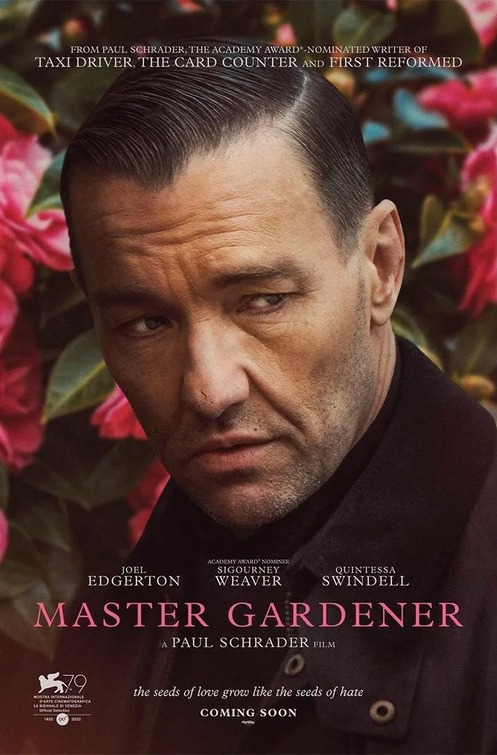
Master Gardener (2022) – Great Movies, 9:00 PM
Paul Schrader’s latest drama centres on a horticulturist with a violent past who becomes entangled with a young woman in need of protection. The film is a slow-burning examination of redemption and identity in a nation scarred by racism and generational trauma.
What makes the film arresting is its refusal to offer easy forgiveness. The protagonist’s past as a white supremacist is not glossed over, and his transformation is tentative. The garden becomes a metaphor for cultivation and control—of the self and society.
This is a film about inherited guilt and the hope that care can be more powerful than destruction. Schrader’s Calvinist sensibility makes it heavy viewing, but in its own way, it’s a political film about American decay and spiritual yearning.
Storyville: Wedding Night – BBC Four, 10:00 PM
This documentary offers a rare and intimate look into the experiences of ultra-Orthodox Jewish couples on their wedding night, a moment steeped in tradition and expectation. In this community, men and women are raised separately, with little interaction before marriage. When the time comes, the expectation is that they will consummate their union, navigating a deeply personal and often overwhelming transition.
Through candid interviews, Wedding Night explores the emotional and psychological impact of these customs, revealing how modesty, religious doctrine, and societal pressures shape the experience. Men and women speak openly about their feelings during matchmaking, engagement, the wedding ceremony, and their first night together, offering a nuanced perspective on a tradition rarely discussed outside the community.
Directed by Rachel Elitzur and produced by Avigail Sperber, the film provides a sensitive yet unflinching portrayal of a world where deeply held beliefs intersect with personal realities
Wednesday 11 June
Witchfinder General (1968) – Legend, 3:05 AM
Michael Reeves’s horror classic stars Vincent Price as the sadistic Matthew Hopkins, hunting so-called witches during the English Civil War. A historical horror rooted in real repression, the film’s power lies in its exposure of mob justice and authority gone mad.
The English countryside is depicted as bleak and paranoid, where superstition thrives in the absence of law. Reeves’s direction is unforgiving—less gothic and more brutal realism. It is, above all, a warning about the uses of fear to control communities.
Often seen as a comment on Vietnam-era violence and state-sanctioned cruelty, its themes have not aged. From moral panics to modern witch hunts, this remains a visceral critique of unchecked authority.
Thursday 12 June
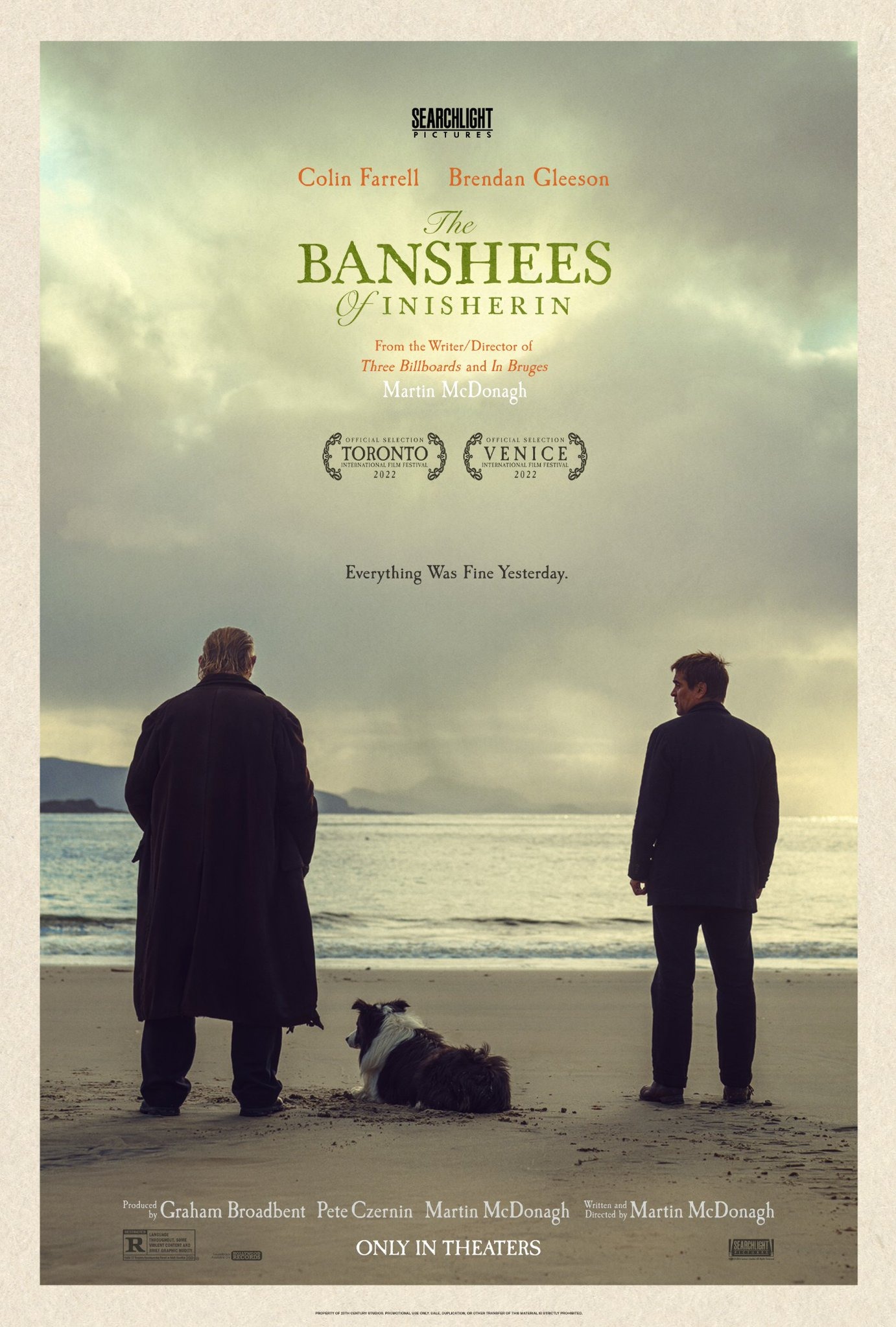
The Banshees of Inisherin (2022) – Film4, 9:00 PM
Martin McDonagh’s black comedy is about a friendship’s abrupt end on a remote Irish island. It quickly becomes an allegory for civil war, grief, and the slow erosion of community.
Brendan Gleeson and Colin Farrell play former friends, their quarrel taking absurdly tragic turns. Inisherin is portrayed as stagnant and inward-looking, where isolation breeds cruelty. The war in the background echoes the pettiness and pointlessness of human conflict.
As with McDonagh’s earlier work, there’s moral ambiguity and biting dialogue. But the lasting effect is mournful. This is a fable about the pain of being human, and the damage we do when we sever connection.
The Last Bus (2021) – BBC Two, 11:00 PM
Timothy Spall delivers a touching performance in this quietly powerful film about love, loss, and resilience. He plays Tom, an elderly widower who embarks on a poignant journey across the UK, travelling from John o’ Groats to Land’s End using only his free bus pass. His mission is deeply personal—one final trip to honour the memory of his late wife.
As Tom moves through towns and cities, he encounters strangers who each add something to his story, whether through moments of kindness, curiosity, or reflection. Along the way, the film gently explores themes of ageing, grief, and the enduring bonds that shape our lives. Flashbacks reveal his younger years with his beloved Mary, showing the love that fuels his determination to complete this journey.
With its heartfelt storytelling and Spall’s understated but deeply expressive performance, The Last Bus is a tribute to quiet perseverance and the simple yet profound connections we make in life. It’s a film that lingers, reminding us of the journeys we take—not just across landscapes, but through time and memory.
Friday 13 June
The Last Black Man in San Francisco (2019) – BBC Two, 11:00 PM
Joe Talbot’s semi-autobiographical debut tells the story of a young man trying to reclaim his childhood home in a rapidly gentrifying city. The film is a lyrical meditation on place, memory, and cultural displacement.
It focuses on Jimmie and his best friend Mont as they navigate friendship, loss, and identity in a city that no longer feels like theirs. San Francisco is portrayed as a living organism—its wealth, tech invasion, and erasure of Black culture weighing on every frame.
Visually stunning and emotionally restrained, the film resists easy answers. It instead offers a poetic portrait of what it means to belong somewhere—and what it feels like to lose that place to time and power.
Naked (1993) – Film4, 11:20 PM
Mike Leigh’s darkest film stars David Thewlis as Johnny, a drifter whose verbal tirades mask deep despair. Set in Thatcher’s London, it exposes a society fractured by inequality, misogyny, and existential dread.
Johnny wanders the capital, leaving ruin in his wake. His encounters with women and strangers are both intellectually charged and emotionally violent. Leigh refuses to redeem him, showing how rage, even when insightful, can be corrosive.
A bleak portrait of a man—and a city—adrift, Naked still feels provocatively contemporary. It asks how a society that has lost its soul can expect its citizens to behave morally.
Streaming Choices
FUBAR Season 2 – Netflix
Arnold Schwarzenegger returns as a retired CIA agent juggling spycraft and family drama. More absurd than thrilling, but it embraces its campiness with gusto.
Deep Cover (1992) – Prime Video
Deep Cover (1992) is a gripping neo-noir thriller that blends crime, identity, and social critique into a tense and thought-provoking narrative. Directed by Bill Duke, the film stars Laurence Fishburne as Russell Stevens Jr., a principled cop with a troubled past who is recruited by the DEA to go undercover in an international cocaine cartel2. As he assumes the alias John Q. Hull, Stevens finds himself navigating the murky waters of law enforcement, morality, and personal transformation.
What sets Deep Cover apart is its unflinching examination of race, power, and the drug war’s devastating impact. The film doesn’t just follow the familiar beats of an undercover cop story—it interrogates the very system Stevens is meant to uphold. As he climbs the ranks of the criminal underworld, the lines between justice and corruption blur, forcing him to question whether he is truly fighting crime or merely perpetuating a cycle of systemic exploitation.
Duke’s direction infuses the film with a stylish yet gritty atmosphere, capturing the tension and paranoia of Stevens’ double life. The screenplay, co-written by Michael Tolkin and Henry Bean, delivers sharp dialogue and layered character development, making Deep Cover as intellectually engaging as it is thrilling. Fishburne’s performance is magnetic, portraying a man torn between duty and survival, while Jeff Goldblum, in a strikingly unconventional role, plays a morally ambiguous lawyer entangled in the drug trade.
Beyond its crime-thriller framework, Deep Cover serves as a searing indictment of the drug war’s moral cost, exposing how law enforcement policies disproportionately affect marginalized communities. The film’s themes remain remarkably relevant, making it a standout in the genre and a must-watch for those interested in socially conscious cinema.
Hereafter (2010) – Paramount+
Hereafter (2010) is a contemplative drama directed by Clint Eastwood, weaving together three parallel narratives that explore themes of grief, mortality, and the search for meaning. The film follows an American factory worker, played by Matt Damon, who has a psychic connection to the afterlife, a French journalist, portrayed by Cécile de France, who survives a near-death experience during the 2004 Indian Ocean tsunami, and a British schoolboy, played by Frankie and George McLaren, who struggles with the loss of a loved one.
Eastwood’s direction lends the film a quiet, meditative tone, steering clear of grand spectacle in favor of a restrained and personal approach. Hereafter focuses on the emotional weight of loss and the human desire for connection, offering a reflection on the different ways people process death. The film’s pacing is deliberate, allowing its characters to navigate their personal struggles with realism, though some critics found its emotional beats inconsistent.
With a screenplay by Peter Morgan, Hereafter balances its supernatural elements with grounded storytelling, making it more of a philosophical exploration than a traditional thriller. The cinematography, particularly in its depiction of the tsunami sequence, is striking, setting the stage for the existential questions that follow. While the film received mixed reviews, it remains a compelling watch for those interested in introspective, character-driven narratives.
Picture credits
Cracked Actor
May be found at the following website: https://www.discogs.com/ru/release/6889562-David-Bowie-Cracked-Actor-A-Film-about-David-Bowie, Fair use, https://en.wikipedia.org/w/index.php?curid=74574080
I Know Where I’m Going! (1945)
By http://www.impawards.com/1945/i_know_where_im_going.html, Fair use, https://en.wikipedia.org/w/index.php?curid=10548579
Road to Perdition (2002)
May be found at the following website: IMP Awards, Fair use, https://en.wikipedia.org/w/index.php?curid=1026190
Bad Lieutenant (1992)
May be found at the following website: IMDb, Fair use, https://en.wikipedia.org/w/index.php?curid=26387547
Julius Caesar (1953)
Fair use, https://en.wikipedia.org/w/index.php?curid=6717381
Groundhog Day (1993)
May be found at the following website: IMP Awards, Fair use, https://en.wikipedia.org/w/index.php?curid=7596535
Our Ladies (2019)
By http://www.impawards.com/intl/uk/2019/our_ladies.html, Fair use, https://en.wikipedia.org/w/index.php?curid=67802038
Master Gardener (2022)
By http://www.impawards.com/2022/posters/master_gardener.jpg, Fair use, https://en.wikipedia.org/w/index.php?curid=71679382
Witchfinder General (1968)
The poster art can or could be obtained from American International Pictures., Fair use, https://en.wikipedia.org/w/index.php?curid=6120541
The Banshees of Inisherin (2022)
By http://www.impawards.com/2022/posters/banshees_of_inisherin_xxlg.jpg, Fair use, https://en.wikipedia.org/w/index.php?curid=71458552
The Last Bus (2021)
By http://www.impawards.com/intl/uk/2021/last_bus_ver3.html, Fair use, https://en.wikipedia.org/w/index.php?curid=68583124
The Last Black Man in San Francisco (2019)
By A24 Films, Fair use, https://en.wikipedia.org/w/index.php?curid=60292326
Naked (1993)
By https://uk.movieposter.com/poster/MPW-53927/Naked.html, Fair use, https://en.wikipedia.org/w/index.php?curid=48434515
Hereafter (2010)
By May be found at the following website: http://www.movieposterdb.com/poster/77bc13c4, Fair use, https://en.wikipedia.org/w/index.php?curid=28805505
Deep Cover (1992)
By IMDb, Fair use, https://en.wikipedia.org/w/index.php?curid=15521015
Mel Brooks
By Angela George, CC BY-SA 3.0, https://commons.wikimedia.org/w/index.php?curid=10257010
Alan Yentob
By Financial Times – https://www.flickr.com/photos/financialtimes/34788802943/in/dateposted/, CC BY 2.0, https://commons.wikimedia.org/w/index.php?curid=64029981
Alison Steadman
By Flickr user Andy from London, UK – You’ll Have Had Your Tea – Alison Steadman as Mrs Naughtie from Flickr, CC BY-SA 2.0, https://commons.wikimedia.org/w/index.php?curid=2256855
Billy Joel
By David Shankbone – David Shankbone, CC BY 3.0, https://commons.wikimedia.org/w/index.php?curid=7866968
Jamie Oliver
By Karl Gabor – http://www.mynewsdesk.com/uk/scandic_hotels/images/jamie-oliver-192908, CC BY 3.0, https://commons.wikimedia.org/w/index.php?curid=31594070

Leave a Reply