Culture Vulture – Week Beginning Saturday 29th March 2025

Curated by Pat Harrington | Music by Tim Bragg

Welcome to Culture Vulture, your weekly entertainment guide that steps off the beaten path. Here, we celebrate films that challenge, provoke, and offer fresh perspectives on the world we live in. From searing psychological dramas to politically charged thrillers, our picks reflect an alternative, progressive view of culture.


Highlights of the Week

  • Luzzu (2021) – A quiet, powerful reflection on dignity, economic marginalisation, and the moral compromises made under pressure.
  • Smoke Sauna Sisterhood (2023) – An intimate Estonian documentary that champions feminine solidarity and trauma healing through communal ritual.
  • The Guard (2011) – A darkly comic crime drama that satirises authority, critiques colonial hangovers, and confronts ethical decay with razor-sharp wit.

Saturday 29th March 2025

Luzzu (2021)
BBC Two, 00:55
A standout in Maltese cinema, Luzzu follows a traditional fisherman caught between heritage and survival. As his livelihood is threatened by bureaucracy and ecological decay, he’s drawn into the black market. What emerges is a quiet, powerful reflection on dignity, economic marginalisation, and the moral compromises made under pressure.

The Guard (2011) Channel 4, 02:10
John Michael McDonagh’s The Guard is an exceptional piece of cinema that masterfully blends dark comedy with sharp social critique. Released in 2011, this Irish crime drama stars Brendan Gleeson in a career-defining role as Sergeant Gerry Boyle, a maverick cop whose unconventional methods and irreverent humor both confound and delight. The film, which airs on Channel 4 this Saturday at 02:10, is an unmissable gem that showcases McDonagh’s ability to confront complex issues through biting wit and compelling storytelling.

The plot revolves around Boyle’s involvement in a drug trafficking investigation, a case that pairs him with an uptight FBI agent played by Don Cheadle. This unlikely duo forms the backbone of the narrative, offering a fascinating exploration of cultural miscommunication and contrasting moral codes. Boyle’s unfiltered remarks and disregard for political correctness reveal a character whose flaws are as pronounced as his surprising integrity. This interplay drives much of the film’s humor and poignancy, elevating it beyond a standard crime drama.

Through Boyle’s interactions with authority figures, McDonagh critiques the lingering effects of colonialism on Irish society and the ethical decay present in global institutions. Corruption, racism, and exploitation are deftly exposed, making The Guard not just a crime story but a scathing indictment of systemic injustices. Gleeson’s performance captures these nuances, presenting a character who is both a product of his environment and a critique of it.

The film’s humor is one of its most defining features. Gleeson’s dry wit and impeccable timing imbue the narrative with moments of levity that contrast sharply with its darker themes. The writing is razor-sharp, ensuring that every laugh serves a purpose in exposing deeper truths about human nature and societal failings. This balance between comedy and critique is a testament to McDonagh’s skill as a filmmaker.

The rugged beauty of the Irish landscape serves as a backdrop for the gritty realities of the story, creating a striking contrast that underscores the film’s themes. Cinematographer Larry Smith captures both the starkness and the vibrancy of the setting, adding depth to the narrative and enhancing the film’s mood.

The Guard is a brilliant fusion of humour, drama, and social commentary. It challenges viewers to confront uncomfortable truths while providing entertainment through its clever dialogue and engaging performances. If you haven’t seen it yet, make time to catch this remarkable film—it’s a thought-provoking journey.

Sunday 30th March 2025

Company BBC4 8pm

Stephen Sondheim’s Company is a groundbreaking musical that explores themes of relationships, marriage, and self-discovery. The story follows Robert, a single man living in New York City, as he celebrates his 35th birthday surrounded by his married friends. Through a series of vignettes, Robert interacts with these couples and reflects on the complexities of love, commitment, and bachelorhood.

The musical is notable for its lack of a linear plot, instead presenting snapshots of Robert’s life and his encounters with his friends and girlfriends. These moments delve into the joys and challenges of marriage, the fear of loneliness, and the search for meaning in human connections. Songs like “Being Alive” and “The Ladies Who Lunch” highlight the emotional depth and wit of Sondheim’s lyrics, making Company a timeless exploration of vulnerability and relationships.

This particular production, staged at the Donmar Warehouse and directed by Sam Mendes, brought a fresh and bold interpretation to the musical. Mendes updated the material for a 1990s audience, infusing the show with a contemporary edge while preserving its core themes. The production was critically acclaimed, earning recognition for Mendes’ direction and Adrian Lester’s compelling portrayal of Robert.

Filmed live by the BBC in 1996, this version of Company captures the intimacy and intensity of the Donmar Warehouse’s unique setting. The small, 250-seat theatre allowed for an up-close and personal experience, enhancing the emotional resonance of the performances. This filmed production remains a landmark in musical theatre, showcasing the brilliance of Sondheim’s work and Mendes’ visionary direction.

Adding to the experience, the evening’s programming is preceded at 8:30 PM by Adrian Lester discussing his love for this production and his connection to the role of Robert. Lester’s insights into the character, the musical, and the Donmar staging bring an enriching perspective to this landmark work.

Ultimately, Company, especially in this Donmar Warehouse production, stands as a thought-provoking and humorous look at the pros and cons of marriage, offering insights into the human condition through its clever dialogue and memorable music. Don’t miss the chance to immerse yourself in this remarkable theatrical experience and Adrian Lester’s reflections beforehand—it’s an unmissable journey into Sondheim’s genius and Mendes’ artistry.

Children of Men (2006) BBC One, 22:30
Alfonso Cuarón’s dystopian vision remains hauntingly relevant. Set in a future where humanity faces extinction due to infertility, the film interrogates themes of immigration, authoritarianism, and resistance. Through immersive camerawork and an emotionally resonant narrative, Children of Men becomes a rallying cry for hope and human dignity amidst despair.

The Road (2009) Great! Movies, 01:25
Based on Cormac McCarthy’s novel, this bleak yet tender survival story follows a father and son navigating a post-apocalyptic wasteland. The film explores moral resilience, love, and the instinct to protect amidst collapse. Stark visuals and sparse dialogue amplify its emotional weight, offering a meditation on endurance and ethical boundaries.

Monday 31st March 2025

Disclosure: One More Fix BBC1 9pm

An examination of Scotland’s first monitored drug consumption room. Good or bad? Chris Clements speaks to those on all sides of the argument.

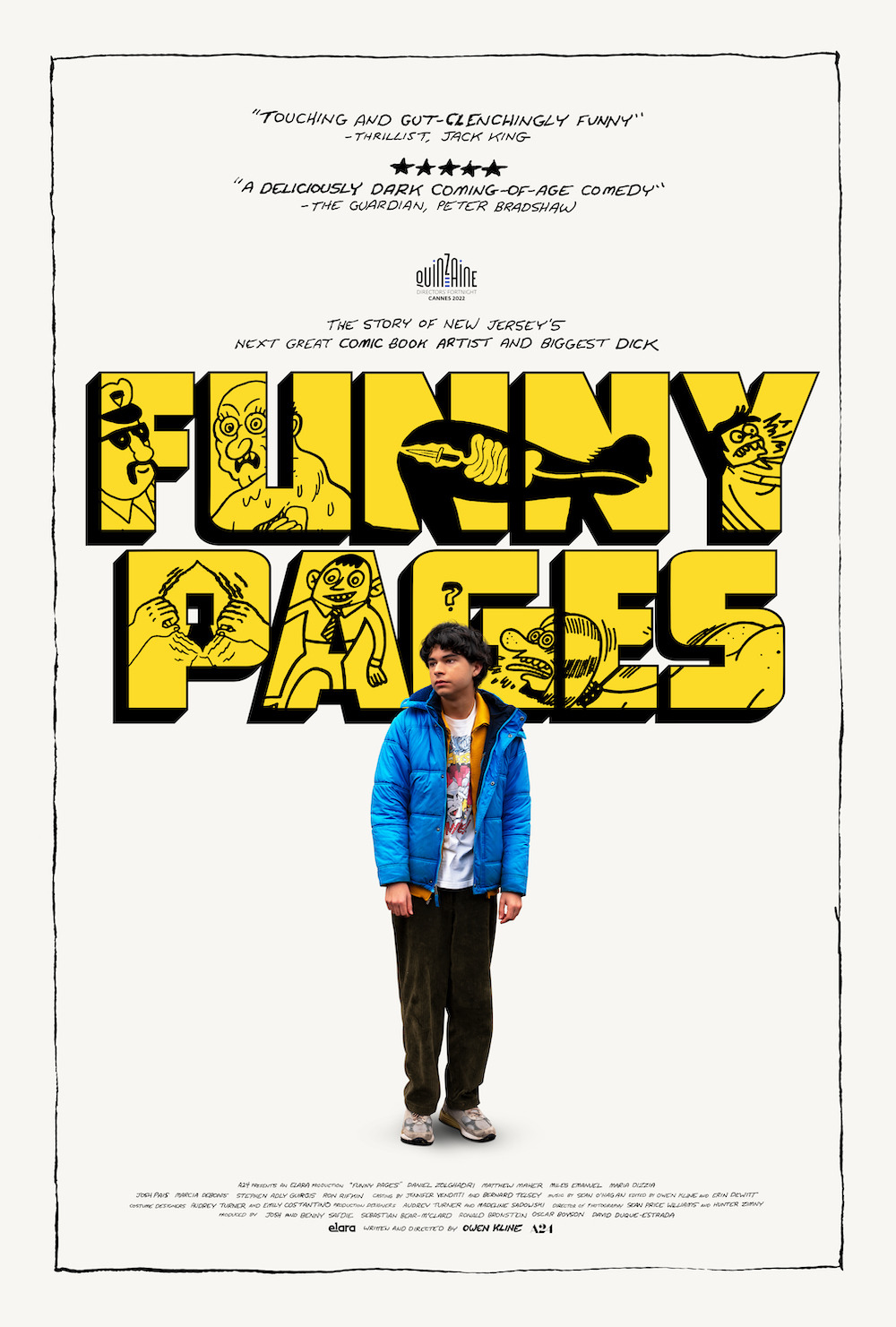
Funny Pages (2022) Film 4, 23:40

Funny Pages, the 2022 coming-of-age drama, delves into the chaotic world of a teenage cartoonist striving to rebel against societal norms. Written and directed by Owen Kline, this sharp and sardonic film offers a raw and unvarnished look at the complexities of youth, creativity, and the pursuit of artistic identity. Set against the backdrop of a grim suburban America, the film airs on Film 4 this Saturday at 23:40 and is a must-watch for anyone fascinated by offbeat storytelling

Funny Pages is a character-driven narrative that examines the obsessive drive of its protagonist, Robert, as he navigates the messy journey of self-discovery. Robert’s passion for cartooning propels him into a world far removed from comfort and convention, where he seeks mentorship in the most unlikely of places. Through his experiences, the film explores the sacrifices and disillusionments often tied to creative ambition, presenting a raw and unfiltered portrayal of what it means to follow one’s passion.

A striking aspect of the film is its commentary on class alienation. As Robert ventures into less privileged social strata in pursuit of authenticity, the stark realities of economic disparity become a defining feature of his journey. The grim suburban setting enhances this theme, serving as both a physical and metaphorical representation of the barriers that separate artistic dreams from harsh reality. This examination of class adds depth to the narrative, grounding its eccentricity in a stark social context.

Mentorship, another central theme, is portrayed in a manner that subverts expectations. Robert’s interactions with his unconventional mentor blur the lines between guidance and exploitation, illustrating the complexities of learning and growth. The relationship serves as a microcosm for the struggles young artists face when seeking validation and direction, encapsulating the tension between inspiration and disillusionment.

The film’s lo-fi aesthetic is a key element of its authenticity. Eschewing polish for a raw, handmade quality, the visual style reflects Robert’s own chaotic and unrefined journey. This deliberate choice aligns with the narrative’s thematic focus, reinforcing the idea that creativity often emerges from imperfection and disorder. It’s a visual representation of the film’s central message: that artistry is born not from order, but from the messiness of life.

Humor plays a vital role in Funny Pages, albeit with a deadpan delivery that borders on discomfort. The film’s dark comedic tone underscores the absurdity of its characters’ situations, offering both levity and critique. This balance of humor and pathos is one of its defining strengths, drawing viewers into its world while prompting deeper reflection on its underlying themes.

Funny Pages is a uniquely chaotic yet deeply resonant exploration of artistic passion, class, and individuality. It captures the tumultuous reality of youth with unflinching honesty and a sharp comedic edge, making it a standout entry in the coming-of-age genre. Don’t miss the chance to experience this raw and thought-provoking tale—it’s a journey into creativity and chaos.

Undergods (2020) Film 4, 01:25
A surreal anthology of dystopian tales, Undergods explores fractured societies and moral rot through interlinked stories. Bleak yet stylish, it comments on alienation, inequality, and the cyclical nature of decline. It’s a nightmarish reflection of late-stage capitalism, rendered with dark wit and visual flair.

Tuesday 1st April 2025

Two Way Stretch (1960) Film 4, 11:00
This British caper film offers a light-hearted contrast in our line-up, with prisoners planning a heist while technically still incarcerated. Beneath the laughs lies a gentle critique of authority and a clever subversion of penal tropes. A cultural time capsule with charm and cheek.

Moon (2009) Film 4, 21:00
Duncan Jones’ philosophical sci-fi drama examines isolation and identity aboard a lunar mining station. Sam Rockwell’s dual performance interrogates corporate exploitation and personal autonomy, revealing a layered narrative about what it means to be human. Moon is both cerebral and emotionally grounded.

Wednesday 2nd April 2025

Drive (2011) Great! Movies, 21:00
Nicolas Winding Refn’s stylish neo-noir fuses existential cool with bursts of brutal violence. Ryan Gosling’s unnamed driver navigates a criminal underworld defined by loyalty, silence, and sudden rupture. The film’s moody aesthetic and synth-heavy soundtrack underscore themes of masculinity, control, and moral ambiguity.

Dreamland (2019) Channel 4, 01:00
Set during the Great Depression, this dusty fugitive romance interrogates the American Dream through a poetic lens. With its evocative visuals and meditative pace, Dreamland reveals the desperation underlying idealism, and how hope can be both a sanctuary and a snare.

Thursday 3rd April 2025

Science Fiction In The Atomic Age (one of four) 8pm Sky Arts

The first episode of Science Fiction in the Atomic Age on Sky Arts is a captivating dive into how science fiction mirrored humanity’s hopes and fears during the atomic era. It spans literature, film, and television, celebrating legendary creators like H.G. Wells, Ursula Le Guin, and Arthur C. Clarke.

The episode features a stunning range of classics, from 2001: A Space Odyssey to Doctor Who and The Quatermass Experiment. It also explores the influence of blockbusters like Star Wars and The Matrix, illustrating how the genre evolved alongside societal shifts.

With its stirring score and insightful commentary, the series is a vibrant tribute to the power of science fiction to critique the present and imagine the future.

The Man Who Fell To Earth (1976) 9pm Sky Arts

Nicolas Roeg’s The Man Who Fell to Earth (1976) is a visually stunning and thought-provoking sci-fi drama that explores themes of alienation, greed, and the human condition. David Bowie delivers a mesmerizing performance as Thomas Jerome Newton, an extraterrestrial who arrives on Earth seeking water for his drought-stricken planet, only to be ensnared by human vices and corporate exploitation.

The film’s surreal imagery and haunting score create an otherworldly atmosphere, while its narrative challenges viewers to reflect on humanity’s flaws and the cost of progress. A cult classic, this film remains a landmark in science fiction cinema and a testament to Roeg’s visionary storytelling.

Bowie: The Man Who Changed The World 11.40pm Sky Arts

Bowie: The Man Who Changed the World is a documentary that honors David Bowie’s extraordinary life and his influence on music, fashion, and culture. Through interviews with those who knew him and archival footage, it explores his artistic evolution, from Ziggy Stardust to his later years as an icon.

While the absence of Bowie’s music may surprise some viewers, the film offers an engaging glimpse into the man behind the legend and his transformative impact on the arts. It’s a compelling watch for fans and anyone intrigued by his legacy.

Dark River (2017) Film 4, 00:25
Clio Barnard’s rural drama tackles generational trauma, memory, and female resilience. Returning home after her father’s death, a woman confronts buried abuse and contested inheritance. Stark Yorkshire landscapes frame a powerful story about silence, survival, and reclaiming one’s past.

Smoke Sauna Sisterhood (2023) Film 4, 02:10

Smoke Sauna Sisterhood, a 2023 Estonian documentary, offers a profoundly intimate exploration of vulnerability, resilience, and connection among women. Directed by Anna Hints, this powerful film is set within the sacred confines of a traditional Estonian smoke sauna, where women gather to share deeply personal stories of pain, shame, and healing. The documentary airs on Film 4 this Thursday at 02:10 and promises to be an unforgettable experience of raw honesty and transformative solidarity.

The central setting of the smoke sauna is more than a backdrop; it serves as a sanctuary where women can strip away the layers of societal judgment and embrace their truth. Within its walls, rituals unfold that are both cleansing and cathartic, allowing the participants to confront trauma and release the burdens they carry. The sauna becomes a safe space, a microcosm of female camaraderie and shared strength, symbolizing the collective healing that emerges from mutual understanding and support.

A recurring theme in Smoke Sauna Sisterhood is the reclamation of power through vulnerability. As each woman bares her soul, the act of sharing becomes a quiet revolution against the stigma surrounding pain and shame. The film underscores the idea that strength lies not in suppressing emotions but in embracing and expressing them. This radical honesty fosters an environment where the women’s voices are heard, their experiences validated, and their resilience celebrated.

Class and cultural dynamics also emerge subtly within the narrative. The smoke sauna—a practice rooted in Estonian tradition—offers a lens through which to examine the intersection of heritage and modernity. While the setting emphasizes community and ancestral wisdom, the stories told within it often highlight the struggles faced by women in a world shaped by structural inequalities. This juxtaposition enriches the film’s exploration of identity, connecting the deeply personal to the broadly political.

Visually, the film is as evocative as its narrative. Hints’ direction captures the textures of the sauna, the gentle interplay of light and shadow, and the raw emotions etched on the women’s faces. The intimate cinematography immerses viewers in the space, allowing them to feel the warmth of the sauna and the intensity of the shared moments. Every frame serves to enhance the documentary’s authenticity and emotional impact.

Through its quiet yet profound storytelling, Smoke Sauna Sisterhood celebrates the power of collective healing and female solidarity. It is a testament to the resilience found in shared experiences and the strength that arises from vulnerability. This documentary is not just a film—it is an invitation to reflect on the universal truths of pain, healing, and connection.

Friday 4th April 2025

Ain’t Them Bodies Saints (2013) Great! Action, 22:25
A lyrical crime romance echoing Badlands, this film paints an aching portrait of love, loyalty, and longing in the aftermath of violence. Rooney Mara and Casey Affleck deliver restrained, heartfelt performances in a tale steeped in mood, moral conflict, and Southern Gothic tradition.

Withnail and I (1987) Film 4, 01:50

Withnail and I (1987) stands as one of British cinema’s most beloved cult classics, offering a heady mix of humor and melancholy in its portrayal of two unemployed actors struggling to find their place in the world. Directed by Bruce Robinson, the film is a poignant exploration of friendship, excess, and existential despair, set in the turbulent backdrop of Thatcher’s Britain. Airing on Film 4 this Friday at 01:50, Withnail and I continues to resonate as a cultural touchstone for its sharp critique and timeless relatability.

The story follows Withnail, a flamboyant and self-destructive actor played with magnetic brilliance by Richard E. Grant, and his quieter, introspective companion (Paul McGann), referred to only as “I.” Together, they embark on a disastrous countryside retreat in search of solace and escape from their bleak London existence. What ensues is a deeply comic yet tragic journey that captures the absurdity of privilege, the decline of youthful idealism, and the failure to find meaning in a changing world.

A key theme in Withnail and I is its biting satire of privilege and entitlement. While the characters face personal struggles, their escapades reveal an obliviousness to the hardships endured by others. Withnail’s behavior, particularly his interactions with locals, underscores the social divide prevalent in the era, offering a microcosm of wider societal tensions. Through humor and absurdity, Robinson critiques the excesses and indulgences of the privileged class, contrasting their plight with the broader realities of Thatcherite policies.

The film also serves as an elegy for lost youth, with its characters embodying the fading dreams and disillusionment of a generation grappling with economic uncertainty. The retreat to the countryside, which initially promises renewal, becomes a metaphor for the futility of escapism. The story’s bittersweet conclusion leaves viewers reflecting on the impermanence of youthful ambition and the inevitability of change.

Withnail and I captures the cultural and political climate of Thatcher’s Britain with remarkable nuance. The austerity, social inequities, and growing sense of alienation are subtly interwoven into the narrative, providing a backdrop for the characters’ personal struggles. While the film never overtly preaches, its setting serves as a powerful commentary on the broader societal shifts and anxieties of the time.

Another notable aspect of the film is its exploration of friendship and human connection. Withnail’s chaotic energy contrasts starkly with “I’s” quiet sensitivity, creating a dynamic that is both dysfunctional and deeply affecting. Their relationship highlights the complexities of companionship, particularly the sacrifices and dependencies that come with it. As their bond is tested, the film becomes a meditation on loyalty and the bittersweet nature of human relationships.

Visually, the film is steeped in a rich, atmospheric aesthetic that accentuates its themes. From the squalor of their London flat to the eerie beauty of the countryside, cinematographer Peter Hannan captures the juxtaposition between grim reality and fleeting hope. The striking imagery serves to heighten the film’s emotional resonance and underscores its sense of decay.

Withnail and I is a masterpiece that transcends its tragicomic surface to offer profound reflections on privilege, decline, and the search for meaning. Its razor-sharp dialogue, unforgettable performances, and poignant themes ensure its place as one of the greats of British cinema. If you haven’t experienced this gem, make time for it this Friday—it’s a journey into humor, heartbreak, and social critique that leaves an indelible impression.

And finally, streaming

The Donmar Warehouse’s production of Macbeth, available on Marquee TV from Tuesday, April 1, 2025, is a bold and electrifying interpretation of Shakespeare’s timeless tragedy. Directed by Max Webster, this staging features David Tennant as Macbeth and Cush Jumbo as Lady Macbeth, delivering performances that are both intense and deeply nuanced.

Filmed live at the Donmar Warehouse, the production captures the unsettling intimacy and brutal action that define the play. Tennant’s portrayal of Macbeth is hypnotic, blending ambition and paranoia, while Jumbo’s Lady Macbeth is compellingly ruthless yet hauntingly vulnerable. The innovative sound design and stark visual elements immerse viewers in the fevered minds of the characters, blurring the lines between reality and hallucination.

This adaptation is a thrilling exploration of ambition, power, and madness, making it a must-watch for fans of Shakespeare and contemporary theatre alike.

Season three of Love on the Spectrum, available on Netflix from Wednesday, April 2, 2025, continues to celebrate the journeys of individuals on the autism spectrum as they navigate the complexities of dating and relationships. This heartfelt docuseries offers a mix of new faces and returning favorites, showcasing their unique experiences and perspectives.

The show remains a powerful exploration of love, breaking stereotypes and fostering understanding. With its blend of humor, emotion, and authenticity, season three promises to be as engaging and inspiring as its predecessors


For extended reviews, visit the Counter Culture website.

Picture credits

Luzzu (2021)
By -jkb- – Own work, CC BY-SA 3.0, https://commons.wikimedia.org/w/index.php?curid=10684187
Smoke Sauna Sisterhood (2023)
By https://hiiumaa.ee/event/kultuurinadalavahetus-savvusanna-sosarad-2/, Fair use, https://en.wikipedia.org/w/index.php?curid=74650682
The Guard (2011)
By The poster art can or could be obtained from Element Pictures., Fair use, https://en.wikipedia.org/w/index.php?curid=32348267
Company (1996 Donmar Warehouse production)
Original Broadway Playbill – By It is believed that the cover art can or could be obtained from the publisher., Fair use, https://en.wikipedia.org/w/index.php?curid=8146470
Children of Men (2006)
By May be found at the following website: IMP Awards, Fair use, https://en.wikipedia.org/w/index.php?curid=24105930
The Road (2009)
By May be found at the following website: IMP Awards, Fair use, https://en.wikipedia.org/w/index.php?curid=24227798
Funny Pages (2022)
By http://www.impawards.com/2022/posters/funny_pages_xlg.jpg, Fair use, https://en.wikipedia.org/w/index.php?curid=71349562
Two Way Stretch (1960)
By British Lion Films – https://alchetron.com/Two-Way-Stretch, Fair use, https://en.wikipedia.org/w/index.php?curid=64079430
Moon (2009)
By http://www.impawards.com/2009/moon_ver2.html, Fair use, https://en.wikipedia.org/w/index.php?curid=20348255
Drive (2011)
By The poster art can or could be obtained from IMP Awards., Fair use, https://en.wikipedia.org/w/index.php?curid=32645711
Dreamland (2019)
By https://twitter.com/IndieWire/status/1324414929613500416?s=20, Fair use, https://en.wikipedia.org/w/index.php?curid=65768083
The Man Who Fell to Earth (1976)
By http://www.movieposterdb.com/poster/7cb9cac9, Fair use, https://en.wikipedia.org/w/index.php?curid=11988138
Ain’t Them Bodies Saints (2013)
By http://www.ifcfilms.com/films/aintthembodiessaints, Fair use, https://en.wikipedia.org/w/index.php?curid=39419362
Withnail and I (1987)
By Art by Ralph Steadman screenonline entry for the film, Fair use, https://en.wikipedia.org/w/index.php?curid=15999449

Leave a Comment

Adolescence: A Controversial Netflix Drama Explained by Anthony C Green

2,273 words, 12 minutes read time.

Adolescence is the Netflix drama that has got the whole nation talking, not least because our Prime Minister, Kier Starmer, and Jack Thorne, who wrote the script for the four-part series from an idea from featured actor Stephen Graham, have decided to use it in in the cause of creating a moral panic against white working class boys. The claim is that these boys are being ‘radicalised’ online by ‘Red Pill’ ‘toxic-masculinity’ influencers (‘That Andrew Tate Shite’ to quote one of the characters). The implication is that this radicalisation carries with it the distinct possibility of tragic outcomes such as the one that is the subject of this drama, the violent killing of a schoolgirl by a male contemporary.

This is controversial because, statically, it’s clear that white boys are much less likely to use violence against women and girls, and much less likely to engage in knife crime in general than members of some other identifiable groups and communities.

Graham has even cited two real-life crimes as giving him the initial inspiration for the story. Both of the killers in these crimes were non-white. This being the case, it begs the question as to why it was that he or Thorne or those who commissioned the drama at Netflix saw fit to ‘race swap’ the central character. 

I’ll return to this topic, but first I’ll approach the drama on purely artistic grounds, briefly assessing its strengths and weaknesses.

It is essentially a four-act play, each act corresponding to a roughly one-hour-long episode, and each filmed strikingly as one long single-take.

Act One concerns the arrest of thirteen-year-old Jamie, played superbly by Owen Cooper in his first acting role, on charges of stabbing to death his school colleague Katie.

Act Two focuses on the ongoing investigations at the school where they were both students.

Act Three is almost a two-hander between Jamie and the clinical psychologist Briony, played by Erin Doherty at the Special Training Centre that is his temporary place of incarceration several months after the murder.

Act Four concentrates on Jamie’s family, dad, mum, and sister as they struggle to come to terms with what has happened.

It’s a gripping watch with the realism brilliantly enhanced by the single-shot method of filming. Director Philip Barantini deserves much credit for the success of the drama.

I would, however, suggest that the play was perhaps an act too long, that the action could have been better condensed into three hour-long parts.

It certainly starts with a bang, with armed police smashing through the door of the Miller’s ordinary working class home to arrest Jamie, decimating the normality of life of this seemingly average family of four.

This act is essentially a very believable police procedural as the action switches from the house to the police station. All the performances here are spot on, from young Owen Cooper to Ashley Waters as DI Luke Bascombe, who is taking the lead on the case, to Mark Stanley as the solicitor Pal Barlow who has been appointed to assist Jamie.

The star here though is Graham as the dad, Eddie who we see go from complete disbelief as to what is happening, to grim determination to do his best in his role as his son’s ‘appropriate adult’, even though this is a term he has never heard of until this moment, to uncertainty as to his ability to fulfil his duties as a dad in circumstances that are way beyond the norm of his everyday life, to moments of defiance such as when Hamie is told he must strip naked for a full body search, to his breakdown when his absolute belief in Jamie’s innocence is shattered as the two of them are shown CCTV footage that seems to be conclusive evidence that his son did indeed repeatedly stab Katie to death.

Christine Temarco as the mum who tries her best to hold things together while fighting understandable feelings of jealousy at Jamie’s decision to choose his dad rather than her to play the Appropriate Adult role, is also excellent, as is Amelie Pease as the supportive sister.

Act Two, set at the school, was, I thought, a weak point in the drama. It seemed a little too convenient for the plot that DCI Bascombe should have a son, Adam (Amari Bacchus), at the very school where Jamie and Katie had come to know each other.

It is through Adam that the DCI, and we, learn something about the world of online influencers, the meaning of being ‘Red Pilled’ (eyes being opened to the truth) the 80-20 equation which claims that 80% of females are attracted to only 20% of males, with the implication being that many of these young men will face a life of involuntary celibacy.

Adam also outlines the meaning of different emojis, an elaborate and opaque system of symbols through which it appears Katie had been bating Jamie, denouncing him as ugly, thus giving him a motive for the murder.

We never see Adam again, and I couldn’t help but feel that he was a mere plot device, existing only to didactically ‘info’ drop’ the above points, and to introduce us to the children’s toxic online relationships.

Jo Hartley gave a fine supporting performance as the harassed, bewildered teacher Mrs Fenumore, but I wasn’t sure what we were supposed to make of Katie’s best friend Jade and the slight backstory, of mental health struggles and issues wit her mother that we are provide. Aside from her fight with Jamie’s friend Ryan (Caine Davis), which led to DI Bascombe’s discovery of the murder weapon, the character was, with no disrespect to the actress (Fatima Bojang), needless plot-filler whose screen time could have been substantially cut to the betterment of the whole.

Act Three was the strongest of the four, with a mesmerising performance from Erin Doherty as the Psychologist Briony Arishton, who has been commissioned to write an independent assessment of Jamie’s mental health and the possible motivations that turned him into a killer.

This is a powerfully written and performed section as Briony probes Jamie at the Special Education Centre, the sandwich she has brought in for him lying uneaten in one corner of the table across which they face each other (Jamie doesn’t like pickle).

The action here is certainly enhanced by the single-take approach, allowing room for improvisation as the psychologist seeks to elicit information from the thirteen-year-old on his relationship with his dad, his dad’s possible anger-management issues (he once destroyed a shed), his attitude to girls and women, his sexual experience and desires, and how he sees himself.

I didn’t quite believe that Jamie would believe himself to be ugly, as was symbiotically alleged by Katie. Briony raises this issue but without assuring Jamie that she doesn’t share Katie’s assessment of his looks. This is one of the two occasions when he explodes into a rage, and through these nicely played eruptions of anger, we begin to see that this is a damaged young man who, given the ‘right’ circumstances could indeed be capable of murder.

Briony succeeds in holding her cool throughout, though the mild breakdown after Jamie has left, unwillingly after she informs him that their interactions are now over, that she has everything she needs to make her assessment, is a delayed reaction that will be recognisable to anyone who has concluded a difficult interaction with an aggressive member of a challenging client group in the line of duty.  

Act Four concentrates on Jamie’s family, with Jamie himself completely absent, save for a disembodied voice on the phone informing them that he has decided to change his plea from Not Guilty to Guilty. But, of course, the impact of what he has done is felt in every word and every gesture as Dad, on his fifteeth birthday, with full support from his loyal wife and daughter, strives to ‘take back the day’,  to salvage some enjoyment via a family outing to the cinema after local youths have spray-painted ‘Nonce’ on the side of his works van.

The chemistry between the three family members is excellent, but as with Act Two, I thought there was unnecessary filler here that could have been cut. For instance, a young worker in the ‘Wainwrights’ shop, where the father has driven his family for assistance/advice on removing/covering the offending word on his van, was a character we could have lived without. I’m not sure where it was supposed to lead us when he recognised Eddie and offered his support to him and Jamie, claiming that people would be behind him if he ‘crowdfunded’ the funds for a full repaint job. The implication was, I suppose, that there was some vast network out there of fellow incels, Andrew Tate fans who would be ready to rally to the cause, should they receive the call. But we hadn’t really learnt enough about this world to buy into the idea of a mutually supportive movement. I found this section to be rather ‘on the nose’ and, frankly, silly.

Maybe this was nothing more than the result of binge-watching the whole thing in one sitting but I started to sag a bit towards the end, as the drama rather fizzled out with Eddie and Manda lamenting that they hadn’t been vigilant enough to be aware of Jamie’s online activities, ignorant of his ‘radicalisation’ and, finally, Salt of the Earth plumber Eddie breaking down in Jamie’s room, acknowledging that ‘I could have done more, son.’

In the end, though a gripping watch, I thought the drama was messy and confused.  If the object of the exercise was to launch a moral crusade against online influencers pushing ‘toxic masculinity’ on young working class white boys, and writer Thorne now seems to be joining forces with Starmer with the call for ‘something to be done’ (perhaps the restriction of internet use for under 16s), then I thought we needed to be shown much more evidence of this happening.

This thread of the play has been elevated above all others, but there were other strands that were suggested as playing a part in Jamie’s motivation to kill. Online bullying through the use of emojis is one, and something that I, as the father of two teenage boys, wouldn’t mind knowing more about.

Father-son relationships were also touched upon, between DCI Bascombe and Adam as well as between Eddie and Jamie (though Bascombe was portrayed as the much more assertive, sensitive, in control of the two. I’m loathe to raise the question of race here, but it’s now become almost an inevitability that the strongest male role model in a Netflix drama, or indeed any TV drama, will be a black character). But issues around such relationships were raised and then left undeveloped. Overall, the drama was rather too broad-brush, and thus largely failed to hit its marks. This avoidance of telling us what to think would be fine and laudable were it not for how Thorne and Graham have since sought to use their works’ success as a means of bringing about political change.

Setting that aside, the drama certainly left much for the fathers of teenage boys, especially older dads like me who know little of this online world to think about.

For what it’s worth, I’ve chosen to largely allow my children to navigate their own way through this new online childhood, just as we earlier generations navigated our way through the old offline childhood, hopefully in the knowledge that parental help is at hand should they need it.

Whether that’s right or wrong, the play didn’t do nearly enough to lead me to believe that a draconian, potentially restrictive moral crusade is justified.

Yes, there is a crisis of masculinity in society. Society has been largely feminised, with masculine attributes routinely denounced as ‘toxic’ and the necessary role that male strength plays in a healthy society downplayed. This is mirrored in the world of work where traditionally male jobs that brought with them a degree of community status, as well as enough pay to raise a family, in construction and production, have largely disappeared, outsourced elsewhere. We’ve become a service society, and that is almost by definition a less masculine society.

But these are questions that are too deep and complex to be reduced to the need to restrict access to a few online influencers who may be peddling perhaps a distorted, unhealthy, caricatured idea of masculinity to our youth.

I can’t help but feel that there is an element of ‘look over here, not over there’ aspect to this apparent attempt to demonise white working class boys.

After all, there are calls for Adolescence to be shown in parliament and in schools. Fine. But there were no similar calls regarding the excellent Three Girls about the Pakistani grooming gangs.

I’ll conclude with a thought experience, bearing in mind that white boys are statistically far from the most frequent culprits when it comes to knife crime or violent/sexual crimes against girls and women. Imagine the excellent Act Thee of the drama but change Jamie into a boy of East Asian or Middle Eastern origin. Then, have Bryon deconstruct his attitude toward girls in relation to the religious and cultural norms of his community. Or ‘colour swap’ Jamie into a teenage black boy and unleash Byron’s considerable psychological skills on the macho culture of rap music and gang membership, and the lack of positive male role models caused by the much higher degree of absent fatherhood among that demographic.

Either of these would make for great drama, but great drama that would likely remain unseen.

Comments (1)

Culture Vulture: 22nd to 28th March 2025

5,735 words, 30 minutes read time.

Welcome to this week’s Culture Vulture. We curate the most thought-provoking and culturally significant films, documentaries, and television programmes. They are airing from the 22nd to the 28th of March 2025. This edition offers an eclectic mix of classic cinema, in-depth historical investigations, and powerful contemporary storytelling. With a progressive lens, we highlight themes of justice, identity, resistance, and human psychology across various genres. From the enduring appeal of noir and Westerns, this week’s selections explore music, politics, and social change. They promise to both entertain and challenge perspectives.

Let’s dive into what’s on offer.


Saturday 22nd March 2025

The Big Sleep (1946)

BBC Two, 14:40
Howard Hawks’ The Big Sleep is a quintessential film noir. It is brimming with the genre’s signature cynicism. The film also embodies moral ambiguity and sharp-tongued dialogue. The film is adapted from Raymond Chandler’s novel. It follows private detective Philip Marlowe (Humphrey Bogart). He becomes entangled in a labyrinth of crime, blackmail, and deception. Lauren Bacall’s commanding presence adds depth to the film, crafting a world where power and corruption intertwine seamlessly. The plot is famously intricate. It can be difficult to untangle. However, the film’s atmospheric tension and rapid-fire exchanges solidify its place as a cinematic classic. Yet beneath its stylish veneer, The Big Sleep serves as a searing critique of post-war American society. In this society, justice is elusive, and morality is subjective.

One of the film’s most striking social critiques is its portrayal of a society teetering on the edge of lawlessness. In this society, criminality infects even the wealthiest circles. The Sternwood family seems respectable. However, they are riddled with corruption and moral decay. This family mirrors a post-war America where power does not equate to virtue. The narrative reveals that privilege and wealth do not shield individuals from scandal. Instead, they enable their vices to flourish behind closed doors. Marlowe is caught in the midst of their tangled affairs. He must navigate a world where justice is not a clear-cut ideal. It is a flexible concept dictated by those with influence.

Politically, The Big Sleep reflects a growing distrust in institutional authority, a common theme in noir films of the 1940s. The police are either absent or ineffective, and the legal system appears incapable of maintaining order. The real power lies in the hands of gangsters, blackmailers, and private investigators like Marlowe. These individuals operate in the murky spaces between the law and outright criminality. The film’s cynicism reflects a society disillusioned by war and economic upheaval. In this world, ethical compromises are necessary for survival. In this morally compromised world, Marlowe may be the closest thing to an honest man. However, he bends the rules to serve his own version of justice.

The film also grapples with ethical dilemmas surrounding truth and deception. It questions whether integrity can exist in a society built on lies. Nearly every character Marlowe encounters is engaged in some form of manipulation, whether for financial gain, self-preservation, or sheer amusement. Even Bacall’s Vivian, ostensibly the film’s romantic lead, conceals critical information and operates with an agenda of her own. This pervasive dishonesty forces Marlowe to constantly reassess his allegiances. It ultimately reinforces the film’s central question: is survival more important than virtue? The Big Sleep suggests that in a world dictated by power and greed, idealism is a luxury few can afford.

Ethically, the film blurs the lines between right and wrong. It presents a protagonist who is neither a paragon of virtue nor a hardened criminal. Marlowe is a relic of a bygone era of chivalry. He holds fast to his own moral code. Yet, he is willing to engage in deceit, violence, and intimidation when necessary. His code of ethics is not aligned with the law. It operates within a framework of personal honor. This is a stark contrast to the outright amorality of the criminals he faces. This creates tension between personal morality and legal justice. It gives The Big Sleep its lasting resonance. The film questions whether righteousness is defined by one’s actions or merely by the intentions behind them.

The Big Sleep is more than a stylish detective story. It is a meditation on the corrupting forces of wealth and power. It also reflects the disillusionment of a post-war generation. Additionally, it explores the ethical compromises required to navigate an unjust world. It presents a vision of society where the pursuit of truth is not only dangerous but often futile. This vision leaves its characters—and its audience—questioning whether justice is even possible. In this way, the film stands as one of noir’s most enduring works. It reflects a world where the only certainty is uncertainty itself.

One Fine Morning (2022)

BBC Four, 21:00
Mia Hansen-Løve’s introspective drama is a moving meditation on love, loss, and familial responsibility. Léa Seydoux stars as a woman caring for her ailing father while experiencing a burgeoning romance. The film delicately captures the emotional weight of navigating personal transitions. The understated performances add depth. The thoughtful direction makes One Fine Morning resonate. It serves as an exploration of life’s inevitable shifts. It also highlights the quiet strength found in resilience.


Sunday 23rd March 2025

The Man Who Shot Liberty Valance (1962)

GREAT! action, 16:00
The Man Who Shot Liberty Valance (1962), directed by John Ford, is a masterful Western. It transcends its genre to offer a profound exploration of justice. It examines memory and the shaping of history. The film follows Ransom Stoddard, played by James Stewart. He is an idealistic lawyer who arrives in the town of Shinbone. He has dreams of bringing law and order to the untamed West. His ideals face the brutal reality of Liberty Valance. Lee Marvin portrays Valance as a ruthless outlaw with menacing charisma. The clash between these two characters sets the stage. The narrative questions the nature of heroism. It also ponders the cost of progress.

Ford’s direction is meticulous, using the stark black-and-white cinematography to emphasize the moral and physical contrasts of the Old West. The film’s central theme is the tension between myth and reality. This theme is encapsulated in its famous line, “When the legend becomes fact, print the legend.” Through this lens, Ford examines how history is often shaped by narratives. These narratives often take precedence over the truth. They serve to uphold societal ideals. The film recounts the events that led to Stoddard’s rise to prominence. The story unfolds in flashback. Stoddard, now an aging senator, shares his experiences. This structure helps the film explore the complexities of memory. It examines how individuals and societies construct their pasts.

The performances are exceptional. Stewart embodies the earnestness and vulnerability of a man striving to uphold his principles. This is in a world that often rewards violence over reason. Lee Marvin’s Liberty Valance is a chilling representation of unchecked power. John Wayne’s Tom Doniphon, a rugged rancher, ultimately saves Stoddard. Doniphon serves as a poignant counterpoint to the lawyer’s idealism. Wayne’s portrayal of Doniphon is layered, revealing a man whose sacrifices are overshadowed by the myths that elevate others. Vera Miles adds depth as Hallie. She is a woman caught between two worlds and two men. Her character symbolizes the personal and societal choices that define the era.

The Man Who Shot Liberty Valance is is a meditation on the complexities of human nature. It also reflects on the forces that shape history. It challenges viewers to consider the cost of progress. They are prompted to think about how truth is often sacrificed for the sake of legend. Ford’s film remains a timeless commentary on the interplay between justice, memory, and the power of storytelling. The film is solidified as one of the most thought-provoking works in American cinema.

Paranormal: Britain’s Last Witch

BBC Three, 21:00
Exploring the tragic case of Helen Duncan, Paranormal: Britain’s Last Witch examines the 1944 trial that led to her conviction under the Witchcraft Act. The documentary sheds light on the superstitions and political paranoia that fueled this bizarre legal case, drawing parallels to contemporary debates on state control and freedom of belief.

Ian Dury and the Blockheads: Hold Onto Your Structure

Sky Arts, 21:45
This documentary dives into the punk-era icon, exploring Ian Dury’s unique fusion of rock, poetry, and social critique. It celebrates his rebellious spirit and the way his music challenged societal norms, providing insight into both his artistry and personal struggles.

The Fog of War (2003)

Sky Documentaries, 23:00
Errol Morris’ The Fog of War (2003) is a compelling and thought-provoking documentary that delves into the life and career of Robert McNamara, the former U.S. Secretary of Defense. Through a series of candid interviews, archival footage, and an evocative score by Philip Glass, the film explores McNamara’s reflections on the complexities of modern warfare and the moral dilemmas faced by those in positions of power.

Structured around eleven lessons derived from McNamara’s experiences, the documentary provides a unique lens into pivotal moments in 20th-century history, including the Cuban Missile Crisis and the Vietnam War. McNamara’s introspective narration offers a rare glimpse into the decision-making processes behind some of the most consequential events of his tenure, revealing both his triumphs and regrets.

The film’s exploration of themes such as the ethics of war, the fallibility of human judgment, and the unintended consequences of political and military actions remains profoundly relevant. It challenges viewers to consider the moral responsibilities of leaders and the often ambiguous nature of historical narratives. Morris’ meticulous direction and McNamara’s candidness combine to create a powerful meditation on the human cost of conflict and the lessons that can be drawn from history.

The Fog of War is a deeply human story that resonates with contemporary issues of power, accountability, and the pursuit of peace. Its chilling relevance lies in its ability to provoke reflection on the complexities of leadership and the enduring impact of decisions made in the “fog” of uncertainty.


Monday 24th March 2025

Ramses the Great: King of Ancient Egypt

Sky History, 21:00
A deep dive into the legacy of Ramses II, this documentary presents new archaeological discoveries that reshape our understanding of his rule. It explores the intersection of mythology and statecraft, questioning how much of his enduring legend is fact or propaganda.

My Friend Dahmer (2017)

Film4, 23:40
Based on the graphic memoir by Derf Backderf, this unsettling film traces the teenage years of Jeffrey Dahmer before his infamous crimes. Rather than sensationalising his actions, it offers an eerie portrait of isolation, mental illness, and the warning signs that were ignored.


Tuesday 25th March 2025

Miyazaki: Spirit of Nature

Sky Arts, 21:15
A fascinating look at Hayao Miyazaki’s deep environmental themes, this documentary examines how nature, spirituality, and human impact shape his storytelling. With insights into Princess Mononoke, My Neighbor Totoro, and more, it’s a must-watch for animation enthusiasts.

Lucy Worsley Investigates: The Witch Hunts

BBC Four, 21:00
Lucy Worsley Investigates (BBC Four, 21:00) offers a fascinating and thought-provoking exploration of the 16th-century witch hunts, a dark chapter in British history that saw thousands of people, predominantly women, accused of witchcraft and executed. Historian Lucy Worsley brings her signature blend of meticulous research and engaging storytelling to uncover the cultural, political, and social forces that fueled these persecutions. By focusing on specific cases, such as that of Agnes Sampson, a midwife and healer accused of witchcraft in Scotland, Worsley sheds light on the human cost of these events and the broader implications for society at the time.

The episode delves into the intersection of religion, politics, and fear that created the perfect storm for the witch hunts. The rise of Protestantism and the accompanying religious reforms played a significant role, as hardline reformers sought to root out perceived threats to their vision of a devout society. King James VI of Scotland, later James I of England, emerges as a central figure in this narrative. His personal involvement in witch trials, driven by his belief in the Devil’s active recruitment of witches, highlights how political leaders exploited these fears to consolidate power and assert their authority. The program examines how these trials were not merely about superstition but were deeply entwined with the political and religious upheavals of the time.

Worsley also explores the gendered nature of the witch hunts, emphasizing how societal attitudes toward women made them particularly vulnerable to accusations. Women who defied traditional roles—whether as healers, midwives, or simply outspoken individuals—were often targeted, reflecting broader anxieties about female autonomy and power. The use of torture to extract confessions and the subsequent executions reveal the brutal methods employed to enforce conformity and suppress dissent. By examining these dynamics, the episode provides a nuanced understanding of how the witch hunts were a manifestation of deeply ingrained misogyny and fear of the “other.”

This episode of Lucy Worsley Investigates invites viewers to reflect on the enduring relevance of the witch hunts. It draws parallels between the scapegoating and moral panics of the past and similar phenomena in contemporary society, urging us to consider how fear and prejudice can lead to the persecution of marginalized groups. Through her insightful analysis, Worsley not only brings history to life but also challenges us to learn from it, making this a must-watch for anyone interested in the complexities of human behavior and the forces that shape our world.

Rocketman (2019)

Film4, 21:00
Rocketman (2019) is more than a vibrant musical biopic—it’s a kaleidoscope of social, political, ethical, and psychological themes, intertwining Elton John’s life story with universal struggles and triumphs. The film provides a poignant exploration of identity and self-acceptance, shedding light on the societal challenges faced by LGBTQ+ individuals. Elton John’s journey through his sexuality highlights the importance of embracing one’s true self amidst societal stigmatization. It also reflects the changing attitudes towards LGBTQ+ rights, contrasting the oppressive environments of the past with the increasing acceptance seen in more recent times. Additionally, the isolating effects of fame and wealth are explored as the narrative critiques how celebrity culture often exploits individuals, exposing the loneliness behind the glamour of stardom.

The backdrop of Elton John’s rise—beginning in the conservative social climates of mid-20th-century Britain—serves as a commentary on the intersection of art, politics, and personal expression. The lack of space for LGBTQ+ individuals in the entertainment industry during that period emphasizes the courage required to confront these barriers. The film also critiques societal systems that overlook mental health issues and addiction, underscoring the need for greater institutional support.

Elton John’s struggles with addiction introduce questions about personal responsibility versus societal and environmental factors. The enabling behavior of those around him—both personally and professionally—raises ethical concerns about prioritizing profit or convenience over someone’s well-being. Forgiveness and redemption play central roles, as Elton’s eventual reconciliation with himself and his past illustrates the complexities of healing and the importance of accountability.

Rocketman is a profound psychological exploration of identity, self-worth, and personal growth. It delves into Elton’s strained relationships with his parents, revealing how their lack of emotional support influenced his sense of inadequacy and longing for validation. These experiences shaped his reliance on external affirmation, addiction, and his ultimate journey toward self-love. The psychological toll of suppressed emotions and the weight of public expectations are vividly illustrated through the fantastical musical sequences, serving as visual metaphors for his inner turmoil.

This multi-layered narrative offers more than just a glimpse into Elton John’s life—it becomes a universal story about the human need for acceptance, the pitfalls of success, and the resilience required to overcome life’s challenges. The film is a celebration of individuality, artistry, and the transformative power of authenticity.

Selma (2014)

BBC Two, 23:05
Ava DuVernay’s Selma is a powerful and deeply affecting civil rights drama that chronicles Martin Luther King Jr.’s historic 1965 march from Selma to Montgomery, a pivotal moment in the struggle for voting rights. Rather than serving as a broad biopic of King’s life, the film focuses on this crucial chapter, immersing viewers in the tensions, courage, and sacrifices that defined the movement. With a careful balance of historical accuracy and emotional depth, Selma offers an intimate portrayal of the figures who risked everything to challenge systemic oppression.

At the heart of the film is David Oyelowo’s commanding performance as Dr. King. He captures the civil rights leader’s charisma, strategic brilliance, and moments of private vulnerability with remarkable nuance. His depiction avoids hagiography, instead presenting King as a man burdened by responsibility, plagued by doubt, yet unwavering in his commitment to justice. The supporting cast, including Carmen Ejogo as Coretta Scott King and Tom Wilkinson as President Lyndon B. Johnson, adds further depth to the narrative, illustrating the complex political and personal stakes of the movement.

DuVernay’s direction brings an urgent and immersive quality to the film. The scenes of protest, particularly the infamous “Bloody Sunday” attack on the Edmund Pettus Bridge, are harrowing and visceral, placing the audience in the midst of the brutality faced by activists. The cinematography and score heighten the emotional weight, making the violence and resistance feel immediate rather than a distant historical event. Every shot is infused with purpose, reflecting both the collective struggle and individual sacrifices of those involved.

Beyond its historical significance, Selma remains profoundly relevant to contemporary discussions on racial justice, voter suppression, and activism. The film draws undeniable parallels between the past and present, emphasizing that the fight for equality is ongoing. King’s speeches, reimagined for the film due to copyright restrictions on his actual words, still resonate with striking authenticity, demonstrating the continued necessity of grassroots movements and political engagement in the face of systemic injustice.

One of the film’s greatest strengths is its refusal to simplify history into neat narratives of good versus evil. It acknowledges the tensions within the movement, the strategic disagreements, and the personal costs borne by its leaders. This complexity allows Selma to transcend mere historical reenactment, instead offering a meditation on leadership, sacrifice, and the price of progress. By giving space to both the well-known figures and lesser-sung heroes of the movement, the film underscores the collective nature of change.

Selma is a film about the present and future not just history. DuVernay crafts a gripping, deeply human story that both educates and inspires, urging audiences to reflect on the ongoing struggles for civil rights. With its masterful performances, evocative storytelling, and poignant themes, Selma stands as an essential watch, reminding us that the march toward justice is far from over.

Wednesday 26th March 2025

A Cruel Love: The Ruth Ellis Story (four of four)

ITV1, 21:00
The final episode of A Cruel Love: The Ruth Ellis Story is a harrowing and poignant portrayal of the last hours of Ruth Ellis, the last woman to be executed in Britain. Lucy Boynton delivers a powerful performance as Ruth Ellis, capturing her vulnerability and resilience as she faces the inevitability of her fate. The episode unfolds with her lawyer, John Bickford, played with quiet determination by Toby Jones, racing against time to secure a reprieve. With only 24 hours left, Bickford’s efforts highlight the systemic biases and societal indifference that sealed Ruth’s tragic destiny.

Through a series of flashbacks, the episode delves into the tumultuous weeks leading up to the murder of David Blakely, portrayed by Laurie Davidson. These scenes shed light on the toxic and abusive nature of their relationship, with Davidson embodying Blakely’s charm and cruelty in equal measure. The narrative does not shy away from depicting the physical and emotional abuse Ruth endured, offering a stark commentary on the lack of support for victims of domestic violence during that era.

Mark Stanley’s portrayal of Desmond Cussen, Ruth’s loyal yet conflicted friend, adds another layer of complexity to the story. His quiet devotion to Ruth contrasts sharply with Blakely’s volatile behavior, raising questions about the choices and sacrifices made in the name of love and loyalty. The flashbacks also explore Ruth’s struggles as a single mother and nightclub hostess, painting a vivid picture of the societal pressures and personal demons that shaped her actions.

The episode masterfully intertwines the past and present, using the flashbacks to provide context for Ruth’s final moments. The courtroom scenes, where Ruth’s stoic demeanor and refusal to present herself as a victim are brought to life, underscore the legal and societal prejudices that contributed to her conviction. Nigel Havers, portraying his real-life grandfather Justice Cecil Havers, delivers a chilling performance as the judge who sentenced Ruth to death, embodying the rigid and unforgiving nature of the justice system at the time.

As the clock ticks down, the emotional weight of the episode intensifies. Boynton’s portrayal of Ruth’s quiet acceptance of her fate is both heartbreaking and thought-provoking, leaving viewers to grapple with the ethical and moral questions surrounding her execution. The episode does not offer easy answers but instead invites reflection on the broader themes of justice, gender, and societal change.

By re-examining Ruth Ellis’s story through a modern lens, A Cruel Love: The Ruth Ellis Story challenges viewers to consider how far society has come—and how far it still has to go—in addressing issues of domestic abuse, legal bias, and gender inequality. The final episode is a fitting and powerful conclusion to a series that is as much about the systemic failures of the past as it is about the enduring need for compassion and justice.

Triple 9 (2016)

Legend, 22:55
Triple 9 (2016) is a relentless and gritty crime thriller that plunges viewers into a world of corruption, desperation, and moral ambiguity. Directed by John Hillcoat, the film is set in the seedy underbelly of Atlanta, where the lines between law enforcement and criminality blur to devastating effect. With a stellar ensemble cast, including Casey Affleck, Chiwetel Ejiofor, Anthony Mackie, Kate Winslet, and Woody Harrelson, the film delivers a high-octane narrative that explores the fragility of trust and the devastating consequences of betrayal.

The story revolves around a group of corrupt cops and ex-military operatives who are coerced by the Russian mafia, led by the ruthless Irina Vlaslov (played with chilling precision by Kate Winslet), into executing a series of heists. The crew’s desperation reaches a boiling point when they devise a plan to stage a “999”—the police code for “officer down”—as a diversion for their final, high-stakes robbery. This plan sets the stage for a tense and morally complex showdown, as loyalties are tested and the characters’ true natures are revealed.

Casey Affleck shines as Chris Allen, a principled rookie cop who becomes an unwitting pawn in the crew’s deadly scheme. His portrayal of a man navigating a corrupt system adds a layer of vulnerability and integrity to the film. Chiwetel Ejiofor delivers a powerful performance as Michael Atwood, the crew’s leader, whose personal ties to the mafia complicate his already precarious situation. Anthony Mackie brings depth to his role as Marcus Belmont, a conflicted cop torn between his loyalty to his partners and his own moral compass.

The film’s visual style is as unflinching as its narrative, with Hillcoat and cinematographer Nicolas Karakatsanis capturing the stark contrasts of Atlanta’s urban landscape. The gritty, dimly lit streets and dilapidated housing projects serve as a backdrop for the characters’ descent into chaos, while the sleek, sterile interiors of corporate safe houses underscore the systemic corruption that permeates every level of society.

Triple 9 is not just a tale of crime and betrayal; it is a commentary on the corrosive effects of power and greed. The film delves into the psychological toll of living a double life, as the characters grapple with their own guilt and the ever-present threat of exposure. It also raises questions about the nature of justice and the extent to which individuals are willing to compromise their principles in the face of desperation.

With its intense action sequences, complex characters, and thought-provoking themes, Triple 9 offers a gripping exploration of the darker aspects of human nature. It is a film that challenges viewers to confront the uncomfortable realities of a world where morality is often a matter of perspective, and survival comes at a steep cost.

Late Night (2019)

BBC Two, 23:35
Late Night (2019) is a witty and incisive comedy-drama that deftly explores themes of media, diversity, and personal reinvention. Directed by Nisha Ganatra and written by Mindy Kaling, the film stars Emma Thompson as Katherine Newbury, a legendary late-night talk-show host whose career is on the brink of collapse. Thompson delivers a tour-de-force performance, portraying Katherine as a complex blend of arrogance, vulnerability, and biting humor. Her character is a paradox—a trailblazer in a male-dominated industry who struggles to adapt to the changing landscape of modern entertainment.

Mindy Kaling, who also stars as Molly Patel, brings warmth and relatability to the film. Molly is an ambitious and idealistic newcomer hired as a diversity hire to Katherine’s all-male writing team. Kaling’s portrayal of Molly is both charming and grounded, serving as a counterpoint to Katherine’s jaded cynicism. The dynamic between the two characters drives the narrative, as Molly’s fresh perspective challenges Katherine to confront her own biases and insecurities.

The film’s sharp satire takes aim at the entertainment industry, highlighting its resistance to change and its often superficial approach to diversity. Through Katherine’s struggles to remain relevant, Late Night critiques the industry’s obsession with youth and social media, as well as its tendency to overlook talented women and people of color. The writing is both clever and poignant, balancing laugh-out-loud moments with heartfelt introspection.

John Lithgow delivers a touching performance as Walter, Katherine’s supportive husband who is battling Parkinson’s disease. His relationship with Katherine adds emotional depth to the story, revealing a softer side to her otherwise abrasive personality. The supporting cast, including Hugh Dancy as a smarmy writer and Amy Ryan as the network president, adds layers of complexity to the film’s exploration of workplace dynamics and power struggles.

Visually, the film captures the frenetic energy of a late-night talk-show environment, with its fast-paced editing and vibrant set design. The cinematography complements the narrative, emphasizing the stark contrast between Katherine’s glamorous on-screen persona and her private moments of self-doubt.

Late Night is a celebration of resilience and reinvention. It champions the idea that growth often comes from embracing discomfort and challenging the status quo. Emma Thompson and Mindy Kaling’s performances anchor the film, making it both entertaining and thought-provoking. With its sharp humour and timely themes,


Thursday 27th March 2025

Douglas Adams: The Man Who Imagined Our Future

Sky Arts, 20:00
Douglas Adams’ imaginative ideas in The Hitchhiker’s Guide to the Galaxy have remarkably foreshadowed modern technology. For example:

  • The titular “Hitchhiker’s Guide” predicted e-books and digital assistants like Kindle or Siri with its portable electronic book full of information.
  • His vision of seamless information access mirrors the internet and cloud computing.
  • The Babel Fish, which instantly translates languages, resembles today’s translation apps and devices.

Adams’ influence even extends to innovators like Elon Musk. Musk has called The Hitchhiker’s Guide to the Galaxy a “philosophy book disguised as humour,” shaping his worldview. Musk’s ventures, such as exploring artificial intelligence and aiming for humanity to become multi-planetary, echo Adams’ themes of curiosity and exploration.

Adams’ work inspires thinkers and dreamers to push boundaries and reimagine what’s possible.

Discovering Sci-Fi

Sky Arts, 21:30
This compelling documentary delves into the transformative power of science fiction, exploring how the genre shapes our vision of the future while offering profound social commentary. By blending creativity with critique, science fiction has consistently challenged societal norms, anticipated technological breakthroughs, and reimagined humanity’s potential.

Through thought-provoking interviews with authors, filmmakers, and scholars, Discovering Sci-Fi traces the genre’s evolution, examining its influence on technology, ethics, and culture. The program uncovers how iconic works have inspired real-world innovations, from space exploration to artificial intelligence.


Friday 28th March 2025

When Patsy Cline Was… Crazy

PBS America, 22:50
When Patsy Cline Was… Crazy is a compelling exploration of the life and legacy of one of country music’s most iconic voices. The documentary delves into Patsy Cline’s meteoric rise to fame, her groundbreaking contributions to the genre, and the personal struggles that shaped her artistry. Through archival footage, interviews, and performances, the film paints a vivid portrait of a woman who defied the odds to become a trailblazer in a male-dominated industry. Her powerful voice and emotional depth revolutionized country music, leaving an indelible mark on the hearts of fans and the music world alike.

The documentary also examines the societal and cultural challenges Patsy faced during her career. It highlights the pressures of navigating fame as a woman in the 1950s and 1960s, a time when traditional gender roles often stifled female ambition. Patsy’s determination to assert her independence and artistic vision, even in the face of industry resistance, underscores her resilience and pioneering spirit. The film doesn’t shy away from exploring the personal sacrifices and hardships she endured, offering a nuanced perspective on the cost of success.

When Patsy Cline Was… Crazy is a celebration of Patsy’s enduring influence and the timeless quality of her music. It captures the emotional resonance of her songs, which continue to connect with audiences across generations. By blending her personal story with her professional achievements, the documentary provides a heartfelt tribute to a woman whose legacy transcends the boundaries of country music.

Get Out (2017)

BBC One, 23:40
Get Out (2017), Jordan Peele’s groundbreaking directorial debut, is a masterful blend of horror and social commentary that unpacks the complexities of race relations in contemporary America. The film follows Chris Washington, played with remarkable nuance by Daniel Kaluuya, as he visits the family of his white girlfriend, Rose Armitage (Allison Williams). What begins as an awkward weekend with her seemingly progressive parents, Dean and Missy Armitage (Bradley Whitford and Catherine Keener), spirals into a chilling nightmare that exposes the sinister undercurrents of performative allyship and racial exploitation.

Peele’s script is razor-sharp, using microaggressions and unsettling interactions to build an atmosphere of creeping dread. The Armitages’ overly accommodating behavior—such as Dean’s infamous claim that he would have voted for Obama a third time—initially seems like clumsy attempts at inclusivity but soon reveals a far more disturbing agenda. The film’s brilliance lies in its ability to make the audience feel the weight of these interactions, capturing the discomfort and paranoia that often accompany racial dynamics in predominantly white spaces.

The horror elements are both visceral and psychological, with Peele employing genre tropes to amplify the film’s social critique. The “Sunken Place,” a haunting metaphor for the silencing and marginalization of Black voices, is one of the film’s most striking visual and thematic devices. Catherine Keener’s portrayal of Missy, whose hypnosis traps Chris in this state of helplessness, is both chilling and emblematic of the insidious ways power can be wielded under the guise of benevolence.

The supporting cast, including Lakeith Stanfield and Betty Gabriel, delivers unforgettable performances that add depth to the film’s exploration of identity and autonomy. Their characters, who appear to be living under the Armitages’ control, embody the loss of agency that lies at the heart of the story. The film’s climactic revelations about the Armitages’ true intentions serve as a scathing indictment of cultural appropriation and the commodification of Black bodies.

Peele’s direction is meticulous, with every shot and line of dialogue serving a purpose. The film’s pacing keeps viewers on edge, while its dark humor provides moments of levity without undermining its serious themes. The use of music, from the eerie opening track “Redbone” by Childish Gambino to the unsettling score by Michael Abels, enhances the film’s tension and emotional resonance.

Get Out is a cultural phenomenon that forces audiences to confront uncomfortable truths about privilege, systemic racism, and the facade of progressivism. By blending entertainment with incisive social critique, Peele has created a work that is as thought-provoking as it is terrifying, cementing his place as a visionary filmmaker. The film’s impact continues to resonate, making it a must-watch for anyone seeking to understand the intersection of race and power in modern society.

And finally, Streaming Releases

Harlan Coben’s Caught (Netflix, 26th March)

This tense thriller explores the devastating consequences of lies and the relentless pursuit of redemption. Following a journalist entangled in a missing child case, it examines the role of the media in shaping narratives and the impact of perception on justice. The story unveils the fragility of trust and the emotional toll exacted on individuals navigating a morally fraught world.

See No Evil (Netflix, 27th March)

This unsettling series revisits the horrific crimes of Myra Hindley and Ian Brady, whose actions shocked a nation. It explores the factors that led to their gruesome acts, the societal reactions to their atrocities, and the enduring trauma inflicted on victims’ families. By confronting the darkest aspects of human behavior, it prompts a reflection on accountability, memory, and the pursuit of justice.

Number One On The Call Sheet (Apple TV+, 28th March)

Celebrating Black actors who have made remarkable strides in Hollywood, this documentary reflects on the barriers they have overcome and the impact of their achievements. It highlights the importance of representation in challenging outdated norms, while showcasing the resilience and innovation required to redefine an industry. Their stories are a testament to the transformative power of perseverance and creativity.

Walter Presents: Deception (Channel 4, 28th March)

Set in the captivating city of Helsinki, this drama weaves a tale of manipulation, ambition, and the consequences of hidden truths. Against a backdrop of urban sophistication, the series navigates the intricacies of fractured relationships and secret agendas, providing a fascinating examination of human behavior and the costs of deceit.

Deadwax (ITVX, 20th March)

Blending psychological tension with supernatural horror, this series revolves around a cursed vinyl record that unravels the lives of those who encounter it. It delves into the darker sides of obsession and the lengths people will go to obtain the unattainable. The eerie narrative explores the fine line between passion and madness, drawing viewers into a haunting tale of human vulnerability.

Royal Favourites: George Villiers and James I (History Hit, 27th March)

This historical documentary offers a detailed look at the relationship between King James I and George Villiers, Duke of Buckingham, revealing how personal alliances shaped political outcomes. By examining their connection, it sheds light on the complexities of ambition, loyalty, and influence within the royal court, offering a nuanced perspective on history’s interwoven personal and public spheres.

Leave a Comment

Mickey 17 Film Review: Visuals, Philosophy, and Missed Opportunities by Pat Harrington

764 words, 4 minutes read time.

Bong Joon-ho’s Mickey 17 is a film of contradictions. It introduces a deeply fascinating concept. The film centers on the ethics of human expendability and the nature of identity. Still, it struggles to commit to the philosophical weight of its premise. Adapted from Edward Ashton’s novel Mickey7, the story follows Mickey Barnes (Robert Pattinson). He is a disposable worker for a human colonisation mission. Mickey is repeatedly resurrected upon death. The film presents striking visual storytelling. It features strong performances, particularly from Pattinson and Naomi Ackie as Nasha. Yet, it ultimately loses focus in its latter half. Many of its most thought-provoking ideas stay underdeveloped.

Exploring Identity Through Multiples

The novel captivates readers with its exploration of multiplicity. It questions how a person defines their sense of self. This becomes complex when there are multiple iterations of them. The film briefly touches on this. Mickey 17 finds himself co-existing with Mickey 18. This moment is one of the film’s most compelling scenes. It features the two Mickeys in bed with Nasha. Played by Naomi Ackie, Nasha is the only colonist who treats Mickey with genuine love. She shows affection despite knowing that he is a regenerating “expendable” rather than a singular, irreplaceable human. The film plays this scene for both dark humour and existential tension, highlighting the possibilities in their relationship.

The novel delves more deeply into the question of intimacy and relationships between multiples. It explores how the psychological burden of knowing one is replaceable affects Mickey. This burden also impacts those around him. The film, nevertheless, largely avoids these deeper philosophical inquiries. The scene with Mickey 17 and Mickey 18 in bed with Nasha is portrayed with surreal discomfort. It does not engage with the implications of a person loving two versions of the same individual. In the book, there is more discussion about how Nasha rationalises her relationship with Mickey. She considers whether she sees each version as an extension of the same person or as distinct entities.

Shifting Focus: The Alien Subplot and Narrative Detours

For much of its first half, Mickey 17 seems poised to explore identity and survival. It also aims to delve into the ethics of cloning. However, the film loses its way when it introduces an underdeveloped alien subplot. While stories like Arrival and Annihilation successfully integrate first-contact narratives with human introspection, Mickey 17 struggles to balance its themes. The alien presence in the film serves more as a distraction. It draws attention away from Mickey’s personal struggles. It also detracts from the moral dilemmas of human replication.

The Destruction of the Regeneration Machine: A Missed Climax?

The destruction of the regeneration machine is one of the story’s pivotal moments, carrying enormous thematic weight. In both the book and the film, this event symbolizes the end of Mickey’s ability to be reborn. His survival suddenly becomes meaningful in a way it was not before. Yet, the film handles this with far less impact than the novel. In Ashton’s book, the loss of the machine forces Mickey to confront his own mortality. This happens in a meaningful way for the first time. It significantly alters his relationship with the other colonists. They had earlier viewed him as a tool rather than a person.

In the film, this moment arrives with less emotional weight, failing to deliver the existential gut punch it deserves. The narrative swiftly concludes. It does not fully explore what it means for Mickey to become “irreplaceable” after a lifetime of disposability. As a result, many questions stay unresolved.

Final Verdict

Mickey 17 is a visually striking and well-acted film that never quite reaches its potential. Robert Pattinson delivers a strong performance. He navigates the film’s existential undertones with charm and depth. Naomi Ackie brings warmth and complexity to Nasha. Yet, Bong Joon-ho’s adaptation ultimately sidesteps some compelling aspects of its source material. This is particularly clear in its treatment of identity. It also overlooks relationships and the ethical dilemmas of cloning. The film’s shift towards an underwhelming alien subplot weakens its impact. It also shows reluctance to fully engage with the implications of multiple Mickeys. These choices leave it feeling like a missed opportunity.

While Mickey 17 is worth watching for its performances and aesthetic, it lacks the philosophical depth of its literary counterpart. Fans of intelligent, thought-provoking science fiction may find themselves wanting more. They should watch the film, then read the book.

Picture credit

By http://www.impawards.com/2025/mickey_oneseven_ver2_xxlg.html, Fair use, https://en.wikipedia.org/w/index.php?curid=78090284

Mickey 17 – DVD & Blu-ray

Directed by: Bong Joon Ho
Starring: Robert Pattinson
Release Date (UK): 26 May 2025

Buy DVD

Buy Blu-ray

Leave a Comment

Exploring Led Zeppelin’s Musical Journey: A Documentary Review By Jeff Williams

Becoming Led Zeppelin is a 2025 documentary directed by Bernard MacMahon that explores the origins and formative years of Led Zeppelin.

Boy .. where should I begin?  I was only able to see Becoming Led Zeppelin once 2 days ago so I have to put down my impressions into words before the details escape me.

You could properly review every book, every documentary, every bit of film by taking this quote to heart, from the dedicated special issue from Guitar World, Mar. 2004 (#66) on Led Zeppelin.  The intro from Brad Tolinski, Guitar World’s editor in chief, sums is all up:

“To be fair, Led Zeppelin’s greatness is genuinely complex.  Like a Japanese puzzle box whose contents are revealed only after one acquires a deep knowledge of how each piece works together, the group defies easy analysis. The truth must be found among the shifting layers of decadence and discipline, and in light and shade, and in the explosive energy of the four supremely talented band members.”

That is a great way to preface the documentary.  The audience should range from the graduate students of the band all the way down to the casual viewer.  Like all great documentaries, it spans that range.

WHO WAS I WHEN I FIRST HEARD THEM?

Before I delve into the details of the documentary, most of which has really been covered elsewhere, a few points:  When and where did I first hear them?  That was 1969 in Tripoli Libya. My ten year old brother had LZII but I bought LZI.  We were young and super hip! Why did they reach our attention?  Because what we heard were primarily English bands and the place we got all of our early records was Malta, a simple hour flight north of Tripoli.  There was a Tower Records on Prince St. in Valetta – our early source for all albums.  Good times!

So with many, many listenings of the first two albums under my belt, reviewing the documentary is now a good place to go.

WHERE DID EACH MEMBER COME FROM? (Physically and musically)

Like with me or any fans of Led Zeppelin, it is good to know where they “came from” on their journey to their first meeting at a rehearsal room in Soho in Sept. of ’68.

By this time, John Paul Jones and Jimmy Page had known each other for years as studio musicians.  Both started very very young as studio players, which in the documentary was a brutal environment that tolerated no 2nd tier players.  It’s important to emphasize this as the doc. does, as their early recorded and live efforts demanded this. 

Jimmy Page: Essentially, as the doc reveals, prior to forming Led Zeppelin, Jimmy Page was fresh out of the Yardbirds, having played with them until sometime in 1968.  Early versions of songs in the 1st two albums had already been “workshopped” in the Yardbirds.  He was born and raised in a nurturing supportive family.  He has been seen in a film (in the doc of course!) in the late 1950s playing in a skiffle band, as all proper English kids did after Lonnie Donegan exploded on the scene.  He eventually snaked into a job as a studio musician in late 1962 – about 18 years old (he claims he was younger in the doc, but..??) !! – and developed a good reputation with his precision and reliability.  Eventually he worked with Donovan, Shirley Bassey, The Who (details are disputed but aren’t included in the doc.).  He was playing with the big boys in London and with the Yardbirds he was able to tour America – which was momentous in his career and the direction he decided to take once he formed Led Zeppelin.

John Paul Jones: John Paul Jones started early in life as an organist but had a love for bass, which his father eschewed (“It’s just a passing fad – focus on the saxophone instead”. How dead wrong he would be!).  He became a very busy studio musician and arranger, and worked with Page on Donovan’s “Hurdy Gurdy Man”.   As the documentary states in ’68 after the Yardbirds disbanded, his wife said to him that Page was looking for band members and that he should give Page a call, which he did. But at that moment in time, John Paul Jones was already a masterful multi-instrumentalist with love of Motown and blues players.  He certainly brought probably more to the table than any English musician out there. 

Robert Plant: Robert Plant recalls his early childhood as happy in a neighbuorhood in the West Midlands.  He is portrayed in the doc. as being the hippiest dippiest of the four, and promoted marijuana and grew his hair and had a beard in his late teenage years.  He had a solo single of “You’d Better Run” (a Rascals song covered by Pat Benatar in the early 80s by the way) in 1966 with his group Listen and even then you could hear his soulful baritone sound characteristic of LZ’s first two albums – though his upper range was amazing as well! He formed Band of Joy in 67-ish (details omitted in the doc) with John Bonham on drums.  He then joined/formed a band named Hobstweedle prior to joining Led Zeppelin.

John Bonham: John Bonham was born in ’48 (same year as Plant, and was given a snare drum by his parents at the age of 5. He had a full kit by the time he was fifteen.  His voice is included in the doc by a previously unreleased interview, excerpts of which fill out his thoughts and detailes of his early life.  He cites Max Roach, Gene Krupa, and Buddy Rich as major infuences.  Krupa makes a lot of sense as his crazy energy can be seen in Bonham’s playing. Like everyone else in the band, there are good samples and snippets of his playing from the early sixties until LZ’s formation, but once the first album was out, with it’s IMMACULATE sound, all bets were off.  That album is the best version of all four members in audio format up to that time.  More on that later.

HOW DID THEY ALL CONVENE FOR THEIR FIRST MUSICAL EXPERIENCE?

So how did they all get together? John Paul Jones and Page knew each other and Jones’ wife recommended he get in touch with him.  Terry Reid was going to be Page’s choice as a singer but he turned him down, citing more lucrative offers (I bet he’s sorry now!) but wisely referred Page to Plant, who he watched at a live show in Birmingham.  Finally Bonham, who had s secure job w/Tim Rose, turned town Robert’s invitation to try out but eventually relented following a barrage of telegrams from Page and their manager Peter Grant after Page saw Bonham play in a North London club (details not included in the doc in that detail).  

When they finally all met, in Aug. 12 of 1968 in a tiny downstairs rehearsal room on Gerard Street. that fact was very fortunate. It allowed the band to all kick-start the sound and live performances which won over crowds, increasing their popularity meteorically, particularly in the United States, where Page states in the doc. that that was a major focus for them.

As portrayed in the documentary, their first musical meeting in that basement in the West End would leave an impression on all of them, with all members in the doc expressing in amazement how much they locked in and what power they had at the get-go.  They immediately embarked on a mini-tour of Scandanavia in Sept. to ostensibly hone their chops for the next move.  By all accounts the audience response was wild and rapturous.

THE FIRST RECORD:

Time for their first record!  It began in late Sept. of ’68 with Glyn Johns co-producing with Page.  As the band were well rehearsed and money tight, it was done on a tight budget and schedule.  As the doc states, they’d rehearse the music in London but go to his house(boat?) up the Thames to write new music.  The first albums non-covers were written by Page including music and lyrics. Page used his expertise and experience (remember, he was 24 at the time!) to get the sound he wanted, taking advantage of the best skills each musician could supply, and certainly, to repeat an oft-used phrase, the sum of the whole was much greater than the individual parts.  Snippets of the first album are featured in the doc. I always loved Good Times Bad Times and recent listens really reveal Bonhams’s explosive playing, his swing, and the skill using his right foot (bass drum) to complete a great sound no doubt brought to fore by Page’s production. The doc expands on some of the innovative techniques on the first album, including the reverse reverb on “You Shook Me”. The album’s content had a mix of blues, hard rock, folk, and a touch of psychedelia, most mentioned in the doc.

 CONTRACT, FIRST TOUR. LZII, follow-on live footage:

They self-funded, had to answer to nobody, and shopped the record to various labels (Peter Grant was also well connected)  before finally settling on Atlantic.  They were given full control of, well, everything!

Page demanded that no singles were required to be released (few ever in fact were in their career. NONE in the UK and a few in the US) and once that was all in place, they started their fall UK tour (not really covered in the doc) and their fall/winter US tour. 

The doc shows how keen they were to win over US audiences and to the fans and themselves they did not disappoint.  This tour started their meteoric rise that only ended with the death of Bonham in ’80.

(I believe that) the documentary shows how they began to extend their concert lengths with improvisations that enthralled the audiences and among themselves made them realize they could do almost anything.  Though none of their now-legendary excesses were documented here, photos of them on tour with some very attractive women featured in the doc. 

The documentary concludes with their 2nd album recording experience including the complex layers in “Whole Lotta Love” which reveals all of the parts track-by-track in the doc.  Notably it discusses Plant’s songwriting in “Thank You” which really led him to the fore as their lyricist, tho in reality Plant had contributed since LZ1.  The doc discusses how the 2nd album propelled them to the highest heights of fame, eclipsing other live acts except a precious few.  Like the first album, in my experience, it “bats 1000” as they say over here. Not a bad song almost ever with Led Zeppelin.  Notably the critical responses, though tepid at first (huh?), really began to turn positively by the second album. Also briefly mentioned is the fact that LZII was recorded all over the place (tho mixed at A&R studios in NYC).  Eddie Kramer is featured discussing the recording and mixing experience on the 2nd album.

The documentary shows some rare footage of tours in the US in the early dates – side note: Peter Grant refused to allow them to be filmed claiming it would overexpose them – and a document of the band following the release of LZII is the show at the Royal Albert Hall in Jan. of ’70- a rare official view of the band in the early days.  Though featured well in the documentary, this show was only released recently although I saw snippets of it in a Kiosk outside of the Portland Memorial Coliseum preceding a Page/Plant show in the nineties. The full show, well represented in the documentary, shows how rabid the fans were, even in the UK, or should I say, ESPECIALLY in the UK. 

OVERVIEW OF THE DOCUMENTARY

The documentary really shows a) their focus on excellence, yet paradoxically their bemusement at the success, which to their credit was a surprise in a hyper-competitive environment and b) their discipline and drive. In this period the only albums I can really compare in their greatness are Tommy by The Who, Abbey Road, and Black Sabbath. Each were vastly different in their style and focus yet all were great albums in a small pantheon of the all time greats.

The three surviving band members were interviewed around the same time but not in the same room apparently.  Apparently the doc was in the can by 2021 so these interviews are at least that old. It’s fortunate that Page cleaned up his act and is the archivist and elder spokesman for this famous band, tho Plant, Jones and audio of Bonham provide in-depth and sanguine observations about their lives before Zeppelin and during this formative period.

COUNTER CULTURE?

Let’s get back to 8 year old me. Counter Culture? Well I was certainly aware of it, mostly musically as in Tripoli there was music and baseball and having scraps with the local kids.  I am shocked that everyone doesn’t know at LEAST as much as me about these bands. I don’t mean this in any way judgmentally. I just presumed it. I am routinely disappointed in that area! I started my research as early as humanly possible besides just listening to the albums in amazement.  I’ve always said, let the music speak for itself.  Led Zeppelin proves this in their first two albums without a shadow of a doubt.  The music I knew well. It was engrained into every cell in my body and always has been.  It was only in later years (besides reading rock magazines) that I could glean the finer details of this band, only solidifying my love for them, if only to appreciate their fallibilities.  The internet allowed some of the very rare footage to creep out of the woodwork in the last 25 years or so, but the early footage of the band members pre-Zeppelin, little tho there was, was a pleasant surprise in the doc!

SIDE NOTE

I was fortunate enough to see them at the Seattle Kingdome in 1977 over the bellicose protestations of my dad.  I went with a friend’s parents who  dropped us off. 100 level seats (that I had) were ten bucks, sold out, but we bought them from “reputable” scalpers for a whole 20 bucks! . Only two songs from the 1st two albums survived into the setlist: Moby Dick and Black Mountain Side.  The acoustics there were atrocious! The only other show I saw there was The Who/The Clash/The Fabulous Thunderbirds in ’82. The Kingdome show  was their 4th from last ever in the US. Oh, I took an Amtrak back the next day to Portland and weed was shared among the concert goers.  I remember is was a sunny mild day on that Monday morning and let’s say I was a little “dazed and confused” finding my way home on the Tri-Met bus! I still have the T-shirt which is now highly reprinted. 

If you haven’t, GO SEE THIS DOCUMENTARY! I strongly recommend it.

Picture Credit

By Sony Pictures Classics – https://blabbermouth.net/news/official-led-zeppelin-documentary-becoming-led-zeppelin-to-receive-imax-theatrical-release-in-february, Fair use, https://en.wikipedia.org/w/index.php?curid=78984569

Leave a Comment

Analysing “The Communist” Newspaper: Issue 22 Review

543 words, 3 minutes read time.

“The Communist” is an intriguing publication that offers a distinct and thought-provoking perspective on contemporary political and social issues. Issue 22, dated 26th February 2025, delves into a range of significant topics, each analysed through a lens that challenges mainstream narratives.

“The Communist” A thought-provoking read

One of the central discussions revolves around Britain’s financial support for Ukraine. The newspaper raises critical questions about whether the substantial financial aid, amounting to £13 billion so far and a promised £3 billion annually, truly serves the interests of working people in the UK. It contrasts this with the rising cost of living, noting increases in essentials like water, energy, and council tax. This juxtaposition serves as a reminder of how foreign adventures can adversely impact domestic welfare.

The paper also delves into the rise of the Reform Party, exploring why segments of the working class might be drawn to it. Yet, it cautions against the division along racial lines, arguing that such fractures weaken the collective power needed to fight for better economic conditions. This aligns with its broader critique of how societal divisions can distract from economic struggles. It should be noted that thus far the ‘Left’ has had little success in refocusing many working class people in the UK away from a very deep hostility to woke or overcoming a very deep nationalist instinct. My own view is that one problem the ‘Left’ has had in connecting to working class people is their failure to listen to their concerns.

In addressing the concept of “woke,” “The Communist” advocates for rejecting cultural battles in favor of systemic change. It posits that the exploited and oppressed should focus on class struggle against the billionaires and bankers, rather than getting entangled in what it views as a “reactionary war on woke.”

A particularly compelling piece in this issue is the review of Mussolini: Son of the Century. The newspaper highlights how fascists historically rallied the middle class and landowners by exploiting their fears during times of economic crisis and revolutionary turmoil. The review notes Mussolini’s rhetoric, such as “Against the red beast, let us make a ram of all our lives,” to illustrate how fascism can gain momentum by manipulating public anxieties. The conclusion of the review warns not merely of the threat posed by ‘strong’ leaders but rather the fragility of “bourgeois democracy” and how the ruling class, when faced with a choice between socialism and fascism, might favour the latter to protect their own interests. I also reviewed this programme myself and found it deeply insightful. As cuts in services bite in the UK and costs rise we may see a further increase in support for non-mainstream or populist parties and movements. As of now it seems this will favour the ‘Right’ rather than the ‘Left’.

Unfortunately, “The Communist” is not easy to purchase. I obtained my copy at the excellent Housmans bookshop near King’s Cross, and it is also available by subscription (details can be found on the web at communist.red).

In sum, “The Communist” is a publication that challenges readers to think critically about societal structures and the power dynamics within them. It encourages a re-evaluation of priorities, urging a focus on class unity and systemic change over divisive cultural battles. I’ve only just scratched the surface of the articles in this issue, as it offers a wealth of thought-provoking content. Despite its title, the newspaper provides valuable insights that are relevant across the political spectrum, making it a worthwhile read for anyone interested in a deeper understanding of contemporary issues.

By Patrick Harrington

Pat Harrington reviewed Mussolini: Son Of The Century here

Comments (1)

Trust and Deception in Black Bag: A Deep Dive by Pat Harrington

2,755 words, 15 minutes read time.

Black Bag is a glossy espionage thriller directed by Steven Soderbergh, centering on a high-stakes mole hunt within British intelligence. The story follows strait-laced agent George Woodhouse (Michael Fassbender), a legendary operative tasked with unmasking a traitor who has stolen dangerous technology . In a world where deception comes as easily as breathing, George’s commitment to truth is tested when evidence points to his own wife, Kathryn (Cate Blanchett), a high-ranking agent, as a prime suspect . With their marriage on the line, George must quietly investigate Kathryn and their colleagues – including the agency’s insightful psychiatrist Dr. Zoe Vaughan (Naomie Harris), a charmingly reckless field agent Freddie Smalls (Tom Burke), and an eager junior operative Clarissa Dubose (Marisa Abela) – all while keeping up appearances. The film’s premise sets up an intriguing blend of marital drama and spy mystery without tipping off any major twists. Soderbergh wastes no time plunging the audience into a paranoid atmosphere of secret meetings, surveillance, and double lives, establishing the stakes and conflicts early on in a spoiler-free manner.

Click on image to buy DVD

Themes of Espionage, Deception, and Trust

At its core, Black Bag uses the spy genre to explore deeper themes of trust and betrayal. The film asks what it’s like to build a marriage on secrets and lies, when both partners are trained to deceive as part of their profession. The central tension revolves around espionage bleeding into domestic life – can George and Kathryn truly trust each other when each is skilled in subterfuge? Soderbergh and screenwriter David Koepp play with the idea that romance can feel a lot like spycraft when suspicion creeps in; every affectionate gesture or offhand remark might mask an ulterior motive. This dynamic gives the film an emotional undercurrent: the characters grapple not only with catching a mole, but also with the erosion of intimacy and certainty in their personal relationships. As Mark Kermode observed, the film functions as a “seductive spy comedy” about “married spooks trying to trace a leak whilst navigating a relationship that must have secrets” . Indeed, Black Bag balances its cloak-and-dagger intrigue with witty commentary on the impossible dilemma of total honesty between spies. The theme of deception is handled with a light touch at times – there are playful moments when characters test each other’s trust – but the emotional stakes remain relatable. Even without revealing any outcomes, it’s clear that the question of trust (who can believe whom, and to what extent) drives the suspense as much as the actual spy plot.

Performances and Characters

The film boasts a stellar cast who elevate the material with nuanced performances. Michael Fassbender brings a steely gravitas to George Woodhouse, portraying him as a methodical agent torn between duty and devotion. Fassbender’s intensity sells George’s internal conflict; with just a tightened jaw or a flicker of doubt in his eyes behind thick-framed glasses, he conveys the weight of suspecting the person he loves . Opposite him, Cate Blanchett is effortlessly compelling as Kathryn, imbuing the character with an air of elegant mystery. Blanchett plays Kathryn as both caring partner and enigmatic operative – her cool composure keeps us guessing about Kathryn’s true intentions. The chemistry between Fassbender and Blanchett is a highlight: their cat-and-mouse exchanges and subtle shifts in tone make the central husband-wife relationship believable and intriguing. Critics have noted that the charged relationship between these two stars is what makes the film so alluring, as their scenes crackle with tension and restrained emotion .

The supporting cast provides strong backup. Naomie Harris shines in a smaller role as Dr. Zoe, the agency psychologist who perhaps knows more than she lets on; Harris delivers warmth and shrewdness, often serving as the story’s moral compass. Tom Burke is memorable as Freddie Smalls, bringing roguish charm and a touch of vulnerability to the “alcoholic maverick” agent who injects some unpredictability into the team . Marisa Abela plays the junior tech expert Clarissa with earnestness, and her scenes often add a youthful, modern perspective on the old-school spy game. Notably, former James Bond star Pierce Brosnan makes a brief but delightful appearance as the silver-haired agency boss overseeing the mole hunt – a casting choice that serves as a sly wink to the genre’s legacy . Each actor mentions their character by name in dialogue naturally, making it easy to keep track of who’s who. Overall, the performances ground the film’s twisty plot in genuine emotion. Even as the story’s deceptions multiply, the cast ensures that the audience remains invested in the characters’ fates.

Direction and Cinematography

Director Steven Soderbergh imprint is unmistakable in Black Bag. Known for his versatility and stylish visuals, Soderbergh here indulges his love for the classic British spy thriller ethos while giving it a contemporary polish. He not only directs but, true to form, reportedly handles the cinematography and editing himself under pseudonyms – a rare one-man technical show that gives the film a cohesive, auteur vision. The cinematography is sleek and controlled: Soderbergh frames the scenes with a cool, modern elegance. From the hushed corridors of London offices to the lavish interiors of the Woodhouse home, every setting is filmed with crisp precision and atmospheric lighting. The camera often lingers on fabulously chic interiors and impeccable tailoring, creating a sumptuous visual palette that distracts (in a good way) from the potentially convoluted plot . There’s a memorable visual contrast between the polished veneer of the spy world and the ugliness of betrayal lurking underneath. Soderbergh uses subtle camera movements – a slow pan here, a steady long take there – instead of shaky action, to ratchet up tension. One standout sequence involves all the suspects gathered in a single location; the way Soderbergh’s camera glides around the room builds suspense through staging and glance, rather than explosions. It’s a restrained approach that favors slow-burn suspense over bombastic action.

This refined visual style has drawn mixed reactions. Some viewers will appreciate the “hyper-polished” and coolly elegant look of the film, which the Financial Times aptly described as a “coolly cerebral take on British espionage” . The subdued color palette and meticulous shot composition give Black Bag a sophisticated sheen, more John le Carré than James Bond. However, others might find the visuals almost too slick, contributing to a tone that is emotionally distant at times. While undeniably beautiful to look at, the film’s style can feel icy. Still, Soderbergh’s direction keeps the storytelling clear despite multiple characters and clues. Even without high-octane chases, he maintains a taut pace through editing – cross-cutting between characters’ perspectives to reveal lies and truths incrementally. The result is a film that is visually confident and consistently engaging, if not overtly flashy. Soderbergh proves once again that a thriller can be tense and cinematic without relying on CGI or rapid-fire action; his focus on mood and detail in each frame invites the audience to live in the intrigue alongside the characters.

Screenplay and Tone

The screenplay, written by veteran screenwriter David Koepp, is packed with intrigue, sharp dialogue, and the occasional dash of dark humor. Koepp sets up a classic whodunit structure within the spy framework – every main character has secrets, alibis, and motives that slowly come to light as George conducts his clandestine investigation. The script smartly balances spy jargon and personal drama. Conversations oscillate between mission briefings and intimate husband-wife banter, emphasizing how the professional and personal are intertwined for the Woodhouses. Many critics have highlighted the film’s witty, verbal sparring. Much of Black Bag is “relegated to dinner tables and office rooms as stages for rapid-fire, gleefully barbed verbal exchanges,” one reviewer noted, pointing out that the thrills often come from words more than gunplay . Indeed, the tension builds through mind games and probing conversations, giving the film a cerebral quality. This lighter, talkier tone – even verging on a social comedy of manners in some scenes – has led Mark Kermode and others to label the film a sly spy comedy as much as a thriller . There are flashes of humor (often bone-dry British wit) that relieve the tension and remind us that Soderbergh is having fun subverting genre expectations.

That said, the screenplay has faced some criticism. The Guardian’s reviewer argued that the script is the film’s “main problem,” suggesting that after all the elaborate setup, Koepp’s screenplay doesn’t quite deliver a satisfying payoff . Without spoiling details, it’s fair to say the third act resolution has proven divisive – some feel it wraps up too conveniently or lacks the punch one might expect after such a careful build-up. Additionally, a few character motivations remain somewhat baffling or under-explained , which can leave parts of the story feeling convoluted if you stop to question them. The film asks the audience to go along with its twists even if not every detail fully adds up. For viewers accustomed to the gritty realism and complexity of modern spy series like Slow Horses, Black Bag may come off as inauthentic or superficial beneath its glossy surface . The Guardian quipped that, compared to the grubby, hard-edged world of Mick Herron’s spies, this film “feels about as authentic as a set of dental veneers” – a pointed critique that it’s style over substance. However, other voices found Koepp’s script clever in how it turns a spy caper into a relationship drama. There is praise for how the screenplay uses the espionage plot as a lens to examine marriage and trust, with one outlet calling it “smart [and] titillating” in that regard . In tone, Black Bag walks a fine line: it’s suspenseful but not overly grim, sophisticated but not afraid to wink at the audience. Depending on your expectations, you’ll either enjoy the dialog-driven approach as a fresh twist on the genre or wish the film had a bit more bite and clarity in its narrative bite.

Critical Reception

Upon release, Black Bag garnered a generally positive but somewhat mixed critical reception, with many praising its style and performances while noting some shortcomings in substance. The Guardian’s Wendy Ide gave the film a middling 3 out of 5 stars, commending its “fabulously chic” aesthetic and the pleasure of watching Blanchett and Fassbender on screen, but ultimately finding it a slick experience that lacks the gritty authenticity of the best spy tales . The Guardian review highlighted that while the film is polished and entertaining, it doesn’t fully resonate on an emotional level, owing largely to a script that sacrifices plausibility for panache . Over at the Financial Times, the critic also remarked on Soderbergh’s hyper-polished approach. The FT described Black Bag as a “coolly cerebral take on British espionage” with an abundance of suave style . This assessment aligns with many reviewers who admired the movie’s intelligence and measured pacing – it’s a thriller that “luxuriates in its own cerebral suaveness,” focusing on psychological chess matches rather than explosive action (a quality the FT noted with both appreciation and a hint of reservation). In other words, the film’s methodical, brainy nature was seen as a double-edged sword: it set Black Bag apart from run-of-the-mill spy flicks, but also made it a touch too cool and arm’s-length for some tastes.

Renowned film critic Mark Kermode also weighed in with his perspective. On his film review podcast, Kermode characterized Black Bag as seductive and stylish, emphasizing the unique blend of marital drama and espionage comedy . He lauded Soderbergh’s technical artistry – noting it’s “a rare situation where one person is in charge of the entire visual treatment” of a film – and suggested that viewers who enjoy sleek direction and subtle details would find much to admire. Kermode appreciated the film’s witty script and retro spy vibes, comparing its tone favorably to classic genre pieces. However, he also hinted that the film might not be for everyone, acknowledging that its deliberate pacing and talky nature could test the patience of those expecting a high-octane thriller. In summary, critics from The Guardian, Financial Times, and Mark Kermode’s camp all agree on the strong performances and high-gloss direction, even as they diverge on whether the film’s cerebral, slow-burn approach is a brilliant subversion or a missed opportunity. The overall critical consensus tilts positive: Black Bag is frequently described as “sleek” and “spiked with dry wit,” an espionage tale that succeeds more in atmosphere and character interplay than in white-knuckle thrills . It currently enjoys a high approval rating on review aggregators, indicating that most critics were intrigued and entertained, if not outright blown away.

Strengths and Weaknesses

Black Bag stands out for its strengths in style, acting, and thematic ambition. The combination of Steven Soderbergh’s assured direction and the magnetic star power of Michael Fassbender and Cate Blanchett results in a film that is immensely watchable. Its espionage-meets-marriage concept feels fresh, and the theme of trust is woven thoughtfully into the narrative. Many viewers will enjoy the film’s dry humor and classy visual flair – it’s the kind of thriller that opts for tête-à-tête confrontations over shootouts, which can be a refreshing change of pace. Technically, the film is top-notch: from the cinematography and production design to a jazzy, percussive score by David Holmes (reminiscent of his work on Soderbergh’s Ocean’s series), Black Bag oozes a confident, upscale vibe. Among its greatest strengths is the palpable chemistry between the leads and the way the dialogue crackles when they face off. There are moments of real tension and sly excitement as layers of deception are peeled back. In short, Black Bag excels as a sophisticated spy drama that doubles as an intimate character study. It’s likely to please fans of slow-burn thrillers and those who appreciate witty, literate screenplays.

On the flip side, the film does have weaknesses that prevent it from reaching true classic status. The most cited issue is the screenplay’s third act, which some found underwhelming after such a meticulous build-up . The revelations and resolution can come across as a bit pat – lacking the knockout punch or clarity one might hope for. While the movie is consistently engaging, it seldom reaches a boiling point; for some, the understated approach may verge on anticlimax. Additionally, the heavy emphasis on style sometimes comes at the expense of substance. Black Bag is so immaculate in its look and tone that it risks feeling clinical and distant, and as The Guardian noted, there’s an air of superficiality in how neatly everything (and everyone) is groomed in this spy world . The emotional core between George and Kathryn, while compelling, could have been explored even more deeply – a few more raw moments of vulnerability might have added heft. Viewers expecting a heart-pounding thriller might also be let down by the film’s restrained pace and talkiness; the cerebral plotting demands close attention, and a few mid-section scenes do drag slightly as characters trade barbs in well-furnished rooms. Lastly, the film juggles multiple supporting characters, and not all of them get satisfying development. Some of the intriguing side players (like Harris’s and Abela’s characters) feel underused, leaving one wishing for more payoff to their subplots.

Verdict

In the end, Black Bag is a smart, stylish espionage drama that offers a nuanced take on a spy hunt by filtering it through the lens of a marriage built on secrets. Its spoiler-free premise of two married agents caught in a web of suspicion is handled with enough skill and charm to hook the audience, even if the film doesn’t revolutionize the genre. The central themes of espionage, deception, and trust are well-realized – especially the notion that in love as in espionage, knowing whom to trust is the ultimate challenge. With first-rate performances (Fassbender’s stoicism and Blanchett’s inscrutability make for a riveting pair) and slick direction, Black Bag delivers plenty of pleasures: it’s tense but not terrifying, witty but not silly, and above all, consistently engaging. Its weaknesses, notably a somewhat safe finale and a sheen of implausibility, keep it just shy of greatness. But taken on its own terms, the film succeeds as a “sleek, sexy take on marital espionage” that entertains and intrigues in equal measure . In a year filled with bombastic action movies, Black Bag feels like a throwback to more elegant, character-driven thrillers, and it earns a recommendation for those who enjoy their spy films with a side of sophistication. Without spoiling any surprises, one can say that Black Bag ultimately packs its punch not in explosive twists, but in the subtle knife’s edge it draws between love and betrayal,

Picture credit

🎬 Watch Black Bag at Home

Starring: Michael Fassbender, Cate Blanchett
Directed by: Steven Soderbergh

Own the gripping espionage thriller that has everyone talking.

Leave a Comment

Culture Vulture 15th to the 21st of March 2025

5,085 words, 27 minutes read time.

Welcome to Culture Vulture, your alternative, non-mainstream weekly entertainment guide. Our aim is to highlight films and programmes that offer something deeper—whether through social critique, political subtext, or psychological insight. Selection and writing are curated by Pat Harrington, with music provided by Tim Bragg.

Here are three highlights from this week’s schedule:

  • The French Connection (1971) – BBC Two, 22:00, Sunday 16th March A gritty, uncompromising crime thriller that delves into police obsession, systemic corruption, and the brutal realities of law enforcement. Gene Hackman’s portrayal of Popeye Doyle remains one of cinema’s most fascinating antiheroes.
  • The Northman (2022) – Film 4, 21:00, Monday 17th March Robert Eggers’ visually stunning Viking epic explores revenge, destiny, and the destructive cycles of violence, questioning whether vengeance ever leads to true justice.
  • Aftersun (2022) – BBC Three, 21:00, Friday 21st March A deeply moving drama about memory, fatherhood, and self-discovery, Aftersun offers a quiet yet powerful meditation on nostalgia and intergenerational trauma.

Longer reviews of some of the featured films are available at Counter Culture, where we explore the cultural, philosophical, and political themes embedded within these works.

Now, on to this week’s full schedule:

Saturday, 15th March 2025

The Third Man (1949)

BBC Two, 14:50
Carol Reed’s The Third Man is a masterclass in post-war noir cinema, dripping with shadowy intrigue and moral ambiguity. Set in a divided, war-torn Vienna, the film follows an idealistic American writer, Holly Martins (Joseph Cotten), as he arrives in the city to meet his old friend Harry Lime (Orson Welles), only to discover that Lime is dead—under suspicious circumstances. As Martins digs deeper, the lines between truth and deception blur, leading him into a web of corruption, espionage, and betrayal.

Beyond its gripping narrative, The Third Man is a film about disillusionment and the erosion of idealism in the face of harsh political realities. Reed’s use of canted angles and deep shadows heightens the sense of unease, while the haunting zither score by Anton Karas underscores the melancholy of a city divided by war. The film asks uncomfortable questions about loyalty and morality—who gets to decide what is right and wrong in a world recovering from the trauma of global conflict?

Orson Welles’ enigmatic portrayal of Harry Lime elevates the film to legendary status. His brief yet unforgettable performance, particularly in the famous Ferris wheel scene, reveals the chilling pragmatism of a man who sees human suffering as an economic opportunity. In an age where corporate greed and political maneuvering continue to dominate global discourse, The Third Man remains as relevant as ever.

War for the Planet of the Apes (2017)

GREAT!Movies, 18:25
In a franchise often associated with science-fiction spectacle, War for the Planet of the Apes stands out as a meditation on leadership, revenge, and the cost of war. The film follows Caesar (Andy Serkis), the reluctant leader of the apes, as he seeks to protect his people from a ruthless human military faction led by the fanatical Colonel (Woody Harrelson). As the war escalates, the film pivots into a deeply introspective journey, exploring Caesar’s internal struggle between his quest for justice and his growing desire for vengeance.

Unlike its predecessors, War for the Planet of the Apes places a heavier emphasis on themes of morality and power. While it draws clear parallels to historical conflicts—including the American Civil War and Vietnam—the film also resonates in today’s era of authoritarianism and xenophobia. The apes, once portrayed as the ‘other,’ become a reflection of humanity’s own capacity for resistance and unity in the face of oppression.

Andy Serkis delivers one of the most remarkable motion-capture performances in cinema history, bringing depth and gravitas to Caesar’s character. His nuanced portrayal allows us to see a leader burdened by the weight of responsibility, forced to navigate a world where survival often comes at the cost of one’s soul. In an era where political leadership is under intense scrutiny, War for the Planet of the Apes asks what it truly means to lead—and at what cost.

Lady Gaga: Inside the Chaos

BBC Two, 20:30
Lady Gaga: Inside the Chaos features an insightful conversation between Lady Gaga and BBC’s music correspondent, Mark Savage. In this intimate documentary, Gaga discusses the creation of her latest album, Mayhem, her growing connection with a younger audience, and offers a glimpse into her personal life.

She shares the inspiration and creative freedom behind Mayhem, a blend of various genres reflecting her artistic evolution. Working with producers like Andrew Watt and her fiancé, Michael Polansky, Gaga has crafted an album that’s both personal and universally relatable.

Additionally, Gaga talks about how her music resonates with a younger audience, attributing this to her unique style and genre-defying music. Her use of visual storytelling and social media has strengthened her bond with fans, allowing her to engage directly and create a sense of unity.

On the personal front, Lady Gaga opens up about her relationship with Michael Polansky and the impact it has had on her life. She reflects on her journey, the pressures of fame, and the importance of mental health, emphasizing self-care and resilience.

Overall, Lady Gaga: Inside the Chaos is a must-watch for those interested in the behind-the-scenes realities of creative industries and the personal sacrifices involved in achieving success.

Lady Gaga at the BBC

BBC Two, 21:00
A retrospective of Lady Gaga’s performances and interviews, this programme showcases her growth as both a musician and a cultural icon. Her ability to blend avant-garde artistry with mainstream appeal is highlighted through key moments in her career, from early pop hits to experimental projects that challenge industry norms.

Enya at the BBC

BBC Two, 22:00
Enya at the BBC is a captivating retrospective that celebrates the ethereal sound and enduring appeal of Enya. This collection of performances and interviews showcases her unique ability to blend haunting melodies with lush, atmospheric arrangements. The programme highlights key moments in her career, from her early days with Clannad to her solo success with hits like “Orinoco Flow” and “Only Time.”

Enya’s music has always provided a refuge for listeners, offering a sense of tranquility and escape from the chaos of everyday life. Her distinctive style, characterized by layered vocals and intricate instrumentation, is beautifully captured in this compilation. The documentary also delves into her creative process, revealing the meticulous craftsmanship behind her timeless compositions.

As I Roved Out

BBC Two, 22:45
As I Roved Out is a captivating BBC programme that delves into the rich tradition of Irish folk music. This documentary offers an exploration of how Irish ballads and folk songs have preserved history, identity, and resistance through the ages.

Featuring rare performances and in-depth discussions with contemporary musicians, the programme highlights the enduring relevance of these traditional songs. It examines the role of oral storytelling in shaping national memory and the way these ballads have been passed down through generations.

The documentary also provides insights into the personal and cultural significance of the songs, showcasing their power to evoke emotion and convey the struggles and triumphs of the Irish people. Through evocative performances and thoughtful commentary, As I Roved Out celebrates the beauty and resilience of Irish folk music, making it a must-watch for anyone interested in cultural heritage and musical traditions.

St. Patrick’s Day at the BBC

BBC Two, 23:15

St. Patrick’s Day at the BBC is a vibrant celebration of Irish culture and music, showcasing some of the finest performances from the BBC archives. The programme features a diverse lineup of artists, including U2, Sinead O’Connor, Van Morrison, The Pogues, The Corrs, and The Cranberries, reflecting the immense impact of Irish music on the global stage.


A musical celebration featuring performances that capture the spirit of Ireland. Beyond the revelry, the programme subtly acknowledges the historical struggles tied to Irish identity and the role of music in cultural resilience.

Sunday, 16th March 2025

Dark Victory (1939)

BBC Two, 13:30
Bette Davis delivers a powerhouse performance in Dark Victory, a deeply moving drama that explores mortality, resilience, and self-discovery. Davis plays Judith Traherne, a wealthy socialite whose carefree existence is upended when she is diagnosed with a terminal illness. Instead of dwelling on despair, she embarks on a journey of personal transformation, embracing love and purpose in the face of her fate.

What makes Dark Victory stand out is its raw emotional honesty. Rather than portraying Judith as a passive victim, the film highlights her strength in choosing how to live her final days. The narrative critiques societal expectations of women, showing Judith breaking free from superficial concerns to find a deeper sense of identity. The film’s handling of terminal illness is refreshingly progressive for its time, avoiding melodrama in favor of introspective realism.

The chemistry between Davis and co-star George Brent lends the film additional depth, but it is Davis who commands every scene. Her ability to portray vulnerability without sacrificing agency ensures that Dark Victory remains a standout in Hollywood’s Golden Age. The film’s themes of self-determination and dignity in the face of mortality continue to resonate today, making it a timeless meditation on what truly matters in life.

Stardust (2007)

E4, 15:15
A fantastical adventure that blends fairy tale charm with sharp wit, Stardust is a modern classic that subverts traditional storytelling tropes. Directed by Matthew Vaughn, the film follows Tristan (Charlie Cox), an unassuming young man who embarks on a quest to retrieve a fallen star for his beloved. However, the star turns out to be a celestial woman (Claire Danes), and the journey becomes far more perilous than he anticipated.

Beyond its enchanting visuals and thrilling action, Stardust offers a deeper critique of power, ambition, and gender dynamics. The film’s antagonist, Lamia (Michelle Pfeiffer), embodies the dangers of unchecked greed, while its heroines challenge the passive roles often assigned to women in fantasy. Yvaine, the fallen star, is no mere damsel but a force of agency and independence.

A standout aspect of Stardust is its playful examination of identity. Tristan’s transformation from insecure villager to confident adventurer is not just about winning a romantic prize—it’s about self-discovery. In an era where traditional masculinity is being reevaluated, the film’s depiction of personal growth through emotional openness feels especially relevant. Stardust reminds us that true heroism is not about conquest but about understanding one’s own worth.

The French Connection (1971)

BBC Two, 22:00
William Friedkin’s The French Connection redefined the crime thriller genre, presenting a gritty, unflinching look at law enforcement and organised crime. The film follows NYPD detectives Jimmy “Popeye” Doyle (Gene Hackman) and Buddy Russo (Roy Scheider) as they attempt to dismantle a French heroin-smuggling operation. What sets The French Connection apart is its commitment to realism—filmed on location in New York, its documentary-like aesthetic immerses viewers in a world where justice is often as murky as the criminal networks it seeks to dismantle.

The French Connection is a film about obsession. Doyle, an unorthodox and deeply flawed protagonist, is driven not by noble ideals but by an almost pathological need to bring down the criminals he hunts. His reckless methods blur the line between law enforcement and vigilantism, forcing the audience to question whether the ends justify the means. In an age where discussions around police accountability are more urgent than ever, Doyle’s character serves as a stark reminder of the dangers of unchecked authority.

One of the film’s most celebrated sequences is the heart-stopping car chase beneath an elevated train track—a sequence that remains one of the most thrilling in cinema history. But beyond its technical brilliance, the film is a study in contrasts: the meticulous, disciplined criminals versus the erratic, relentless detective. This dynamic creates a tension that keeps viewers on edge throughout.

Friedkin’s decision to eschew a traditional Hollywood ending reinforces the film’s bleak realism. Unlike conventional crime dramas where justice is served, The French Connection ends on an ambiguous note, reflecting the frustrating reality of real-world law enforcement. In doing so, it captures the moral ambiguity of its time, where corruption and crime often go hand in hand.

The film also offers an early exploration of the global drug trade, an issue that continues to plague societies worldwide. The impact of such trade—on communities, law enforcement, and international politics—remains just as relevant today. By immersing the audience in the mechanics of a transatlantic smuggling operation, The French Connection forces viewers to confront the systemic nature of crime and its far-reaching consequences.

Decades after its release, The French Connection remains a landmark film, not just for its technical achievements but for its unflinching look at the complexities of justice. In an era where crime dramas have become increasingly stylised, this film’s raw, uncompromising storytelling stands as a testament to cinema’s ability to provoke, challenge, and unsettle.

Monday, 17th March 2025

The Northman (2022)

Film 4, 21:00
Robert Eggers’ The Northman is a brutal, visually arresting Viking epic that delves into themes of revenge, destiny, and the cyclical nature of violence. Inspired by the Scandinavian legend of Amleth, the film follows a young prince (Alexander Skarsgård) seeking vengeance for his father’s murder. Eggers’ meticulous attention to historical accuracy gives the film a mythic yet grounded quality, immersing viewers in a raw, elemental world where fate is inexorable.

Unlike conventional revenge narratives, The Northman examines the psychological and ethical weight of vengeance. Skarsgård’s Amleth is not a glorified hero but a deeply troubled figure, trapped in a cycle of retribution that threatens to consume him. The film subtly critiques traditional notions of masculinity and honor, questioning whether violence truly brings justice or merely perpetuates suffering.

Visually, The Northman is stunning, with haunting landscapes, hypnotic battle sequences, and surreal dream imagery that reinforce the film’s mythological underpinnings. Anya Taylor-Joy and Nicole Kidman deliver standout performances, adding depth to the narrative’s exploration of power, survival, and agency. The film’s unflinching brutality may not be for everyone, but its thematic richness makes it a compelling, thought-provoking work of historical fiction.

What Do Artists Do All Day? Jack Vettriano

BBC Four, 22:00
This insightful documentary offers a rare glimpse into the life and creative process of Jack Vettriano, one of Scotland’s most commercially successful yet critically divisive artists. Known for his evocative, film-noir-style paintings, Vettriano has long been dismissed by the art establishment despite his enduring popularity. The documentary follows him in his studio, capturing his meticulous approach to painting and his reflections on success, rejection, and artistic integrity.

Vettriano’s art is often associated with themes of longing, seduction, and nostalgia, drawing comparisons to cinematic storytelling. While some critics deride his work as overly commercial, his ability to evoke strong emotional responses from audiences speaks to its cultural significance. The documentary subtly explores this tension, raising broader questions about what defines ‘serious’ art in the contemporary landscape.

Beyond the studio, What Do Artists Do All Day? presents Vettriano’s personal journey, from his working-class roots to his unexpected rise in the art world. It highlights the ways in which class dynamics shape access to and recognition within artistic circles, making it a fascinating study of both an artist and the institutions that determine artistic legitimacy.

Jack Vettriano: Heaven and Hell XS

BBC Four, 22:30
A deeper exploration of Vettriano’s career, this follow-up programme examines his most iconic works and the controversies surrounding his artistic reputation. Through interviews with collectors, critics, and the artist himself, Heaven and Hell XS investigates how Vettriano has navigated fame, criticism, and the shifting perceptions of his work over time.

Tuesday, 18th March 2025

The Mouse That Roared (1959)

Film 4, 11:00
A biting political satire wrapped in a charming comedy, The Mouse That Roared follows the fictional, impoverished European microstate of Grand Fenwick, which declares war on the United States in the hopes of receiving post-war aid. What begins as an absurd military campaign takes an unexpected turn when Grand Fenwick accidentally wins the war, sending international politics into chaos.

Beyond its whimsical premise, the film cleverly critiques Cold War-era geopolitics and the absurdities of superpower rivalries. The notion that a tiny, unassuming nation could upend global affairs underscores the arbitrary nature of political influence and military might. Peter Sellers shines in multiple roles, delivering a satirical yet oddly sincere performance that reinforces the film’s underlying message.

In an era still dominated by discussions of international power struggles, The Mouse That Roared remains a relevant and witty exploration of how small actions can have outsized consequences. Its humor, rooted in sharp social commentary, ensures that it endures as a classic farce with serious undertones.

Can You Ever Forgive Me? (2018)

Channel 4, 02:15
A gripping drama based on true events, Can You Ever Forgive Me? tells the story of Lee Israel (Melissa McCarthy), a struggling biographer who turns to literary forgery to make ends meet. What starts as a desperate attempt to survive soon escalates into a sophisticated con, forcing Lee to navigate the ethical and legal consequences of her actions.

Melissa McCarthy delivers a career-defining performance, shedding her comedic persona to embody a deeply flawed but sympathetic character. The film’s nuanced portrayal of isolation, financial hardship, and moral compromise makes it a compelling character study that resonates far beyond its crime plot.

At its heart, Can You Ever Forgive Me? is a meditation on artistic legitimacy and societal neglect of those who fall outside the mainstream. It critiques the publishing industry’s elitism while also exploring how personal struggles can drive individuals to make impossible choices.

The Undercover Police Scandal: Love and Lies Exposed

ITV1, 22:45
This episode, titled There Are Others, delves into the shocking revelations surrounding undercover police officers who infiltrated activist groups, forming long-term relationships under false identities. Helen and Alison are introduced by a mutual friend and soon discover that their former partners belonged to a special Met Police squad tasked with infiltrating political groups. As they piece together the truth, they find that the media are not interested in their stories. Despite the lack of attention, the women rebuild their lives until a social media post seven years later unmasks one of the spy cops, Mark Kennedy, whose undercover name was Mark Stone.

The programme examines the devastating personal and legal consequences for those deceived, many of whom unknowingly built their lives around fictional personas. It does not just document the scandal but interrogates the wider implications for civil liberties and state surveillance. In an era where police accountability is a growing concern, Love and Lies Exposed highlights systemic failures and the ethical breaches within law enforcement.

Through interviews with victims, legal experts, and former officers, the documentary paints a chilling portrait of institutional deception. It forces viewers to ask whether such tactics are ever justified and what protections should exist to prevent future abuses of power.

Wednesday, 19th March 2025

The Swimmer (1968)

Film 4, 15:10
A surreal and deeply introspective drama, The Swimmer follows Ned Merrill (Burt Lancaster), a seemingly successful suburban man who decides to “swim” his way home by hopping from pool to pool in his affluent neighborhood. What begins as an eccentric, light-hearted journey slowly morphs into a devastating exploration of loss, self-delusion, and the collapse of the American Dream.

Lancaster delivers one of his most poignant performances, portraying a man whose self-perception crumbles with each interaction. As Ned encounters friends and acquaintances, the film peels away layers of his past, revealing uncomfortable truths about his financial ruin, personal failures, and emotional isolation. The film’s structure is deceptively simple, yet its impact lingers long after the credits roll.

Visually, The Swimmer uses the idyllic suburban landscape to reinforce its themes of nostalgia and disillusionment. The pools, initially symbols of luxury and freedom, become markers of Ned’s slow descent into a tragic reality he refuses to acknowledge. This underappreciated classic remains a powerful allegory for the dangers of clinging to illusions in a world that has already moved on.

French Connection II (1975)

GREAT!Action, 21:00
A sequel that dares to break convention, French Connection II follows Gene Hackman’s iconic character, Popeye Doyle, as he travels to France to track down his nemesis, drug kingpin Alain Charnier. Unlike its predecessor, which focused on high-stakes surveillance and action-packed chases, this film delves deeper into Doyle’s psyche, portraying his struggle with addiction and cultural alienation.

Hackman delivers a riveting performance, showcasing Doyle’s brash arrogance alongside his vulnerabilities. The film’s most harrowing sequence sees Doyle forcibly addicted to heroin, a stark contrast to the confident, reckless detective audiences met in the first film. His detox scenes are gut-wrenching, reinforcing the brutal realities of drug dependency and its dehumanizing effects.

While French Connection II lacks the kinetic energy of the original, it makes up for it with psychological depth and a gripping character study. The film’s critique of American exceptionalism, as Doyle flounders in a country that does not play by his rules, adds another layer of complexity to the narrative. It is a bold, often overlooked sequel that deserves more recognition.

A Cruel Love: The Ruth Ellis Story (3/4)

ITV1, 21:00
The third episode of this gripping series continues its examination of Ruth Ellis, the last woman to be executed in Britain. This episode follows Ruth, who has been found guilty and is due to hang in three weeks’ time. Initially, she accepts her fate, but as her execution date draws nearer, she grows more desperate. Her lawyer, played by Toby Jones, seeks a reprieve from the Home Office, hoping to save her from the gallows.

The Tower of London Special: Elizabeth I and Anne Boleyn, The Prisoner Queens

Channel 5, 21:00
This historical special juxtaposes the lives of two of England’s most famous queens, both of whom spent time in the Tower of London under vastly different circumstances. While Anne Boleyn met her tragic fate there, her daughter Elizabeth I later emerged from imprisonment to become one of the most powerful monarchs in history.

The documentary traces the parallels between mother and daughter, highlighting how political intrigue, gendered power struggles, and personal resilience shaped their respective legacies. Featuring expert historians and dramatic reenactments, it offers a fresh perspective on how the Tower served both as a prison and a place of transformation.

By shedding light on their personal struggles and triumphs, The Prisoner Queens challenges viewers to see beyond the myths and consider the human cost of power. It is a compelling watch for those interested in Tudor history and the lasting impact of these formidable women.

Thursday, 20th March 2025

The Old Man and the Gun (2018)

Film 4, 19:15
A charming farewell to a Hollywood legend, The Old Man and the Gun stars Robert Redford in what was widely regarded as his final acting role. The film tells the true story of Forrest Tucker, a lifelong criminal who escapes from San Quentin prison and embarks on a series of audacious heists—all carried out with remarkable politeness and charm.

Redford delivers a performance imbued with warmth, charisma, and a quiet melancholy, embodying an aging outlaw who refuses to conform to societal expectations. His dynamic with Sissy Spacek adds depth to the narrative, elevating the film beyond its crime elements to become a meditation on aging, purpose, and the joy of doing what one loves—even if it is outside the law.

Director David Lowery employs a nostalgic visual style, evoking 1970s crime films while reinforcing the story’s themes of nostalgia and time slipping away. In an era that often glorifies youthful rebellion, The Old Man and the Gun presents an alternative perspective—that of a man who has lived by his own rules and refuses to let age define him.

Hearts of Darkness: A Filmmaker’s Apocalypse (1991)

Film 4, 01:25
A legendary behind-the-scenes documentary, Hearts of Darkness chronicles the near-disastrous production of Apocalypse Now, revealing the chaos, ambition, and near-madness that fueled Francis Ford Coppola’s Vietnam War epic. Through on-set footage and candid interviews, the documentary exposes the psychological toll of artistic obsession, as Coppola battles financial ruin, uncooperative weather, and an increasingly erratic Marlon Brando.

The film offers a rare glimpse into the extremes of filmmaking, highlighting the fine line between creative genius and self-destruction. Coppola’s struggles mirror the themes of Apocalypse Now itself, with both narratives exploring power, control, and the human cost of ambition.

Beyond the film industry, Hearts of Darkness speaks to broader questions about leadership and perseverance under pressure. It is a must-watch not just for cinephiles but for anyone fascinated by the lengths to which individuals will go in pursuit of artistic vision.

St. Patrick: Born in Britain, Made in Ireland

BBC Two, 21:00
This historical documentary re-examines the life and legacy of St. Patrick, Britain’s most famous expatriate and Ireland’s most celebrated saint. Tracing his journey from a kidnapped youth to a religious icon, the programme challenges the myths surrounding his story, offering a nuanced view of his historical significance.

While St. Patrick is often romanticized as a bringer of Christianity, this documentary presents a more complex picture—one of a man navigating the political and cultural landscapes of early medieval Ireland. It explores the role of religion as both a tool of unification and division, drawing parallels to modern struggles over identity and faith.

Through expert interviews and stunning cinematography, St. Patrick: Born in Britain, Made in Ireland invites viewers to reconsider the narratives we inherit and how historical figures are shaped by the times in which they lived.

The Undercover Police Scandal: Love and Lies Exposed (3/3) – Neither Confirm Nor Deny

ITV1, 21:00
The concluding episode of this gripping investigative series delves into the long-term consequences of the undercover policing scandal that shattered lives and raised serious ethical concerns about state surveillance.

This episode focuses on the legal and emotional aftermath, highlighting the victims’ fight for justice and the institutional resistance they continue to face. Through interviews with those directly affected, the documentary uncovers how the policy of “Neither Confirm Nor Deny” has been used to evade accountability, leaving many questions unanswered.

The series as a whole stands as a powerful indictment of unchecked governmental power, exposing how trust can be systematically weaponized for the sake of intelligence gathering. It forces viewers to confront the delicate balance between security and civil liberties, a conversation that remains as urgent today as ever.

Stacey Dooley: Meet the Shoplifters

BBC Three, 21:00
Stacey Dooley’s latest investigative piece explores the rise of organized shoplifting and its connection to economic hardship, addiction, and shifting social attitudes towards crime. With her signature blend of empathy and direct questioning, Dooley speaks with shoplifters, security professionals, and those impacted by retail theft to paint a comprehensive picture of this growing issue.

The documentary goes beyond sensationalism to examine the structural factors that drive theft, highlighting how poverty, corporate policies, and law enforcement responses contribute to the cycle. It also questions whether harsher penalties or alternative rehabilitation approaches would be more effective in addressing the problem.

Dooley’s ability to humanize both perpetrators and victims makes Meet the Shoplifters a thought-provoking watch that challenges viewers to consider the broader implications of crime and punishment in contemporary society.

Friday, 21st March 2025

Aftersun (2022)

BBC Three, 21:00
A deeply introspective drama, Aftersun is a quiet yet emotionally devastating exploration of memory, childhood, and the bonds between a father and daughter. Paul Mescal delivers an understated but powerful performance as Calum, a young father trying to give his daughter Sophie (Frankie Corio) a joyful holiday while struggling with his own internal battles.

Charlotte Wells’ direction lends the film an almost dreamlike quality, where past and present blur through Sophie’s recollections of their time together. The film subtly explores themes of mental health and intergenerational trauma, with its most poignant moments emerging not from grand dramatic reveals but from quiet, unspoken interactions.

Aftersun is a meditation on nostalgia, the fleeting nature of happiness, and the way we attempt to reconcile our memories with reality. Its emotional resonance has solidified it as one of the most powerful films in contemporary cinema.

And finally, Streaming

Walter Presents: Flowers Over the Inferno

Channel 4 Streaming, available from 21st March
A psychological thriller that delves into the mind of a brilliant but haunted detective, Flowers Over the Inferno follows Teresa Battaglia, a seasoned investigator with a sharp mind but a deteriorating memory. Tasked with solving a series of gruesome murders in the Alps, she must confront both the killer and her own encroaching vulnerability.

This Italian drama, based on Ilaria Tuti’s bestselling novel, weaves an intricate narrative filled with psychological depth, rich character development, and breathtaking scenery. Unlike many crime thrillers that focus purely on action and mystery, Flowers Over the Inferno deeply examines aging, resilience, and the cost of dedicating one’s life to justice.

With a gripping storyline and a protagonist unlike any seen in crime dramas before, this series promises to be an unforgettable viewing experience for fans of dark, character-driven mysteries.

Icons of Style is a captivating new series streaming on BBC iPlayer, with the first episode available from Sunday, 16th March 2025. Presented by the esteemed journalist Kirsty Wark, this two-part series delves into the rich and influential history of Scottish fashion.

Episode One: A Journey Through Time

The first episode takes viewers on a journey through 60 years of Scottish fashion, highlighting the designers, influencers, and celebrities who have left an indelible mark on the global fashion scene. From the historical connections between Dior and Scotland to the impact of the Scottish landscape on designers like Bernat Klein, the episode offers a comprehensive look at how Scotland has shaped the fashion industry.

Celebrating Iconic Figures

Kirsty Wark meets with a diverse array of fashion icons, including actor Alan Cumming, designers Pam Hogg and Bill Gibb, and singer Sharleen Spiteri. Each interview provides unique insights into how these figures have championed Scotland’s distinctive style and contributed to its enduring appeal.

A Blend of Tradition and Modernity

The series beautifully captures the essence of Scottish fashion, showcasing how traditional elements like tartan and tweed have been reimagined for contemporary audiences. The episode also explores the role of iconic Scottish mills, such as Lochcarron, in producing fabrics for major fashion houses worldwide.

A Must-Watch for Fashion Enthusiasts

Icons of Style is a must-watch for anyone interested in the intersection of fashion, culture, and history. The series not only celebrates the creativity and innovation of Scottish designers but also highlights the importance of sustainability and the timeless nature of well-crafted garments.

Icons of Style is a visually stunning and intellectually engaging series that offers a fresh perspective on the global impact of Scottish fashion.

Picture Credits

The French Connection (1971)
By RogerEbert.com: [1], Fair use, https://en.wikipedia.org/w/index.php?curid=4368613
The Northman (2022)
By https://twitter.com/TheNorthmanFilm/status/1508806210451091463, Fair use, https://en.wikipedia.org/w/index.php?curid=69558144
Aftersun (2022)
The Third Man (1949)
By “Copyright 1949 Selznick Releasing Organization, Inc. Country of Origin U.S.A.” – Scan via Heritage Auctions. Cropped from the original image and lightly retouched to repair the torn upper-left corner., Public Domain, https://commons.wikimedia.org/w/index.php?curid=85714336
War for the Planet of the Apes (2017)
By http://www.impawards.com/2017/war_for_the_planet_of_the_apes_ver3.html, Fair use, https://en.wikipedia.org/w/index.php?curid=48616125
Dark Victory (1939)
By http://www.movieposterdb.com/poster/94189217, Fair use, https://en.wikipedia.org/w/index.php?curid=7200777
Stardust (2007)
By May be found at the following website: MoviePosterDB.com, Fair use, https://en.wikipedia.org/w/index.php?curid=11120362
The Swimmer (1968)By http://www.movieposterdb.com/poster/3d02fcee, Fair use, https://en.wikipedia.org/w/index.php?curid=35940227
French Connection II (1975)
By RogerEbert.com, Fair use, https://en.wikipedia.org/w/index.php?curid=7942921
The Old Man and the Gun (2018)
By https://www.imdb.com/title/tt2837574/, Fair use, https://en.wikipedia.org/w/index.php?curid=57635090
Hearts of Darkness: A Filmmaker’s Apocalypse (1991)
By American Zoetrope – IMDb, Fair use, https://en.wikipedia.org/w/index.php?curid=39124787
Lady Gaga
By Carlos M. Vazquez II – 210120-D-WD757-1720, CC BY 2.0, https://commons.wikimedia.org/w/index.php?curid=121269563
Enya
By Orlando Sentinel/ Associated Press – The Orlando Sentinel, January 22, 1989, Public Domain, https://commons.wikimedia.org/w/index.php?curid=151569434
Jack Vettriano -The Singing Butler
Fair use, https://en.wikipedia.org/w/index.php?curid=3809260
SpyCops
Used with kind permission of KollectivFutur
Ruth Ellis
Fair use, https://en.wikipedia.org/w/index.php?curid=29759349
The Tower Of London
By Joy – Tower of London, CC BY 2.0, https://commons.wikimedia.org/w/index.php?curid=10578253
Stacey Dooley
By War on Want – https://www.flickr.com/photos/waronwant/3930619275/, CC BY-SA 2.0, https://commons.wikimedia.org/w/index.php?curid=74634102
Can You Ever Forgive Me? (2018)
By Fox Searchlight Pictures, Fair use, https://en.wikipedia.org/w/index.php?curid=56873249
Saint Patrick
By Nheyob – Own work, CC BY-SA 4.0, https://commons.wikimedia.org/w/index.php?curid=39732088

Comments (2)

Culture Vulture 8th to the 14th of March 2025

Welcome to Culture Vulture, where we go beyond the mainstream to bring you a fresh perspective on the best in film, television, and music. Curated by Pat Harrington, with music selections from Tim Bragg, this weekly guide highlights thought-provoking, overlooked, or uniquely compelling entertainment that challenges the conventional. Whether it’s a gripping drama, an insightful documentary, or a film that dares to push boundaries, Culture Vulture is your go-to source for entertainment with depth.

Here are three standout selections this week:

  • NCIS: Origins (Paramount+, March 13) – A deep dive into the early days of NCIS legend Leroy Jethro Gibbs, this prequel series offers a fresh take on a fan-favorite character’s journey in the 1990s.
  • All This I Will Give to You (Channel 4, March 6) – A dark and atmospheric French mystery that unravels a wealthy family’s long-buried secrets after a sudden and suspicious death.
  • Tom Petty: Heartbreakers Beach Party (Paramount+, March 12) – A sun-soaked documentary that captures Tom Petty and the Heartbreakers at a pivotal moment, featuring rare performances and behind-the-scenes footage.

For those who want to dig deeper, Counter Culture, frequently features longer reviews of selected films where we explore the themes, artistic merits, and cultural significance of what we watch. Stay tuned, stay curious, and most importantly—stay alternative.

Saturday 8th March 2025

Bob Dylan: No Direction Home (BBC Two, 9pm)

Martin Scorsese’s two-part profile of Bob Dylan explores the cultural landscape of the 1960s. It also delves into the political climate as seen through Dylan’s eyes. The documentary highlights Dylan’s role in the civil rights movement and how his music became anthems for social change. His shifting identity and resistance to being labeled mirNo Direction Home: Bob Dylan (Part 2) – 10:55 PM

Martin Scorsese’s documentary continues to delve into Bob Dylan’s rise to fame. It focuses on his transition from folk singer to rock icon. The film is a captivating exploration of Dylan’s early career, featuring rare footage and insightful interviews.

No Direction Home: Bob Dylan (Part 2) – 10:55 PM

Martin Scorsese’s documentary continues to explore Bob Dylan’s rise to fame. It focuses on his transition from folk singer to rock icon. The film is a captivating exploration of Dylan’s early career, featuring rare footage and insightful interviews. Critics have praised it for its depth and the way it captures Dylan’s enigmatic persona.

Bob Dylan: Shadow Kingdom – 12:55 AM

This unique project features new studio recordings of some of Dylan’s classic songs, originally part of a 2021 streaming special. The album reinvents these iconic tracks with a fresh, intimate feel, blending acoustic and electric elements. Critics have lauded it for its innovative approach and the timeless quality of the arrangements.

Sings Dylan Two – 1:15 AM

Joan Baez’s compilation album, released in 1975, features her renditions of Bob Dylan’s songs. Some purists argue that Dylan’s originals are unbeatable. However, Baez’s interpretations bring a unique and heartfelt perspective to these classic tracks. The album includes well-known songs like “Blowin’ in the Wind” and “A Hard Rain’s A-Gonna Fall”.

Tangled Up With Dylan: The Ballad of AJ Weberman – 2:15 AM

This documentary explores the life of A.J. Weberman, a self-proclaimed “Dylanologist.” He is known for his obsessive analysis of Dylan’s lyrics. He also has the infamous habit of going through Dylan’s trash. The film offers a fascinating and often humorous look at Weberman’s eccentricities and his complex relationship with Dylan.

Enjoy your Dylan-filled night on BBC2!

Louder: The Soundtrack of Change (TLC 10pm)

Airing on International Women’s Day, Louder: The Soundtrack of Change is a powerful documentary exploring the transformative role of female musicians in advocating for social justice and equality. Produced and narrated by political activist Stacey Abrams and singer Selena Gomez, the film weaves together archival footage, personal testimonies, and electrifying performances to showcase how music has been a driving force for change across generations.

The documentary features a diverse range of artists, from trailblazers like Nina Simone, whose civil rights anthems of the 1960s became rallying cries for justice, to contemporary performers like H.E.R., whose song I Can’t Breathe resonated with the Black Lives Matter movement. It also highlights Melissa Etheridge’s groundbreaking coming out in the 1990s and the struggles of country artist Mickey Guyton as a Black woman in a predominantly white genre. Hip-hop’s contributions to gender and racial equality are also explored, with figures like Queen Latifah and Salt-N-Pepa showing how female voices reshaped a male-dominated industry.

Visually, Louder: The Soundtrack of Change is a vibrant and engaging documentary, skillfully blending past and present to highlight the ongoing fight for representation and equality. The film is at its best when it allows the artists themselves to speak, offering raw and emotional insights into the battles they have faced. The soundtrack is, unsurprisingly, a highlight—powerful protest songs, anthems of empowerment, and performances that still carry weight decades after they were first recorded.

Critics have praised the documentary for its relevance and emotional impact, calling it a vital reminder of music’s power to challenge injustice. However, some have noted that certain historical moments, such as Billie Holiday’s Strange Fruit, could have been explored in greater depth. Despite this, the film remains a compelling and inspiring watch, encouraging viewers to reflect on the past while recognizing the work still to be done.

Directed by Kristi Jacobson, Louder: The Soundtrack of Change is both a celebration and a call to action. More than just a history lesson, it is a tribute to the resilience and influence of women in music, making it a fitting and essential watch for International Women’s Day.

The Ipcress File (1965) (BBC Two, 1.05pm)

This gritty spy film reflects the Cold War’s paranoia and the shadowy world of espionage. The film’s realism exposes the psychological toll on intelligence officers and the murky ethics of their work. The protagonist, Harry Palmer, embodies the everyman caught in a web of deceit. This highlights the societal tensions between duty and morality. The film’s political undertones critique the impersonal and bureaucratic nature of intelligence agencies.

Funeral in Berlin (1966) (BBC Two, 11.30pm)

“Funeral in Berlin” (1966) takes place against the backdrop of a divided Berlin. It is a spy thriller that masterfully explores themes of loyalty and betrayal. These themes unfold in a politically charged environment. The protagonist, Harry Palmer, maneuvers through a complex web of double agents. He encounters shifting alliances. This scenario mirrors the intricate power dynamics of the Cold War. The film delves into the psychological strain of constant surveillance. It explores the moral ambiguities faced by those in the espionage world. This creates a tense and captivating narrative.

Harry Palmer is portrayed by Michael Caine. He is a quintessential anti-hero. He stands in stark contrast to the more polished and suave spies of his time. Unlike the typical secret agent, Palmer is a working-class intelligence officer with a sardonic wit and a no-nonsense attitude. Characterized by his thick horn-rimmed glasses and his disdain for authority, Palmer is both relatable and endearing. His pragmatic approach to espionage sets him apart. His dry humor and resourcefulness make him a memorable and enduring character in the spy genre.

Palmer is sent to Berlin to arrange the defection of Colonel Stok, a high-ranking Soviet intelligence officer. He quickly realizes that things are not as straightforward as they seem. Palmer is caught in a web of deceit. He must determine who he can trust. He also needs to find out who is playing him for a fool. The plot thickens with unexpected twists and turns. These twists lead to a suspenseful and gripping climax. The climax keeps the audience on the edge of their seats.

The film’s setting in a divided Berlin adds to the atmosphere of tension and uncertainty. The city’s stark contrasts and the constant presence of surveillance create a sense of paranoia that permeates the film. Loyalty and betrayal are central themes. Palmer must navigate a world where alliances are constantly shifting. Trust is a rare commodity. The film also explores the psychological toll of espionage, as Palmer grapples with the moral ambiguities of his profession.

Sunday 9th March 2025

Get Carter (1971) (ITV4, 9pm)

Get Carter (1971) is a grim and gritty exploration of moral decay. It examines the harsh realities of urban life in 1970s Britain. The film explores the seedy underbelly of Newcastle. The protagonist, Jack Carter (Michael Caine), embarks on a relentless quest for vengeance. He delves deeper into the city’s criminal world. The movie paints a stark picture of social corruption. It highlights the brutality that often lies beneath the surface.

At the core of Get Carter are themes of justice and retribution. Carter’s journey is fueled by a desire to avenge his brother’s death, highlighting the personal and societal thirst for justice. Yet, as the film progresses, it becomes evident that true justice is elusive in such a morally bankrupt environment. The urban decay and corruption underscore the futility of trying to escape one’s past. The film also explores the impact of violence. It affects individuals not just physically but also psychologically. It portrays how violence scars both the victim and the perpetrator.

Michael Caine delivers one of his most iconic performances as Jack Carter. His portrayal is chillingly detached, yet simmering with a cold fury that drives the narrative forward. Caine’s ability to convey both menace and vulnerability makes Carter a complex anti-hero, one who embodies the film’s darker themes. The supporting cast includes Ian Hendry, Britt Ekland, and John Osborne. They add depth and texture to the story. Each actor brings their own shades of moral ambiguity to the film.

The plot of Get Carter is a tight, unrelenting tale of revenge. Carter investigates his brother’s death, which takes him through a labyrinth of deceit and betrayal. Each step uncovers more about the corrupt world he inhabits. The film’s brutal realism is a departure from the more polished crime thrillers of the time. Its raw portrayal of violence and moral ambiguity was groundbreaking, setting a new standard for the genre.

The setting of Newcastle has a bleak industrial landscape. It becomes almost a character in itself. This reflects the despair and decay that permeate the story. The film’s cinematography, with its stark, uncompromising style, enhances this atmosphere, immersing the viewer in Carter’s dark world.

Get Carter is more than just a revenge-driven crime thriller. It is a profound commentary on the darker aspects of human nature and society. The film remains relevant for its unflinching portrayal of violence and moral ambiguity.

A Quiet Place Part II (2020) (Film4, 10pm)

The sequel intensifies the psychological horror of living in a world where silence is essential for survival. The film explores the themes of family, resilience, and the primal instinct to protect loved ones. The relentless tension and ever-present danger create a suffocating atmosphere, reflecting the characters’ psychological trauma and the broader societal collapse.

Yardie (2018) (BBC Two, 11.30pm)

This crime drama delves into the cycle of violence and the struggle for identity within the Jamaican and British communities. The protagonist’s quest for justice is intertwined with themes of revenge and redemption. The film highlights the psychological scars of a violent past. It shows the difficulty of breaking free from a life defined by crime and retribution. The film also features a fantastic reggae soundtrack, which adds depth and authenticity to its portrayal of Jamaican culture. Notable tracks include “Natty Rebel” by U-Roy. Another classic is “Funky Kingston” by Toots and the Maytals. Additionally, there is “Police and Thieves” by Junior Murvin. These songs not only enhance the film’s atmosphere but also underscore its themes of resistance and resilience.

Monday 10th March 2025

Rum And Revolution: History Of Havana (PBS America, 7.35pm)

Rum and Revolution: A History of Havana is a captivating documentary that delves into the intricate tapestry of Havana’s mid-20th-century history, exploring how the city’s vibrant culture intertwined with political upheaval to shape its unique identity. Airing on PBS America, the film offers an insightful look into the forces that transformed Havana from a bustling playground for the elite into the epicenter of a revolutionary movement.​

Set against the backdrop of the 1950s, the documentary paints a vivid picture of Havana as a city alive with music, casinos, and cabarets. It was a time when U.S. tourists flocked to the Cuban capital, seeking an escape from the moral restrictions back home. Icons like Ernest Hemingway, Frank Sinatra, and Ava Gardner reveled in the city’s rhythms, frequenting hotspots such as the Hotel Nacional and the Tropicana nightclub. However, beneath this glamorous veneer lay a city controlled by the American mafia, where luxury starkly contrasted with the poverty endured by most Cubans. ​

The film delves into the corrupt alliance between Cuban dictator Fulgencio Batista and the mafia, who conspired to transform Havana into a “Las Vegas in the Caribbean.” This unholy partnership exacerbated social inequalities and fueled widespread unrest among the Cuban populace. As the Cuban people suffered under oppression and economic disparity, the stage was set for revolution. The documentary meticulously traces how these tensions culminated in Fidel Castro and his revolutionaries triumphantly entering Havana on January 8, 1959, effectively ending U.S. dominance on the island. ​

“Rum and Revolution” also explores the cultural renaissance that paralleled these political shifts. The city’s vibrant music scene, rich traditions, and the indomitable spirit of its people played a pivotal role in shaping Havana’s identity during this tumultuous period. The film captures how, despite facing systemic corruption and oppression, the Cuban people’s resilience and cultural pride remained unshaken, ultimately fueling their desire for change.​

Through a blend of archival footage, expert interviews, and evocative storytelling, Rum and Revolution: A History of Havana offers viewers a comprehensive understanding of how Havana’s cultural vibrancy and political turmoil were inextricably linked. It sheds light on the complexities of a city that, despite external influences and internal strife, forged a unique path that continues to captivate the world today.

Michael Sheen’s Secret Million Pound Giveaway (Channel 4, 9pm)

Michael Sheen’s Secret Million Pound Giveaway is more than just a Channel 4 documentary; it’s a searing indictment of the UK’s broken financial system and the devastating impact of debt on ordinary people. Set in South Wales, the program follows Sheen as he uses £100,000 of his own money to establish a debt acquisition company with a unique purpose—not to profit from struggling individuals, but to abolish their debt entirely. In doing so, he wipes out £1 million worth of financial burdens for 900 people, providing not just relief, but a pointed challenge to the system that allowed their suffering in the first place.

At its core, the documentary lays bare the harsh realities of the secondary debt market, where financial institutions sell off unpaid debts to third-party buyers for a fraction of their original value. These companies, in turn, pursue debtors aggressively, often exploiting legal loopholes to extract payments from those who can least afford it. Sheen’s intervention exposes the moral contradictions of this system—how it profits from human hardship and sustains cycles of poverty rather than alleviating them.

The stories featured in the documentary bring a deeply personal dimension to what is often treated as a faceless economic issue. The individuals affected speak about the emotional toll of financial distress, the sleepless nights, the anxiety, and the sense of powerlessness. For many, the weight of debt has not only constrained their financial futures but has eroded their self-worth and mental well-being. Sheen’s act of debt forgiveness is not just about money—it’s about restoring dignity, hope, and the possibility of a fresh start.

Politically, the film raises urgent questions about the regulation of lending practices, consumer protection, and the role of government in tackling financial exploitation. While Sheen’s generosity is commendable, the documentary forces viewers to ask why such measures are left to private individuals rather than being addressed through structural reforms. The need for stronger financial oversight, fairer lending practices, and safety nets for vulnerable citizens is clear.

Economically, the program highlights how debt relief can have a ripple effect beyond the individuals directly impacted. Freed from relentless repayments, those affected can redirect their income into local businesses, education, and essential needs, fostering wider economic stability. The film implicitly argues that lifting people out of financial despair isn’t just an act of charity—it’s an investment in society as a whole.

Beyond its economic and political angles, Secret Million Pound Giveaway also carries a powerful ethical message. Sheen’s action is a challenge to the complacency of those in power and an invitation for viewers to consider their own role in pushing for change. It’s a rare documentary that not only informs but inspires, making a compelling case for systemic reform while also demonstrating the immediate impact of compassion and solidarity.

Michael Sheen has long been known for his activism, but this documentary elevates his work to a new level. By using his own money to subvert a broken system, he makes an unflinching statement about justice and fairness in modern Britain. The result is a gripping and emotional watch that is as much a call to action as it is an exposé of financial injustice.

Jerry Maguire (1996) (ITV2, 9pm)

A compelling story of personal and professional transformation, Jerry Maguire addresses themes of integrity, love, and redemption. The protagonist’s crisis of conscience and career downfall reflect broader societal questions about success and the true meaning of fulfillment. The film’s exploration of human connections and honesty in a cutthroat industry offers a psychological perspective on ambition and vulnerability.

Tuesday 11th March 2025

Ali & Ava (2021) (BBC Four, 9pm)

In the film Ali & Ava, a profound love story unfolds amidst social and cultural divides, offering a deep exploration of the human experience. The narrative delves into the lives of two distinct individuals, each grappling with their own emotional baggage and societal expectations.

Ali, a British Pakistani landlord, and Ava, a white Irish-born teaching assistant, come from different worlds, yet their lives intersect in the most unexpected way. The film masterfully highlights the subtle but powerful impact of cultural and ethnic backgrounds on relationships. It paints a vivid picture of how societal norms and prejudices can shape, and often challenge, the connections we form with others.

One of the central themes of the film is loneliness, depicted through the characters’ struggles with isolation despite being surrounded by people. Ali, trapped in a loveless marriage, and Ava, a widow yearning for companionship, both find solace in each other’s company. Their bond underscores the universal human need for understanding and acceptance, transcending the boundaries of race and class.

Moreover, Ali & Ava tackles the complexities of overcoming past traumas. Both characters carry emotional scars that influence their present lives. Ali’s attempts to reconcile with his failed marriage and Ava’s journey to move past the grief of losing her husband are portrayed with raw honesty. The film sensitively portrays how love can be a catalyst for healing, offering hope and a chance for redemption.

The story also sheds light on the psychological effects of long-term isolation. Ali’s internal struggle and Ava’s quiet resilience speak volumes about the human capacity for endurance and the desire for connection. Their relationship becomes a beacon of hope, illustrating that even in the face of adversity, love can pave the way to emotional recovery and personal growth.

In essence, Ali & Ava is more than just a love story; it is a commentary on the social themes of loneliness, acceptance, and the power of human connection in overcoming life’s challenges. The film invites viewers to reflect on their own experiences and the barriers that can both hinder and enrich our relationships.

Wednesday 12th March 2025

A Cruel Love: The Ruth Ellis Story (two of four) (ITV1, 9pm)

The second episode of A Cruel Love: The Ruth Ellis Story shifts its focus to the dramatic courtroom proceedings at the Old Bailey, where Ellis, the last woman to be executed in the UK, faces trial for the murder of her lover, David Blakely. As the prosecution lays out its case, the episode weaves in flashbacks that piece together the events leading to the fatal shooting, revealing the toxic and abusive nature of their relationship.

Lucy Boynton’s performance as Ellis is gripping, capturing both her defiance and underlying fragility as she stands in the dock. The episode does not shy away from the societal expectations and double standards of 1950s Britain, emphasizing how Ellis, a nightclub hostess, was judged as much for her lifestyle as for the crime itself. Laurie Davidson’s portrayal of Blakely highlights the dangerous mix of passion and cruelty that defined their relationship, making it clear that Ellis’s final act was the result of years of manipulation and violence.

Tightly structured and emotionally charged, this episode presents a compelling account of how a woman pushed to the edge became a figure of both scandal and sympathy. It effectively balances legal drama with human tragedy, offering a nuanced portrayal of Ellis’s fate while leaving viewers questioning whether justice was truly served.

Invasion of the Body Snatchers (1956) (Film4, 10pm)

Invasion of the Body Snatchers (1956) masterfully intertwines Cold War anxieties with a gripping sci-fi horror narrative. It creates a film that resonates with the fears and uncertainties of the McCarthy era. The film tells the story of an alien invasion. This invasion replaces humans with emotionless duplicates. The film offers a chilling allegory of the period’s paranoia. It reflects the fear of ideological subversion.

The invasion of the alien “body snatchers” symbolizes the pervasive fear of losing one’s identity. It also symbolizes the fear of losing autonomy. This mirrors the societal fear of communist infiltration and conformity. The film shows a small-town community gradually succumbing to an unseen threat. This reflects the atmosphere of distrust and suspicion during the Cold War. The pods that replicate humans lack emotions and individuality. They serve as a powerful metaphor for the loss of personal freedom. They also highlight the homogenizing influence of authoritarian regimes.

The plot centres on Dr. Miles Bennell. He returns to his hometown. There, several residents claim their loved ones have been replaced by impostors. As Miles investigates, he discovers the horrifying truth. Alien organisms are taking over human bodies. They create perfect physical duplicates that are devoid of human emotions. The story escalates. Miles and his companions struggle to resist the invasion. They attempt to alert the authorities. This leads to a tense and suspenseful climax.

Invasion of the Body Snatchers excels in its character-driven storytelling. It focuses on the personal experiences and psychological struggles of its protagonists. Dr. Miles Bennell is portrayed by Kevin McCarthy. He anchors the narrative with his determined efforts to save his town. His attempts become increasingly desperate as he faces the alien threat. The film’s tension rises due to its focus on the characters’ emotional responses to the unfolding horror. This approach makes their plight more relatable. It also keeps the audience engaged.

Many modern sci-fi films heavily rely on elaborate special effects. In contrast, Invasion of the Body Snatchers uses atmosphere, psychological tension, and strong performances to create its sense of dread. The film uses practical effects effectively. It employs suggestive storytelling. These techniques allow it to evoke fear and suspense without the need for CGI or flashy visuals. This character-driven approach creates a more immersive and emotionally resonant experience, highlighting the power of storytelling over visual spectacle.

Invasion of the Body Snatchers remains a timeless classic, its Cold War themes and character-driven narrative continuing to captivate audiences. The film reflects the societal anxieties of its time. It delivers a compelling and suspenseful story. This combination is a testament to its enduring impact on the sci-fi horror genre.

Thursday 13th March 2025

Stacey Dooley: Rape On Trial (BBC3, 9pm)

As a big fan of Stacey Dooley, I was eager to see how she would handle such a sensitive and important topic, and Rape On Trial does not disappoint. This gripping documentary follows four women over the course of three years as they navigate the harrowing journey of seeking justice for sexual assault. Dooley’s signature empathy and directness shine as she gains rare access to the deeply personal and often distressing reality of bringing a rape case to trial.

The film highlights the immense challenges survivors face, from the emotional strain of reliving their trauma to the difficulties of securing a conviction in a legal system where the burden of proof remains incredibly high. Stacey approaches each story with care, never sensationalizing but instead amplifying the voices of those who have fought for justice. The documentary does not just expose the flaws in the system—it also explores the long-lasting impact of these crimes on the survivors’ lives, their relationships, and their mental health.

With powerful storytelling and Dooley’s unwavering commitment to shedding light on difficult issues, Rape On Trial is a compelling, urgent, and necessary watch. It forces viewers to confront the reality of how sexual violence cases are handled and raises essential questions about whether enough is being done to support survivors. Stacey once again proves why she is one of the most trusted voices in documentary filmmaking.

Strike! The Village That Fought Back (BBC2, 9pm)

Strike! The Village That Fought Back is a powerful and deeply moving documentary that explores the 1984-85 miners’ strike through the experiences of the miners and families of Polmaise Colliery in Scotland. This pit holds a significant place in the history of the strike, being the first to take industrial action and the last to return to work, standing firm for an incredible 56 weeks.

The documentary offers an intimate and emotionally charged portrayal of the miners’ resilience, featuring first-hand accounts from those who lived through the struggle, as well as perspectives from their families and journalists. It paints a vivid picture of the sacrifices made, the hardships endured, and the unbreakable sense of solidarity that bound the community together. The film does not just focus on the strike itself but also explores its wider social and economic consequences, showing how the miners and their families navigated life in the aftermath of the conflict.

One of the documentary’s strengths is its ability to balance historical analysis with deeply personal storytelling. Archival footage is interwoven with contemporary reflections, providing both historical context and emotional weight. The sense of injustice and determination felt by the miners is palpable, making it impossible to watch without feeling the intensity of their fight. The film also highlights the striking contrast between the power of grassroots resistance and the political forces that sought to break it.

What makes Strike! The Village That Fought Back particularly compelling is its message of endurance. Even after returning to work, Polmaise remained a symbol of defiance. The National Coal Board allowed the colliery to continue operating until 1987, a small reprieve that nevertheless underscored the community’s strength.

This documentary is not just a historical account—it is a reminder of the power of working-class solidarity and the cost of standing up to injustice. With its rich storytelling, deeply personal interviews, and evocative archival footage, it is an essential watch for anyone interested in British labour history and the enduring spirit of those who refuse to back down.

Memento (2000) (Film4, 11pm)

Christopher Nolan’s psychological thriller explores the fragility of memory and the quest for truth. The protagonist’s struggle with short-term memory loss creates a fragmented narrative that mirrors the elusive nature of reality. Themes of revenge, identity, and the reliability of one’s own mind are central to the film. They offer a deep psychological exploration of human consciousness.

Friday 14th March 2025

Romeo + Juliet (1996) (BBC Four, 9pm)

Romeo + Juliet (1996), directed by Baz Luhrmann, is a vibrant and modern retelling of Shakespeare’s classic tragedy. This adaptation brings the timeless tale of star-crossed lovers into a contemporary urban setting. It blends the original Shakespearean dialogue with a visually stunning and dynamic cinematic style.

In Luhrmann’s version, the Montagues and Capulets are reimagined as rival mafia families in Verona Beach, a fictional modern-day city. The intense rivalry between these families is shown through stylized violence. It also involves gang conflicts. These aspects mirror the power struggles and territorial disputes of organized crime. The film presents the modern mafia in a fresh way. It adds a relevant dimension to the story. This highlights how themes of power, honour, and revenge transcend time and context.

Romeo + Juliet is set in a modern environment. Yet, it retains the original Shakespearean dialogue. This choice allows the beauty and eloquence of the text to shine through. The juxtaposition of Shakespeare’s verses with contemporary visuals and settings creates a unique contrast. This contrast is compelling and emphasizes the timelessness of the story’s themes and language.

The film is anchored by strong performances, particularly from Leonardo DiCaprio (Romeo) and Claire Danes (Juliet). Their portrayals capture the intensity and vulnerability of young love, bringing a fresh and relatable energy to their characters. The supporting cast enhances the narrative with depth and complexity. John Leguizamo portrays Tybalt and Harold Perrineau plays Mercutio. Each character contributes to the film’s exploration of loyalty, passion, and tragedy.

Luhrmann’s adaptation emphasizes themes of fate, destiny, and the inevitability of tragedy, much like the original play. The film opens with a television news report. It sets the stage for the unfolding drama. This highlights the media’s role in shaping public perception and societal pressures. This modern twist adds a layer of commentary on how external forces influence personal choices and relationships.

Romeo + Juliet stands out for its character-driven narrative and emotional depth. This is in contrast to many contemporary films that rely heavily on special effects. Luhrmann’s film uses innovative cinematography. It also incorporates dynamic editing and a powerful soundtrack. These elements enhance the storytelling without overshadowing the characters’ emotional journeys. This approach creates a more immersive and emotionally resonant experience, demonstrating the enduring power of strong performances and compelling narratives.

Baz Luhrmann’s Romeo + Juliet is a bold and visually captivating adaptation. It breathes new life into Shakespeare’s timeless tragedy. Its modern mafia setting is mixed with the original Shakespearean dialogue. The character-driven storytelling ensures that the film remains a relevant exploration of love, fate, and the human condition.

Cover Your Ears (Sky Arts, 10.45pm)

Cover Your Ears is a compelling documentary that explores the long and often controversial history of music censorship. Directed by Sean Patrick Shaul, the film examines how different genres—from jazz and rock ‘n’ roll to hip-hop—have faced suppression and moral outrage, sparking debates over artistic freedom and societal values.

Featuring insightful interviews with musicians and industry figures such as Chuck D of Public Enemy, Dee Snider of Twisted Sister, and Jello Biafra of Dead Kennedys, the documentary brings to life the battles artists have fought against censorship. Their firsthand accounts provide a fascinating look at how the music industry has been shaped by legal battles, public outrage, and shifting cultural norms.

The documentary takes a balanced approach, presenting perspectives from both artists and those who sought to censor their work. From the 1927 Radio Act to modern-day controversies, Cover Your Ears highlights how censorship has evolved, reflecting broader societal anxieties. It also examines the ways in which musicians have resisted restrictions, turning their fights for free speech into powerful cultural moments.

Visually engaging, the documentary blends archival footage, pop-art imagery, and contemporary interviews to create a dynamic and rhythmic narrative. The film captures the rebellious energy of artists who have continually pushed back against censorship and fought for their right to express themselves freely.

More than just a history lesson, Cover Your Ears challenges viewers to reflect on the ongoing struggles over artistic expression in a world where censorship debates are far from over. By celebrating the resilience of artists who refused to be silenced, the film serves as a powerful reminder of music’s ability to provoke, inspire, and challenge authority.

And finally, streaming

Streaming on Channel 4 from March 6, 2025. All This I Will Give to You is a gripping French miniseries that masterfully blends suspense, drama, and mystery against the atmospheric backdrop of Provence. Adapted from Dolores Redondo’s best-selling novel, the six-episode series unravels a deeply personal yet far-reaching story of deception, privilege, and hidden identities.

The plot is set in motion when a fatal car accident in the French countryside claims the life of Aymeric Fabre de Castelmore, a man whose death exposes layers of secrets long buried beneath a façade of aristocratic respectability. His husband, Manuel Ortigosa, a successful novelist in Paris, is not only devastated by the tragedy but blindsided by the revelation that Aymeric had been living a double life. Rather than being on a business trip to Brussels as he had claimed, Aymeric was tied to a sprawling wine estate and a powerful, unwelcoming family. As Manuel is forced into their world, inheriting an estate they resent him for, he begins to suspect that Aymeric’s death was not as straightforward as it seemed. Partnering with the grizzled detective Richard Saugier, he embarks on a relentless search for the truth, exposing a web of betrayal, privilege, and old family wounds.

David Kammenos delivers a hauntingly introspective performance as Manuel, portraying a man navigating not only grief but the unraveling of everything he thought he knew about his partner. Bruno Solo adds further weight to the drama as Saugier, the weary detective whose own struggles with the aristocracy lend a sharp edge to his investigation. The Fabre de Castelmore family, particularly its steely matriarch and scheming younger son, serve as chilling representations of inherited power and prejudice. Their presence in the narrative highlights the tension between those who seek truth and those who will do anything to keep it buried.

The cinematography enhances the contrast between the idyllic French countryside and the darkness festering within its grand estates. Sweeping shots of vineyards and winding rural roads set a striking stage for a mystery steeped in secrecy. The estate itself, with its imposing beauty, functions as a metaphor for the wealth and decay at the heart of the story. While the series takes a slow-burn approach, allowing tensions to simmer and relationships to evolve, its intricate storytelling ensures that each revelation lands with impact.

With its measured pacing, complex character dynamics, and atmospheric storytelling, All This I Will Give to You stands out as an engrossing psychological thriller. More than just a murder mystery, it is an exploration of identity, power, and the painful cost of long-buried secrets.

Streaming on Netflix from Friday, March 14, 2025. Anthony and Joe Russo’s The Electric State is a visually breathtaking and emotionally charged sci-fi adventure that blends retro-futurism with a poignant human story. Based on Simon Stålenhag’s acclaimed graphic novel, the film transports viewers to an alternate 1990s America, where the remnants of a failed technological revolution litter the landscape.

At the heart of the film is Michelle, played by Millie Bobby Brown, an orphaned teenager navigating a fractured world in search of her missing brother. She’s joined by a mysterious, outdated robot named Cosmo and a smuggler, Keats (Chris Pratt), who reluctantly aids her journey. Together, they traverse a world where sentient machines—once part of everyday life—now exist in exile after an unsuccessful uprising.

The Russo brothers bring their signature blockbuster flair, balancing large-scale spectacle with intimate storytelling. The film maintains the melancholy and wonder of Stålenhag’s artwork, depicting abandoned highways, colossal decaying machinery, and eerie remnants of a war between humanity and artificial intelligence. Each frame is rich with detail, evoking a sense of nostalgia and unease.

Millie Bobby Brown delivers a compelling performance, capturing both resilience and vulnerability as Michelle. Chris Pratt provides a mix of humor and grit, grounding the film’s emotional core, while Cosmo, the robot companion, is a standout—a silent observer whose expressive design conveys more emotion than words ever could.

One of the film’s most striking aspects is its visual storytelling. The desolate landscapes and retro-futuristic technology create an atmosphere that feels both familiar and otherworldly. The cinematography embraces wide shots that emphasize the vast loneliness of Michelle’s journey, while the score, composed by Henry Jackman, reinforces the film’s emotional depth with haunting synth melodies.

However, fans of the graphic novel may find the adaptation’s tone somewhat different. Where Stålenhag’s original work is introspective and minimalist, The Electric State leans more into action and spectacle. Some may feel that the increased pace and added humor dilute the novel’s quiet melancholy, but the film compensates with heartfelt character moments and thought-provoking themes about human connection in an increasingly mechanized world.

The Electric State is a visually stunning and emotionally resonant sci-fi epic. It asks profound questions about identity, loss, and what it means to be human in a world that feels increasingly artificial. While it may take creative liberties with its source material, the film stands as a powerful and engaging piece of storytelling.

NCIS: OriginsParamount+ (First Two Episodes Available from March 13, 2025)

A fresh yet nostalgic addition to the NCIS franchise, NCIS: Origins transports viewers back to the early days of Leroy Jethro Gibbs, long before he became the legendary leader of the Naval Criminal Investigative Service. The prequel series follows a young Gibbs (portrayed by Austin Stowell) as he begins his career in the 1990s, navigating his first major cases, forming the relationships that would shape his future, and developing the moral code that fans have come to know so well.

The first two episodes do an admirable job of capturing the spirit of NCIS while offering a fresh perspective. Stowell brings a measured intensity to the role, balancing the quiet resolve and sharp instincts that make Gibbs such an iconic character. The show also leans into its 90s setting, featuring a mix of nostalgic callbacks and a time-appropriate investigative style that feels distinct from the high-tech procedures of its modern counterpart.

While NCIS: Origins doesn’t reinvent the procedural formula, it effectively builds intrigue around Gibbs’ early career while offering long-time fans rewarding nods to the wider NCIS universe. The series benefits from a strong supporting cast and solid writing, setting the stage for a compelling exploration of how Gibbs became the investigator and leader audiences know today.


Tom Petty: Heartbreakers Beach PartyParamount+ (Available from March 12, 2025)

A treat for music lovers and Tom Petty fans alike, Tom Petty: Heartbreakers Beach Party is a vibrant, sun-soaked documentary that delves into a little-explored chapter of Petty’s career. Capturing a unique moment in the early 1980s, the film blends rare footage, interviews, and live performances, offering an intimate look at the band’s creative process, camaraderie, and love for the road.

More than just a nostalgic trip, the documentary highlights Petty’s artistic evolution, the challenges he faced within the music industry, and the deep connection he shared with his bandmates. The film’s relaxed, beach-party vibe mirrors Petty’s easygoing energy, while archival interviews and behind-the-scenes clips provide fresh insight into his genius as a songwriter and performer.

Beautifully crafted and rich in previously unseen material, Tom Petty: Heartbreakers Beach Party is a must-watch for both longtime fans and newcomers. It’s a celebration of a rock legend at a pivotal moment in his journey, capturing the spirit, sound, and sheer joy of making music.

Picture Credits

Bob Dylan: No Direction Home
May be found at the following website: Amazon.com, Fair use, https://en.wikipedia.org/w/index.php?curid=2759904
The Ipcress File (1965)
By Rank Organisation – http://testtransmissionarchive.blogspot.co.uk/2011_07_01_archive.html, Fair use, https://en.wikipedia.org/w/index.php?curid=40521190
A Quiet Place Part II (2020)
By IMP Awards / 2021 Movie Poster Gallery / A Quiet Place: Part II Poster (#5 of 8), Fair use, https://en.wikipedia.org/w/index.php?curid=63813788
Funeral in Berlin (1966)
By The poster art can or could be obtained from Paramount Pictures., Fair use, https://en.wikipedia.org/w/index.php?curid=43190196
Get Carter
The poster art can or could be obtained from Metro-Goldwyn-Mayer., Fair use, https://en.wikipedia.index.php?curid=882263
A Quiet Place Part II (2020)
By IMP Awards / 2021 Movie Poster Gallery / A Quiet Place: Part II Poster (#5 of 8), Fair use, https://en.wikipedia.org/w/index.php?curid=63813788
Yardie
By IMDB – https://www.imdb.com/title/tt5862902/, Fair use, https://en.wikipedia.org/w/index.php?curid=56657428
Rum and Revolution: A History of Havana
Illustration: The Cuba State Capitol (El Capitolio) in Havana.
By Nigel Pacquette – Own work, CC BY-SA 3.0, https://commons.wikimedia.org/w/index.php?curid=14798550
Michael Sheen’s Secret Million Pound Giveaway
Michael Sheen By iDominick – https://www.flickr.com/photos/82924988@N05/13408249074/, CC BY-SA 2.0, https://commons.wikimedia.org/w/index.php?curid=37564522
Jerry Maguire (1996)
Fair use, https://en.wikipedia.org/w/index.php?curid=1835112
Ali & Ava (2021)
By Altitude Film Distribution – https://makingwavesfilmfestival.com/ali-ava-once-upon-a-time-in-bradford/, Fair use, https://en.wikipedia.org/w/index.php?curid=78633606
Invasion of the Body Snatchers (1956)
Distributed by Allied Artists Pictures Corporation – Scan via Heritage Auctions. Cropped and lightly retouched from the original image, primarily to remove autographs; see unretouched original in upload history below., Public Domain, https://commons.wikimedia.org/w/index.php?curid=86642192
Stacey Dooley: Rape On Trial
Stacey Dooley: By War on Want – https://www.flickr.com/photos/waronwant/3930619275/, CC BY-SA 2.0, https://commons.wikimedia.org/w/index.php?curid=74634102
Strike! The Village That Fought Back
London protest in support of the miners By sludgegulper – https://www.flickr.com/photos/28179929@N08/4057072990/, CC BY-SA 2.0, https://commons.wikimedia.org/w/index.php?curid=95925125
Memento (2000)
May be found at the following website: TheQuietFront.com, Fair use, https://en.wikipedia.org/w/index.php?curid=4762204
Romeo + Juliet (1996)
Derived from a digital capture (photo/scan) of the Film Poster/ VHS or DVD Cover (creator of this digital version is irrelevant as the copyright in all equivalent images is still held by the same party). Copyright held by the film company or the artist. Claimed as fair use regardless., Fair use, https://en.wikipedia.org/w/index.php?curid=5885947
Electric State (2025)
By http://www.impawards.com/2025/electric_state_ver3.html, Fair use, https://en.wikipedia.org/w/index.php?curid=78139933

Comments (1)

The Last Showgirl: A Powerful Film on Ageing and Resilience By Patrick Harrington

The neon-lit stages of Las Vegas shine brightly. They contrast with the dim corridors of fading dreams. The Last Showgirl takes viewers on a deeply affecting journey. It delves into the lives of those who once dazzled in the spotlight.

A Story of Reinvention in a Precarious Industry

At its heart, The Last Showgirl is a film about transition—both personal and cultural. Shelly has spent decades in the spotlight. She suddenly faces the harsh reality of an industry that discards women once they are no longer deemed marketable. But the film also highlights the broader financial precarity of those working in entertainment. As Le Razzle Dazzle closes, Shelly and her colleagues are left without pensions, savings, or even medical insurance. This serves as a stark reminder of how vulnerable performers can be when their careers are upended.

This sense of insecurity extends beyond the stage. One of Shelly’s closest friends is Annette, who is played by Jamie Lee Curtis. She works as a cocktail waitress and finds herself in an equally precarious situation. Struggling with gambling debts, she ultimately resorts to sleeping in her car. This subplot is devastating. It underscores how quickly fortunes can turn in an industry that offers glamour but little long-term stability. Coppola’s direction ensures that these economic concerns are integral to the story. They are not just background noise. These elements make The Last Showgirl feel both personal and politically charged.

Pamela Anderson’s Career-Defining Performance

Anderson’s portrayal of Shelly is nothing short of revelatory. She is long known for her work in Baywatch and as a Hollywood sex symbol. She channels her own experiences with objectification into a performance brimming with vulnerability. The performance also exudes strength and emotional depth. Anderson herself has commented, “I poured my heart and soul into this role. Shelly’s journey is so deeply personal to me.”

Echoes of Sunset Boulevard

Coppola’s film draws clear comparisons to Billy Wilder’s Sunset Boulevard (1950). It is another story about a woman past her prime. She struggles to stay relevant in an industry that has moved on. Like Norma Desmond, Shelly Gardner has built her life around performance. When that world vanishes, she is left grappling with an identity crisis. Yet, where Sunset Boulevard delves into psychological horror and self-delusion, The Last Showgirl takes a more grounded, empathetic approach. Shelly is not a relic clinging to faded glory. She is a survivor. She is painfully aware of the changing landscape. She is determined to find a way ahead. The contrast between Desmond’s tragic retreat into fantasy and Shelly’s determined path is fascinating. Shelly’s path is uncertain, but it leads toward reinvention.

Thematic Depth: Ageism, Economic Precarity, and the Male Gaze

Beyond its intimate character study, The Last Showgirl raises broader social and political questions. The film starkly portrays ageism in entertainment. It highlights how women are often discarded. In contrast, male performers continue to be celebrated well into old age. Shelly struggles to find new opportunities. This reflects the economic precarity of performers. Their careers are at the mercy of industry trends.

Moreover, The Last Showgirl critiques the male gaze and the commodification of women’s bodies. Shelly built her career on beauty, movement, and allure. Now, she faces an existential question. Who is she beyond her stage persona? This theme affects her personal life too. She tries to mend her fractured relationship with her estranged daughter (Billie Lourd). This subplot adds emotional weight to the narrative.

Gia Coppola’s Directorial Style

Gia Coppola’s direction is both intimate and expansive. Her previous works, like Palo Alto (2013), showcased her ability to delve deep into character psychology. She can keep a broader social commentary as well. In The Last Showgirl, Coppola uses a visual style to show Shelly’s internal struggle. She creates stark contrasts between the glitzy past and the uncertain present.

Contemporary Issues in the Entertainment Industry

The Last Showgirl resonates with today’s entertainment industry’s ongoing struggles. The film’s portrayal of economic insecurity and ageism reflects actual conversations about fair wages. It highlights discussions around career longevity and the treatment of aging performers. The industry’s shift towards digital and commercialized content also finds echoes in Coppola’s depiction of a changing Las Vegas.

Conclusion

Despite a mixed critical reception, The Last Showgirl succeeds in delivering a deeply affecting portrait of resilience and self-redefinition. The film’s depiction of financial insecurity elevates it beyond a simple character study. The portrayal of the struggles of aging performers makes it a relevant social critique. Pamela Anderson’s performance is the heart of the film. She offers a raw and introspective take on a woman grappling with change. Thematically rich and visually evocative, The Last Showgirl is rich in themes and colours. It is a must-watch for those who appreciate films that challenge industry norms.

By Pat Harrington

Picture credit

By Roadside Attractions – IMP Awards, Fair use, https://en.wikipedia.org/w/index.php?curid=78436833

Leave a Comment

« Newer Posts · Older Posts »