The film The Heretic, directed by Scott Beck and Bryan Woods, dives deeply into religious philosophy and psychological terror, starring Hugh Grant in an unsettling departure from his typical rom-com roles. Set primarily in a claustrophobic, dimly lit house, The Heretic weaves tension through intellectual debate and moments of mounting dread. The film is a slow-burn thriller that pulls viewers into the uncomfortable space between religious conviction and reason, embodied in the cat-and-mouse dynamics between Grant’s character, Mr. Reed, and two Mormon missionaries, Sisters Paxton and Barnes (played by Chloe East and Sophie Thatcher).
Hugh Grant’s portrayal of Mr. Reed is a key highlight, as he brings a chillingly controlled malevolence to a role that could easily become overblown in lesser hands. Grant, known for his charisma, subverts his usual affable charm, presenting Reed as a disarmingly courteous yet manipulative antagonist who delights in intellectual debates that unsettle and entrap his young guests. Reed’s charm and sinister edge blur the boundaries between captivating conversation and psychological torment, demonstrating Grant’s versatility and adding a layer of sophistication to his menace. This transformation into a philosophical villain feels refreshingly novel and almost playful—Grant clearly revels in embodying a character who uses intellectual sparring as a weapon of control and intimidation.
The young missionaries, Paxton and Barnes, represent two contrasting approaches to faith. Sister Paxton (Chloe East) is devout and naive, and initially appears to be an easy target for Reed’s sharp criticisms and dark humor. Sister Barnes (Sophie Thatcher), on the other hand, is worldly and self-assured, serving as a grounded counterpoint to Paxton’s wide-eyed zeal. Both actresses bring depth to their roles, with Thatcher particularly shining as her character’s skepticism transforms into visceral fear. Together, they become effective foils for Reed’s probing discourse on faith and reason. Their performances create a tension that carries the film forward, as each sister is pushed to her psychological limits by Reed’s manipulative conversations and subtle threats.
Beck and Woods craft The Heretic with atmospheric visuals and well-paced suspense. The cinematography by Chung-hoon Chung adds a level of depth to the film’s tense ambiance. His use of close-ups and shifting perspectives intensifies the feeling of entrapment within Reed’s home, making it both alluring and foreboding. As Reed’s home becomes a labyrinthine trap, we see the subtle but effective transformation of this ordinary setting into a claustrophobic prison that reflects the characters’ entangling psychological struggles. Philip Messina’s production design supports this transformation beautifully, creating a deceptively simple but eerie space that feels increasingly oppressive as the film progresses.
Yet, The Heretic isn’t a typical horror film. Instead of relying on jump scares or supernatural elements, it leans into “elevated horror,” a subgenre that emphasizes character and theme. In The Heretic, horror is rooted in Reed’s manipulative rhetoric and philosophical debates, questioning organized religion in a way that challenges not just the characters but the audience’s beliefs as well. As Reed dismantles the young women’s convictions, Beck and Woods explore the gray areas of faith, raising questions about certainty, doubt, and moral absolutes. Reed’s monologues, which touch on religion’s contradictions and its social role, spark fascinating questions but occasionally veer towards heavy-handedness, particularly as the film progresses and the focus shifts to a more traditional horror climax.
The film’s third act introduces some pacing issues. After a compelling and nuanced build-up, the narrative dips into more familiar genre tropes, with the final showdown between Reed and the missionaries feeling somewhat rushed compared to the earlier, dialogue-driven tension. Although some viewers may find this a satisfying payoff, others may feel that the intellectual intensity of the first two acts is sacrificed for a more conventional horror ending. Nonetheless, even as the film’s impact wanes slightly toward the end, it maintains enough suspense to leave a lingering sense of unease.
The Heretic is also complemented by a haunting score from Chris Bacon, who punctuates the film’s quieter moments with unsettling tones that amplify the tension without overpowering the narrative. Notably, the soundtrack includes Radiohead’s “Creep,” which adds a layer of irony and darkness, resonating with Reed’s sinister personality and amplifying the film’s eerie undercurrents.
Overall, The Heretic presents an ambitious meditation on belief, doubt, and the psychological impact of faith. While its philosophical musings and complex character dynamics make for an intellectually engaging experience, the film may fall short for audiences seeking pure horror. Those, however, who appreciate thoughtful, dialogue-driven suspense anchored by strong performances will likely find The Heretic a refreshing addition to the horror genre. Hugh Grant’s unsettling transformation, coupled with Beck and Woods’ skilful direction, ensures that this film will remain a provocative and memorable exploration of horror in the context of faith and doubt. Despite its minor narrative flaws, The Heretic is a compelling experience that deftly uses horror to pose profound questions about the human psyche and the nature of belief.
Welcome to Culture Vulture, your guide to the week’s entertainment from an alternative standpoint. Selections and writing are by Pat Harrington and music is by Tim Bragg. Highlights this week include: The Hollies: Look Through Any Window, a captivating documentary that delves into the iconic British rock band’s journey through the swinging ’60s and their enduring impact on the music industry.; After Chaos, a documentary depicting the post-war reconstruction of four emblematic cities, including Berlin and Warsaw; and the film Deep Horizon a 2016 American biographical disaster film based on the Deepwater Horizon explosion and oil spill in the Gulf of Mexico.
Saturday 21st of October 2023
Collateral (2004 film) 9pm Film4
“Collateral,” released in 2004, showcases Tom Cruise in a role that breaks away from his typical on-screen persona. In this gripping crime thriller directed by Michael Mann, Cruise takes on the character of Vincent, a cold-blooded contract killer. This departure from his usual roles demonstrates Cruise’s versatility as an actor, and he delivers a standout performance that showcases his range and ability to embody complex characters.
One aspect that truly elevates “Collateral” is its excellent film score. Composed by James Newton Howard, the score perfectly captures the tension and atmosphere of the movie. The music enhances the suspenseful moments, heightening the audience’s emotional involvement and contributing to the overall intensity of the film. The combination of Howard’s masterful composition and the film’s expertly crafted visuals creates a truly immersive experience for viewers.
In addition to Cruise’s against-type performance and the remarkable score, “Collateral” boasts a tightly woven plot that keeps audiences on the edge of their seats. The story follows a taxi driver named Max, played by Jamie Foxx, who unwittingly becomes involved in Vincent’s murderous plans. The dynamic between Cruise and Foxx is captivating, as they navigate the dark underbelly of Los Angeles over the course of a single night.
Mann’s direction brings a distinct visual style to the film, capturing the gritty and atmospheric cityscape of Los Angeles. The nighttime sequences are particularly impressive, showcasing Mann’s talent for creating a moody and evocative atmosphere that perfectly complements the narrative.
“Collateral” is a thrilling and engaging crime thriller that stands out for its exceptional performances, particularly Tom Cruise’s against-type portrayal of a ruthless hitman. The outstanding film score by James Newton Howard further enhances the viewing experience, contributing to the tension and emotional impact of the story. Michael Mann’s direction, coupled with the film’s gripping plot and atmospheric visuals, makes “Collateral” an unforgettable cinematic experience.
The Hollies: Look Through Any Window 10pm Sky Arts
If you love the music of the sixties and seventies, you might want to check out The Hollies: Look Through Any Window, a documentary. It’s a film that celebrates the legacy of one of the most successful British groups of that era, who have sold over 60 million records worldwide and have been inducted into the Rock and Roll Hall of Fame.
The documentary features interviews with original members Graham Nash, Allan Clarke, Tony Hicks and Bobby Elliott, who share their stories and insights about the band’s history, influences, songwriting and performances. You’ll also get to see rare footage of The Hollies in concert, on TV shows and in the studio, as well as clips of some of their biggest hits, such as Bus Stop, He Ain’t Heavy He’s My Brother, Carrie Anne, The Air That I Breathe and Long Cool Woman in a Black Dress.
The film is a tribute to a group that has continued to perform up to the present day, with a sound that is timeless and distinctive. The Hollies: Look Through Any Window is a must-watch for fans of The Hollies and anyone who appreciates the music of the British Invasion era. Don’t miss it!
Sunday 22nd of October 2023
Julius Caesar (1953 film) 12 noon BBC2
“Julius Caesar,” directed by Joseph L. Mankiewicz and released in 1953, stands as a timeless cinematic adaptation of William Shakespeare’s immortal tragedy. This film faithfully brings to life the intricate web of political conspiracy and betrayal in ancient Rome, and its enduring appeal lies in its powerful performances, masterful direction, and a profound exploration of ambition and honor.
Stellar Performances:
At the heart of the film is a cast of exceptional actors, with standout performances that breathe life into Shakespeare’s iconic characters. Marlon Brando, in the role of Mark Antony, delivers a captivating portrayal. His famous “Friends, Romans, countrymen” speech is delivered with intensity, resonating with the passion and emotion expected of this crucial moment in the play.
John Gielgud’s Brutus:
John Gielgud’s portrayal of Marcus Brutus is equally remarkable. His portrayal captures the inner turmoil, moral dilemma, and tragic nobility of the character, making it easy for the audience to empathize with Brutus’s moral struggle and his ultimate fate.
James Mason’s Cassius:
James Mason’s Cassius is another highlight, exuding the cunning and charisma required for the role. HFis chemistry with Gielgud’s Brutus creates a palpable tension that drives the narrative forward.
Greer Garson’s Calpurnia
Greer Garson deserves high praise for her ability to infuse depth and authenticity into the character. Her performance as Caesar’s devoted and concerned wife is both graceful and emotionally resonant, offering a compelling contrast to the political intrigue that unfolds. Garson’s portrayal brings out the vulnerability and strength of Calpurnia, providing a touching and humanizing aspect to the story. Her on-screen presence adds a layer of depth to the film, contributing to the overall richness of this classic Shakespearean adaptation.
Masterful Direction:
Joseph L. Mankiewicz’s direction is a masterclass in bringing Shakespearean drama to the silver screen. The film’s cinematography and set design authentically recreate ancient Rome, immersing the audience in the grandeur and turmoil of the era. Mankiewicz’s ability to balance the intimate character moments with the larger political intrigue showcases his directorial prowess.
Tension and Political Intrigue:
“Julius Caesar” excels in conveying the political tension and machinations of the Roman Senate. The film’s pacing keeps the audience engaged, and its exploration of power, loyalty, and the consequences of betrayal remains relevant in any era.
A Cinematic Time Capsule:
While some may find the theatrical language of Shakespeare challenging, “Julius Caesar” (1953) offers a chance to experience the timeless themes and captivating characters of this classic play in a cinematic format. The film preserves the essence of the source material, making it accessible to a wider audience.
“Julius Caesar” (1953) is a cinematic gem that stands as a testament to the enduring power of Shakespeare’s storytelling. It remains a must-see for enthusiasts of classic cinema and those with an appreciation for the complexities of human ambition, honor, and the consequences of political intrigue. With its outstanding performances, evocative direction, and profound themes, this adaptation continues to be a benchmark in cinematic history.
Testament of Youth (2014 film) 11.55pm BBC1
This adaptation of Vera Brittain’s memoir, stands as a powerful indictment of the horrors of war. Directed by James Kent, this remarkable film masterfully weaves together themes of love, loss, resilience, and the transformation of a generation scarred by the devastation of World War I. In a world marked by the chaos and destruction of the Great War, Alicia Vikander’s portrayal of Vera Brittain is profoundly moving. Her performance captures not only the personal transformation of a young woman determined to defy societal norms but also the broader anti-war sentiment of an era marred by senseless conflict.
“Testament of Youth,” the 2014 film adaptation of Vera Brittain’s poignant memoir, invites viewers into a world irrevocably altered by the cataclysmic events of World War I. Directed by James Kent, this cinematic masterpiece transcends the confines of war to delve into the depths of love, loss, and resilience against the backdrop of global conflict. Alicia Vikander’s portrayal of Vera Brittain is both a heartfelt tribute to the author’s life and a compelling anti-war statement, shedding light on the devastating toll of war.
Alicia Vikander’s performance as Vera Brittain is a testament to her remarkable acting prowess. Her portrayal is characterized by its emotional depth, vividly capturing the personal transformation of a young woman who defied societal norms. One poignant scene, for instance, reveals Vera’s determination to become a nurse and care for the wounded despite societal expectations. This portrayal encapsulates the film’s larger anti-war message by depicting a woman who seeks to heal the wounds of a world torn apart.
“Testament of Youth” doesn’t merely dwell on the war’s horrors; it deeply explores the intertwined themes of love, loss, and resilience. Through a compelling love story, it underscores how war disrupted lives and tested the strength of human connections. The film also highlights Vera’s loss of loved ones, emphasizing the profound, lasting effects of war.
The 2014 adaptation offers a thought-provoking narrative that reaches far beyond a mere retelling of history. Alicia Vikander’s portrayal of Vera is a powerful embodiment of the anti-war sentiment, showing the futility of conflict through her unwavering resolve to bring solace and healing to those affected by the war. It resonates with audiences, urging them to reflect on the consequences of war and the value of peace.
For those who may remember the 1979 TV adaptation of Brittain’s memoir, the 2014 big-screen version offers an intriguing opportunity for comparison. This new adaptation provides a more immersive and cinematic experience, enhancing the emotional impact of the story and emphasizing the anti-war message.
“Testament of Youth” is a must-watch for those who appreciate thought-provoking narratives. It targets a broad audience interested in history, human resilience, and the enduring consequences of war. This film not only serves as a compelling portrayal of Vera Brittain’s life but also delivers a powerful anti-war message, encouraging viewers to contemplate the destructive consequences of conflict and the strength of the human spirit.
Monday 23rd of October 2023
After Chaos: Berlin (one of two) 8.35pm PBS America
After Chaos: Berlin is a documentary that explores the aftermath of World War II in the German capital, which was divided into four zones of occupation by the victorious Allies. The film chronicles the daily struggles of Berliners as they cope with hunger, cold, violence, crime, and the trauma of war. The film also examines the political and ideological conflicts that shaped the future of Germany and Europe, such as the rise of communism, the emergence of the Cold War, and the creation of the Berlin Wall. The film features interviews with eyewitnesses, historians, and experts, as well as archival footage and photographs that reveal the complex and often contradictory realities of life in post-war Berlin. The film is a fascinating and insightful look at a city that was both a symbol of hope and a scene of horror in the 20th century.
The Deep Blue Sea (2011 film) 11.40pm Film4
In Film 4’s tribute to the late, great British Director Terence Davies, “The Deep Blue Sea” (2011) stands as an unforgettable testament to his cinematic brilliance. This emotionally charged film, starring Rachel Weisz as Hester Collyer and Tom Hiddleston as Freddie Page, offers a poignant look into the bleak landscape of post-World War II London. It paints a vivid portrait of love and despair against a backdrop of societal constraints and lost dreams.
Set in the grim aftermath of World War II, “The Deep Blue Sea” introduces us to Hester Collyer, who leaves her stifling marriage for a passionate love affair with Freddie Page, once a dashing RAF pilot. However, as Hester finds herself in a gloomy bedsit, Freddie’s life spirals into the dimly lit pubs of London, leading to a tumultuous and poignant tale of love and loss.
Rachel Weisz delivers an extraordinary performance as Hester, her portrayal a poignant embodiment of inner turmoil and vulnerability. We witness her navigating the complexities of love and desire, particularly in the powerful scene where she contemplates her life in the mirror. Tom Hiddleston, as Freddie Page, captures the fading glory of a war hero, vividly illustrated as he drowns his sorrows in the shadowy taverns.
Terence Davies’ direction is nothing short of exceptional. He masterfully captures the somber post-war atmosphere, and his attention to detail, such as the authenticity of the period-accurate set design and costumes, is evident throughout. One of the most poignant scenes in the film is the rekindling of Hester and Freddie’s passion, which is beautifully framed against the backdrop of their strained relationship.
The film’s melancholic symphony of emotions is enhanced by Samuel Barber’s hauntingly beautiful score. The music draws viewers deeper into Hester’s world and highlights her unending yearning for love, exemplified in the scene where she listens to the gramophone in solitude.
“The Deep Blue Sea” received critical acclaim for its powerful performances and Terence Davies’ meticulous direction. It has garnered attention for its contribution to British cinema and its emotional impact, underscoring the enduring themes of love, longing, and human connection.
As Film 4 pays tribute to Terence Davies, “The Deep Blue Sea” invites viewers to delve into this emotionally charged narrative and celebrate his cinematic legacy. We encourage you to watch the film and share your thoughts, as it sparks engaging discussions on love, desire, and the complexities of the human heart. Don’t miss this cinematic gem that continues to resonate with audiences worldwide.
Tuesday 24th of October 2023
After Chaos: Warsaw (two of two) 8.35pm PBS America
After Chaos: Warsaw is a documentary that follows the reconstruction of the Polish capital after it was almost completely destroyed by the Nazis during World War II. The film shows how the city’s residents, architects, and engineers used 18th century paintings, historical documents, and personal memories to recreate the old Warsaw, while also incorporating modern elements and innovations. The film also explores the cultural, social, and political challenges that Warsaw faced in the post-war era, such as the rise of communism, the Cold War, and the Solidarity movement. The film features interviews with experts, eyewitnesses, and descendants of the original builders, as well as archival footage and photographs that reveal the remarkable transformation of Warsaw from a pile of rubble to a vibrant metropolis. The documentary is a tribute to the resilience, creativity, and courage of the people of Warsaw, who managed to rebuild their city against all odds
Wednesday 25th of October 2023
The Magic of Mushrooms 9pm BBC4
The Magic of Mushrooms is a documentary that explores the fascinating and normally hidden kingdom of fungi, which is essential for life on Earth. The film is presented by Professor Richard Fortey, a mushroom enthusiast and a natural historian, who delves into the evolution, life cycle, and value of fungi. The film features stunning time-lapse photography and microscopy that reveal the beauty and diversity of fungi, from the microscopic spores to the giant puffballs. The film also showcases the amazing abilities and roles of fungi, such as decomposing organic matter, forming symbiotic relationships with plants and animals, producing antibiotics and other chemicals, and influencing human culture and history. The film is a captivating and enlightening journey into the world of fungi, which is often overlooked and misunderstood by most people
Titane (2021 film) 10.50pm Film 4
“Titane” is an audacious and fearless exploration of the human body, identity, and transformation. The film introduces us to Alexia, portrayed by Agathe Rousselle, a young woman with a deep connection to automobiles after a childhood accident. Her provocative and transformative journey unfolds with a mesmerizing blend of body horror and psychological intrigue.
Julia Ducournau’s direction is nothing short of exceptional. She challenges conventional storytelling with a narrative that is as unsettling as it is enthralling. The film masterfully blurs the boundaries between the natural and the supernatural, creating a unique and immersive cinematic experience. Ducournau’s ability to capture the complexity of the human experience in such a raw and unfiltered manner is a testament to her directorial prowess.
“Titane” boasts a mesmerizing and evocative visual style that is both striking and nightmarish. The transformation sequences and body horror elements are executed with incredible attention to detail, immersing the audience in the unsettling world of the film. Ducournau’s use of practical effects and visual storytelling heightens the overall impact of the narrative.
Agathe Rousselle delivers a fearless and captivating performance as Alexia, embodying the character’s turmoil and transformation with unwavering commitment. Vincent Lindon, as a fire chief, adds depth to the narrative with his own layered performance.
As a follow-up to “Raw,” “Titane” continues Julia Ducournau’s exploration of human desires, obsessions, and the consequences of personal transformation. It is a film that demands contemplation, provoking discussion on themes of identity and the boundaries of human existence.
“Titane” is an audacious cinematic creation that solidifies Julia Ducournau’s reputation as a visionary director. This unapologetic exploration of the human psyche, paired with its superb visual storytelling and standout performances, makes it a must-watch for those who appreciate bold and unconventional cinema.
Thursday 26th of October 2023
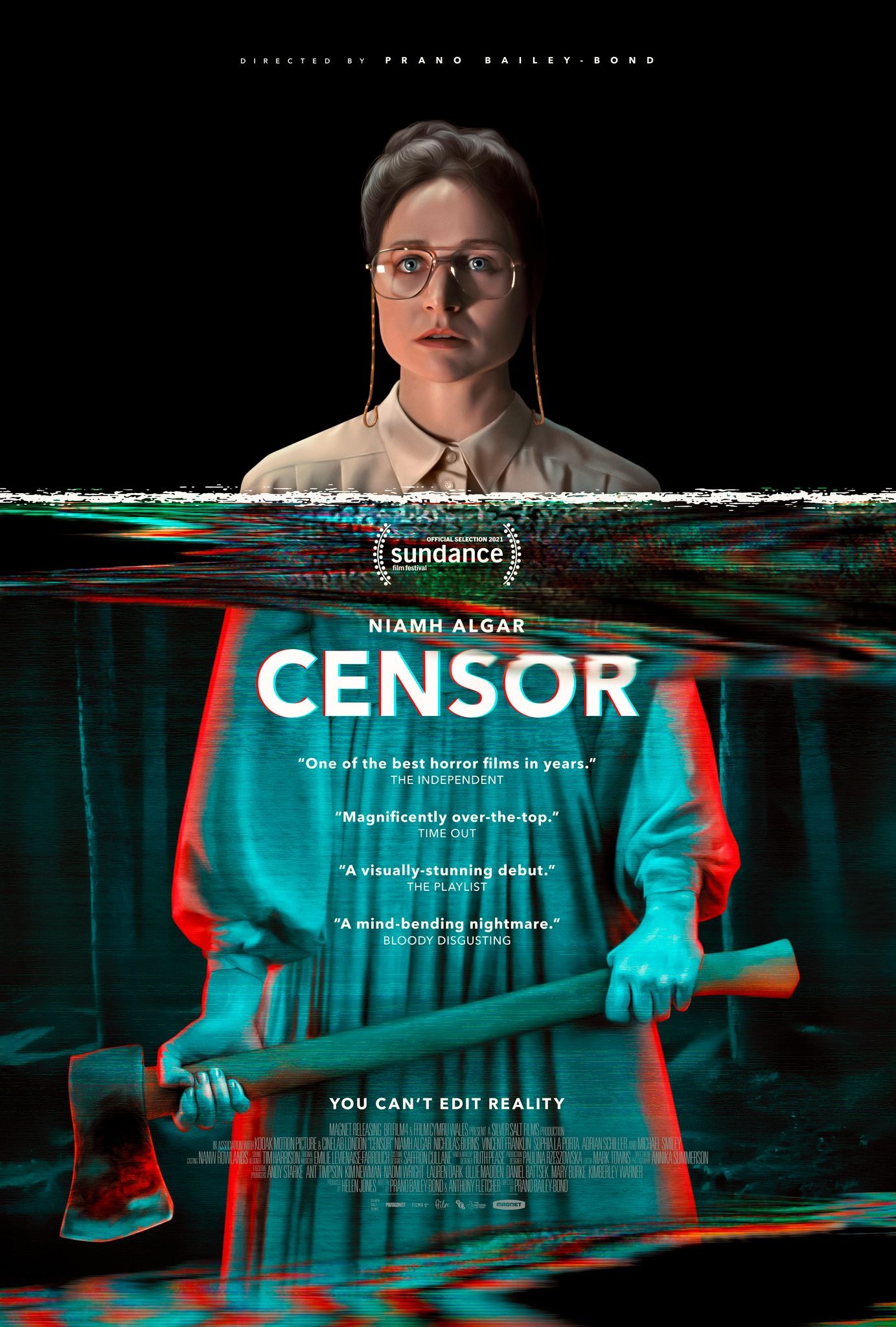
Censor (2021 film) 10.50pm BBC4
Prepare for a chilling cinematic experience as “Censor” (2021) makes its British TV premiere. Directed by Prano Bailey-Bond, this psychological horror film takes us on a gripping journey into the shadows of the film industry, offering a unique and haunting perspective that unveils deeper social and political themes, keeping viewers on the edge of their seats.
“Censor” immerses us in the dark underbelly of the 1980s British cinema world, a time fraught with social and political tensions. Niamh Algar portrays Enid, a diligent film censor grappling with the morally complex task of reviewing and censoring gruesome and controversial films. In her performance, Algar captures the weight of a society wrestling with its own demons, mirroring the political turmoil of the era.
Prano Bailey-Bond’s direction shines a spotlight on the disorienting atmosphere of the time, where a conservative political climate was reflected in the cinema’s obsession with violence and exploitation. The film’s visual style and use of ’80s aesthetics serve as a powerful backdrop for its exploration of the societal obsession with disturbing content. The blend of fiction and reality is an allegory for a society that often struggled to distinguish between the two, all while political issues loomed large.
The film delves into the social and political consequences of exposure to disturbing content, asking viewers to confront the impact of censorship and the fine line between protection and restriction. It poses crucial questions about the role of censorship in preserving societal values and protecting the vulnerable, especially in a time marked by political and moral conflicts.
As “Censor” receives its British TV premiere, it provides an ideal platform to revisit these themes. The film has garnered critical acclaim for its thought-provoking narrative, the exceptional performance by Niamh Algar, and its ability to unmask the hidden social and political horrors lurking within the human psyche.
“Censor” (2021) is a chilling and thought-provoking exploration of the dark underbelly of cinema, amplified by the social and political tensions of its time. Its British TV premiere is the perfect opportunity to experience this gripping tale, which challenges viewers to reflect on the consequences of censorship, the blurred lines between reality and fiction, and the broader societal and political implications that lurk beneath the surface. Don’t miss this thought-provoking journey into the heart of darkness in both the cinema and society.
Friday 27th of October 2023
Deepwater Horizon (2016 film) 9pm GREAT!movies
“Deepwater Horizon” is a gripping and intense disaster thriller that vividly recreates the devastating events surrounding the infamous oil rig explosion in the Gulf of Mexico in 2010. Directed by Peter Berg, the film delves into the harrowing true story of the men and women who found themselves at the center of one of the largest man-made environmental disasters in history.
The film primarily focuses on the courageous crew members of the Deepwater Horizon, led by Mike Williams (Mark Wahlberg), as they battle escalating technical failures and mounting pressure from corporate interests. The tension builds steadily, and when the explosion finally occurs, it unleashes a chaotic and heart-stopping sequence that leaves viewers on the edge of their seats.
The strength of “Deepwater Horizon” lies in its ability to blend gripping action with a genuine portrayal of the human tragedy and heroism that unfolded during the disaster. The film pays tribute to the workers who displayed extraordinary courage in the face of unimaginable danger, highlighting their unwavering commitment to saving lives and their determination to survive amidst the chaos.
The visual effects in the film are outstanding, capturing the scale and devastation of the rig explosion with breathtaking realism. The attention to detail in depicting the oil rig environment and the technical aspects of drilling operations adds an authentic layer to the film, immersing the audience in the high-stakes and perilous world of offshore drilling.
The performances in “Deepwater Horizon” are compelling, with Mark Wahlberg delivering a strong and emotionally charged portrayal of Mike Williams, a resilient and resourceful everyman caught in the midst of the disaster. The supporting cast, including Kurt Russell and Gina Rodriguez, deliver solid performances, portraying the camaraderie and dedication of the oil rig crew.
While the film succeeds in capturing the immediate impact and chaos of the disaster, it could have delved deeper into the long-term environmental and economic consequences. A more comprehensive examination of the aftermath could have added further weight to the narrative.
“Deepwater Horizon” serves as a stark reminder of the human and environmental cost of industrial disasters. It raises important questions about corporate responsibility, governmental oversight, and the need for stringent safety regulations in high-risk industries. The film prompts reflection on the impact of our actions on the environment and the importance of learning from such catastrophic events.
“Deepwater Horizon” is a gripping and emotionally charged film that honors the bravery and sacrifices of those involved in the Deepwater Horizon tragedy. With its thrilling action sequences, compelling performances, and thought-provoking themes, it offers a riveting cinematic experience that sheds light on the human resilience and the consequences of corporate greed and negligence.