★★★★★ A beautifully judged, musically rich, quietly emotional and gently funny exploration of Lennon & McCartney, delivered with craft, charm, and a level of musicianship that allows two men with two guitars to stand toe‑to‑toe with some of the most orchestrated recordings in pop history.
What the show is about
Sittin’ on a Cornflake is The Brothers Broke’s latest deep‑dive into the Lennon–McCartney partnership: the friendship, the rivalry, the creative tension, and the sheer musical brilliance that defined the Beatles’ most fertile years. It’s not a tribute act, nor a nostalgia show. It’s a thoughtful, musically intelligent piece of storytelling that uses the songs themselves as the narrative engine.
Tom Adams (guitar/vocals) and his twin brother Hugh (bass, harmonica, vocals) guide the audience through the arc of Lennon and McCartney’s creative relationship with warmth, humour and a distinctly Irish ease. Their rapport is relaxed and natural, and the banter — dry, lightly self‑mocking, and never forced — keeps the show grounded even as the music reaches for the big emotional notes.
What makes the show distinctive is the brothers’ focus on the game‑changing songs: the ones where Lennon and McCartney pushed ahead of everyone else, reinventing what pop music could be. They explore influence, competition, and respect — not academically, but through performance, letting the songs themselves reveal the story.
Musical handling: the heart of the show
This is where the show truly shines. The Brothers Broke take songs originally recorded with full studio orchestration and render them convincingly with just two instruments. It’s not imitation — it’s interpretation.
Tomorrow Never Knows
One of the boldest choices in the set. The original is a psychedelic studio construction built on tape loops and experimental production. Here, stripped back to acoustic essentials, the song becomes something new: stark, hypnotic, and surprisingly intimate. It’s a reminder that the Beatles’ innovations weren’t just technological — they were musical.
I Am the Walrus
Delivered raw and uncut, without the studio chaos or orchestral swirl. The performance highlights the song’s structural oddity and Lennon’s surrealism, proving that even the most layered Beatles tracks can survive — and thrive — when reduced to their bones. And I learned that it was inspired by a Lewis Carroll story!
A Day in the Life
The standout example. The original famously used a full orchestra, captured in that unforgettable film where musicians in fancy dress fall into psychedelic chaos. The Brothers Broke strip all of that away. No orchestra. No overdubs. Just two guitars — and occasionally a harmonica — yet the emotional weight remains.
They don’t attempt to replicate the orchestral swell; instead, they re‑imagine the song’s shape, leaning into its lyrical intimacy. It’s a bold choice, and it works because they understand the material at a structural level. Musical intelligence isn’t about scale — it’s about sensitivity. They know what to leave out.
Yesterday
Their use of harmonica on Yesterday is inspired. On paper, harmonica and McCartney’s most delicate ballad shouldn’t work — but it absolutely does. It adds a plaintive, folk‑like colour that freshens the song without distorting it. A respectful reinterpretation rather than reverence.
Across the set
The Brothers Broke
They move confidently between Lennon‑led and McCartney‑led material, highlighting contrasts in personality and songwriting style. The choices are thoughtful, the transitions clean, and the emotional architecture of the Beatles catalogue is used to tell the story.
The brothers bring a distinctly Irish warmth to the stage. Their humour is gentle, observational, and rooted in the easy familiarity of two performers who know each other inside out. It never overshadows the music; it frames it.
Offstage, they’re exactly the same — approachable, open, and genuinely interested in conversation. That authenticity carries into the show.
Sittin’ on a Cornflake is an outstanding piece of Fringe musicianship. It’s intimate, clever, and emotionally resonant. The Brothers Broke have the rare ability to make familiar songs feel newly alive, not through gimmickry but through insight.
Two guitars. Occasional harmonica. No orchestra. No spectacle. Just two men who understand Lennon and McCartney well enough to honour them without copying them.
A superb show, and one I’d recommend without hesitation.
How I remember the excited build-up the release of the first ‘new’ Beatles song in over a quarter-of-a-century, Free as a Bird, on December 4th, 1994. The first play anywhere in the world was on Annie Nigtingale’s ‘graveyard shift’ show on Radio One in the middle of the night. I didn’t stay up for that, though if we’d been given a set-time I probably would have set my alarm. Instead, I decided to wait for Chris Evans to play it, as promised, on his morning breakfast show.
‘Coming up, the first new Beatles song since 1970,’ Evans repeatedly stated, or words to that effect. I had to get to work, a 10-8 shift as I remember, which as it involved a two-bus trek from West Gorton to Ashton-Under-Lyne, meant setting off at nine at the latest. In the end, though with mounting annoyance at Evans, who I liked in those days, I resolved that having come this far, I wasn’t leaving the house until I’d heard the song.
So, late it was. Excuses to be formulated en-route, though in the end I realised my colleagues knew me well enough for me to stick with the truth.
After all, this was the fucking Beatles!
Was it worth the wait, given that by this time we’d known of the existence of the track for approximately a year-and-a-half?
I must admit that my first reaction was one of disappointment, though I didn’t want to say anything against the Beatles, even in my mind, in the same way I hadn’t wanted to be mentally disloyal to John Lennon as regards his ‘comeback’ single, Starting Over, and the soon to follow joint John and Yoko album Double Fantasy shortly before his tragically, premature and violent death in 1980. I was eighteen then. Thirty-three when Free as a Bird was released, but some things never change.
I also knew that first listens often lead to prematurely negative reactions, or, conversely, we can go the other way and ecstatically react to a new song by a favourite artist which we’ll quickly tire of, and rarely play again again after those first few excited listens.
In 1995, I now realise, I had an exaggerated belief in what could be done to make an old, home-recorded two-track piano/vocal cassette demo sound modern. Because of my near-magical idea of the transformative power of (then) cutting edge studio technology, I, like many others, was not at all impressed with the quality of the ghostly, rather distorted version of John’s voice which we ended up with.
Over time, once I got used to the none-studio quality of the vocal, I grew to love the song. The arrangement is superb, Paul’s verse was moving and simply right, and the section where George’s shortened version of the same verse suddenly gives way to his cracker of a slide guitar solo, was and remains one of the great Beatles’ moments, up there with almost anything they recorded in the sixties.
Having said that, and in common with most fans, I’ll always have a problem with Jeff Lynne’s dated 1980’s style production. Jeff could make Jandek sound like ELO.
If you’re interested enough to read this, then you probably know the backstory. So, I won’t go too much into it here. In a cliché of a nutshell, Lennon’s widow Yoko had handed Paul a cassette tape of four John piano demos, all recorded at some point during Lennon’s ‘house-husband’ period when he holed up in their Dakota home and gave up recording in order to raise his and Yoko’s baby son Sean, at least according to the official narrative, which we now know contains elements of truth, but no more than ‘elements’.
The idea was that what remained of the Beatles, Paul, George and Ringo, the soon to be nick-named ‘Threetles’, would attempt to turn these demos into proper Beatles tracks, for use in the forthcoming Anthology television series and three volumes of CD.
The handover of the cassette, marked ‘For Paul’, written either by Yoko or one of her assistants, took place at the Rock ‘n’ Roll Hall of Fame ceremony in early ’94, where Paul was to induct John as a member on the basis of his solo career, the Beatles themselves having already been inducted at the inaugural ceremony in 1988. On that occasion, Paul failed to attend because of still ongoing business differences with the others, a decision which earned him much criticism at the time.
(In a blatant rebuff to Paul, who’d been assured that if he inducted John then his own induction would follow a year later, Rolling Stone magazine founder Jann Wenner, who wielded considerable power in ‘Hall of Fame’ circles, and who had long shown himself to be a ‘John man’ and a Paul hater, made McCartney wait another five years for his induction. Pointedly, when he was finally given his spot on the rather pointless roster of legends, Paul’s daughter Stella wore an ‘About Fucking Time’; T-shirt to the ceremony. Had I been McCartney, I would have told Wener to ‘stuff it.’)
The songs on the tape Yoko handed to Paul were Grow Old With Me, Free as a Bird, Real Love and Now and Then.
None of these songs were unknown to Lennon/Beatles aficionados. The first named, had already been released, in its original demo form of piano/vocal/drum machine on the posthumous John and Yoko Milk and Honey album, which was came out in January 1984. Real Love had been included in the 1988 Imagine documentary film (there are several different Lennon documentaries called Imagine. This one is essentially the official Yoko, and now Sean, approved narrative). Free as a Bird had appeared on bootlegs and in the excellent Lost Lennon Tapes series which had aired on American radio between 1988 and 1992.
Now and Then was less well known, having apparently not been played in the radio series, but was known to bootleg collectors, usually listed under he title I Don’t Wanna Lose You.
The idea for the Anthology television series had been knocking around since the band had broken up in 1970, originally being called The Long and Winding Road, of which a rough cut exists, put together by ex roadie Neil Aspinall, who effectively if not officially became the Beatles manager after the split. It was even referred to under this name by John during his last round of interviews in 1980.
The time was finally right for the project by the in the mid-90’s, largely, it seems, because George, generally the least keen to revisit his Beatles past, was short of money following the collapse of his Handmaid Films company, which had foundered despite a promising start with such classics as The Life of Brian and Withnail and I.
As well as being the ‘spiritual’ Beatle, George was also, perhaps contradictorily and perhaps not, rightly regarded as the ‘money’ Beatle.
The idea was that the six-part television series, which was significantly extended for the DVD release, would be accompanied by three CD’s of previously unreleased Beatles outtakes, demos, and even the odd song that had never been heard before outside of the band, their closest collaborators, the most diligent collector of bootlegs.
Each CD was to begin with one of the new Beatles tracks created at Abbey Road studios by the ‘Threetles’ from John’s original cassette demos. Volume one began with Free as a Bird, volume Two with Real Love, which I like, though it’s less of a Beatles song than Free as a Bird, simply because John’s original demo left less room for new contributions from the surviving Beatles. Presumably, Grow Old With Me was rejected because it was simply too well know, having already been featured on an official album release. Later, a nice version would be released, accompanied by a tasteful George Martin strings arrangement. Ringo would also, much later, record his own version, and it’s pretty much as you’d expect.
Volume Three was to open with Now and Then.
There is some doubt as to which order the songs were worked on. Free as a Bird came first, that is not in dispute. I’d always assumed that they then completed Real Love, a year later, before moving on to Now and Then. Work on this song was then curtailed after no more than a few perfunctory run-throughs over a couple of afternoons, when George denounced the song as ‘fucking rubbish’, though it’s still not clear whether his dismissive comments referred to the song itself, or to the sound quality of the demo they had to work from. The official narrative in Beatles Land now demands that it was the latter.
The official line, as put forward by Paul in the excellent twelve-minute ‘Making of…’ documentary that aired the evening before the final release of Now and Then,insists that what little work was done on it followed the completion of Real Love. However, I have also heard it suggested that Now and Then was begun prior to Real Love, which if true destroys my hunch that tensions between Paul and George, that we know were there throughout the Anthology project, and glimpses of which can be seen in some of the footage, both formally released and not, were as much to do with the song’s abandonment as George’s view of its quality (be it creatively or sonically). This can’t have been the case if they then worked on Real Love to completion.
Leaving aside this minutia, of which us uber-Beatles fans are so fond, that seemed to be that. On Geroge’s insistence, the fruits of what little work the ‘Threetles’ did on Now and Then were consigned to languish in the Abbey Road vaults.
Apple run a tight-ship when they want to, and not a single second of the ‘Threetles’ 1995 additions to John’s raw demo reached the ears of anyone outside the most innermost of the inner-circle. Even Mark Lewisohn, the world’s leading Beatles historian and definitive biographer, if he lives long enough to complete his three, possibly four volume series, who has heard Carnival of Light (the final Beatles mystery?) twice didn’t get to hear whatever there was to hear of the Beatles version of Now and Then.
Every now and then (sorry), Paul would return to the subject, In a 2012 documentary about Jeff Lynne called ‘Mr. Blue Sky’, he remarked, after talking about George’s ‘fucking rubbish’ denunciation of the song, and with no apparent ambiguity as regards whether George had been referring to the quality of the song or the recording, ‘One of these days I’m going to nick in to Abbey Road with Jeff and finish it.’
Fortunately, in my opinion, Lynne was not involved in the final completion of the song 2022/3.
Unfortunately, for Paul, Harrison’s widow Olivia, George having died from cancer in 2001, wished to respect her late husband’s wishes and leave the song unfinished: ‘Some things are not meant to be,’ she said, or words to that effect.
What changed matters was Peter Jackson’s epic Get Back documentary, which was released in November 2020. For this project, put together from the hundreds of hours of footage and audio shot and recorded by Michael-Lyndsey-Hogg throughout January 1969 (see my review, link below) for what became his Let It Be movie in May 1970, Jackson made use of the new, cutting edge ‘Machine Learning’, nicknamed Mal named in tribute to the Beatles late and ever willing roadie, friend and general gofer, Mal Evans, a man seemingly capable of any task the band asked of him, including the accessing of an anvil overnight for use on Maxwell’s Silver Hammer (which he also got to play on the track), as seen in the Get Back documentary. Peter Jackson’s film made Mal something of a posthumous star, the gentle giant, the Liverpool telephone operator who got to meet Elvis and Frank Sinatra by virtue of his relationship with the Beatles, was shot dead by LA police in 1976, whilst waving a fake gun around during what appears to have been a psychotic episode.
This ‘de-mixing’ technology, allowed for the separation of sounds which had previously been locked together on one track. For instance, during the filming of Let It Be in January 1969, whenever the band wished to talk together in a manner that could not easily be picked up by Lyndsey-Hogg’s elaborate set up of microphones, they might randomly strum electric guitars at the same time, thus rendering much of their speech inaudible. But, through the application of the cutting-edge Mal technology, their words could be isolated from the guitars. As another example, a discussion in the Twickenham studio canteen between John and Paul (and others, though only those two made it into Get Back), had long been known to super-fans through the bootleg ‘Nagra Tapes’ of the January 1969 audio in full. Sadly, the recording of this fascinating conversation, which was made possible through Hogg’s arguably unethical placement of a secret microphone in a flowerpot, was virtually inaudible amid the clattering of cups, plates and cutlery. Mal made it possible to really hear how John and Paul spoke to one another off mic.
In short, through his use of Mal, not only did Jackson’s near eight-hour epic look beautiful in comparison to Hogg’s grainy, disjointed eighty-minute relic, but it sounded fantastic too.
Musically, the first real possibilities of this technology were seen on Paul’s ‘Got Back’ tour last year, where John’s isolated vocal on I Got a Feeling rom the January 30th 1969 rooftop session, accompanied by the relevant visuals on the big screen, John’s long hair flowing in the breeze as it had more than five decades previously, allowed Paul to live-perform a virtual duet with his former (and forever) musical collaborator.
In terms of Now and Then, what it meant was that unlike on the previous two ‘Threetles’ tracks, John’s vocal could be isolated from his piano and whatever room-noise could be heard as he worked on what to him at the time was just another run-of-the-mill demo (a T.V could be heard playing softly in the background in the original), and then worked on and enhanced as a track in and of itself, in much the same way as any normal vocal track is worked on during the record production process.
So, here, at last, was Paul’s opportunity. Ringo, surprisingly, was less keen, needing all of Paul and Giles Martin’s (the role of Beatles producer has somehow become a hereditary position) powers of persuasion to agree to add to whatever basic drum-track he’d originally laid down back in 1995. Even more surprisingly, the Harrison estate, Olivia and son Dhani who now seems to be playing an increasingly active role on the Apple board, the now ninety-year-old Yoko Ono Lennon having handed over the Lennon side of the business completely to son Sean, finally agreed to allow the completion of the song.
Call me a cynic, but I suspect George’s much increased presence on the expanded and re-mixed ‘Red’ and ‘Blue’ compilation albums which are to be released on November 10th, may have played an important part in this decision.
(This article has proven harder, and taken much longer, to complete because I have been constantly learning new information concerning the track during the writing process, forcing me to amend or add sections as I go along. The story now is that the cuckoo-clock seen on the back cover of the Now and Then single, had sat on the Harrison’s mantlepiece since, I believe, the nineties, and really did have the words ‘Now’ and ‘Then’ written on it. According to George’s widow Olivia, Paul rang, almost certainly not for the first time, to speak to her about the possibility of finally completing the track. At that moment, here eyes fell upon those words written on the clock, and all doubt suddenly fell away. She knew the time was right, that George was somehow giving his belated permission to complete the track from beyond the grave. Erin Weber, author of the excellent book The Beatles and Historians, has written, and talked at length about competing Beatles narratives. She calls the official narrative, the one constructed and maintained by the Beatles, their families and their inner-circle ‘The Fab Four Narrative,’ which began in 1963, ceased when the band broke up, but was revived through the Anthology project, the ‘approved’ history of the Beatles. This story sounds to me like a new addition to this narrative, a heartwarming and suitably mystical tale to add to the Beatles ongoing mythos. It may of course be completely true, or at least to contain elements of truth. But it is, I suspect, mostly a creation which critical thinkers shouldn’t take too seriously).
Anyway, work on the track re-commenced after a twenty seven year gap in 2022, and continued amid admirable secrecy into this year. Apparently, even the string section, whose parts were recorded in New York last year, were unaware of exactly what it was they were playing on.
An interview with Paul this June, concerning his new Eye of the Storm book of his own photographs taken at the height of Beatlemania circa 1963/4, was the occasion for him to ‘let it slip’ that a ‘final Beatles song’ had been completed using Artificial Intelligence (AI), and was soon to be released. This was the first us fans got to hear about it.The song wasn’t named, but we all knew what he was referring to: What else could it have been?
More information was provided by Penn Jillette, of the American Magician duo ‘Penn and Teller’, including the snippet that the track included the importation of harmonies previously recorded for the classic late Beatles track Because, following a visit to the Abbey Road studios where he got the chance to talk with Giles Martin, who even gave him a sneak preview of the finished version of the song.
Most of this information proved remarkably accurate, including the revelation that new re-mixed Red and Blue (officially ‘The Beatles 1962-66’ and ‘The Beatles 1967-70’, but always known to fans as the Red and the Blue albums, and the 1970 cut-off point of course no longer making sense now that the collection is to conclude with Now and Then from 2023) was also planned. I can’t believe Penn spoke without the authorisation of Apple, Paul, Ringo and the estates of John and George.
I believe this was an exercise in what is known as ‘guerilla marketing.’
The use of the term ‘AI’ by Paul was perhaps unfortunate, giving the impression that something had been essentially created out of nothing, using unnatural means of which us aging mortals know little and fear more. The internet is apparently full of such creations as ‘The Rolling Stones’ singing Taylor Swift songs, Elvis Presley covering The Libertines or whatever, though I’ve not heard any of it and nor do I intend to.
I suppose Mal is a form of AI, in that its workings improve organically with experience, but the ‘de-mixing’ process is simply the latest in a long line of technological recording tools, the development of which The Beatles and their producer George Martin had played no small part in pushing radically forwards themselves. It was simply a way of improving what was already there, and then adding to and improving it, not especially different in essence from creating perfect, digitally created stereo versions of old mono/analogue recordings. Admittedly, I may have this totally wrong, given that I still have to ask either my fifteen or my eleven-year-old son how to do a screenshot on the PC.
So, the word was out, and another tense Beatle-obsessive wait began, though of shorter duration and not quite as intense as the wait for Free as a Bird back in 1994/95.
And now, finally, as of November 2nd 2023, here it is, Now and Then by the Beatles, a song which we thought we would never get to hear (though I’ve always had a sneaking suspicion that Macca would find a way), and a song that contains elements from four separate decades.
I will leave aside the question that some spoilsports insist on asking, that of whether it is a proper Beatles song at all. It’s a song written by John Lennon which includes contributions from all four Beatles, which is one, two, or three more Beatles than on some of the songs they put out under the Beatles name in the sixties. It is, ergo, a Beatles song, and I’m not sure what ‘proper’ means in this context, anyway.
OK, like Free as a Bird and Real Love, I’ll accept it’s not quite canon. It’s best looked at as a third addendum to the Beatles canon, but the only real question that matters now is, is it any good?
As I learnt with Free as a Bird, it’s best not to be too hasty with one’s judgement. After maybe six full listens, some through speakers and some through headphones, probably a few more by the time you get to read this, this should really be regarded as a first reaction review.
As such, I’m pleased to report that those initial reactions are almost wholly favourable.
Firstly, regarding John’s vocal. When I first heard this isolated, during the twelve-minute ‘Makin of…’ documentary the night before the release of the song itself (link at the end of the article), it really did send shivers down my spine. OK, on the finished track, it’s not quite up to ‘recorded at Abbey Road yesterday’ standard, but it’s close enough; and in comparison with Free as a Bird and Real Love, and given the quality (or lack of) of the original Dakota demo, the sound of it is not far off miraculous.
One of my first thoughts was that if they can now work such wonders with raw demos through the use of Mal, why would they not use it to re-do Free as a Bird and Real Love too? Personally, I’d be amazed if this hasn’t already happened. These tracks, unlike Now and Then, are not to be included in the forthcoming ‘Blue’ half of the revamped Red and Blue albums, which leads me to suspect they’re being saved for a future project. My guess is a (long overdue) restoration, and expansion, of the Anthology series, probably produced by Jackson, which will be ready for release around the 30th anniversary of the original series in 2025.
Apparently, Jackson only agreed to do the Now and Then video after being presented with fourteen hours of previously unseen Anthology/’Threetles’ footage which, as can be seen in the finished video, he has already restored to Get Back standards. The accompanying three volumes of albums, if a revamped Anthology series does indeed happen, will likely be accompanied by three volumes similarly expanded versions of the original albums, each one headed by a ‘Threetles’ track, a Mal enhanced Free as a Bird on volume one, a similarly improved Real Love on two, and Now and Then to begin volume three, as of course was the original intention.
The thought, in particular, of Free as a Bird, still my favourite of the ‘Threetles’ tracks, with John vocals now as clear as on Now and Then is already giving me pre-emptive goose bumps.
I should stress though that this is all nothing but guess work on my part. Apple have a long track record of either giving us more or less than us fans have come to expect when it comes to Beatles releases…
One problem envisaged with the idea of finishing Now and Then now concerned the current state of Paul’s voice. He is still recording and touring, and is on the latest leg of his Got Back tour in Australia at this very moment. And why not? He has earned the right to keep going as long as he can, and with near three-hour-sets he’s still doing his best to give his public value for money. But even his biggest fans, whose number most definitely include me, will concede that, at eighty-one, his voice is far from what it once was. Age is a big part of that fact, but decades of singing such vocal-chord-shredding masterpieces as Maybe I’m Amazed and Helter Skelter can’t have helped, and Paul, commendably, refuses to compromise by dropping such songs from his set, or even by amending musical keys to make it easier on his voice.
Unlike Dylan, another eighty-something who is still frequently to be found on the road or in the studio, and who can get away with singing old-man songs in an old-man voice, and still have his fans love him for it, with even some of his older material being afforded an extra level of gravity as he croaks gallantly from behind his keyboard (arthritis has, unfortunately, made it difficult for him now to play guitar, a problem that, happily, has not afflicted Paul) this doesn’t work so well for Macca, a songwriter and vocalist whose melodic range spans smooth balladeer to hard-rocker, and all points between.
One solution to the problem was the idea of ‘de-aging’ Paul’s voice, so that his appearance on the same song as a thirty-six year old John would not sound too incongruous. Personally, I had no problem with this idea. It was a technique that had already been used by the Beatles as far back as 1967 for When I’m Sixty Four on the Sgt Pepper album, when varispeed technology was used to make Paul’s voice sound more like the fourteen or fifteen year-old self who’d first written this song on his dad’s piano at the Forthlin Road, Liverpool family home (or at least the melody, but that’s another story). The Beatles always embraced new technology, so I really didn’t see an issue with using what is effectively ‘old tech’ to regress Paul’s voice to something like his 1980’s self (the era that was rumoured, so as to make the song sound as much like an eighties Beatles track as possible.)
In the end, they, meaning Paul, listed as the primary producer (for the first and almost certainly only time on a Beatles track) assisted by Giles Martin, didn’t go for this option. For the ambient backing vocals, which are mainly audible during the fifty-second or so instrumental break about half-way through the song, unused harmonies from genuine sixties’ Beatles tracks, Because, Eleanor Rigby, and Here, There and Everywhere were imported, though fortunately the origins of these harmonies is not obvious.
Unlike on Free as a Bird, there is no new Paul lead vocal, aside from on a couple of lines at the end of verses two and three, ‘I love you…’, ‘I miss you…’ (words touchingly reminiscent of his John tribute song Here Today from 1982) where his voice essentially replaces that of John, who either fluffed his lyrics on the original demo, or did not yet have finalised lyrics in place. This also made me think of the very first Beatles single Love Me Do, the 2023 mix of which is officially a double-A-Side with Now and Then, when Paul had to take over the ‘love me do’ refrain from John out of necessity, because the words overlapped with John’s harmonica playing.
These lines at the end of the Now and Then verses were apparently recorded by Paul back in 1995, when his voice was still not far so from its peak. The age factor therefore wasn’t an issue here. Modern day Paul is only heard, vocally, on the big ’Now and Then’ chorus, where both he, and modern-day Ringo harmonise with John. To my ears, this sounds fine. Yes, listen closely enough and you can tell that this is not Beatles Paul singing, but the mix is good enough for it not to be glaringly obvious. The presence of Ringo on this chorus, with its deeper register and ‘everyman’ quality, adds a surprising depth, and makes the chorus sound as Beatley as possible, given the absence, on these sections, of George.
Some have seen the lyrics essentially as a love song from John to Paul and, retrospectively, from Paul to John. The ‘For Paul’ markings on the cassette handed to Paul by Yoko in 1994 have even been called into the service of this theory, with the claim now being made by some that the writing was in John’s hand, meaning that he either wrote it about Paul, or intended to work on it with Paul at some point. Certainly, it’s very touching to hear John and Paul sing words like ‘I love you’ and ‘I miss you’ together, but I won’t read too much into it. This too sounds like an addition to the official mythos.
We do have outside verification though that the words ‘now’ and ‘then’ did and do have a special significance to Paul.
The story goes that after the legendary fifties’ rockabilly guitarist and vocalist, and composer of Blue Suede Shoes, Carl Perkins had duetted with Paul on the song Get It on the island of Monseratt in 1981, a song which appeared on Paul’s Tug of the War album the following year, Carl told Paul that he had written a song for him, which he then played for him. The song was called My Old Friend, which contained the lines ‘won’t you think about me every now and then, old friend.’ After this point on the song was reached, Paul apparently burst into tears and left the room. When a dumfounded Carl asked McCartney’s then wife Linda what had just happened, she told him that the words ‘won’t you think about me every now and then, old friend’ were the last words John had ever spoken to Paul. This could obviously be yet more Beatles mythos, but we have no reason to disbelieve Perkins who, like Linda, is sadly no longer with us. And if true, given that the incident occurred less than a year after John’s death, when Paul’s grief would have still been raw, this may well be another reason Paul was determined to finish the song one day. It may also be significant that Carl finally released My Old Friend, with contributions from Paul, in 1996, not long after George had ended further work on Now and Then.
I’ve should now mention that most of this article was written before I’d seen Peter Jackson’s official song video, released November 3rd, the day after the song itself, so I won’t comment too much on that, except to say it’s cleverly done, as one might expect from master filmmaker Jackson, very moving at times, and really enhanced my enjoyment of the song the first couple of times I watched it. I loved the previously unseen mid-90’s Anthology footage of the ‘Threetles’ at work, apparently on Now and Then, though some have pointed out that in the scenes where Paul and George are seen playing acoustic guitars together, it doesn’t always look like they are playing this song, or are necessarily even playing together at the same time. I also love the sight of modern-day Paul and modern-day Ringo singing the chorus together, though once it was pointed out that Paul and Ringo were never together in the studio at any point during 2022/3, it does become obvious that their visual appearances were recorded separately and spliced together. As the week has progressed, I’ve also become more and more doubtful about the appropriateness of cutting some of John’s more ‘zany’ antics into the footage. Jackson has said he felt the need to lighten the sombre mood of the song and the video about half-way through. I’m not sure this was strictly necessary, but most people seem to like it, and I do love the ending, as I will return to later.
And now to the little matter of George…
As we’ve seen, original work on the track was curtailed by Harrison in the mid-90’s, and so his contribution to the final version is necessarily minimal. During the two-day’s work (some say one, the consensus now says two) they did back in ’95, he ran through the song on acoustic guitar, at least once, probably more than that, and that is apparently there throughout the finished, though who knows how high/low in the mix his probably rather perfunctory strumming is?
There is also a snatch of nice ‘funky’ electric guitar in verses two and three, which we are assured is George, and which he perhaps intended to be a re-occurring motif but didn’t get around to developing before deciding he didn’t want to do the song at all (though this could have been done in production. Then there are of course the vocal harmonies imported from the sixties, which sound beautiful in the musical interlude, those trademark late-Beatles three-part harmonies fitting perfectly, without it being too obvious that their origins lay in already recorded Beatles songs.
These adapted harmonies from more than five decades ago aside, there is a sense that what little of George there is from the ‘90’s is there simply to tick the box, to be able to say that ‘all four Beatles play on the track…’ Certainly, musically, there is nothing here that multi-instrumentalist Paul couldn’t have done himself.
George got nowhere near contributing a guitar solo in ’95 before he packed away his guitar and headed off, back to his understated home at Friar Park, to his meditation and chanting, to his wife and young son, and to following the Grand Prix circuit around the world with his motor racing mates.
So, no Free as a Bird like cracker of a solo from George on Now and Then.
The lead guitar we hear is from Paul.
In tribute to George, Paul opted for a facsimile of Harrison’s trademark slide guitar style, both during the long musical interlude in the middle of the song, and in the shorter solo towards the end. I do absolutely love this interlude, where Paul’s Harrison-esque guitar, the very Beatles strings, arranged by Giles Martin who has said he was basically ripping-off his father, and nothing wrong with that, and the imported harmonies blend magnificently.
The instrumental section is in fact my, current, favourite part of the track.
However, although I fully understand Paul’s decision to imitate George’s style of playing for the solo(s), I think too much emphasis was put on maintaining the illusion of a fully engaged George, especially as we all know it was Paul anyway. it’s noticeable in the Jackson video that, amidst the footage of the ‘Threetles’ apparently working on the track in the 90’s and Paul and Ringo (the ‘Twootles’?) playing and singing (separately) in the modern era, we never get to see who is playing either of the solos. Why? Is it in the hope that some will think it really s George?
Other decisions could have been made. Paul was no mean Beatles lead guitarist himself when given the opportunity. Two of my favourite Beatles solos, on George’s Taxman from Revolver, and on, John’s, primarily, Good Morning, Good Morning off Pepper, were played by Paul. I would have liked it if we’d had one point on Now and Then where Paul let rip with one of his Beatles’ era style guitar solos, even though I wouldn’t wish to lose the beauty of the extended instrumental middle section where Paul’s George impersonation fits perfectly either. I will come on to a way we could have had both shortly.
Firstly though, should be pointed out that George’s beautiful, distinctive none-blues based slide-guitar style was mainly a post-Beatles development, beginning with his My Sweet Lord single and his All Things Must Pass album in 1970. Free as a Bird, oddly, is the only example I can think of where George contributed a full-on, up-front slide solo to a Beatles track. Thus, there was no absolute necessity for a slide solo to be a part of the Now and Then musical palette, much as, to repeat once more, I love how Paul’s playing fits so well into the musical whole.
My suggestion for an extra, McCartney-led, ultra-Beatles addition to the song dovetails with perhaps the most controversial aspect of the final version of Now and Then, that is the question of the complete absence of a section which was present, twice, on John’s original demo.
On the demo, on two occasions before the entry of the ‘Now, and then…’ chorus, there is what I suppose should be called in musical terms a ‘pre-chorus’, where the key shifts and John begins by singing: ‘I don’t wanna lose you…no, no. no.’
This part of the song is missing entirely from the Beatles version.
Having listened to the original demo a few times over the recent days, and also watched a very good video comparing the demo and the Beatles final version (link at the end), my own conclusion is that for John to repeat this section twice was unnecessary and weakened the structure of the song. The section, therefore, didn’t work as a link between the verses and the chorus. It could, however, have worked well as a middle-eight (I’ve actually counted seventeen bars, an odd number and I could be wrong, but I’m using middle-eight in the sense the Beatles themselves always used it, as a way of describing a section that was musically different to both the verse and the chorus).
The verses are in the key of A Minor, the chorus in G Maj. The change to E Maj in the missing section at some point in the track would I think have served it well, making four sections in all, including the solo/musical interlude where we modulate rather nicely from D Maj to D Minor.
However, the problem with this part of the demo was that John’s vocals were not up to the standard of the rest of the song, and clearly some of the lyrics were obvious place-makers, or simply nonsense-sounds, to be replaced at a later stage, a practice with which all songwriters are familiar.
So, I fully understand the reasons for dropping this part of the song. Had Paul’s voice been in better shape, and perhaps had George still been with us, it’s likely we would have seen the erasure of John’s vocals here, to be replaced by entirely new lyrics sung by Paul and maybe George, as on Free as a Bird Free. With those possibilities ruled out through aging and death, could we not have retained this section, just once, without vocals, but with a rip-roaring mid-60’s Paul guitar solo over the top of those interesting new chords? Or even, maybe, Paul could really have gone to town, claiming once and for all the ‘arty Beatle’ credentials he richly deserves, complete with tape-loops/backward tapes, the full gamut of Beatles experimentation, one last time, including maybe even a touch of sitar and/or tabla as a further tributary nod towards the absent George?
Then again there was always a danger that Paul/Giles could have produced something close to Beatles pastiche, a danger I’m sure Paul at least was fully aware of. The Beatles always showed great taste, and that, thankfully, has been preserved.
During the dark days when it looked like the Beatles Now and Then would never happen, many fan-produced versions were produced, all of which offered differing suggestions as to how the missing section might have been utilised. I have linked to one of the best of these at the end of this piece, but as good as some of these efforts are, and they do show alternative ways that John’s original structure may have been preserved, none of them wherever going to be how a real Beatles version would sound.
Putting all that to one side, Paul, Giles, Ringo and everyone concerned, with more than a little help from Peter Jackson’s baby Mal, have done a fine job, taking what was in George’s words (used in a different context) ‘a shitty demo’, which was then given no more than a skeletal arrangement by the ‘Threetles’ over a couple of days nearly three decades ago, and made it into a Beatles track.
John’s piano was of course eradicated completely, with Paul replicating John’s piano style as well as George’s guitar style, underpinned by some nice electric harpsichord, played once again by, you guessed it, Paul. John’s vocal sounds as I’ve said, the next best thing to him having been there, the instrumental section is beautifully Beatley, and the ‘old Paul/young John’ problem has been partially avoided, partially resolved.
The song is well structured, despite my comments about how it might have been different above. Ringo is simply Ringo, ‘serving the song’, keeping the beat, with nice cymbal crashes at points where such things were needed, and some cool rim shots towards the end. At least he hasn’t been made to sound like an eighties drum machine as Jeff Lynne somehow managed in the nineties. His vocal contribution on the chorus is, as I indicated earlier, excellent, and grows in importance with each listen.
Paul’s bass, apparently a new bass line either replacing or augmenting whatever he’d already laid down in 1995, also sounds better every time I hear it. It’s understated, but with enough Beatles era panache to lift it above the standard of most of his solo career, and most importantly, it fits the song perfectly.
I did think at first that the string-led ending to the song was rather abrupt, but I’ve also grown to love this more and more. I don’t know whether the idea to switch time-signature here from 4/4 to 3/4 was Paul’s or Giles’, but it was a good one, one of those unexpected moments we ought to expect of the Beatles.
Leaving aside the final production and musicianship of the completed track, Now and Then now seems a much better song than I once thought. Admittedly, I’ve listened to the finished Beatles version more times this past week than I’ve listened to any one song in years, but the melody will I think stand the test of time. It’s a real earworm.
So, is Now and Then set to become a Beatles classic to rival I am the Walrus, A Day in the Life, She Loves You, Strawberry Fields Forever, Penny Lane, Hey Jude et al? No, of course it isn’t. But it doesn’t sully their legacy either, which is the most important thing. It’s a song I can well imagine a reformed Beatles having recorded in the eighties or nineties, had circumstances allowed, though no doubt it would have sounded very different with greater input from John and George.
It’s also really whetted my appetite to hear the Mal assisted new versions of Free as a Bird and Real Love which, as I’ve said, I’m sure have, or will soon happen, and which we’ll get to hear, probably as part of a restored Anthology series.
Sometimes, things happen when they are meant to happen. Had George hung around to complete the track back in the nineties, it would have simply joined the other two ‘Threetles’ tracks as an interesting curio, some fans liking it, some not, and many, like me, wishing it had been produced by George Martin rather than Jeff Lynne. In any case, it would be something now long in our past, belonging to the Anthology era when, for a brief time, we finally had new Beatles music to await and then evaluate.
George Harrison did us a favour by kiboshing the track back then. The long wait, and technological advance allowed us one last moment of true Beatles magic.
Apologies for rambling for so long, but this was I believe an important cultural moment which deserved to be approached at length.
As may have been gauged by those who’ve stuck around long enough, I’ve already grown to love this song; and though I’ve developed more and more reservations about Peter Jackson’s accompanying video, the ending, when the boys, for they will forever be ‘the boys’, take a final bow before we fade to an empty stage, with no Beatles, just Ringo’s drum kit with the word ‘Beatles’ emblazoned across it, is a perfect and fitting end.
We are entering a Science Fiction world where most anything is possibly. Already we have avatars of ABBA, Agnetha and Anni-Frid forever young and beautiful (Benny and Bjorn were never really about looks), performing to ecstatic London crowds. But I hope there is never such a thing as a virtual Beatles concert.
That innate good taste will ensure it won’t happen for a while yet, but what about when no Beatles remain to stop every-last drop of filthy lucre being squeezed from their legend? Who is to say that future generations, born long after the Beatles ceased to exist as a band, into a world very different to the fifties Liverpool environment from which they first emerged as a young Skiffle band called The Quarry Men, wouldn’t embrace AI ‘Beatles’ singing AI generated ‘new Beatles songs’?
At least I won’t be around to see it…
It’s time to draw a line.
Time, excuse the pun, to Let It Be.
The Beatles story is, as Mark Lewisohn says, the ‘great story of humanity.’ It’s a story that keeps on giving, keeps on unfolding, with always new discoveries to be made, new insights to be uncovered.
But as far as new music goes, Now and Then should be the end. I’m glad Paul, because this was his baby more than that of anyone else, got the chance to finish while he still could, to have had one last opportunity to sprinkle magic on a promising but unfinished John Lennon idea.
And I feel privileged to have got to hear it.
The Last Beatles Song, and they didn’t let us down.
(Interestingly, I’ve just discovered, all versions of the original John 1977 Dakotas demo have been removed from You Tube. Here’s the ‘Fab Four’ narrative in action. The ‘lost’ section of the song is to disappear down the Memory Hole. Hopefully, my above and below links will survive the Apple cull.
I began writing my latest novel Better than the Beatles! in early 2016, but its real beginnings were around the turn of the millennium when I purchased a book called Raw Vision, a large coffee table style tome that was essentially a compendium of articles and photographs from the magazine of the same name, a magazine that was, and is, dedicated to the subject of Outsider Art Welcome to Raw Vision Magazine | Raw Vision Magazine.
There is no fully accepted definition of Outsider Art, but the attempt by the man who first identified it as a distinct entity, the French artist and collector Jean Dubuffet, is perhaps as good as any:
“We understand by this term works produced by persons unscathed by artistic culture, where mimicry plays little or no part... These artists derive everythingfrom their own depths, and not from the conventions of classical or fashionable art.”
Through my reading of Raw Vision, of Cardinal and other sources, I discovered the collection of loners and misfits who made up the Outsider Art cannon, if there can ever really be such a thing, including such marginal luminaries as Adolf Wolfli, Henry Drager, Madge Gill, and Sabato Rodeo
Although Outsider Art would become an enduring interest, it was my discovery that this primarily visual art had spawned the sonic off-shoot of Outsider Music that led me to immerse myself in a whole new world of creative exploration.
It was the American Disc Jockey and writer Irwin Chusid who adopted the phrase ‘Outsider Music’ and publicised it as a distinct genre in his book ‘Songs in the Key of Z’, which was followed by an accompanying two volumes of illustrative C. D’s.
I am not without my criticisms of Chusid. For me, it was a mistake to incorporate into his book and C.D. collection such artists as Syd Barrett, Scott Walker, and Captain Beefhart, artists whom, whilst occupying a space well beyond the musical mainstream, were too well known to be classed as true outsiders. He also included material that I regard as revealing a knowing ‘so bad it’s good’ attitude that I found rather patronising. For instance, a recording of an old man suffering from dementia singing fragments of songs hazily remembered from his youth may be either sad or sweet, but it is not particularly musically interesting, and is therefore not, in my opinion, Outsider Music.
Nevertheless, it is primarily Chusid whom I must thank for my discovery of the work of the likes of Jandek, the Shaggs, and Daniel Johnston, artists who have continued to fascinate and inspire me to the present day. The first and last named of this trio have had great, niche films made about them, both of which are well worth checking out https://www.amazon.co.uk/Jandek-Corwood-DVD-Byron-Coley/dp/B0006FGHDS/
Although a work of fiction, the movie ‘Frank’, written by Jon Ronson and based (loosely) on a combination of the stories of papier-mâché headed Mancunion outsider Frank Sidebottom and the bizarre story of the making of Captain Beefheart and his Magic Band’s weird classic Trout Mask Replica, also gives a great feel of the nature of Outsider Music https://www.amazon.co.uk/Frank-DVD-Michael-Fassbender/dp/B00NIPIIQM/
It was however the story of The Shaggs which had the most impact upon me, and which was the catalyst for the writing of Better than the Beatles!
The Shaggs was the family name of the three sisters who initially made up the band, Dot and Betty on guitars and Helen on drums, with a fourth sister, Rachel later joining them on bass for live performances. The band were founded in 1968 in their hometown of Freemont, New Hampshire, and were set on their musical path by their father Austin Shaggs. He claimed to have done this in response to a premonition by his late mother, who had apparently correctly predicted the hair colour of the woman he would marry, and more interestingly, that the couple would have three daughters who would go on to attain musical stardom.
In response to this prediction, he took the then teenage girls out of school, bought them instruments, paid for singing lessons and encouraged them to write songs. In 1969, he paid privately for recording studio time, and for the pressing of 1000 copies of the resultant album, an album which was named Philosophy of the World after one of its best loved tracks on the album. Allegedly, the man responsible for pressing the album absconded with 900 of the 1000 copies of the album, and it’s been suggested that he, whether as a form of artistic criticism, through shame at his involvement in such a project, or for more prosaic reasons, simply dumped them. This left around 100 copies to be distributed, mostly locally and for free, by Pappa Austin.
The music of The Shaggs is perhaps best described as the sonic equivalent of a naïve-primitive painting. The ten songs on the album are conventional in structure, but are written and performed in a manner that suggests that they have been produced by ‘musicians’ who have only recently been introduced, and in a very quick and basic fashion at that, to the rudiments of melody, harmony and rhythm. In addition, the lyrics, about such topics as fidelity to one’s parents, self-acceptance, the joys of pet ownership and much else besides, have a charming, child-like quality that is a perfect accompaniment to the music.
Whilst recording their album, the producer of Philosophy of the World is said to have suggested that Austin allow his daughters more time to hone their musical and vocal skills before letting them loose in a recording studio. Austin’s response, which has gone on to become a part of Shaggs folk-lore, was to say that he wanted to catch them ‘whilst they are hot.’
Philosophy of the World would have disappeared without trace had a copy not somehow found its way into the hands of legendary muso Frank Zappa who played a couple of tracks, and professed his love for the album, whilst appearing as a guest on a radio show presented by a DJ by the name of Dr Demento in the early ‘70’s. From there, its reputation grew by word of mouth amongst lovers of left-field music, until it was eventually re-released by Rounder Records in 1980.
It should be noted here that it is Zappa who is often erroneously credited with ironically describing The Shaggs as ‘Better than the Beatles,’ the phrase that I used as the title of my novel. In fact, the phrase originally came from the headline for a Rolling Stone magazine review of the re-released album by iconic music journalist Lester Bangs.
The album was given a further boost in the 1990’s when Nirvana front-man Kurt Cobain placed it no. 5 in his list of his all-time favourite albums. This helped it to gain a CD release by RCA Victor in 1999. Its popularity/notoriety was also greatly aided by the growth of the Internet.
Initially, and until quite late on in the writing process, my novel was called triplets, which is also the name of the Shaggs-like band in the book, as well as of their sole recorded album. In addition, when I began writing the novel, I took the decision to transfer the action from small town America to the North West of England, and the time of the band’s slim recorded output from the late ‘60’s to the late ‘70’s. ‘Write what you know’ they say, and this approach also had the advantage of allowing me to work a potted history of British rock music into the narrative, from fifties rock ‘n’ roll, through Merseybeat, psychedelia, and onwards to punk/Mew Wave and the mostly localised Lo Fi ‘cassette culture’ which emerged from it MESSTHETICS: U.K. DIY/postpunk 1977-84, Hyped to Death (hyped2death.com).
Much of this was done through the character of the father Sam Curtis who, in the manner of many 1950’s British rock ‘n’ roll hopefuls, was gifted a new, larger than life name by representatives of noted show business impresario Larry Parnes, in this case Sam Singer (see real-life examples such as Billy Fury, Marty Wilde, Vince Eager, Duffy Power et al) https://en.wikipedia.org/wiki/Larry_Parnes
In the true story of the Shaggs, the father Austin Shagg was a key player. By all accounts, in particular by the accounts of his children, he appears to have been a driven, pushy and authoritarian figure in the manner of music biz dad’s such as Joe Jackson of the Jackson family and Murray Wilson of the Beach Boys’ Wilson clan. It’s probably no accident that the Shaggs disbanded as a band (despite some latter-day reunions once Philosophy of the World belatedly found its fan-base) in 1975, immediately following the death of their father. In my novel, Sam Curtis/Singer plays an equally key role in the story, although I did try to make him a touch more likeable and sympathetic than his real-world counterpart.
In my previous novel, Special, I drew on my twenty five years of experience as a social care worker in order to tell the story of a fictional woman with a learning disability. https://www.amazon.co.uk/Special-Anthony-C-Green/dp/1788033442/ In writing Better than the Beatles! I again decided to make use of this experience, by incorporating into the narrative the suggestion that the triplets have a form of high functioning autism. Although I have never seen it explicitly stated that this was also the case with the real-life Shagg sisters, my reading and observation of their public comments, their music and lyrics, and the testimony of those who worked with them suggest that this is not entirely out of the question.
Speaking of lyrics, as something of an ‘outsider’ singer/songwriter myself, although I’m not sure that one can be knowingly such, one of the most enjoyable aspects of writing the novel was my writing of excerpts of triplets songs in the naïve style of the Shaggs themselves. At one point I even considered writing these songs in full, and then seeking to find three suitable females to record them with, or perhaps one suitable female to sing each vocal in, to use a phrase that re-occurs throughout the novel, ‘near-unison’. In the end however, I decided that some things are best left to the imagination….
I won’t give away any more of the plot. In my opinion Better than the Beatles! In my opinion, it is by far my best novel to date, a novel that I enjoyed writing very much, such that I felt a distinct sense of loss when I finally decided that it was finished. It’s a novel that I’m proud to have written, and I only hope it will find a readership. Hopefully, I won’t have to wait as long as the Shaggs for it to do so.
MILLIONS of people around the globe would say that Elvis Aaron Presley was one of the greatest singers and entertainers the world has ever seen. Some would go further and say that he was the greatest singer and entertainer ever. And they would agree 100% with this description from the official Elvis Presley website:
“Known the world over by his first name, he is regarded as one of the most important figures of twentieth century popular culture.” (Check out www.elvis.com for much more information about Elvis.)
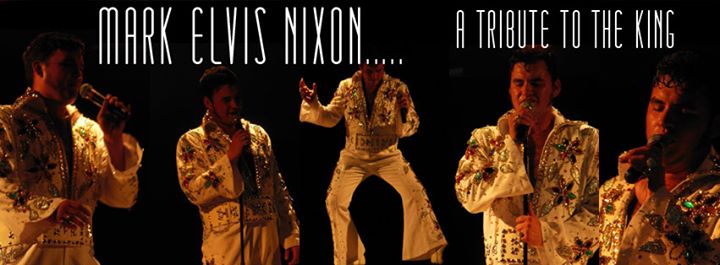
I feel that one of these people would be Mark Elvis Nixon. But who is he, why is he named after The King and what’s he doing in Counter Culture?
Well, first things first. Mark is a 23 year old native of Durham in the North East of England. His parents are massive fans of Elvis and his music had a real effect on Mark. Indeed, he changed his middle name to ‘Elvis’ by deed poll wheb he was just 17.
Not content with calling himself Elvis, Mark now earns a very honest crust via his way above average – and highly energetic – Elvis Tribute act. I was lucky enough to catch him towards the end of September whilst on a brief family holiday in Majorca. Mark had been performing here seven days a week for the whole season.
At first I was a little taken aback – it’s not often that you see a youngster in one of The King’s trademark white catsuits, normally associated with the latter part of his career! Despite Mark’s young age, there’s no mistaking his love and passion for Elvis. He puts his heart and soul into his performance. This really comes over in his hour long show, which was very energetic to say the least. The sweat was bouncing out of him in no time!
Mark had the crowd singing, clapping and dancing in no time at all. Really noticeable were the dozens of people taking photographs and filming him as he got into his set.
Along with virtually all Elvis tribute acts and impersonators, he’s got every mannerism – from swiveling hips to the famous curled lip – off to a tee. His singing voice is also spot on. However, what makes Mark stand out from the crowd is his self-depreciating sense of humour. He’s not afraid to send himself up. When he’s introducing songs and talking about himself he does it on his normal voice – as he noted a couple of times, his is the worst American accent you’ll ever hear!! However, there’s also a serious point to this. Mark doesn’t regard himself as an Elvis impersonator (he’ spaying tribute to The King), so there’s no need to put on that famous Southern drawl.
Another thing that sets Mark apart from the rest is that his set list is really different. I’ve seen a few Elvis acts and it’s reasonably easy to predict what songs will feature. Whilst Mark sings many favourites – Hound Dog, You Were Always On My Mind, Blue Suede Shoes and so on – he featured several songs I hadn’t heard before. One was the fantastic Steamroller Blues, which had a great Rockabilly feel to it. Also included were Elvis’ interpretations of the Beatles classics Something (in the Way She Moves) and Hey Jude.
As I mentioned earlier, Mark Elvis Nixon really puts his heart and soul into his performance. If he keeps at it he’ll be doing what he loves for a living for a long time to come. If you see him advertised go alongand see him – you’ll be in for a great show!