Posts Tagged TVGuide

Culture Vulture: 3–9 May 2025


1,829 words, 10 minutes read time


This week’s selections shine a light on visual imagination, artistic legacy, and dramatic storytelling.

You might find yourself escaping into the dream logic of Annihilation. Or you could revisit the enduring sweep of Lawrence of Arabia. There’s a wealth of viewing to challenge, delight, and provoke. Our picks this week range from the speculative future to Britain’s legal past. They prove that television and film remain some of the richest canvases for cultural engagement.

We’re especially drawn to the bold and the beautiful this week. Alex Garland’s Annihilation stuns with psychedelic strangeness, while Tuesday’s immersive Hockney retrospective reminds us that great artists never stop reinventing. Midweek, Mads Mikkelsen faces the elements in Arctic. Jimmy McGovern stars in the searing drama Common and offers his reflections on it.

Whether you’re in the mood for noir, nostalgia, or narrative risk-taking, there’s something here for every discerning viewer. As ever, all selections have been handpicked by Pat Harrington, with original music on our video version from Tim Bragg.


🌟 Highlights this week:

Annihilation brings visual and psychological brilliance to your Saturday night.
Lawrence of Arabia remains an unmatched cinematic epic on Sunday afternoon.
A David Hockney night on Tuesday offers layered artistic insight.


📅 Saturday, 3 May

Annihilation (2018) – Great Movies, 9:00 PM 🌟
Alex Garland’s sci-fi mystery dazzles with strange beauty and creeping dread. Natalie Portman leads a team of scientists into “The Shimmer,” a mysterious zone where the laws of nature seem suspended. What begins as an expedition quickly unravels into a psychological and existential journey.

Garland weaves a hypnotic atmosphere, enriched by eerie visuals and an unnerving score. The film examines grief, transformation, and the unknown, with echoes of Tarkovsky and Cronenberg. It’s a cerebral experience as much as a visceral one.

Though its abstract nature divided audiences, Annihilation remains one of the boldest science fiction films of the past decade. Ideal for viewers who prefer their thrills slow-burning and their questions unresolved.


📅 Sunday, 4 May

Lawrence of Arabia (1962) – Film4, 12:50 PM 🌟
Lawrence of Arabia is one of those rare films. It transcends mere historical drama. It becomes something far more intricate—a meditation on identity, power, and ambition.

It’s visually stunning, of course. The desert cinematography, the sweeping scale, and Maurice Jarre’s haunting score all contribute to its legendary status. But beneath all that grandeur, there’s something deeply unsettling about the man at its center.

Lawrence, played with mesmerizing intensity by Peter O’Toole, is a man caught between worlds. He’s fiercely drawn to Arab culture. He takes up their cause in the struggle against the Ottomans. At the same time, he is undeniably a product of British imperialism. The film doesn’t shy away from showing his shifting loyalties. It reveals how he wrestles with the idea of belonging.

The British establishment ultimately manipulates his idealism. There’s a bitter irony. His passion for Arab unity is undercut by the very forces he’s working for. He’s both a visionary and a pawn—a man who dreams big but is powerless against the machinery of empire.

Then there’s the question of Lawrence’s sexuality. The film doesn’t make explicit statements, but it certainly hints at something beyond traditional masculinity. O’Toole’s striking, almost ethereal appearance makes him stand out among the hardened soldiers around him. He’s not driven by the same bravado. His relationships, whether with the Arab tribes or his British compatriots, have a certain emotional ambiguity.

One of the most unsettling scenes is his capture and torture by the Turks. This scene is often read as containing elements of sexual violence. The film seems keen to explore Lawrence as a man fundamentally out of place. He is out of place not just politically but personally. Whether or not this aligns with historical accounts remains uncertain.

It’s this elusive quality that keeps Lawrence of Arabia so compelling. It’s a film about war. Yes, it’s also a film about one man’s inner battle. He battles with his allegiances, his desires, and his very sense of self. That ambiguity, that refusal to fit neatly into one box, is what makes it endure.

Even after more than sixty years, it remains unmatched in its depth and grandeur.


📅 Monday, 5 May

A Quiet Place (2018) – Great Movies, 9:00 PM
Creatures that hunt by sound overrun the world. In this world, silence becomes survival. John Krasinski directs and stars alongside Emily Blunt in this tense and innovative horror-thriller.

What sets A Quiet Place apart is its economy—both in dialogue and spectacle. Every sound carries weight, every silence amplifies dread. The family dynamic at its core adds emotional stakes that feel earned.

It’s rare to find a genre piece that balances innovation, emotion, and tension so deftly. This one does, and it lingers.


📅 Tuesday, 6 May

David Hockney: A Life in Art – The Interview – BBC Four, 10:00 PM 🌟
The programme is an intimate exchange. It reveals much about one of Britain’s most influential living artists. Hockney reflects on fame, creativity, and the shifting art world with clarity and wit. The programme offers not just biography, but insight into process. Hockney’s reflections are accompanied by a rich visual tour of his work. This makes it an aesthetic treat. It is also an intellectual one. It is a must-see for art lovers. It also appeals to anyone curious about continuing to create with joy and vision into their 80s.

Imagine – David Hockney: A Bigger Picture – BBC Four, 10:25 PM
This companion piece delves into Hockney’s Yorkshire landscapes. Focused on his late-career work, it’s both painterly and philosophical. The film captures how Hockney reinvents himself through colour, light, and technique. It also addresses the changes brought by age and technology. A beautiful meditation on reinvention and legacy.

Hockney: Double Portrait – BBC Four, 11:20 PM
This is a documentary exploring one of Hockney’s most iconic paintings. It delves into the personal relationships behind it. Revealing and sensitive. The portrait becomes a lens through which to examine the intersection of intimacy and creativity. Archival footage and modern interviews bring it to life. Essential for anyone fascinated by the emotional stakes of visual art.

Face to Face with David Hockney – BBC Four, 12:15 AM
A candid one-on-one interview that strips away pretense. Hockney’s humour and insight shine through. The intimacy of this late-night slot suits the tone—quiet, personal, sincere. A quiet gem in a packed night of programming.


📅 Wednesday, 7 May

Arctic (2018) – Great Movies, 11:35 PM
Mads Mikkelsen is the lead in a survival story. He plays a man stranded in a frozen wilderness. With almost no dialogue, it relies on visual storytelling and raw performance. The harsh environment becomes both enemy and backdrop for existential meditation. Every decision matters; every failure is fatal. Sparse but powerful, Arctic is about resilience when hope is almost gone.

Gogglebox: 10 Year Anniversary Special – Channel 4, 10:00 PM
A decade of watching ordinary Brits watching telly has provided more insights than expected. The show has revealed more than we anticipated. It reflects our identity, emotions, and reactions to the world around us.

This special celebrates ten years of laughter, tears, and heated debates from UK living rooms. It blends nostalgia with the wit and charm that have made it a cultural staple. It’s one of my favourite programmes.

Beyond the entertainment, Gogglebox offers something deeper—a quiet but powerful reminder of how much we have in common. No matter our class, ethnicity, or background, we all gather around the TV. We laugh at the same absurdities. We feel the same emotions.

We find connection in the everyday. We feel collective joy over gripping dramas. We share outrage at political scandals. We experience mutual fascination with the bizarre corners of reality television. The programme showcases the threads that unite us.

This anniversary special promises to be warm and funny. It also provides a surprisingly insightful reflection on how we consume culture. Just as importantly, it examines how we consume each other’s perspectives. A decade on, Gogglebox remains a rare gem. It is a programme that entertains. It quietly reinforces the fundamental truth that we’re more alike than we are different.

Dead Man Walking: Dan Walker on Death Row – Channel 5, 9:00 PM
Journalist Dan Walker examines capital punishment. He does this through a series of interviews and case studies. The personal stories are haunting. The documentary avoids easy answers, focusing instead on moral complexity and judicial fallibility. A sobering, necessary watch.

Jimmy McGovern Remembers Common – BBC Four, 10:00 PM
The acclaimed writer looks back on his hard-hitting legal drama. It is about joint enterprise laws. Personal and political, McGovern’s reflection sheds light on the motivations behind his work. A timely revisit in light of ongoing legal reform debates.

Common – BBC Four, 10:15 PM
A young man faces murder charges under the controversial joint enterprise doctrine. Sean Bean co-stars in this tense, issue-driven drama. Common is not just a legal story—it’s a moral indictment. Powerful, affecting, and still deeply relevant.


📅 Thursday, 8 May

Baby Done (2020) – BBC Three, 10:05 PM
A refreshingly honest comedy about a couple struggling with impending parenthood. Stars Rose Matafeo in a standout performance. Funny without being flippant, it captures the ambivalence of growing up. Whip-smart and heartwarming in equal measure.

The Invisible Woman (2013) – BBC Four, 10:10 PM
Ralph Fiennes directs and stars in this tale. It is about Charles Dickens’s secret love affair with actress Nelly Ternan. The film is restrained, elegant, and quietly heartbreaking. Felicity Jones excels as Ternan. A literary biopic with emotional weight and visual grace.

The Real Adolescents: Our Killer Kids – Channel 5, 10:00 PM
A provocative documentary exploring extreme youth violence. Harrowing but responsibly handled. Raises difficult questions about justice, rehabilitation, and society’s role. Not easy viewing—but important.


📅 Friday, 9 May

The Shape of Water (2017) – Film4, 11:35 PM
Guillermo del Toro’s lush, genre-defying romance captivates audiences. A mute cleaner falls in love with a sea creature. This unique story won Best Picture for a reason. Part fairy tale, part political allegory, it’s visually sumptuous and deeply humane. A film that embraces the outsider and dares to dream.

Michael Portillo’s Travel Diaries: In Prague (Ep. 1 of 3) – Channel 5, 9:00 PM
The colourful traveller swaps train for footnotes in this personal tour of Prague. Less formal than his railway shows, this series reveals more of Portillo the man. Gentle, informative, and quietly engaging.


📺 Streaming Choices

Star Wars: Tales of the Underworld – Disney+, all six episodes available from Sunday, 4 May
Criminal syndicates and bounty hunters in a gritty galaxy far, far away.

The Handmaid’s Tale (Season 6) – Prime Video, new episodes weekly from Saturday, 3 May
Resistance continues in Gilead.


Longer reviews and expanded commentary on many of the films and programmes featured this week are available on the Counter Culture website. For example, Tony Green has written in-depth critiques of the first three episodes of the current season of Doctor Who, examining their themes, structure, and resonance in greater detail.


We hope this issue of Culture Vulture has offered not only guidance but inspiration.
Until next week, stay curious.

Leave a Comment

Culture Vulture 26 April – 2 May 2025

Welcome to this week’s Culture Vulture, your weekly entertainment guide written from an alternative standpoint.

Selections and commentary are by Pat Harrington, with original music for our video version provided by Tim Bragg. Our normal video version will be available later due to technical difficulties.

This week’s highlights include Titanic, a sweeping portrait of love and class in a world poised for disaster; The Last of Us, a gripping post-apocalyptic journey that explores what survival really costs; and Priest, a fearless drama about conscience, secrecy, and the loneliness of truth.

We hope you find something here to challenge, inspire, and entertain you.

Saturday, 26 April

West Side Story (1961)
1:50 PM, BBC Two

West Side Story remains one of the most potent portraits of urban alienation ever captured in a musical. Set against the backdrop of a crumbling, overcrowded New York, the film reframes Romeo and Juliet as a turf war between two dispossessed groups, each clinging to what little territory and pride they have left. The city they fight over barely notices them, a cold giant of concrete and decay that mirrors their shrinking chances for dignity.

The young characters are caught in a trap not entirely of their making, inheriting rivalries and resentments that the adults around them either exploit or ignore. Education, opportunity, and security — all the things that might lift them out — are tantalisingly close but always just out of reach. When dreams do appear, they’re swiftly crushed under the reality that belonging often demands loyalty to violence.

Despite its sweeping music and kinetic choreography, there’s no real escape offered here. Love can bloom in alleyways and abandoned lots, but survival depends on hard choices and luck more than any sense of justice. The film’s heartbreak is less in the tragedy itself and more in how inevitable it all feels, even from the opening frames.


Doctor Who (Episode 3 of 8: “The Well”)
7:20 PM, BBC One

As Doctor Who continues its new season, “The Well” plunges into questions about legacy, tradition, and the hidden costs of memory. Beneath the science fiction trappings, the story hints at how societies bury uncomfortable truths in rituals and myths, covering over wounds they are unwilling to heal properly. The Doctor, as always, holds up a mirror to human habits and asks whether we are brave enough to confront the monsters we’ve hidden away.

The idea that history is a battleground — fought not just by soldiers but by storytellers — runs throughout the episode. Every ancient site, every relic unearthed, holds competing versions of the past depending on who tells the story. Some of these narratives empower, others entrench fear or division. The Well becomes a symbol not only of physical depth but of how deep societies must dig to find honesty.

What keeps the Doctor fascinating, even after decades, is the refusal to give easy answers. Instead of offering salvation through technology or sheer willpower, the Doctor suggests that true healing demands discomfort, humility, and courage. “The Well” invites viewers to consider that growth often comes not by building new monuments, but by breaking old spells.


Gone Baby Gone (2007)
9:00 PM, Great Movies

In Gone Baby Gone, Ben Affleck peels back the layers of a working-class Boston community to reveal how desperation warps even the simplest notions of right and wrong. The film’s murky streets are filled with people doing their best in systems that have long since failed them, and where the only choices left are bad ones. Institutions meant to protect the vulnerable seem sluggish, corrupt, or simply overwhelmed.

As the case of a missing child unfolds, every character must wrestle with impossible decisions that blur the line between justice and vigilantism. Loyalty to community, family, or the law rarely align neatly, and Affleck refuses to let viewers sit comfortably on moral high ground. Instead, he presents a tangle of compromised motives and gut-wrenching dilemmas, asking whether idealism survives where poverty and addiction are everyday realities.

The film’s final scenes haunt because they refuse neat closure. There is no reward for doing the “right thing” when the very idea of righteousness feels hollow against the weight of suffering. Gone Baby Gone challenges audiences to question what safety means, and whether it can truly exist without confronting the deeper rot beneath surface order.


Benedetta (2021)
11:15 PM, Film4

Benedetta unsettles because it understands power not as something seized violently, but as something often disguised as divine blessing. Set within the restrictive walls of a 17th-century convent, the film shows how structures designed to protect spirituality are vulnerable to ambition, manipulation, and very human desires. Every prayer uttered, every vision proclaimed, becomes a weapon or shield depending on who wields it.

The characters navigate a closed system where survival depends less on piety than on navigating political alliances cloaked in religious robes. Benedetta herself walks a razor-thin line between sincerity and strategy; the film never fully declares whether her miracles are genuine, only that belief itself is a form of currency. For those locked in poverty or servitude, even false salvation is better than none at all.

What lingers most after the final scenes is how little separates faith from fear, liberation from captivity. Institutions meant to offer grace become machines of exploitation, and miracles — real or not — change little when earthly hierarchies are at stake. Benedetta forces us to look beyond scandal and ask who really profits when the divine becomes a matter of paperwork and spectacle.


Carlito’s Way (1993)
11:20 PM, Channel 4

Carlito Brigante’s struggle to go straight after prison feels less like a personal failing and more like an indictment of a society built on broken promises. In Carlito’s Way, dreams of redemption clash against the relentless pull of old loyalties and street codes, showing how hard it is to escape a life when the outside world sees you only through the lens of your past mistakes.

The film bathes New York in a heavy, almost funereal atmosphere where hope is fleeting and paranoia is a survival skill. Carlito’s attempts to build something honest — a small nightclub, a quiet life with a woman he loves — seem almost laughably naïve against the grinding machinery of crime and betrayal that surrounds him. The system may offer a theoretical second chance, but it rarely delivers it without exacting a brutal toll.

By the time the credits roll, we’re left asking whether ambition itself is a trap. In a world where systemic barriers loom larger than personal ambition, where the past is never forgiven, and where loyalty can be a death sentence, Carlito’s tragedy feels less personal and more universal. In the end, it isn’t just bullets that kill him — it’s the silent judgment of a world that never truly offered him a way out.


AngelHeaded Hipster: The Songs of Marc Bolan & T. Rex
11:35 PM, Sky Arts

AngelHeaded Hipster is more than a tribute concert; it’s a reminder that pop music often says what politics cannot. Bolan’s songs, bursting with playful rebellion and emotional rawness, created a world where glitter, fantasy, and subversion could live side by side. In revisiting them, a new generation of musicians finds both celebration and subtle mourning.

Each interpretation in the film reveals something about Bolan’s legacy: the tension between sincerity and spectacle, between cultural escapism and buried pain. Glam rock offered an escape hatch from the conformity and grayness of Britain, yet it also hinted at deeper yearnings — for belonging, for transformation, for dignity denied elsewhere.

The tribute gently suggests that art remains one of the few spaces where outcasts can reshape their realities. Bolan sang about unicorns and dandelions, but also about survival. Even now, when the guitars fade, the hunger behind those lyrics remains.

Sunday, 27 April

Gunfight at the O.K. Corral (1957)
6:25 PM, Great Action

At first glance, Gunfight at the O.K. Corral seems like a straightforward retelling of frontier justice, but underneath the pistol smoke and dusty streets lies a story about fractured loyalty and the precarious nature of authority. Wyatt Earp and Doc Holliday operate in a world where law is as much about reputation and grudges as it is about written rules. Every man at the Corral believes he has right on his side; what separates the heroes from the villains is often little more than who wins the final standoff.

The film paints the American West not as a land of opportunity but as a battleground where power has to be constantly asserted with violence or cunning. Formal institutions are weak or absent, and communities survive through uneasy pacts and silent understandings rather than justice. It’s a reminder that stability often depends less on laws and more on those willing — or desperate enough — to enforce them.

Beneath the surface, Gunfight at the O.K. Corral wrestles with the cost of that enforcement. The characters cling to honour, friendship, and personal codes, but the blood spilled at the end shows how fragile and hollow those codes can become. Victory might bring order, but it rarely brings peace — not even for the victors..


Louis Theroux: The Settlers
9:00 PM, BBC Two

Louis Theroux has made a career out of exploring the spaces where ideology and lived experience collide, and The Settlers is no exception. Set among Israeli settlers in the West Bank, the documentary uncovers a community whose beliefs in destiny and survival are challenged daily by the stark realities of the land and its history. These settlers live with a defiant sense of purpose, but Theroux quietly reveals the fractures and contradictions within that certainty.

Each conversation hints at the uneasy compromises that shape life in contested territory. Economic hardship, cultural memory, and personal fears all blend into justifications for a status quo that feels increasingly unsustainable. Theroux rarely editorialises, yet the faces and silences he captures speak volumes about the psychological toll of endless conflict. Here, certainty can be a shield, but it can also become a prison.

What makes The Settlers so unsettling is not its portrayal of extremism, but its portrait of ordinariness. These are people living, raising families, building homes, even dreaming — yet doing so in a place where every cruel act carries political weight. Theroux shows how human lives, when woven tightly into ideological fabrics, can make even everyday gestures a battleground for meaning and control.

Monday, 28 April

Titanic (1997)
7:00 PM, Film4

Titanic sweeps viewers back to 1912 aboard the world’s grandest ship, a floating palace on its maiden — and final — voyage. It pairs breathtaking spectacle with an intimate love story between Rose, an aristocrat yearning for freedom, and Jack, a penniless artist. Every grand staircase and glittering ballroom speaks to an age intoxicated with its own progress, even as the cold inevitability of disaster closes in. Beneath the romance, there’s a creeping sense that this voyage was always doomed, that hubris and faith in technology would never be enough to command the sea.

What gives the film its lasting power is the way it captures an invisible but ever-present divide. Above deck, the wealthy dance and dine; below, the workers and immigrants sleep cheek by jowl. The story shows how security and luxury are bought with the sweat and sacrifice of those who remain unseen until tragedy strikes. Jack and Rose’s love story offers a glimpse of possibility — that these walls might be breached — but the ocean proves merciless, erasing fine suits and ragged clothes alike when the ship finally sinks.

Rewatching Titanic now, it’s striking how much it says about dreams built on fragile foundations. In Rose’s survival there’s not just sorrow but a kind of warning: that those who are supposed to be protected may in the end be left clinging to wreckage, while the architects of disaster escape consequence. The film’s final images, beautiful yet deeply sad, remind us that for all our ambitions, nature — and fate — remain indifferent.


Panorama: The Truth About Baby Food Pouches
8:00 PM, BBC One

Tonight’s Panorama turns its gaze onto something that many parents reach for without a second thought: baby food pouches. Brightly coloured, convenient, and marketed as a healthy choice, they’ve become a booming part of family life. But what lurks behind the cheerful packaging? The investigation reveals that many of these products are packed with sugar and stripped of essential nutrients, offering an easy sale at the cost of children’s long-term health.

It’s a story about more than nutrition. In a world where time is short and pressures are high, companies offer solutions that slip into the gaps left by modern life. Panorama captures how trust is sold in glossy advertising while quietly undermined in supermarket aisles. It’s a system that relies on parents doing their best in difficult circumstances — and rarely rewards them with the full truth. The promises on the pouch are simple; the reality inside is not.

At its heart, the episode invites viewers to see who benefits when nutrition becomes a product rather than a principle. Government warnings gather dust, industry profits climb, and another generation is quietly nudged down an unhealthy path. Without preaching, Panorama makes clear that the real costs of convenience are often carried not by those who sell, but by those too small to choose for themselves.


The Last of Us
9:00 PM, Sky Atlantic

The Last of Us offers a vision of the future that feels uncomfortably close to the present. After a fungal infection tears through the world, civilisation collapses into isolated, suspicious enclaves. In this battered landscape, Joel and Ellie — a weary survivor and a teenage girl who may hold humanity’s hope — journey through crumbling cities and overgrown highways. The real threat isn’t just the infected, but what people are willing to become when the old rules are swept away.

Across broken towns and desolate plains, the show paints a portrait of a world trying to rebuild itself out of ash and fear. Some communities cling to old structures of governance, others fall into anarchy or cultish devotion. Everywhere, survival demands hard choices and harder hearts. Yet among the ruins there are flashes of generosity, loyalty, even love — stubborn lights against the long dark. These moments matter all the more because they are rare and hard-won.

What makes The Last of Us compelling isn’t its monsters, but its compassion. It reminds us that survival alone is never enough; what matters is the kind of people we become when survival is all we have left. In Joel and Ellie’s fragile bond — filled with mistrust, tenderness, sacrifice — lies a simple but profound truth: the future, if it has any hope at all, depends on who we choose to protect, not just on who we manage to defeat.


Yield to the Night (1956)
11:05 PM, Talking Pictures

In Yield to the Night, Diana Dors strips away glamour to deliver a performance full of raw defiance and sorrow. As Mary Hilton, a woman condemned to death, she waits out her final days in a prison cell while flashbacks slowly reveal how she came to kill. The walls around her feel not just physical, but deeply symbolic: a world that offers little mercy, even when mercy might be deserved. Time stretches and twists in these bare surroundings, each tick of the clock a reminder that forgiveness, once denied, cannot be bargained back.

What makes the film endure is its refusal to flatten Mary into a simple figure of guilt or innocence. Her life is laid bare: moments of humiliation, heartbreak, loneliness all stack atop one another until the final act seems less a snap decision than the inevitable breaking of a spirit. The people around her — kind guards, distant officials, pitying visitors — seem powerless to change a system that demands retribution, not understanding. There’s no melodrama here, just the slow grinding of a machine that consumes even those who run it.

Watching Yield to the Night today feels like looking into a mirror we’ve not fully put down. It invites uncomfortable questions about what society asks in the name of justice, and whether any punishment can truly balance out despair. Mary’s story may be personal, but its implications are anything but: a warning about the kind of cold righteousness that turns punishment into ritual, and people into statistics.

Tuesday, 29 April

The Bridge on the River Kwai (1957)
5:45 PM, Film4

The Bridge on the River Kwai stands as one of the great studies of pride, loyalty, and delusion. In the blistering heat of a Japanese prisoner-of-war camp, British officers are ordered to build a railway bridge, a project meant to serve their captors. Colonel Nicholson, played with unforgettable precision by Alec Guinness, decides that cooperation — carried out with the highest standards of British engineering — is a way to maintain dignity. What follows is a quiet tragedy, as the very qualities that make Nicholson a great leader also blind him to the fact that he is aiding the enemy.

The film is full of uneasy ironies. Nicholson’s determination to uphold discipline and tradition offers his men a measure of order amid brutal captivity, but it also morphs into a kind of madness. Meanwhile, the captured soldiers toil to complete a symbol of their own subjugation, their labour becoming both a point of pride and a grim joke. Watching the bridge rise, immaculate against the tropical landscape, one feels the deep tension between personal honour and the larger currents of war, ambition, and survival.

As the story hurtles toward its explosive conclusion, the audience is left to ponder the terrible ambiguity of service and sacrifice. What does it mean to be right when the world itself has turned upside down? The Bridge on the River Kwai refuses easy judgments. It shows how human ideals — loyalty, professionalism, courage — can become disastrous when stripped from their deeper purpose, and how even the best of intentions can pave the road to ruin.


Matthew Bourne’s Edward Scissorhands: Dance Adaptations
9:00 PM, Sky Arts

Matthew Bourne’s Edward Scissorhands reimagines Tim Burton’s beloved outsider tale in a stunning new language: dance. Without dialogue, Bourne draws out the aching tenderness and silent yearning that always lay beneath Edward’s clumsy charm. The production transforms the suburban world Edward stumbles into, turning every picket fence and pastel kitchen into a choreography of conformity, where fitting in demands a brutal smoothing of every sharp edge.

Edward himself — sweet, bewildered, yearning for love — becomes a figure of pure vulnerability. In his every gesture, the longing for acceptance is palpable, yet his difference makes true belonging impossible. The cheerful surface of the town around him only barely masks a viciousness beneath: a hunger for spectacle, a fear of the strange, and a ready cruelty toward those who fail to blend in. Bourne’s dance captures the rhythm of this society beautifully: smiling, uniform, and ultimately suffocating.

Without ever hammering the point, the production makes it clear that Edward’s tragedy is not his scissorhands, but the world’s refusal to accept anything it cannot easily explain. The silent grace of dance allows Bourne to show, rather than tell, how dreams of community can warp into exclusion, and how tenderness, if misunderstood, can be punished. It’s a story about innocence in a world too quick to destroy what it doesn’t understand — told with aching beauty and wordless sorrow.


Secret Battle for the Ho Chi Minh Trail: The Misty Experiment
9:35 PM, PBS America

The Misty Experiment tells a story few outside military history circles have heard: a covert U.S. Air Force operation during the Vietnam War, aiming to disrupt the vital Ho Chi Minh Trail. In lush jungles and perilous skies, young pilots embarked on dangerous, often improvised missions, tasked with slowing an invisible enemy’s supply lines. But the documentary quickly makes clear that this was a battle fought as much against nature, uncertainty, and moral unease as against any human foe.

Through archival footage and veteran testimony, the film reveals a campaign marked by both courage and deep contradiction. The “Misty” pilots were selected for their daring and skill, yet the mission itself seemed to slip increasingly out of control — a strategic necessity in theory, an endless escalation in practice. For every truck destroyed, more seemed to appear; for every risk taken, little visible progress was achieved. Pilots found themselves caught between duty and growing doubt, a tension that simmers through every recollection.

Rather than glorifying the conflict, The Misty Experiment lingers on the human cost of fighting a war from the sky — a war where victory was measured in wreckage and estimates. It leaves viewers with a picture not of heroism in the traditional sense, but of perseverance within an ever-shifting fog of uncertainty. There’s no grand victory offered, only the quiet acknowledgment of those who risked everything for missions whose success was measured in whispers and shadows.

Wednesday, 30 April

Groomed: A National Scandal
9:00 PM, Channel 4

Groomed: A National Scandal confronts a part of British life that has too often been pushed aside or politely ignored. Through survivors’ testimonies and forensic journalism, it lays bare how vulnerable young people were failed not just by individual predators, but by the very institutions designed to protect them. Local councils, police forces, and social services emerge less as villains than as examples of a quiet, everyday abandonment — a willingness to look away when protecting reputations or avoiding difficult truths felt more urgent than doing what was right.

The documentary makes clear that the horror wasn’t just in the acts committed, but in the silence that followed. Again and again, warning signs were dismissed, victims were disbelieved, and community tensions were prioritised over justice. The viewer is left with the sickening realisation that inaction often causes more lasting harm than any single crime. It asks, without melodrama, what it says about a society that prefers uncomfortable truths to remain buried, even when children are the ones paying the price.

Ultimately, Groomed refuses to offer the comfort of closure. There are apologies, investigations, reviews — but for those who lived through it, the damage is irreparable. The programme captures a country grappling not only with what happened, but with what it says about the easy compromises and everyday cowardice that allowed it to happen at all. It reminds us that no system is better than the will of those who run it, and that neglect often wears a mask of polite professionalism.


Jimmy McGovern Remembers Priest
10:00 PM, BBC Four

In this intimate reflection, Jimmy McGovern Remembers Priest offers not just a recollection of a controversial film, but a meditation on the cost of telling hard truths. McGovern speaks frankly about the struggles he faced bringing Priest to life — the backlash from religious institutions, the outrage from censors, and the personal toll of stepping into the minefield of faith and sexuality at a time when such conversations were barely whispered in public.

McGovern’s memory of the project is tinged with pride but also melancholy. The film opened wounds in a Britain still struggling to reconcile its traditions with its realities. McGovern doesn’t gloat about the battles won; instead, he reflects on how fragile and fleeting even small cultural victories can be. Viewers sense that Priest was not simply a “statement,” but a personal risk, undertaken at a moment when the wrong word, the wrong scene, could derail a career or bring down a storm of condemnation.

What lingers after McGovern speaks isn’t the controversy, but the loneliness of those who try to hold a mirror up to the world and say: look harder. His recollections remind us that progress often comes with bruises, and that those who demand honesty from society often find themselves standing apart from it, paying a quiet price long after the headlines fade.


Priest (1994)
10:15 PM, BBC Four

Priest remains a raw, deeply unsettling portrait of a man caught between two irreconcilable parts of himself. Father Greg, played with aching vulnerability by Linus Roache, enters the church full of hope and conviction, only to find that the institution he reveres is riddled with hypocrisy and fear. His struggle is not just with his own sexuality, but with the crushing realisation that those around him — his mentors, his congregation, his Church — have little interest in redemption when appearance and authority are at stake.

The film paints an unforgiving world where vulnerability is punished and silence is rewarded. The confessional, meant to be a place of honesty and healing, becomes instead a battleground of impossible secrets. Father Greg’s attempts to live truthfully bring him into direct conflict with the very institution that should nurture compassion. In this setting, forgiveness is conditional, compassion is selective, and human suffering becomes just another embarrassment to be managed.

Watching Priest today, it feels no less urgent. It captures the isolation that comes from standing at the fault lines of personal integrity and institutional cowardice. McGovern’s film does not offer easy villains or tidy resolutions. Instead, it forces viewers to sit with discomfort, to feel the slow corrosion that occurs when loyalty is demanded at the expense of conscience. In the end, it is less about faith lost than about faith betrayed.


Cold War and Cinema
11:30 PM, Sky Arts

Cold War and Cinema examines a time when fear and imagination collided on the silver screen. The documentary traces how Hollywood and European filmmakers alike processed the looming dread of nuclear annihilation, espionage, and ideological battle. Through slick thrillers, surreal science fiction, and bleak dramas, the anxieties of a divided world were distilled into stories that offered both escape and confrontation — sometimes at the same time.

The most fascinating moments reveal how cinema became both a weapon and a refuge. Propaganda seeped into everyday entertainment, while artists found ways to smuggle subversive ideas past censors under the guise of genre. The threat of global destruction left its mark on everything from shadowy noir films to shiny space operas, each story echoing the tensions of a world forever two minutes to midnight. Even the most fantastical tales often carried the heavy weight of very real dread.

Yet Cold War and Cinema isn’t simply a history lesson. It captures how artists, consciously or unconsciously, translated fear into shared myths — about identity, betrayal, survival. It reminds viewers that culture often absorbs what politics tries to suppress. In the flicker of film reels, the Cold War raged as fiercely as it did in any courtroom or battlefield.


A Most Wanted Man (2014)
11:15 PM, Film4

In A Most Wanted Man, Philip Seymour Hoffman delivers one of his most haunting performances, embodying a German intelligence officer wearied by years spent chasing shadows. Set in the murky aftermath of 9/11, the film follows a half-legal operation to intercept a suspected terrorist in Hamburg. But nothing is clear, and every character — every loyalty — seems weighed down by compromises made too quickly and regrets borne too late.

There’s little glamour in this world of espionage. Instead, the film shows grey offices, fraught meetings, whispered deals made over cheap coffee. Intelligence work here is less about daring feats than about long games played by exhausted men and women, sacrificing ideals for pragmatism one careful step at a time. Hoffman’s character aches with the knowledge that in a climate of fear, even small victories carry hidden costs, and today’s ally might be tomorrow’s scapegoat.

By the end, A Most Wanted Man leaves a taste of quiet betrayal. It is not just individuals who aremanipulated or discarded, but principles themselves. Ideals are worn thin by years of fear and suspicion, until the very systems meant to protect are shown to be driven more by political necessity than by justice. Watching it, you realise that some battles are not lost in spectacular failures, but in a thousand small, exhausted concessions.

Thursday, 1 May

Classic Movies: The Story of The Ipcress File
8:00 PM, Sky Arts

Classic Movies: The Story of The Ipcress File revisits the making of a spy film that broke all the rules. Unlike the polished glamour of James Bond, The Ipcress File gave audiences a hero who was scruffy, insolent, and unmistakably working-class. Harry Palmer, played by Michael Caine, was a man who punched a timecard, worried about paperwork, and navigated a shadow world where bureaucracy was as dangerous as any enemy agent. The documentary traces how this quieter, grittier take on espionage reflected a Britain grappling with declining influence abroad and a deep sense of exhaustion at home.

Through interviews and archival material, the programme shows how the film captured the weary disillusionment of the Cold War. Palmer’s world was not one of dazzling gadgets and exotic locales, but grimy offices, suspicious glances, and the relentless grind of double-dealing. It was a portrait of a society realising that the old imperial dreams were fading, replaced by the grinding necessities of loyalty and compromise. For audiences in the 1960s, it was a jolt of realism — a spy who seemed less like a fantasy figure and more like someone you might see on the bus.

Watching today, it’s clear why The Ipcress File still resonates. It recognises that the real battles are often waged not on battlefields but in boardrooms and back corridors. It reminds us that danger doesn’t always come in the form of explosions or daring chases, but through the quiet erosion of trust, the endless paperwork of conflict, and the numbing realisation that every side believes itself justified. Palmer survives not because he believes in the system, but because he understands how little belief actually matters in the end.


Mad Max 2 (1981)
9:00 PM, ITV4

Mad Max 2, also known as The Road Warrior, takes place in a landscape where civilisation has collapsed into a brutal, scavenging existence. Petrol, the lifeblood of a former world of ambition and movement, has become the last coin of survival. Max, hardened by loss and disillusionment, drifts through this wasteland not as a hero, but as a man who has abandoned almost everything except instinct. The film’s barren deserts and jury-rigged vehicles speak volumes about what remains when order disintegrates: nothing but speed, violence, and the thin thread of memory.

The film’s power lies in its ruthless honesty. Communities form not out of shared ideals, but out of desperation. People barter trust for fuel, protection for obedience. The settlers Max encounters are a ragged mirror of the old world: trying to build, to grow, to believe in something again, even as they are hunted by marauding gangs who have surrendered to chaos. Every alliance is temporary, every mercy a gamble. Survival comes not from strength alone, but from knowing when to fight, when to flee, and when to trade hope for pragmatism.

And yet Mad Max 2 never collapses entirely into nihilism. Amidst the wreckage, it finds moments of sacrifice, flickers of honour, gestures of community struggling to assert themselves even as they are crushed again and again. Max’s reluctant aid to the settlers hints that even in the worst of circumstances, there remains a human urge to protect more than just oneself. It’s a brutal, propulsive story that lingers long after the engines die down — a portrait of a world lost not simply to disaster, but to the choices people make when desperation becomes the only currency.

Friday, 2 May

Far from the Madding Crowd (1967)
11:00 AM, Film4

Far from the Madding Crowd unfolds in the wide, windswept landscapes of Thomas Hardy’s Wessex, a world where the rhythms of rural life hide quiet, enduring tensions. Bathsheba Everdene, played with intelligence and steel by Julie Christie, inherits a farm and attempts to live on her own terms — independent, proud, and unwilling to surrender her fate to any man. Her choices stir the community around her, revealing how deeply expectation and tradition cling to every field and fencepost.

The film captures a society in slow but steady transformation. The old certainties of class, gender, and property are eroding, but not without resistance. Bathsheba’s suitors — steady Gabriel Oak, reckless Sergeant Troy, and the wealthy, brooding Boldwood — represent not just different men, but different ideas about what life and love should look like. Around them, the farming community watches, judges, and sometimes conspires, struggling with its own anxieties about change and stability.

Though filmed with sweeping romanticism, Far from the Madding Crowd ultimately feels like an elegy for a way of life already beginning to disappear. Hardy’s world is rich with beauty but scarred with loneliness, and the film remains clear-eyed about how easily pride can turn to ruin, or passion to regret. In Bathsheba’s journey, we glimpse not just personal growth, but the slow turning of an entire age.


Brian Wilson: Long Promised Road (2021)
9:20 PM, BBC Four

Brian Wilson: Long Promised Road is less a documentary and more a quiet, respectful pilgrimage into the mind of a musical genius battered by time. Riding around Los Angeles with an old friend, Wilson reflects on his youth, his triumphs, his breakdowns — often haltingly, often guarded, as if the act of remembering costs him something. This isn’t a polished mythologising, but a tender, sometimes painful reminder that genius and vulnerability are often intertwined.

Through archive footage and interviews with admirers like Elton John and Bruce Springsteen, the film fills in the spaces that Wilson himself struggles to articulate. The golden harmonies of The Beach Boys, so synonymous with carefree Californian dreams, came from a place of staggering internal pressure and emotional turbulence. His creativity was both a lifeline and a burden, carried through battles with mental illness, toxic relationships, and decades of self-doubt.

Long Promised Road quietly challenges the idea of success as salvation. Wilson’s story isn’t a straight line from darkness to light; it’s a jagged journey, full of setbacks and fragile recoveries. It leaves the viewer with a sense of awe not for the records sold or accolades earned, but for the resilience needed just to keep creating — to keep moving forward in a world that too often mistakes sensitivity for weakness.


Crimes of the Future (2022)
11:00 PM, BBC Two

David Cronenberg’s Crimes of the Future imagines a near-future where pain has vanished, surgery has become an art form, and human bodies are evolving in ways that no longer seem entirely under our control. In darkened warehouses and abandoned operating rooms, performance artists cut and suture themselves in ceremonies that blur the line between beauty, violence, and spectacle. It’s a vision of the future where the body itself becomes both canvas and battleground.

What gives the film its unsettling power is how little separates this imagined world from our own. In Cronenberg’s future, the boundaries between nature and technology, desire and commerce, have almost completely broken down. Authorities and rebels alike seek to regulate, exploit, or transcend the human form. Identity is no longer a matter of spirit or mind alone; it is etched into flesh, stitched into skin, grown anew in hidden places. Watching it unfold, one senses the profound unease about what progress costs, and what it demands we leave behind.

Crimes of the Future is not a film of easy horrors, but of slow, creeping disquiet. It suggests that human beings, even at their most liberated, are trapped in cycles of transformation they barely understand. Beauty, rebellion, profit, and extinction swirl together, indistinguishable by the end. In this strange, vivid world, the old promises of transcendence have curdled — and all that remains is the body, endlessly reshaped, endlessly betrayed.


Jethro Tull: The Lively Arts
11:35 PM, BBC Four

The Lively Arts takes a deep dive into Jethro Tull, a band that never seemed content to fit neatly into any box. Blending rock, folk, blues, and even touches of classical music, they carved out a space where flutes, concept albums, and sardonic wit could exist side by side. Through interviews, performances, and archival glimpses, the documentary paints a picture of a group that thrived on constant reinvention and an almost stubborn refusal to play by the rules.

Ian Anderson, the band’s unmistakable frontman, emerges as a figure both theatrical and deeply self-aware — a ringmaster presiding over a show that was always part satire, part celebration. Their music often poked fun at the very audiences that adored them, weaving critiques of consumerism, religion, and conformity into songs that managed to be both playful and cutting. Beneath the costumes and stage antics, there was always a sharp mind at work, interrogating the world even as he entertained it.

Watching today, The Lively Arts feels like a reminder of a different kind of musical ambition — one less obsessed with branding and more concerned with sheer, restless creativity. Jethro Tull’s legacy isn’t simply in their hits, but in their willingness to stay strange, to remain proudly difficult to categorise. In an age of mass marketing and algorithmic playlists, their ragged, intelligent weirdness feels almost radical.


I’m Your Man (2021)
1:05 AM, Channel 4

I’m Your Man asks what it means to love when the person you love has been programmed to meet your every need. Alma, a brilliant but guarded academic, agrees to live for a time with Tom — a humanoid robot designed to be her perfect partner. What begins as an experiment soon becomes a quietly disorienting journey into loneliness, longing, and the fundamental awkwardness of intimacy itself.

The film is too clever to suggest that love can simply be manufactured or purchased. Instead, it treats Alma’s growing connection with Tom with tenderness but also sharp scepticism. When a relationship is stripped of conflict, unpredictability, even the potential for real pain, what remains? Is it still love, or just the projection of our own needs onto something that cannot truly resist or surprise us? Alma’s doubts — and Tom’s unnerving patience — give the film an aching, bittersweet tension.

I’m Your Man ultimately leaves the viewer with questions rather than answers. It suggests that true connection requires not just fulfilment, but friction; not just agreement, but risk. In its quiet, often wry way, it reflects on what it is to be human — and how easily that might be lost if we ever forget that real relationships are built not on perfection, but on the mess and uncertainty that come with being alive.

And finally, streaming choices

Turning Point: The Vietnam War lands on Netflix from Wednesday, 30 April, with all five episodes available to watch. This new documentary series delves into the complex roots and harrowing consequences of America’s long, grinding conflict in Southeast Asia. Combining archival footage with fresh analysis, it captures a moment when the world’s most powerful nation found itself mired in a war it could neither easily win nor easily end.

Andor arrives on Disney+, with the first three episodes available from Wednesday, 23 April. Set in the early years of rebellion against the Empire, this Star Wars series brings a grittier, more intimate perspective to a galaxy in turmoil. Diego Luna gives a quietly magnetic performance as Cassian Andor, and the series finds space to explore how ordinary lives are drawn — sometimes unwillingly — into the sweep of history.

Suspect: The Shooting of Jean Charles De Menezes is available in full on Disney+ from Wednesday, 30 April. Across four gripping episodes, it reconstructs the events that led to the fatal shooting of an innocent man by London police in the aftermath of the 7/7 bombings. With interviews and real footage, the series forces viewers to confront how fear, error, and blurred responsibilities can turn tragedy into national reckoning.

Thank you for joining us for this week’s Culture Vulture.
We look forward to bringing you more thoughtful selections and independent commentary next time.
Until then, enjoy exploring these stories — and the worlds they reveal.

Longer reviews of some of the films or programmes featured may be available on the Counter Culture website.

Comments (1)

Culture Vulture – Week Beginning Saturday 29th March 2025

Curated by Pat Harrington | Music by Tim Bragg

Welcome to Culture Vulture, your weekly entertainment guide that steps off the beaten path. Here, we celebrate films that challenge, provoke, and offer fresh perspectives on the world we live in. From searing psychological dramas to politically charged thrillers, our picks reflect an alternative, progressive view of culture.


Highlights of the Week

  • Luzzu (2021) – A quiet, powerful reflection on dignity, economic marginalisation, and the moral compromises made under pressure.
  • Smoke Sauna Sisterhood (2023) – An intimate Estonian documentary that champions feminine solidarity and trauma healing through communal ritual.
  • The Guard (2011) – A darkly comic crime drama that satirises authority, critiques colonial hangovers, and confronts ethical decay with razor-sharp wit.

Saturday 29th March 2025

Luzzu (2021)
BBC Two, 00:55
A standout in Maltese cinema, Luzzu follows a traditional fisherman caught between heritage and survival. As his livelihood is threatened by bureaucracy and ecological decay, he’s drawn into the black market. What emerges is a quiet, powerful reflection on dignity, economic marginalisation, and the moral compromises made under pressure.

The Guard (2011) Channel 4, 02:10
John Michael McDonagh’s The Guard is an exceptional piece of cinema that masterfully blends dark comedy with sharp social critique. Released in 2011, this Irish crime drama stars Brendan Gleeson in a career-defining role as Sergeant Gerry Boyle, a maverick cop whose unconventional methods and irreverent humor both confound and delight. The film, which airs on Channel 4 this Saturday at 02:10, is an unmissable gem that showcases McDonagh’s ability to confront complex issues through biting wit and compelling storytelling.

The plot revolves around Boyle’s involvement in a drug trafficking investigation, a case that pairs him with an uptight FBI agent played by Don Cheadle. This unlikely duo forms the backbone of the narrative, offering a fascinating exploration of cultural miscommunication and contrasting moral codes. Boyle’s unfiltered remarks and disregard for political correctness reveal a character whose flaws are as pronounced as his surprising integrity. This interplay drives much of the film’s humor and poignancy, elevating it beyond a standard crime drama.

Through Boyle’s interactions with authority figures, McDonagh critiques the lingering effects of colonialism on Irish society and the ethical decay present in global institutions. Corruption, racism, and exploitation are deftly exposed, making The Guard not just a crime story but a scathing indictment of systemic injustices. Gleeson’s performance captures these nuances, presenting a character who is both a product of his environment and a critique of it.

The film’s humor is one of its most defining features. Gleeson’s dry wit and impeccable timing imbue the narrative with moments of levity that contrast sharply with its darker themes. The writing is razor-sharp, ensuring that every laugh serves a purpose in exposing deeper truths about human nature and societal failings. This balance between comedy and critique is a testament to McDonagh’s skill as a filmmaker.

The rugged beauty of the Irish landscape serves as a backdrop for the gritty realities of the story, creating a striking contrast that underscores the film’s themes. Cinematographer Larry Smith captures both the starkness and the vibrancy of the setting, adding depth to the narrative and enhancing the film’s mood.

The Guard is a brilliant fusion of humour, drama, and social commentary. It challenges viewers to confront uncomfortable truths while providing entertainment through its clever dialogue and engaging performances. If you haven’t seen it yet, make time to catch this remarkable film—it’s a thought-provoking journey.

Sunday 30th March 2025

Company BBC4 8pm

Stephen Sondheim’s Company is a groundbreaking musical that explores themes of relationships, marriage, and self-discovery. The story follows Robert, a single man living in New York City, as he celebrates his 35th birthday surrounded by his married friends. Through a series of vignettes, Robert interacts with these couples and reflects on the complexities of love, commitment, and bachelorhood.

The musical is notable for its lack of a linear plot, instead presenting snapshots of Robert’s life and his encounters with his friends and girlfriends. These moments delve into the joys and challenges of marriage, the fear of loneliness, and the search for meaning in human connections. Songs like “Being Alive” and “The Ladies Who Lunch” highlight the emotional depth and wit of Sondheim’s lyrics, making Company a timeless exploration of vulnerability and relationships.

This particular production, staged at the Donmar Warehouse and directed by Sam Mendes, brought a fresh and bold interpretation to the musical. Mendes updated the material for a 1990s audience, infusing the show with a contemporary edge while preserving its core themes. The production was critically acclaimed, earning recognition for Mendes’ direction and Adrian Lester’s compelling portrayal of Robert.

Filmed live by the BBC in 1996, this version of Company captures the intimacy and intensity of the Donmar Warehouse’s unique setting. The small, 250-seat theatre allowed for an up-close and personal experience, enhancing the emotional resonance of the performances. This filmed production remains a landmark in musical theatre, showcasing the brilliance of Sondheim’s work and Mendes’ visionary direction.

Adding to the experience, the evening’s programming is preceded at 8:30 PM by Adrian Lester discussing his love for this production and his connection to the role of Robert. Lester’s insights into the character, the musical, and the Donmar staging bring an enriching perspective to this landmark work.

Ultimately, Company, especially in this Donmar Warehouse production, stands as a thought-provoking and humorous look at the pros and cons of marriage, offering insights into the human condition through its clever dialogue and memorable music. Don’t miss the chance to immerse yourself in this remarkable theatrical experience and Adrian Lester’s reflections beforehand—it’s an unmissable journey into Sondheim’s genius and Mendes’ artistry.

Children of Men (2006) BBC One, 22:30
Alfonso Cuarón’s dystopian vision remains hauntingly relevant. Set in a future where humanity faces extinction due to infertility, the film interrogates themes of immigration, authoritarianism, and resistance. Through immersive camerawork and an emotionally resonant narrative, Children of Men becomes a rallying cry for hope and human dignity amidst despair.

The Road (2009) Great! Movies, 01:25
Based on Cormac McCarthy’s novel, this bleak yet tender survival story follows a father and son navigating a post-apocalyptic wasteland. The film explores moral resilience, love, and the instinct to protect amidst collapse. Stark visuals and sparse dialogue amplify its emotional weight, offering a meditation on endurance and ethical boundaries.

Monday 31st March 2025

Disclosure: One More Fix BBC1 9pm

An examination of Scotland’s first monitored drug consumption room. Good or bad? Chris Clements speaks to those on all sides of the argument.

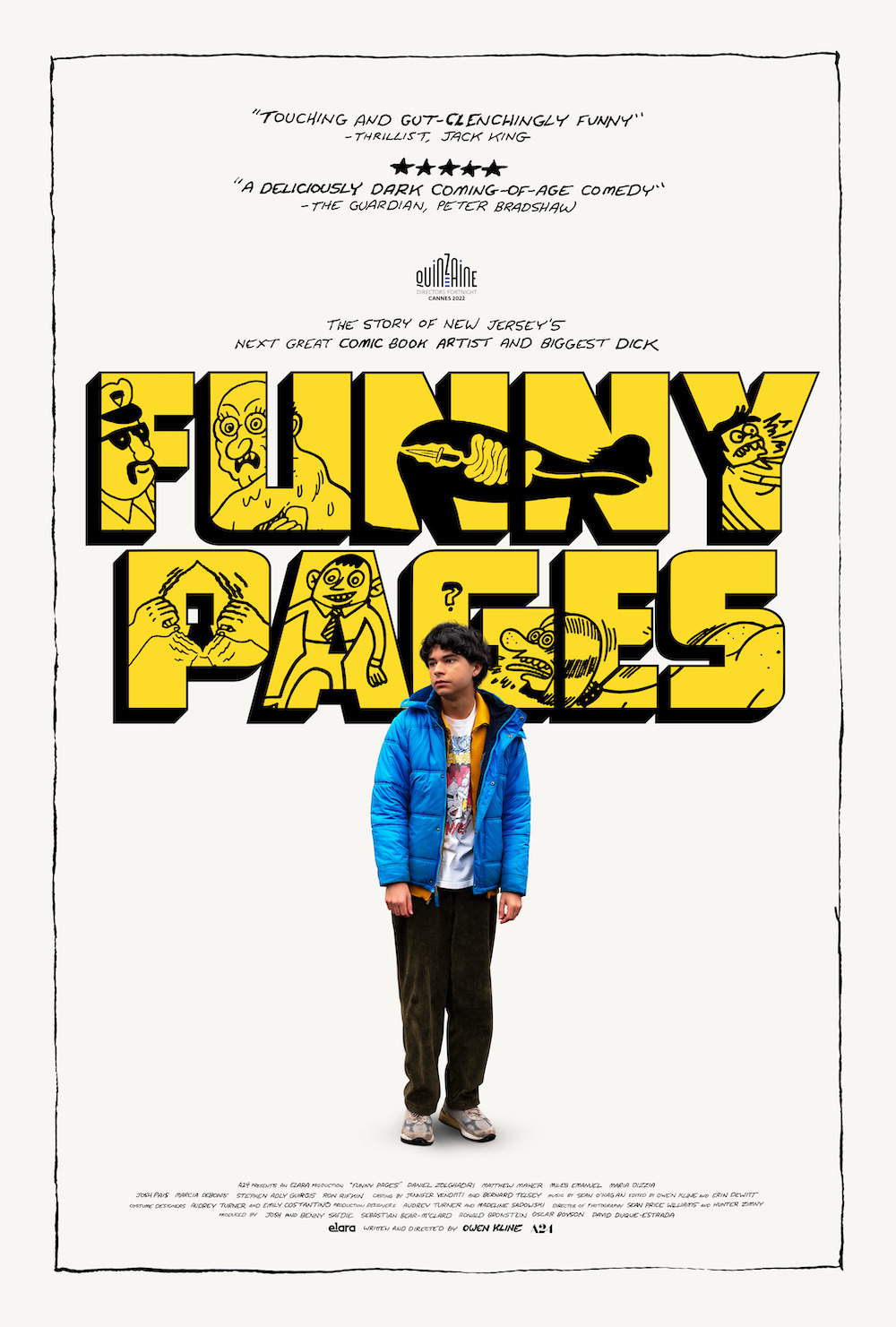
Funny Pages (2022) Film 4, 23:40

Funny Pages, the 2022 coming-of-age drama, delves into the chaotic world of a teenage cartoonist striving to rebel against societal norms. Written and directed by Owen Kline, this sharp and sardonic film offers a raw and unvarnished look at the complexities of youth, creativity, and the pursuit of artistic identity. Set against the backdrop of a grim suburban America, the film airs on Film 4 this Saturday at 23:40 and is a must-watch for anyone fascinated by offbeat storytelling

Funny Pages is a character-driven narrative that examines the obsessive drive of its protagonist, Robert, as he navigates the messy journey of self-discovery. Robert’s passion for cartooning propels him into a world far removed from comfort and convention, where he seeks mentorship in the most unlikely of places. Through his experiences, the film explores the sacrifices and disillusionments often tied to creative ambition, presenting a raw and unfiltered portrayal of what it means to follow one’s passion.

A striking aspect of the film is its commentary on class alienation. As Robert ventures into less privileged social strata in pursuit of authenticity, the stark realities of economic disparity become a defining feature of his journey. The grim suburban setting enhances this theme, serving as both a physical and metaphorical representation of the barriers that separate artistic dreams from harsh reality. This examination of class adds depth to the narrative, grounding its eccentricity in a stark social context.

Mentorship, another central theme, is portrayed in a manner that subverts expectations. Robert’s interactions with his unconventional mentor blur the lines between guidance and exploitation, illustrating the complexities of learning and growth. The relationship serves as a microcosm for the struggles young artists face when seeking validation and direction, encapsulating the tension between inspiration and disillusionment.

The film’s lo-fi aesthetic is a key element of its authenticity. Eschewing polish for a raw, handmade quality, the visual style reflects Robert’s own chaotic and unrefined journey. This deliberate choice aligns with the narrative’s thematic focus, reinforcing the idea that creativity often emerges from imperfection and disorder. It’s a visual representation of the film’s central message: that artistry is born not from order, but from the messiness of life.

Humor plays a vital role in Funny Pages, albeit with a deadpan delivery that borders on discomfort. The film’s dark comedic tone underscores the absurdity of its characters’ situations, offering both levity and critique. This balance of humor and pathos is one of its defining strengths, drawing viewers into its world while prompting deeper reflection on its underlying themes.

Funny Pages is a uniquely chaotic yet deeply resonant exploration of artistic passion, class, and individuality. It captures the tumultuous reality of youth with unflinching honesty and a sharp comedic edge, making it a standout entry in the coming-of-age genre. Don’t miss the chance to experience this raw and thought-provoking tale—it’s a journey into creativity and chaos.

Undergods (2020) Film 4, 01:25
A surreal anthology of dystopian tales, Undergods explores fractured societies and moral rot through interlinked stories. Bleak yet stylish, it comments on alienation, inequality, and the cyclical nature of decline. It’s a nightmarish reflection of late-stage capitalism, rendered with dark wit and visual flair.

Tuesday 1st April 2025

Two Way Stretch (1960) Film 4, 11:00
This British caper film offers a light-hearted contrast in our line-up, with prisoners planning a heist while technically still incarcerated. Beneath the laughs lies a gentle critique of authority and a clever subversion of penal tropes. A cultural time capsule with charm and cheek.

Moon (2009) Film 4, 21:00
Duncan Jones’ philosophical sci-fi drama examines isolation and identity aboard a lunar mining station. Sam Rockwell’s dual performance interrogates corporate exploitation and personal autonomy, revealing a layered narrative about what it means to be human. Moon is both cerebral and emotionally grounded.

Wednesday 2nd April 2025

Drive (2011) Great! Movies, 21:00
Nicolas Winding Refn’s stylish neo-noir fuses existential cool with bursts of brutal violence. Ryan Gosling’s unnamed driver navigates a criminal underworld defined by loyalty, silence, and sudden rupture. The film’s moody aesthetic and synth-heavy soundtrack underscore themes of masculinity, control, and moral ambiguity.

Dreamland (2019) Channel 4, 01:00
Set during the Great Depression, this dusty fugitive romance interrogates the American Dream through a poetic lens. With its evocative visuals and meditative pace, Dreamland reveals the desperation underlying idealism, and how hope can be both a sanctuary and a snare.

Thursday 3rd April 2025

Science Fiction In The Atomic Age (one of four) 8pm Sky Arts

The first episode of Science Fiction in the Atomic Age on Sky Arts is a captivating dive into how science fiction mirrored humanity’s hopes and fears during the atomic era. It spans literature, film, and television, celebrating legendary creators like H.G. Wells, Ursula Le Guin, and Arthur C. Clarke.

The episode features a stunning range of classics, from 2001: A Space Odyssey to Doctor Who and The Quatermass Experiment. It also explores the influence of blockbusters like Star Wars and The Matrix, illustrating how the genre evolved alongside societal shifts.

With its stirring score and insightful commentary, the series is a vibrant tribute to the power of science fiction to critique the present and imagine the future.

The Man Who Fell To Earth (1976) 9pm Sky Arts

Nicolas Roeg’s The Man Who Fell to Earth (1976) is a visually stunning and thought-provoking sci-fi drama that explores themes of alienation, greed, and the human condition. David Bowie delivers a mesmerizing performance as Thomas Jerome Newton, an extraterrestrial who arrives on Earth seeking water for his drought-stricken planet, only to be ensnared by human vices and corporate exploitation.

The film’s surreal imagery and haunting score create an otherworldly atmosphere, while its narrative challenges viewers to reflect on humanity’s flaws and the cost of progress. A cult classic, this film remains a landmark in science fiction cinema and a testament to Roeg’s visionary storytelling.

Bowie: The Man Who Changed The World 11.40pm Sky Arts

Bowie: The Man Who Changed the World is a documentary that honors David Bowie’s extraordinary life and his influence on music, fashion, and culture. Through interviews with those who knew him and archival footage, it explores his artistic evolution, from Ziggy Stardust to his later years as an icon.

While the absence of Bowie’s music may surprise some viewers, the film offers an engaging glimpse into the man behind the legend and his transformative impact on the arts. It’s a compelling watch for fans and anyone intrigued by his legacy.

Dark River (2017) Film 4, 00:25
Clio Barnard’s rural drama tackles generational trauma, memory, and female resilience. Returning home after her father’s death, a woman confronts buried abuse and contested inheritance. Stark Yorkshire landscapes frame a powerful story about silence, survival, and reclaiming one’s past.

Smoke Sauna Sisterhood (2023) Film 4, 02:10

Smoke Sauna Sisterhood, a 2023 Estonian documentary, offers a profoundly intimate exploration of vulnerability, resilience, and connection among women. Directed by Anna Hints, this powerful film is set within the sacred confines of a traditional Estonian smoke sauna, where women gather to share deeply personal stories of pain, shame, and healing. The documentary airs on Film 4 this Thursday at 02:10 and promises to be an unforgettable experience of raw honesty and transformative solidarity.

The central setting of the smoke sauna is more than a backdrop; it serves as a sanctuary where women can strip away the layers of societal judgment and embrace their truth. Within its walls, rituals unfold that are both cleansing and cathartic, allowing the participants to confront trauma and release the burdens they carry. The sauna becomes a safe space, a microcosm of female camaraderie and shared strength, symbolizing the collective healing that emerges from mutual understanding and support.

A recurring theme in Smoke Sauna Sisterhood is the reclamation of power through vulnerability. As each woman bares her soul, the act of sharing becomes a quiet revolution against the stigma surrounding pain and shame. The film underscores the idea that strength lies not in suppressing emotions but in embracing and expressing them. This radical honesty fosters an environment where the women’s voices are heard, their experiences validated, and their resilience celebrated.

Class and cultural dynamics also emerge subtly within the narrative. The smoke sauna—a practice rooted in Estonian tradition—offers a lens through which to examine the intersection of heritage and modernity. While the setting emphasizes community and ancestral wisdom, the stories told within it often highlight the struggles faced by women in a world shaped by structural inequalities. This juxtaposition enriches the film’s exploration of identity, connecting the deeply personal to the broadly political.

Visually, the film is as evocative as its narrative. Hints’ direction captures the textures of the sauna, the gentle interplay of light and shadow, and the raw emotions etched on the women’s faces. The intimate cinematography immerses viewers in the space, allowing them to feel the warmth of the sauna and the intensity of the shared moments. Every frame serves to enhance the documentary’s authenticity and emotional impact.

Through its quiet yet profound storytelling, Smoke Sauna Sisterhood celebrates the power of collective healing and female solidarity. It is a testament to the resilience found in shared experiences and the strength that arises from vulnerability. This documentary is not just a film—it is an invitation to reflect on the universal truths of pain, healing, and connection.

Friday 4th April 2025

Ain’t Them Bodies Saints (2013) Great! Action, 22:25
A lyrical crime romance echoing Badlands, this film paints an aching portrait of love, loyalty, and longing in the aftermath of violence. Rooney Mara and Casey Affleck deliver restrained, heartfelt performances in a tale steeped in mood, moral conflict, and Southern Gothic tradition.

Withnail and I (1987) Film 4, 01:50

Withnail and I (1987) stands as one of British cinema’s most beloved cult classics, offering a heady mix of humor and melancholy in its portrayal of two unemployed actors struggling to find their place in the world. Directed by Bruce Robinson, the film is a poignant exploration of friendship, excess, and existential despair, set in the turbulent backdrop of Thatcher’s Britain. Airing on Film 4 this Friday at 01:50, Withnail and I continues to resonate as a cultural touchstone for its sharp critique and timeless relatability.

The story follows Withnail, a flamboyant and self-destructive actor played with magnetic brilliance by Richard E. Grant, and his quieter, introspective companion (Paul McGann), referred to only as “I.” Together, they embark on a disastrous countryside retreat in search of solace and escape from their bleak London existence. What ensues is a deeply comic yet tragic journey that captures the absurdity of privilege, the decline of youthful idealism, and the failure to find meaning in a changing world.

A key theme in Withnail and I is its biting satire of privilege and entitlement. While the characters face personal struggles, their escapades reveal an obliviousness to the hardships endured by others. Withnail’s behavior, particularly his interactions with locals, underscores the social divide prevalent in the era, offering a microcosm of wider societal tensions. Through humor and absurdity, Robinson critiques the excesses and indulgences of the privileged class, contrasting their plight with the broader realities of Thatcherite policies.

The film also serves as an elegy for lost youth, with its characters embodying the fading dreams and disillusionment of a generation grappling with economic uncertainty. The retreat to the countryside, which initially promises renewal, becomes a metaphor for the futility of escapism. The story’s bittersweet conclusion leaves viewers reflecting on the impermanence of youthful ambition and the inevitability of change.

Withnail and I captures the cultural and political climate of Thatcher’s Britain with remarkable nuance. The austerity, social inequities, and growing sense of alienation are subtly interwoven into the narrative, providing a backdrop for the characters’ personal struggles. While the film never overtly preaches, its setting serves as a powerful commentary on the broader societal shifts and anxieties of the time.

Another notable aspect of the film is its exploration of friendship and human connection. Withnail’s chaotic energy contrasts starkly with “I’s” quiet sensitivity, creating a dynamic that is both dysfunctional and deeply affecting. Their relationship highlights the complexities of companionship, particularly the sacrifices and dependencies that come with it. As their bond is tested, the film becomes a meditation on loyalty and the bittersweet nature of human relationships.

Visually, the film is steeped in a rich, atmospheric aesthetic that accentuates its themes. From the squalor of their London flat to the eerie beauty of the countryside, cinematographer Peter Hannan captures the juxtaposition between grim reality and fleeting hope. The striking imagery serves to heighten the film’s emotional resonance and underscores its sense of decay.

Withnail and I is a masterpiece that transcends its tragicomic surface to offer profound reflections on privilege, decline, and the search for meaning. Its razor-sharp dialogue, unforgettable performances, and poignant themes ensure its place as one of the greats of British cinema. If you haven’t experienced this gem, make time for it this Friday—it’s a journey into humor, heartbreak, and social critique that leaves an indelible impression.

And finally, streaming

The Donmar Warehouse’s production of Macbeth, available on Marquee TV from Tuesday, April 1, 2025, is a bold and electrifying interpretation of Shakespeare’s timeless tragedy. Directed by Max Webster, this staging features David Tennant as Macbeth and Cush Jumbo as Lady Macbeth, delivering performances that are both intense and deeply nuanced.

Filmed live at the Donmar Warehouse, the production captures the unsettling intimacy and brutal action that define the play. Tennant’s portrayal of Macbeth is hypnotic, blending ambition and paranoia, while Jumbo’s Lady Macbeth is compellingly ruthless yet hauntingly vulnerable. The innovative sound design and stark visual elements immerse viewers in the fevered minds of the characters, blurring the lines between reality and hallucination.

This adaptation is a thrilling exploration of ambition, power, and madness, making it a must-watch for fans of Shakespeare and contemporary theatre alike.

Season three of Love on the Spectrum, available on Netflix from Wednesday, April 2, 2025, continues to celebrate the journeys of individuals on the autism spectrum as they navigate the complexities of dating and relationships. This heartfelt docuseries offers a mix of new faces and returning favorites, showcasing their unique experiences and perspectives.

The show remains a powerful exploration of love, breaking stereotypes and fostering understanding. With its blend of humor, emotion, and authenticity, season three promises to be as engaging and inspiring as its predecessors


For extended reviews, visit the Counter Culture website.

Picture credits

Luzzu (2021)
By -jkb- – Own work, CC BY-SA 3.0, https://commons.wikimedia.org/w/index.php?curid=10684187
Smoke Sauna Sisterhood (2023)
By https://hiiumaa.ee/event/kultuurinadalavahetus-savvusanna-sosarad-2/, Fair use, https://en.wikipedia.org/w/index.php?curid=74650682
The Guard (2011)
By The poster art can or could be obtained from Element Pictures., Fair use, https://en.wikipedia.org/w/index.php?curid=32348267
Company (1996 Donmar Warehouse production)
Original Broadway Playbill – By It is believed that the cover art can or could be obtained from the publisher., Fair use, https://en.wikipedia.org/w/index.php?curid=8146470
Children of Men (2006)
By May be found at the following website: IMP Awards, Fair use, https://en.wikipedia.org/w/index.php?curid=24105930
The Road (2009)
By May be found at the following website: IMP Awards, Fair use, https://en.wikipedia.org/w/index.php?curid=24227798
Funny Pages (2022)
By http://www.impawards.com/2022/posters/funny_pages_xlg.jpg, Fair use, https://en.wikipedia.org/w/index.php?curid=71349562
Two Way Stretch (1960)
By British Lion Films – https://alchetron.com/Two-Way-Stretch, Fair use, https://en.wikipedia.org/w/index.php?curid=64079430
Moon (2009)
By http://www.impawards.com/2009/moon_ver2.html, Fair use, https://en.wikipedia.org/w/index.php?curid=20348255
Drive (2011)
By The poster art can or could be obtained from IMP Awards., Fair use, https://en.wikipedia.org/w/index.php?curid=32645711
Dreamland (2019)
By https://twitter.com/IndieWire/status/1324414929613500416?s=20, Fair use, https://en.wikipedia.org/w/index.php?curid=65768083
The Man Who Fell to Earth (1976)
By http://www.movieposterdb.com/poster/7cb9cac9, Fair use, https://en.wikipedia.org/w/index.php?curid=11988138
Ain’t Them Bodies Saints (2013)
By http://www.ifcfilms.com/films/aintthembodiessaints, Fair use, https://en.wikipedia.org/w/index.php?curid=39419362
Withnail and I (1987)
By Art by Ralph Steadman screenonline entry for the film, Fair use, https://en.wikipedia.org/w/index.php?curid=15999449

Leave a Comment

Culture Vulture 9th – 15th of December 2023

Culture Vulture is a weekly entertainment guide offering a refreshing alternative standpoint, curated by Pat Harrington. Tim Bragg complements the reviews with distinctive music. Culture Vulture isn’t just a guide; it’s a manifesto for those seeking entertainment that inspires and resonates with the alternative spirit. Highlights this week include a night dedicated to Tony Bennett, a lesser known Ealing Studio classic, The Titfield Thunderbolt, and the classic love film, An Affair To Remember.

Saturday 9th of December 2023

Some Like It Hot (1959 film) 3.25pm BBC2

“Some Like It Hot,” directed by Billy Wilder and released in 1959, is a classic screwball comedy that has stood the test of time as one of the greatest films in the genre. Starring Marilyn Monroe, Tony Curtis, and Jack Lemmon, the film is a hilarious romp filled with witty dialogue, impeccable timing, and memorable performances.

The plot follows two musicians, played by Curtis and Lemmon, who witness a mob hit and must go on the run to escape the gangsters. In a desperate attempt to hide, they disguise themselves as women and join an all-female band, where they encounter the sultry and unpredictable Sugar Kane, portrayed by Monroe.

The film is known for its sharp and clever screenplay, written by Billy Wilder and I.A.L. Diamond, which keeps the audience engaged with a perfect blend of humor, romance, and suspense. The comedic timing of Curtis and Lemmon is impeccable, and their chemistry on screen is palpable. Monroe, in her iconic role as Sugar Kane, brings her trademark charm and sensuality to the film, adding an extra layer of glamour to the already delightful mix.

“Some Like It Hot” is not only a comedy masterpiece but also a commentary on gender roles and societal norms of the 1950s. The film challenges traditional notions of masculinity and femininity, exploring the absurdity of gender expectations in a lighthearted and entertaining manner.

The movie’s success can be attributed to Wilder’s expert direction, the stellar performances of the cast, and the timeless humor that transcends generations. The film’s final twist remains one of the most famous and satisfying conclusions in cinematic history.

Prince Albert: A Victorian Hero Revealed 11pm PBS America

“Prince Albert: A Victorian Hero Revealed” is a documentary that explores the life and legacy of Prince Albert, Queen Victoria’s husband. The series is produced by PBS America and hosted by Professor Saul David. The show delves into the private papers and photos of Prince Albert, which are currently housed in the Round Tower at Windsor Castle. The series examines how Prince Albert played a significant role in shaping Victorian Britain, from influencing British culture to government policy and even international relations. The show is a must-watch for anyone interested in the history of the British monarchy and the Victorian era.

Sunday 10th of November 2023

The Titfield Thunderbolt (1953 film) 2.45pm BBC2

“The Titfield Thunderbolt,” directed by Charles Crichton and released in 1953, stands as a delightful testament to the Ealing Studios tradition of portraying ordinary folk rebelling against a faceless and stifling bureaucracy. This British comedy, set against the picturesque backdrop of the countryside, unfolds the tale of a close-knit village grappling with the imminent closure of their beloved railway due to modernization.

The narrative takes flight as a determined and eccentric group of villagers decides to take matters into their own hands. In an attempt to save their railway line, they embark on the audacious mission of operating the antiquated Titfield Thunderbolt locomotive themselves. The film expertly navigates the ensuing challenges and humorous situations that arise, including opposition from bureaucratic authorities and a rival bus service.

One of the film’s notable strengths lies in its endearing characters, each brimming with distinctive personalities and quirks. The ensemble cast, featuring talents like Stanley Holloway and John Gregson, brings these characters to life, infusing the story with the charming eccentricities of village life.

“The Titfield Thunderbolt” not only captures the essence of a community banding together to resist change but also fits seamlessly into the Ealing Studios tradition of portraying such resistance. Against the scenic backdrop of the English countryside, the film blends gentle humor with a nostalgic look at a bygone era, featuring the quaint charm of steam locomotives and picturesque landscapes.

Directed by Charles Crichton, the film strikes a delicate balance between heart and humor, making it a feel-good classic that resonates with audiences who appreciate the Ealing Studios signature of showcasing ordinary people rebelling against bureaucratic odds. Though perhaps not as widely recognized as some other Ealing productions, “The Titfield Thunderbolt” remains a hidden gem, offering a timeless and uplifting cinematic experience.

Monday 11th of December 2023

The Death Of Stalin (2017 film)

These days we often hear of people being dismissed, denounced or criticised as ‘Stalinist’. This has become a term of abuse in the same manner as ‘fascist’ or ‘racist’; a useful cudgel with which the unscrupulous individual can use to beat political opponents about the head.

Armando Iannucci’s new black comedy, The Death of Stalin, offers an insight into the paralysing fear felt by everyone who lived in the Soviet Union under the rule of Josef Stalin and his brutal, sadistic henchman; NKVD spymaster Lavrenti Beria, chillingly played by Simon Russell Beale.

The best example of this gnawing fear is shown by Paddy Considine’s panic stricken Radio Moscow producer who tries to get a recording of a classical concert to Stalin after receiving a phone call from him ‘requesting’ a copy. The problem was that the concert was broadcast live; not recorded.

Stalin, (Adrian McLoughlin) is a vulgar peasant with a penchant for practical jokes and bad cowboy movies. All the other members of the politburo go along with his every whim for fear of ending up on one of Beria’s lists of ‘enemies of the people’. This tension makes for some excruciatingly bleak humour that leaves the viewers on the edge of their seats.

Great characterisations from Steve Buscemi as the calculating schemer, Khrushchev who struggles to stay ahead of Beria and keep himself free and alive; Jeffrey Tambor as Malenkov, the vacillating deputy to Stalin who finds himself in over his head after Stalin’s death and most notably by Jason Isaacs as the brash, no-nonsense war hero, Marshal Georgy Zhukov.

Some critics have questioned the use of humour in depicting this dark time in Russia’s history. Isn’t it in bad taste? Perhaps. Nevertheless it is a work of genius from the master of dark sardonic humour. Iannucci has triumphed again.

Review by David Kerr.

Tuesday 12th of December 2023

An Affair To Remember (1957 film) 12.45pm Film 4

“An Affair to Remember,” directed by Leo McCarey and released in 1957, is a timeless romantic classic that continues to captivate audiences with its poignant storytelling and unforgettable performances. Starring Cary Grant and Deborah Kerr, the film weaves a tale of love, destiny, and the enduring power of connection.

The narrative follows Nickie Ferrante (Grant) and Terry McKay (Kerr), two individuals engaged to others who meet aboard a transatlantic cruise. Despite their existing commitments, they find themselves drawn to each other, and a deep and genuine connection develops. To test the authenticity of their feelings, they decide to part ways and meet again at the top of the Empire State Building six months later.

The film is celebrated for its elegant and sophisticated storytelling, combining romance, drama, and a touch of humor. Leo McCarey’s direction brings out the best in the lead actors, and their chemistry is palpable. Grant and Kerr deliver heartfelt performances that transcend the screen, making the audience emotionally invested in their characters’ journey.

What sets “An Affair to Remember” apart is its ability to evoke genuine emotion. The film explores the complexities of love, sacrifice, and the impact of timing on relationships. The iconic scene at the Empire State Building is etched into cinematic history, symbolizing the enduring hope and resilience of true love.

The cinematography is both visually stunning and emotionally evocative, complemented by a beautiful musical score that enhances the film’s romantic atmosphere. The production values, including the glamorous costumes and luxurious settings, contribute to the film’s timeless and classic feel.

“An Affair to Remember” has left an indelible mark on the romance genre and is often cited as one of the greatest love stories ever told on screen. Its influence can be seen in later films, and the enduring popularity of the movie is a testament to its universal themes of love and destiny.

Less Is More: The Truth About Food Price 9pm Channel 4

“Less Is More: The Truth About Food Prices” is a documentary produced by Channel 4 that investigates the reasons behind the rising food prices in the UK. The show is hosted by Harry Wallop and explores how some products have been secretly reformulated with cheaper ingredients. The documentary also examines the impact of Brexit on food prices and the role of supermarkets in shaping the food industry. The show is a must-watch for anyone interested in the food industry and the economics of food production.

Wednesday 13th of December 2023

John Wayne: America At All Costs 3pm Sky Arts

“John Wayne: America at All Costs” is a documentary produced by Sky Arts that explores the life and career of John Wayne, one of the most prominent American actors of his era. The documentary provides an in-depth look at Wayne’s life, from his early days as a stage assistant to his rise to fame in Hollywood. The show features interviews with Wayne’s biographers, friends, and family members, as well as rare footage of his performances. The documentary also examines Wayne’s political views and his role as a right-wing propagandist during the Cold War.

Morgan (2016 film) 2.50am C4

“Morgan,” a science fiction thriller directed by Luke Scott and released in 2016, attempts to explore the ethical dilemmas surrounding artificial intelligence and human experimentation. While the film boasts a compelling premise and a talented cast, including Kate Mara and Anya Taylor-Joy, it falls short of fully realizing its potential.

The plot centers around a corporate consultant, played by Kate Mara, sent to assess the viability of a highly advanced humanoid named Morgan, portrayed by Anya Taylor-Joy. Created in a secret laboratory, Morgan exhibits both extraordinary intelligence and alarming violent tendencies. As the investigation unfolds, ethical questions about the nature of Morgan’s existence and the consequences of tampering with artificial life come to the forefront.

Despite the film’s intriguing setup, “Morgan” struggles to maintain a consistent tone and build sustained tension. The pacing feels uneven, and the narrative takes predictable turns that diminish the impact of its ethical quandaries. While there are moments of suspense, the film fails to deliver the sustained thrills one might expect from a science fiction thriller.

The performances, particularly by Taylor-Joy in the titular role, are commendable, infusing the character with an eerie mix of innocence and potential danger. The supporting cast, including seasoned actors like Paul Giamatti and Jennifer Jason Leigh, adds depth to the ensemble, but their characters are not fully fleshed out, leaving much untapped potential.

Visually, the film has some striking moments, utilizing a sleek and sterile aesthetic to emphasize the clinical nature of the laboratory setting. However, these visuals alone cannot compensate for the film’s narrative shortcomings.

Thursday 14th of December 2023

Integrating Mississippi’s Schools: The Harvest PBS America 8.35pm

“Integrating Mississippi’s Schools: The Harvest” is explores the integration of public schools in Mississippi. The documentary is hosted by Pulitzer Prize-winning author Douglas A. Blackmon and is part of the American Experience series. The show examines how school integration transformed Leland, Mississippi, and the lives of the students who were part of the first class to attend integrated schools. The documentary features interviews with students, teachers, and parents, as well as rare footage of the integration process.

Playground (2021 film) 1.45am C4

Playground is a 2021 Belgian drama film directed by Laura Wandel. The film was selected to compete in the Un Certain Regard section at the 2021 Cannes Film Festival, where it won the FIPRESCI Prize in the Un Certain Regard section. The film follows the story of a seven-year-old girl named Nora who witnesses her older brother being bullied. Though he swears her to secrecy, she tells their father and soon finds herself the victim of bullying as well.

Friday 15th of December 2023

Tony Bennett Night BBC4 From 9pm


Tony Bennett, a legendary figure in the music industry, is celebrated for his timeless voice and distinctive style. His smooth, velvety tones and impeccable phrasing have made him a standout performer for over seven decades. Bennett’s ability to convey emotion and tell stories through his singing, coupled with his versatility across genres, contributes to the universal appeal of his music. His enduring popularity and success attest to his artistic prowess and ability to connect with audiences across generations.

One of the key reasons to watch a night dedicated to Tony Bennett’s music is the vast and versatile nature of his repertoire. From jazz and pop to standards and show tunes, Bennett’s adaptability showcases his exceptional talent. His collaborations with iconic musicians such as Frank Sinatra and Ella Fitzgerald, as well as more contemporary artists like Lady Gaga, highlight his influence and respect within the music industry.

Tony Bennett’s impact goes beyond musical achievements; he is a cultural icon symbolizing sophistication and enduring talent. His commitment to artistic integrity and consistent high standards in his performances have garnered widespread admiration. Watching a night dedicated to Bennett’s music is not just a musical experience but a journey through the career of an artist whose live shows, classic standards, and contributions to the cultural landscape have left an indelible mark on the world of music.

Mud (2012 film) 11.05pm BBC2

“Mud” is a captivating and evocative coming-of-age drama directed by Jeff Nichols. Set against the mesmerizing backdrop of the Mississippi River, the film weaves a poignant tale of friendship, love, and the complexities of adult relationships.

At its core, “Mud” explores the innocence of youth and the harsh realities of the adult world. The story unfolds through the eyes of two teenage boys, Ellis (Tye Sheridan) and Neckbone (Jacob Lofland), who discover a mysterious fugitive named Mud (Matthew McConaughey) hiding out on a remote island. As the boys befriend Mud and become entangled in his quest for love and redemption, the film skillfully navigates themes of loyalty and the inevitability of growing up.

Matthew McConaughey delivers a standout performance as Mud, bringing depth and vulnerability to his character. The actor’s ability to convey Mud’s charm, desperation, and hope adds layers to the narrative, making it a compelling character study. Tye Sheridan and Jacob Lofland, as the young protagonists, deliver performances well beyond their years, capturing the essence of adolescence and the loss of innocence.

The cinematography by Adam Stone is breathtaking, capturing the Southern landscape with a poetic beauty that enhances the film’s emotional resonance. The slow pace and deliberate storytelling allow the audience to immerse themselves in the atmosphere, creating a sense of time and place that becomes integral to the narrative.

One of the film’s strengths is its exploration of moral ambiguity. As the characters navigate a morally complex world, “Mud” challenges viewers to question traditional notions of right and wrong. This ambiguity adds depth to the characters and elevates the film beyond a simple adventure story.

While “Mud” may not be a fast-paced, action-packed film, its deliberate pacing and nuanced character development contribute to its overall impact. Jeff Nichols crafts a film that lingers in the mind, leaving audiences with a mix of nostalgia, reflection, and a profound appreciation for the delicate nuances of human relationships.

and finally, streaming..

Yu Yu Hakusho on Netflix: This is a live-action adaptation of the legendary battle-action manga series. The series follows Yusuke, a tearaway teenager who dies trying to save a young boy from being hit by a speeding car. As he looks down at his body from the afterlife, Yusuke meets a woman named Botan, who guides him to the spirit world. She tells Yusuke that his death was premature and unexpected, but that no one would’ve ever believed a troubled kid like him could perform such a selfless act — so there’s no place for him in heaven or hell. Yusuke is then given the opportunity to be revived after completing a trial, allowing him to be sent back to the human world to investigate demons as an Underworld Detective. The series is set to premiere on Netflix on December 14th, 2023.

Face to Face with ETA: Conversations with a Terrorist on Netflix: This is a documentary film that features an exhaustive interview with Josu Urrutikoetxea, also known as Josu Ternera, about his involvement in the terrorist group ETA. The film is 1 hour and 42 minutes long and is available to stream on Netflix from December 15th, 2023.

Los Farad are available from Tuesday, 12 December, 2023 on Prime Video. A youngster in Marbella, Spain sees a new future as an arms dealer for the wealthy Farad family.

Picture Credits

Some Like It Hot
Designed by Macario Gómez Quibus. “Copyright 1959 – United Artists Corp.”. – Scan via LiveAbout. Cropped from original image., Public Domain, https://commons.wikimedia.org/w/index.php?curid=85794299

The Titfield Thunderbolt
The poster art can or could be obtained from General Film Distributors (UK)Universal (USA)., Fair use, https://en.wikipedia.org/w/index.php?curid=17379841

The Death Of Stalin
The poster art can or could be obtained from the distributor., Fair use, https://en.wikipedia.org/w/index.php?curid=54810778

An Affair To Remember
The poster art can or could be obtained from 20th Century Fox., Fair use, https://en.wikipedia.org/w/index.php?curid=3916540

Morgan
By Studio and or Graphic Artist, Fair use, https://en.wikipedia.org/w/index.php?curid=52372087

Playground
The poster art can or could be obtained from the distributor. Fair use, https://en.wikipedia.org/w/index.php?curid=69613644

Mud
Derived from a digital capture (photo/scan) of the Film Poster/DVD Cover (creator of this digital version is irrelevant as the copyright in all equivalent images is still held by the same party). Copyright held by the film company or the artist. Claimed as fair use regardless., Fair use, https://en.wikipedia.org/w/index.php?curid=38423796

Leave a Comment

« Newer Posts