5,247 words, 28 minutes read time.
Welcome to Culture Vulture, your guide to the week’s entertainment from an alternative perspective. Selections and writing is by Pat Harrington and music is from Tim Bragg.
Kick off the weekend with a dose of 1960s nostalgia as BBC2 airs “A Hard Day’s Night,” directed by Richard Lester. This vibrant and comedic film follows The Beatles during a day and a half of their lives, capturing their youthful exuberance and the spirit of the era. The film’s kinetic style and playful tone were revolutionary at the time, offering an insightful commentary on fame, authenticity, and the generational divide.
Continuing the classic film theme, tune into BBC2 on Sunday afternoon for Elia Kazan’s powerful drama “On The Waterfront.” Starring Marlon Brando, this film explores themes of corruption, morality, and redemption against the gritty backdrop of New York’s docks. Brando’s portrayal of Terry Malloy, an ex-boxer turned longshoreman, captures his internal struggle with guilt and the quest for justice, making this film a timeless classic that delves into the individual’s role in confronting injustice.
Mid-week brings a fascinating exploration of detective fiction with Andrew Marr in “Sleuths, Spies And Sorcerers: Paperback Heroes” on BBC4. This first episode delves into the enduring appeal of detective stories, examining their conventions and the creativity they inspire. With insights from modern-day crime writers like Ian Rankin and Sophie Hannah, and profiles of pioneers such as Agatha Christie, this programme is a treat for fans of mystery and crime literature, providing a deep dive into the genre’s evolution and its impact on our collective psyche.
Saturday 29th of June 2024
A Hard Day’s Night (1964) 3.35pm BBC2
A Hard Day’s Night, directed by Richard Lester, is a vibrant, comedic romp that follows The Beatles over a day and a half of their lives as they navigate screaming fans, media obligations, and the pressures of fame. This film captures the youthful exuberance and spirit of the 1960s, presenting The Beatles not just as musicians but as cultural icons representing a new generation. The film’s kinetic style, influenced by French New Wave cinema, underscores its playful and irreverent tone, which was revolutionary at the time.
The film subtly addresses the pressures of celebrity culture, a theme that resonates with modern audiences familiar with the invasive nature of paparazzi and the relentless scrutiny of public figures. The Beatles’ interactions with various characters in the film highlight the absurdity and superficiality of the media, as well as the often shallow nature of celebrity interviews and public appearances.
A Hard Day’s Night touches on themes of authenticity and individuality. The Beatles are portrayed as genuine and down-to-earth, in contrast to the contrived personas often adopted by celebrities. This distinction between authentic self-expression and public persona is a recurring ethical dilemma in the entertainment industry, prompting audiences to consider the cost of fame on personal identity.
The film depicts the generational divide between the youth culture of the 1960s and the older, more conservative establishment. This is evident in the humorous exchanges between The Beatles and authority figures, such as the stern television producer and Paul’s cantankerous grandfather. The Beatles’ defiance and nonchalance serve as a countercultural statement, championing the values of freedom, creativity, and individuality.
A Hard Day’s Night can be seen as a reflection of the changing power dynamics in society, where the influence of youth culture and popular music began to challenge traditional norms and authority. The film’s light-hearted yet subversive tone embodies the spirit of a decade marked by social upheaval and the questioning of established institutions.
Overall, A Hard Day’s Night remains a landmark film not only for its ground-breaking style and joyful depiction of The Beatles but also for its insightful commentary on fame, authenticity, and the transformative power of youth culture.
Sunday 30th of July 2024
On The Waterfront (1954) BBC2 1.15pm
On The Waterfront (1954), directed by Elia Kazan and starring Marlon Brando, is a powerful drama that delves into themes of corruption, morality, and redemption. The film tells the story of Terry Malloy, an ex-boxer turned longshoreman, who struggles with his conscience after being involved in a corrupt union’s activities. The narrative is set against the backdrop of the gritty New York docks, where workers face exploitation and violence under the oppressive rule of corrupt union bosses.
One of the film’s central social themes is the exploitation of workers and the corruption within labour unions. The longshoremen are depicted as being at the mercy of the corrupt union leader Johnny Friendly and his cronies, who control job assignments and use fear and violence to maintain their power. This portrayal of labour exploitation reflects broader societal issues of the time, highlighting the need for reform and justice within labour organizations. The film critiques the abuse of power and the impact of corruption on the lives of ordinary workers.
On The Waterfront grapples with the concepts of courage and integrity. Terry Malloy’s internal struggle is the heart of the film, as he wrestles with his sense of guilt and his desire to do the right thing. His journey from a complicit bystander to a whistle-blower represents a powerful moral awakening. The film questions what it means to be a hero and emphasizes the importance of standing up for justice, even when it comes at a great personal cost.
The film addresses the dynamics of power and the individual’s role in confronting injustice. Terry’s eventual decision to testify against the corrupt union officials is a bold act of defiance against a system that thrives on fear and silence. The film’s depiction of the struggle for power and control within the docks mirrors broader political battles, emphasizing the need for accountability and the role of individuals in effecting change. The climax, where Terry stands up to Johnny Friendly, serves as a powerful metaphor for resistance against oppressive systems.
The film’s release in 1954, during the height of McCarthyism, adds another layer of political significance. Director Elia Kazan, who had himself testified before the House Un-American Activities Committee, infuses the film with a sense of personal and political urgency. The story of Terry Malloy can be seen as a reflection of Kazan’s own experiences and the broader cultural climate of fear and suspicion. The film’s message about the importance of speaking out against wrongdoing resonated deeply in a time when many felt pressured to conform and remain silent.
Overall, On The Waterfront is a compelling film that combines strong performances, particularly by Marlon Brando, with a gripping narrative and profound social, ethical, and political themes. Its exploration of corruption, morality, and the power of individual action remains relevant, making it a timeless classic. The film’s impact is further heightened by its historical context and the personal experiences of its creators, ensuring its place as a significant work in American cinema.
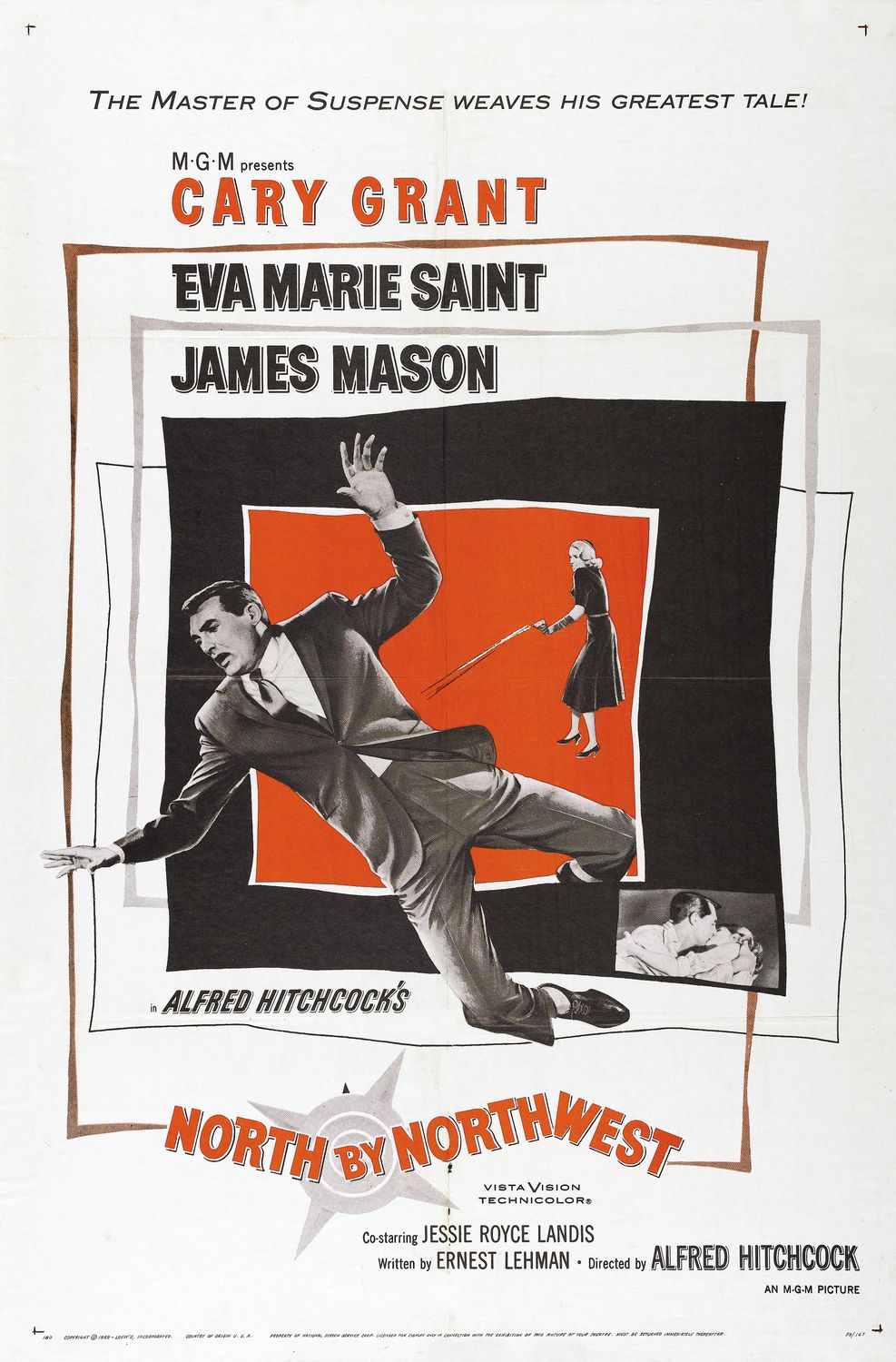
North By Northwest (1959) 3pm BBC2
Alfred Hitchcock’s North By Northwest is a classic thriller that expertly blends suspense, romance, and action. Starring Cary Grant as the unsuspecting Roger Thornhill, who is mistaken for a government agent and pursued across the United States, the film is renowned for its iconic scenes, such as the crop-duster chase and the climactic showdown on Mount Rushmore.
The film explores themes of identity and deception. Thornhill’s mistaken identity thrusts him into a world of espionage and danger, raising questions about the nature of identity and how easily it can be manipulated. This is particularly relevant in the context of Cold War paranoia, where the fear of the “enemy within” was pervasive.
The ethical implications of surveillance and state power are also central to the film. Thornhill’s predicament is a direct result of government secrecy and the lengths to which state agencies will go to protect their interests. This raises questions about the moral boundaries of state power and the individual’s right to privacy and security.
North By Northwest reflects the era’s anxieties and uncertainties. The Cold War backdrop adds a layer of tension, as the film plays on fears of infiltration and the unknown. The suave and resourceful Thornhill represents the ideal of American resilience and ingenuity, able to navigate and ultimately overcome these threats.
The film can be seen as a critique of the mechanisms of power and control. The clandestine operations and lack of accountability depicted in the film mirror real-world concerns about the overreach of government agencies and the ethical dilemmas inherent in espionage and intelligence work.
North By Northwest remains a timeless classic, not only for its masterful storytelling and thrilling set pieces but also for its thoughtful exploration of themes that continue to resonate in today’s socio-political landscape.
Suranne Jones: Investigating Witch Trials (two of two) 9pm Channel 4
The second episode of Suranne Jones: Investigating Witch Trials delves into the infamous Salem witch trials. Suranne travels to the USA to explore their legacy, tracing it from McCarthyism to the present day.
Yield To The Night (1956) 10.05pm
Yield To The Night, directed by J. Lee Thompson and starring Diana Dors, is a harrowing exploration of crime, punishment, and redemption. Originally titled the more sensationalist Blonde Sinner, the film tells the story of Mary Hilton, a woman sentenced to death for murdering her lover’s wife. As she awaits execution, the film delves into her past, revealing the circumstances that led to her crime. The story parallels the real-life case of Ruth Ellis, the last woman to be executed in the UK, which adds a layer of authenticity and poignancy to the film.
The film’s social themes are cantered on the issues of justice and the death penalty. It provides a poignant critique of the capital punishment system, questioning its fairness and efficacy. By portraying Mary Hilton as a complex, sympathetic character rather than a one-dimensional villain, the film challenges the viewer to consider the humanity of those condemned to death. The real-life inspiration from Ruth Ellis’s story further intensifies this exploration, drawing attention to the personal and societal factors that can lead to such tragic outcomes.
Yield To The Night grapples with the morality of retributive justice. The film forces the audience to confront difficult questions about guilt, responsibility, and the possibility of redemption. Mary’s introspection and remorse highlight the potential for personal transformation, suggesting that the death penalty precludes the opportunity for rehabilitation. This theme resonates deeply, especially when considering the case of Ruth Ellis, who became a figure of public debate and sympathy.
The film also addresses gender dynamics, as Mary’s crime is rooted in her tumultuous relationships with men and her struggle for autonomy. This reflects broader societal issues regarding the treatment of women and the limited options available to them, particularly in mid-20th century Britain. The parallels to Ruth Ellis’s life, where her actions were driven by desperation and lack of support, underscore the systemic challenges faced by women of that era.
Yield To The Night serves as a critique of the state’s power to take life. It presents a compelling argument against the death penalty, urging viewers to reconsider the implications of such an irreversible punishment. The film’s release sparked discussions about capital punishment in the UK, contributing to the broader abolitionist movement. The connection to Ruth Ellis’s case added fuel to these debates, highlighting the often-overlooked human cost of such a punitive justice system.
Yield To The Night is a powerful film that combines intense personal drama with a strong social message. Its exploration of justice, morality, and the human condition remains relevant, making it a significant work in the canon of British cinema. The original title, Blonde Sinner, and the real-life parallels to Ruth Ellis add layers of meaning and urgency to its narrative, ensuring its place as a critical and thought-provoking piece of film history.
Emily Atack: Asking For It? 11pm W
Emily Atack: Asking for It? is a deeply personal documentary where actress and comedian Emily Atack opens up her life and social media DMs to the public. She seeks to understand why she, and many others, experience online sexual harassment on a daily basis and explores ways to combat it.
Corpus Christi (2019) 1.35am C4
Corpus Christi, directed by Jan Komasa, is a Polish drama that tells the story of Daniel, a young man with a criminal past who poses as a priest in a small village. The film is a profound exploration of faith, redemption, and the transformative power of belief.
The film’s social themes are cantered on the role of religion and the church in contemporary society. Daniel’s impromptu ministry brings a fresh, unconventional approach to the villagers, challenging their preconceived notions and rigid adherence to tradition. This juxtaposition highlights the potential for religion to be both a source of comfort and a tool for social change.
Corpus Christi examines the concept of forgiveness and the possibility of redemption. Daniel’s journey from a violent past to a spiritual leader underscores the idea that individuals are capable of profound change. The film challenges the audience to consider the nature of sin and the capacity for forgiveness, both on a personal and communal level.
The film also addresses issues of identity and authenticity. Daniel’s masquerade as a priest forces him to confront his own beliefs and values, blurring the lines between his true self and the role he plays. This exploration of identity is further complicated by the villagers’ reactions to him, as they struggle to reconcile his past with the positive impact he has on their lives.
Corpus Christi can be seen as a commentary on the institutional power of the church and its influence on society. Daniel’s unorthodox methods and the resistance he faces from established religious authorities reflect broader tensions between tradition and innovation, authority and individual agency.
The film’s critical acclaim and numerous awards highlight its impact and the universality of its themes. Corpus Christi resonates deeply with audiences, offering a poignant meditation on faith, redemption, and the human capacity for change.
Overall, Corpus Christi is a powerful, thought-provoking film that combines a compelling narrative with rich thematic depth. Its exploration of faith, identity, and redemption makes it a significant work in contemporary cinema.
Drive (2011) 11.55pm C4
Nicolas Winding Refn’s Drive is a stylish neo-noir thriller that blends intense action with a haunting, melancholic atmosphere. Starring Ryan Gosling as an unnamed stunt driver who moonlights as a getaway driver, the film is both a visceral experience and a meditative character study.
Drive explores themes of isolation and the search for connection in an often hostile and indifferent world. The Driver’s stoic demeanour and lack of personal ties reflect a broader sense of alienation that many individuals experience in contemporary society. His brief, tender relationship with his neighbour Irene and her son offers a glimpse of redemption and human connection, making his ultimate sacrifice all the more poignant.
The film delves into the complexities of violence and morality. The Driver operates in a morally grey area, engaging in criminal activities while adhering to a personal code of honour. His willingness to use extreme violence to protect those he cares about raises questions about the justifications for violence and the thin line between heroism and vigilantism.
The film’s aesthetic, characterized by its use of neon lighting and a synth-heavy soundtrack, evokes a sense of nostalgia for the 1980s while also creating a timeless, dreamlike quality. This stylistic choice enhances the film’s exploration of identity and the construction of persona, as the Driver navigates different roles in his life.
Drive can be interpreted as a critique of the American Dream and the harsh realities of economic disparity. The criminal underworld depicted in the film is a stark contrast to the glossy image of success and prosperity often associated with Los Angeles. This juxtaposition highlights the desperation and moral compromises individuals are forced to make in pursuit of their dreams.
Drive is a masterful blend of style and substance, offering a compelling narrative that is as emotionally resonant as it is visually stunning. Its exploration of isolation, violence, and identity resonates deeply, making it a standout in contemporary cinema.
Monday 1st of July 2024
Skint: The Truth About Britain’s Broken Economy With Tim Hartford 9pm Channel 4
Skint: The Truth About Britain’s Broken Economy with Tim Harford is a documentary that provides a fresh analysis of Britain’s economic challenges. Tim Harford, a senior columnist for the Financial Times, delves into the impact of the financial crisis on the general public. The program features powerful real-life stories and expert testimony, offering insights into how to address the broken economy.
Tuesday 2nd of July 2024
DH Lawrence: Sex, Exile And Greatness 10pm Sky Arts
D.H. Lawrence: Sex, Exile and Greatness is a documentary that delves into the life and work of the novelist, poet, and social critic D.H. Lawrence. Known as an unapologetic ‘outsider,’ Lawrence often faced persecution due to his explicit subject matter. The film explores themes of gender, sexuality, class, race, and human nature, challenging literary norms of the time.
Eyes of Laura Mars (1978) 10.50pm Talking Pictures
Eyes of Laura Mars, directed by Irvin Kershner and written by John Carpenter, is a psychological thriller that delves into the world of high fashion and the supernatural. Starring Faye Dunaway as Laura Mars, a fashion photographer who begins to experience visions of murders, the film combines elements of horror, mystery, and social commentary.
The film’s social themes revolve around the objectification of women and the commodification of violence in media. Laura’s provocative photographs, which depict models in violent scenarios, mirror the real murders she envisions. This parallel raises questions about the ethical implications of glamorizing violence and the desensitization of audiences to such imagery.
Eyes of Laura Mars challenges the viewer to consider the impact of art and media on society. Laura’s struggle with her visions and the moral dilemmas they pose highlight the responsibility of artists in depicting violence and the potential consequences of their work. The film suggests that art does not exist in a vacuum and that it can influence and reflect societal attitudes.
The supernatural element of Laura’s visions adds a layer of complexity to the narrative, exploring themes of perception and reality. Her unique ability blurs the line between observer and participant, forcing her to confront her own role in the cycle of violence. This intersection of the supernatural and the psychological deepens the film’s exploration of human consciousness and morality.
I see as the film as a critique of the fashion industry’s exploitation of women and the pervasive nature of violence in American culture. Laura’s visions serve as a metaphor for the hidden, often ignored realities of violence and exploitation that underpin the glamorous façade of the fashion world.
Eyes of Laura Mars also explores themes of surveillance and voyeurism, as Laura’s visions place her in the role of an unwilling witness to horrific crimes. This aspect of the film anticipates contemporary concerns about privacy and the intrusive nature of modern surveillance technologies.
Eyes of Laura Mars is a thought-provoking thriller that combines a compelling mystery with rich thematic content. Its exploration of violence, media, and morality continues to resonate, making it a significant work in the genre of psychological horror.
Red Joan (2018) 11.05pm BBC2
Red Joan, directed by Trevor Nunn and based on the novel by Jennie Rooney, tells the intriguing story of Joan Stanley, a retired physicist who is revealed to have been a Soviet spy during the Cold War. Starring Judi Dench as the older Joan and Sophie Cookson as her younger self, the film delves into themes of loyalty, love, and ideological conflict, while also exploring the complex relationships that shape Joan’s life.
Socially, Red Joan addresses the role of women in science and espionage, particularly during a time when these fields were predominantly male-dominated. Joan’s contributions to nuclear technology and her involvement in espionage activities are framed within the context of the challenges she faced as a woman in these spheres. The film sheds light on the often-overlooked roles that women played in significant historical events, highlighting their capabilities and the societal constraints they navigated.
Ethically, the film explores the moral complexities of espionage and the justification of actions in pursuit of ideological goals. Joan’s decision to pass on sensitive information to the Soviets is depicted as a morally ambiguous act driven by her convictions about achieving global peace. This ethical dilemma raises profound questions about individual responsibility and the consequences of compromising national security for personal beliefs.
The film also delves into Joan’s personal relationships, particularly her bond with her close friends Sonya and Leo. Sonya, played by Tereza Srbova, is portrayed as a fellow Soviet sympathizer who becomes instrumental in Joan’s recruitment as a spy. Their friendship underscores the blurred lines between personal loyalty and ideological commitment. Leo, portrayed by Tom Hughes, represents Joan’s romantic interest and adds another layer of complexity to her motivations and actions.
Politically, Red Joan provides a nuanced portrayal of Cold War tensions and the ideological divide between East and West. Joan’s involvement in espionage serves as a microcosm of the larger geopolitical struggles of the time. The film captures the intense political pressures and moral dilemmas faced by individuals caught in the midst of these global conflicts, challenging viewers to consider the human stories behind historical events.
Aging and memory also play significant roles in Red Joan, as the older Joan reflects on her past actions and the impact they have had on her life. Judi Dench’s portrayal adds emotional depth to the character, highlighting the enduring consequences of decisions made decades earlier. This aspect of the film underscores themes of personal reflection, regret, and the search for redemption amidst a lifetime of secrets.
Red Joan is a compelling drama that skilfully weaves together historical intrigue with a rich exploration of personal, social, and ethical themes. Through Joan Stanley’s story, the film invites audiences to reflect on the complexities of loyalty, the moral ambiguities of espionage, and the enduring legacy of personal choices in shaping individual lives and histories. Judi Dench and Sophie Cookson deliver powerful performances that capture the essence of a woman torn between love, loyalty, and conviction, making Red Joan a thought-provoking and engaging cinematic experience.
Wednesday 3 July 2024
Sleuths, Spies And Sorcerers: Andrew Marr’s Paperback Heroes 9pm BBC4
In the first episode of Sleuths, Spies & Sorcerers: Andrew Marr’s Paperback Heroes, Andrew Marr investigates the curious case of detective fiction. This genre has been producing best-sellers since the 19th century, and its most famous heroes—Sherlock Holmes, Hercule Poirot, and Inspector Rebus—are now embedded in our collective psyche. Andrew deconstructs detective stories by examining their ‘rules’—the conventions we expect in a typical mystery. These rules, akin to a game, stimulate creativity for clever writers like Agatha Christie, allowing them to create an infinite number of storytelling possibilities. The fictional detective takes us to often dark places, dissecting society’s problems while entertaining us. Modern-day crime writers like Ian Rankin, Sophie Hannah, and Val McDermid share insights, and Andrew profiles pioneers such as Agatha Christie and Dashiell Hammett.
Animal Kingdom (2010) 1.35am Film4
David Michôd’s Animal Kingdom is a gripping Australian crime drama that delves into the dynamics of a criminal family. Starring James Frecheville as Joshua “J” Cody, alongside a stellar ensemble including Ben Mendelsohn, Guy Pearce, Joe Edgerton, and Jacki Weaver, the film is a tense exploration of loyalty, survival, and moral corruption.
Socially, Animal Kingdom examines the impact of familial bonds and loyalty within the context of crime. The Cody family operates as a tight-knit unit bound by blood and criminal enterprise. The film portrays how these bonds can both provide support and drive individuals to commit heinous acts, highlighting the complex interplay between family loyalty and personal morality.
The film explores the moral decay that accompanies a life of crime. Joshua “J” Cody, the protagonist, is caught between his loyalty to his family and his own moral compass. His journey through the criminal underworld forces him to confront the ethical implications of his actions and the corrupting influence of his family’s lifestyle.
Animal Kingdom also addresses themes of power and control. The matriarch, Smurf Cody, played with chilling precision by Jacki Weaver, exerts a manipulative and controlling influence over her sons, using her maternal authority to maintain the family’s criminal operations. This dynamic raises questions about the use of power within familial relationships and the ethical boundaries of such control.
Animal Kingdom can be seen as a commentary on the broader societal implications of crime and corruption. The interactions between the Cody family and law enforcement highlight the pervasive nature of corruption and the challenges of maintaining justice in the face of deeply entrenched criminal networks.
The film’s stark, realistic portrayal of violence and its consequences adds to its thematic depth. Animal Kingdom does not shy away from the brutality of the criminal world, instead presenting it in a way that forces the audience to confront the harsh realities and ethical dilemmas faced by its characters.
Animal Kingdom is a powerful crime drama that offers a deep and unsettling look at the complexities of loyalty, morality, and power within a criminal family. Its intense narrative and rich thematic content, supported by outstanding performances from its ensemble cast, make it a standout film in the genre. Guy Pearce, Joe Edgerton, and Jacki Weaver deliver compelling portrayals that enhance the film’s exploration of family dynamics, crime, and the human condition under extreme circumstances.
Thursday 4th of July 2024
Zola (2020) 12.10am Film4
Zola, directed by Janicza Bravo, is a darkly comedic drama based on a viral Twitter thread by A’Ziah “Zola” King. Starring Taylour Paige and Riley Keough, the film follows Zola, a Detroit waitress, as she embarks on a wild road trip to Florida that spirals into chaos. The film is a bold exploration of friendship, exploitation, and the blurred lines between reality and social media.
Socially, Zola highlights the power of social media in shaping narratives and the ways in which individuals curate their identities online. The film’s origin as a Twitter thread underscores the influence of digital platforms in modern storytelling and the rapid dissemination of personal experiences to a global audience.
The film grapples with issues of consent, agency, and exploitation. Zola’s journey exposes her to dangerous and exploitative situations, raising questions about the boundaries of friendship and the exploitation of vulnerable individuals. The film’s candid depiction of these themes prompts viewers to consider the ethical implications of such exploitation and the responsibility of those involved.
The film also addresses themes of race and economic disparity. Zola, a Black woman, navigates a world fraught with racial and economic tensions. Her interactions with the predominantly white characters she encounters highlight the systemic inequalities and prejudices that shape her experiences.
Zola can be seen as a critique of the commodification of personal experiences and the voyeuristic nature of social media. The film’s raw and unfiltered portrayal of Zola’s story challenges the sanitized and often deceptive representations of reality commonly found online, urging viewers to question the authenticity and ethical implications of digital storytelling.
The film’s unique visual style, characterized by its use of social media aesthetics and rapid cuts, enhances its commentary on the digital age. This stylistic choice reflects the fragmented and fast-paced nature of modern communication, adding depth to the film’s exploration of identity and narrative.
Zola is a bold and innovative film that combines a compelling narrative with rich social and ethical themes. Its exploration of exploitation, identity, and the power of social media makes it a significant work in contemporary cinema.
Friday 5th of July 2024
Shirley Valentine (1989) 9pm 5Star
Shirley Valentine, directed by Lewis Gilbert and based on the play by Willy Russell, is a heart-warming comedy-drama that tells the story of a middle-aged Liverpool housewife who rediscovers herself during a holiday in Greece. Starring Pauline Collins, the film is a poignant exploration of self-discovery, empowerment, and the search for happiness.
Socially, the film addresses themes of domesticity and the roles of women in society. Shirley’s mundane life as a housewife, filled with routine and unfulfilled dreams, reflects the societal expectations placed on women to prioritize family and home over personal aspirations. Her journey to Greece represents a break from these constraints and a quest for self-fulfilment.
Shirley Valentine explores the importance of self-identity and personal happiness. Shirley’s decision to leave her unappreciative husband and seek a new life challenges traditional notions of marital duty and loyalty. The film advocates for the pursuit of one’s own happiness and the right to redefine one’s identity outside of societal expectations.
The film also touches on themes of aging and the societal perception of middle-aged women. Shirley’s transformation and newfound confidence challenge the stereotypes associated with aging, particularly the idea that life and adventure are reserved for the young. Her story encourages viewers to embrace change and seek new experiences at any stage of life.
I see Shirley Valentine as a critique of the limited opportunities and rigid gender roles imposed on women. The film’s portrayal of Shirley’s liberation from her domestic life reflects broader feminist themes, advocating for women’s autonomy and the dismantling of traditional gender roles.
The picturesque Greek setting adds to the film’s charm, symbolizing freedom and the allure of the unknown. This contrast between Shirley’s drab life in Liverpool and the vibrant, sun-soaked Greek landscape underscores the transformative power of new environments and experiences.
Shirley Valentine is a touching and uplifting film that combines humour with a deep exploration of personal growth and empowerment. Its timeless message of self-discovery and the pursuit of happiness resonates with audiences, making it a beloved classic.
and finally streaming…
Depp V. Heard on Netflix, all three episodes available from Wednesday, 26th of June. “Depp v. Heard” is a three-part documentary series directed by Emma Cooper. It focuses on the 2022 defamation trial between American actors Johnny Depp and Amber Heard. Emma Cooper deliberately chose not to conduct interviews with Depp and Heard, aiming to provide a cogent reflection of the events without relying on interviews or experts. However, reviews have been mixed, with some critics finding it lacking fresh insight and others appreciating its exploration of the case from different angles.
Picture credits
A Hard Day’s Night (1964)
By Derived from a digital capture (photo/scan) of the Film Poster/ VHS or DVD Cover (creator of this digital version is irrelevant as the copyright in all equivalent images is still held by the same party). Copyright held by the film company or the artist. Claimed as fair use regardless., Fair use, https://en.wikipedia.org/w/index.php?curid=3357114
On The Waterfront (1954)
By Illustrator unknown. “Copyright 1954 – Columbia Pictures Corp.”. – Scan via Heritage Auctions. Cropped from the original image., Public Domain, https://commons.wikimedia.org/w/index.php?curid=85717194
North By Northwest (1959)
By Copyrighted by Loew’s, Incorporated. Incorporates artwork by Saul Bass – http://3.bp.blogspot.com/-TFNtX5EkR4A/US8p1CnHPsI/AAAAAAAABlQ/Ny7EKIHgk_I/s1600/north_by_northwest.jpg, Public Domain, https://commons.wikimedia.org/w/index.php?curid=25318656
Suranne Jones
By Soccer Aid for UNICEF – https://www.youtube.com/watch?v=QFAwVAyqszU, CC BY 3.0, https://commons.wikimedia.org/w/index.php?curid=149266641
Yield To The Night/Blonde Sinner (1956)
Fair use, https://en.wikipedia.org/w/index.php?curid=16815905
Drive (2011)
The poster art can or could be obtained from IMP Awards., Fair use, https://en.wikipedia.org/w/index.php?curid=32645711
Corpus Christi (2019)
By C@rtelesmix, Fair use, https://en.wikipedia.org/w/index.php?curid=61782958
Emily Atack
By vagueonthehow, CC BY 2.0, https://commons.wikimedia.org/w/index.php?curid=74605809
Tim Harford
By PopTech – https://www.flickr.com/photos/poptech/7467970406/, CC BY-SA 2.0, https://commons.wikimedia.org/w/index.php?curid=148613733
Eyes of Laura Mars (1978)
Fair use, https://en.wikipedia.org/w/index.php?curid=18528867
Red Joan (2018)
By Studio and or Graphic Artist – Can be obtained from the film’s distributor., Fair use, https://en.wikipedia.org/w/index.php?curid=60309856
Animal Kingdom (2010)
The cover art can or could be obtained from IMP Awards or Madman Entertainment., Fair use, https://en.wikipedia.org/w/index.php?curid=26766673
Zola (2020)
IMP Awards, Fair use, https://en.wikipedia.org/w/index.php?curid=66086267
Shirley Valentine (1989)
May be found at the following website: http://www.rarefilmposters.com/picture?pic=1232990107&table=pictures&width=600&height=444, Fair use, https://en.wikipedia.org/w/index.php?curid=21133618

Leave a Reply